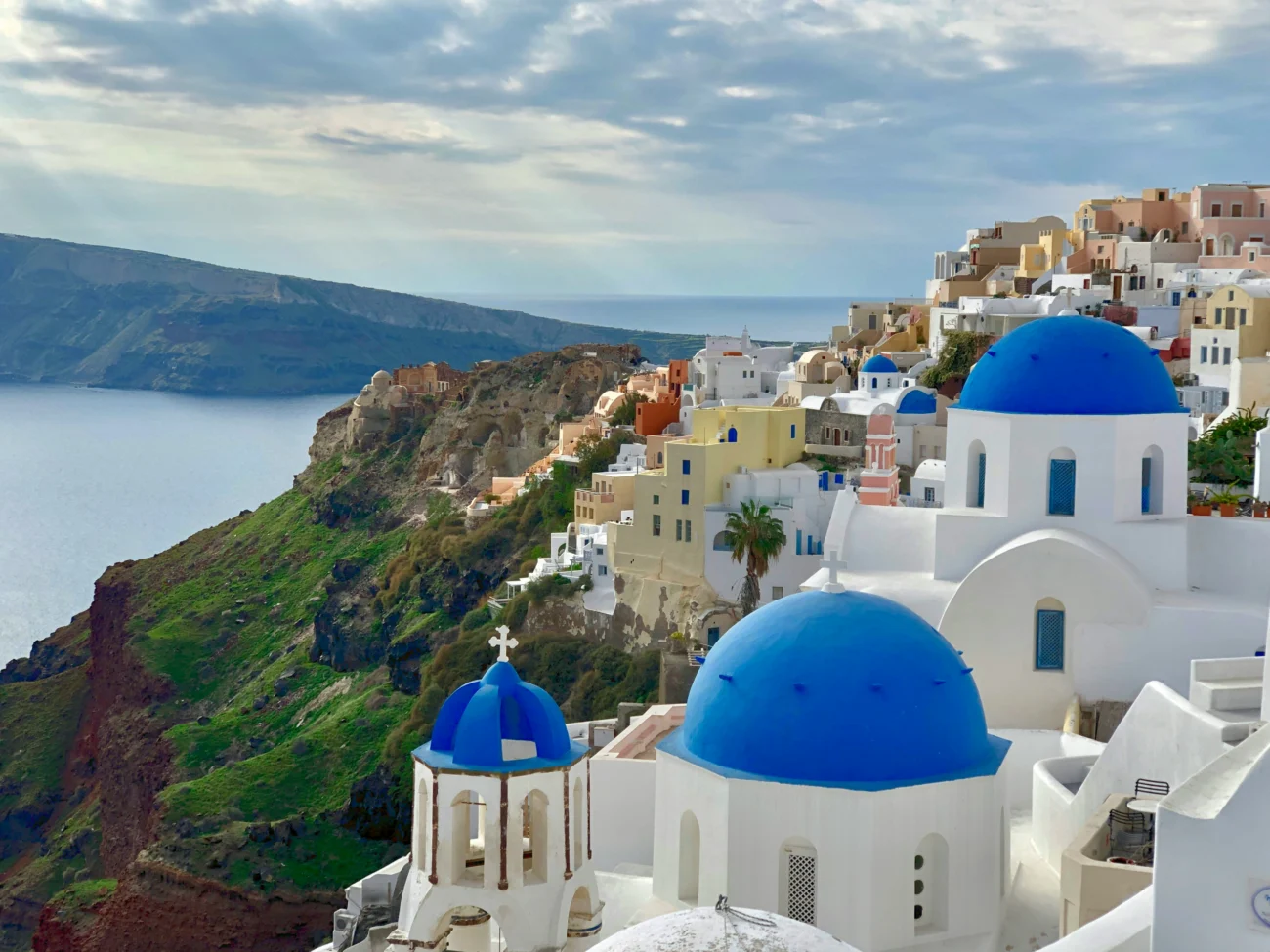
Amorgos is one of the most rewarding of all the Cyclades if you like your islands wild, dramatic and real. It is long and narrow, rising in sheer cliffs on its south east coast, and it has a character all of its own that draws walkers, divers and people who want the Greece of thirty years ago rather than the Greece of the glossy magazines. The film The Big Blue was shot here in the 1980s, and it gave the island a quiet fame that has never turned into mass tourism. What you get instead is a cliffside monastery that ranks among the most extraordinary sights in Greece, some of the best hiking in the islands, and beaches you often have to work a little to reach. Here is what to do when you visit.
Table of Contents
The best things to do in Amorgos at a glance
- Visit the Hozoviotissa Monastery, the white monastery built into a sheer cliff, one of the great sights of the Aegean
- Swim at Agia Anna beach, the cove made famous by the film The Big Blue
- Hike the ancient trails, including the classic path from Chora to the monastery and on to Aegiali
- Explore Chora, the clifftop capital, one of the prettiest towns in the Cyclades
- Take a boat trip to the islet of Gramvousa or the sea caves at Mouros
- See the Olympia shipwreck, the rusting wreck from the film on the south coast
- Go scuba diving in the deep blue water that gave the film its name
- Eat traditional Amorgian food and drink the local rakomelo
The main things to do in Amorgos
Visit the Hozoviotissa Monastery
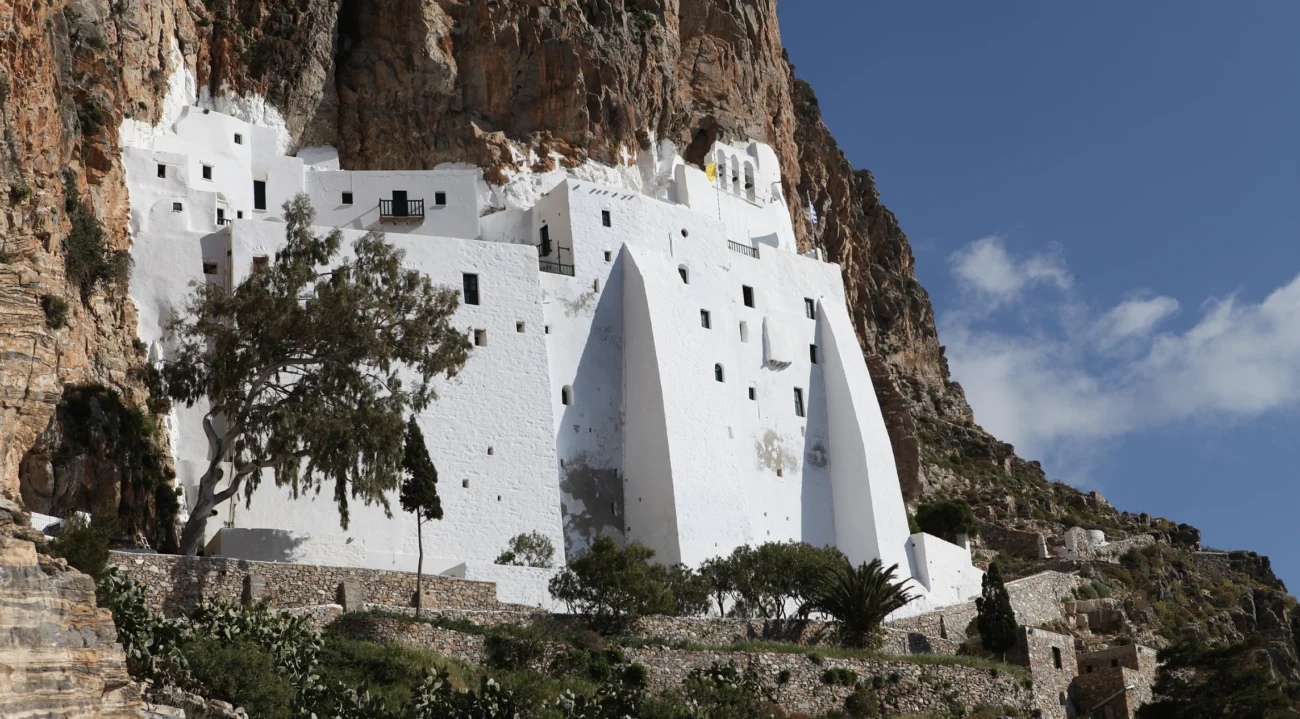
This is the one thing you cannot miss on Amorgos, and it is genuinely one of the most remarkable sights in Greece. The Panagia Hozoviotissa Monastery is built directly into a sheer cliff face on the south coast, a tall, narrow white building that looks as if it has been painted onto the rock. It dates back around a thousand years and is one of the oldest monasteries in Greece.
To reach it you climb a steep stairway of around 300 steps from the car park below, or walk down on the old path from Chora above. Inside, the monastery rises through several floors, each only a few metres wide, until you reach the ancient church at the top with its Byzantine icons. The view over the Aegean from the windows is the finest on the island. The monks who live there traditionally welcome visitors with a small glass of the local raki and a piece of loukoumi, a soft sweet, which is part of what makes the visit so memorable.
There is a strict dress code. Men should wear long trousers and women a long skirt, with shoulders covered. There are sometimes wraps to borrow at the entrance, but it is best to bring your own covering to be sure. Check the opening hours before you go, as the monastery closes in the middle of the day and reopens in the late afternoon.
Swim at Agia Anna, the Big Blue beach
Below the monastery, a twisting road leads down to Agia Anna beach, the small cove made famous by Luc Besson’s 1988 film The Big Blue, which was largely shot on Amorgos. This is where the young free diver Jacques Mayol dives in the film, and standing here looking out at the endless deep blue water, you understand exactly where the film got its name.
Agia Anna is not a big sandy beach. It is a rocky cove with small platforms and crystal clear, deep water that is wonderful for swimming and snorkelling. It gets busy in the middle of the day in summer because of its fame and its position below the monastery, so early morning or late afternoon is the best time to have it closer to yourself. Combining the monastery and Agia Anna in one trip is the classic Amorgos half day.
Explore Chora, the clifftop capital
Chora is regularly called one of the prettiest towns in the whole Cyclades, and it earns the reputation. The whitewashed capital sits high on a ridge in the centre of the island, a maze of narrow car-free lanes, tiny churches and bougainvillea, with a ruined Venetian castle rock rising at its heart. It is a place to wander slowly rather than tick off, stopping for a coffee in one of the small squares and climbing up to the castle for the view.
The evenings in Chora are one of the pleasures of Amorgos, when the day trippers have gone and the lanes are lit and quiet. The photography here is superb, especially around sunset when the light catches the white houses and the castle. Chora is also the starting point for the best walk on the island, the old path down to the monastery.
Hike the ancient trails
Amorgos is one of the best islands for walking in the whole of Greece, with a network of old marked footpaths known as the Blue Paths that once linked the villages, the monasteries and the ports before the roads were built. Seven main marked trails cross the island, and you can combine them into longer routes.
The classic walk is the Palia Strata, the old main road, which runs from Chora past the Hozoviotissa Monastery and on through the hills to the northern villages above Aegiali. It takes around four to five hours and is a hard walk, but it takes in the best of the island’s scenery. For something gentler, the short path from Chora down to the port at Katapola passes through farmland and small chapels and takes about an hour. Above Aegiali, the trails up to the mountain village of Tholaria and neighbouring Langada are among the most rewarding shorter walks.
Take plenty of water, a hat and proper shoes, as there is little shade and the paths are rocky. The best months for walking are May, June, September and October, when the heat is bearable.
Take a boat trip to Gramvousa and the sea caves
Some of the best of Amorgos is only reachable from the water. From the far south of the island near Kalotaritissa, small boats run in summer across to the uninhabited islet of Gramvousa, which has a beautiful quiet beach and clear water for swimming and snorkelling. It is one of the most peaceful spots in the area and worth the effort to reach.
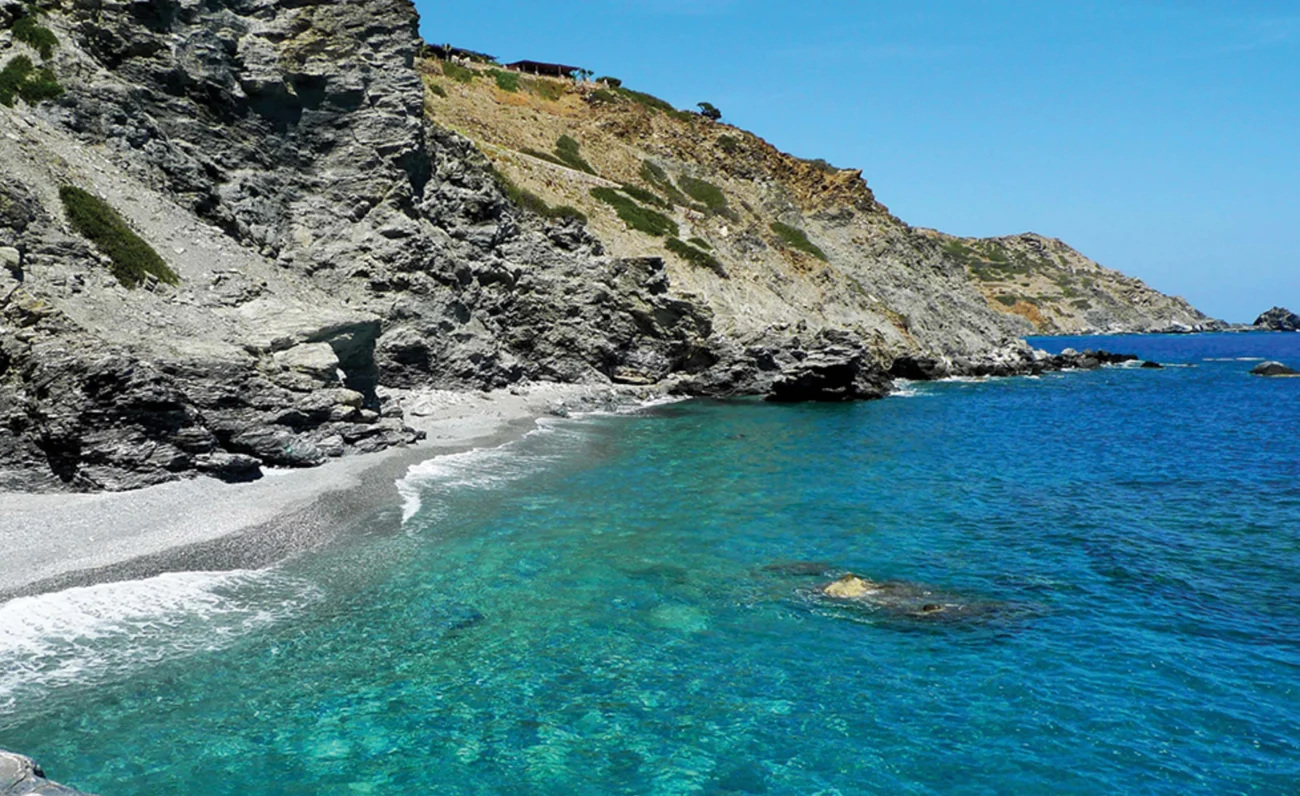
Around the coast, the sea caves near Mouros beach on the south west coast are a highlight for snorkellers, with dramatic rock formations and clear deep water. Mouros itself is a striking beach of grey pebbles beneath high cliffs. You can also explore the island’s other sea caves along the coast, several of which are best seen on a boat trip.
See the Olympia shipwreck
At the southern end of the island lies the rusting wreck of the Olympia, a cargo ship that ran aground in the 1980s and which appears in The Big Blue. The wreck sits in shallow water in a bay and can be seen from the shore or reached on a boat trip. For fans of the film it is a genuine piece of the story, and even for those who have not seen it, the sight of the old hull in the clear water against the cliffs is a memorable one.
Go scuba diving in the deep blue
The waters around Amorgos are famous for their depth and clarity, which is what drew the makers of The Big Blue in the first place. There are dive centres on the island offering first dives for beginners and exploration dives for certified divers, with spectacular sites all around the coast including a cargo wreck. Even if you do not dive, the snorkelling off the rocky coves like Agia Anna and Mouros is excellent, with clear water and plenty to see.
Visit the traditional villages
Beyond Chora, Amorgos has a handful of traditional villages that reward a visit. Tholaria, above Aegiali in the north, sits on a rocky terrace with wide views over the bay and takes its name from the ancient Roman tombs found nearby. The two ports, Katapola in the centre and Aegiali in the north east, are relaxed waterfront villages that are lovely for an evening meal after a day of walking or swimming. See the full guide to the best villages on Amorgos for more.
Relax on the beaches
Amorgos is not an island of long golden sands, but its beaches have a wild beauty and the water is a deep, clear blue. The best sandy beach is the long bay at Aegiali in the north east, which has shade and a gentle entry into the water. Around the coast are quieter coves like Agios Pavlos, the sheltered Maltezi reached by boat or on foot from Katapola, and the remote Kalotaritissa at the southern tip. The full Amorgos beaches guide covers all of them and how to reach each one.
Eat and drink like an Amorgian
Amorgos has a strong food tradition rooted in its farming and its isolation. Local dishes to look for include patatato, a slow-cooked goat with potatoes traditionally served at village feasts, and fava, the Cycladic split pea puree. The island is known for rakomelo, a warm drink of the local raki with honey and spices, which is exactly right on a cooler evening. You can also seek out the island’s cheese making and wine tasting experiences to taste the local produce at the source.
Experience a village panigiri
If you are lucky enough to visit around a saint’s day, try to find a panigiri, a traditional village festival held in honour of the local church. These are the real heart of island life, with long tables of food, homemade wine and raki, live music and dancing that goes on late into the night. They are not put on for tourists, and stumbling into one is one of the most genuine experiences Amorgos offers.
Best things to do in Amorgos for…
Walkers and hikers
Amorgos is a walker’s island above all. Base yourself in Aegiali for the northern trails up to Tholaria and Langada, or in Chora for the classic Palia Strata walk to the monastery. The old Blue Paths give you some of the best coastal and mountain walking anywhere in the Cyclades.
Couples
The Hozoviotissa Monastery at a quiet hour, an evening wandering the lanes of Chora, a swim in the deep blue at Agia Anna, and dinner on the waterfront at Katapola make Amorgos a wonderful island for couples who want beauty and quiet over nightlife and crowds.
Families
Amorgos suits families who like the outdoors and do not need resort facilities. The sandy bay at Aegiali is the best beach for children, with shade and calm water, and the boat trips and gentle coves give older children plenty to explore. Check the Amorgos weather page before travelling, as the island can be windy.
Film and diving fans
For fans of The Big Blue, the pilgrimage is clear: swim at Agia Anna, find the Olympia shipwreck in the south, and go diving in the water that inspired the film. The dive centres on the island can take you to sites all around the coast.
Planning your visit
Most of the main sights on Amorgos are spread between the two ends of the island, so how you get around matters. The Hozoviotissa Monastery, Agia Anna and Chora sit close together in the centre and south, while the best walking and the main sandy beach are up around Aegiali in the north. A bus links the two ends of the island via Chora through the day in summer, but a car or scooter gives you the freedom to reach the southern beaches and the boat trip points. See our guides to getting around Amorgos, the bus timetable and taxi and car hire for full details.
To decide where to base yourself for the things you most want to do, read our guide on where to stay in Amorgos. To plan your arrival, see how to get to Amorgos and the main ferry page. And to see how everything on the island fits together, use the Amorgos map. For the wider region, the Greek islands map shows how Amorgos connects to the rest of the Cyclades.