
Cyclades Ferry Guide: Routes, Prices and Island Hopping
Travelling between the Cyclades islands by ferry is part of the adventure. Every year, thousands of visitors hop from one island to the next, watching the blue Aegean Sea pass by as they go. Whether you are heading to Santorini for the sunsets, Naxos for the beaches, or Mykonos for the nightlife, there is a ferry route waiting for you.
Several ferry companies operate across the region, including Blue Star Ferries, Seajets, Anek Superfast, Fast Ferries and Golden Star Ferries. Between them, they run regular sailings connecting more than 15 islands, as well as routes to and from Athens, Crete and the Dodecanese. In peak season, from June to September, ferries run several times a day on the busiest routes. In winter, sailings become far less frequent, so it pays to plan ahead.
Table of Contents
Cyclades Ferry Ticket Prices
Cyclades.travel covers ferry connections across 15 islands and well over 200 individual routes, from Piraeus, Rafina and Lavrio down to Crete and Rhodes, and from island to island within the group. Because fares differ by operator, vessel, season and demand, a single price list for every route would be out of date within weeks. What stays true across the whole network is that price tracks journey length far more closely than it tracks any one island, so the table below gives average starting prices by journey time, with real example routes at each length to show what that looks like in practice.
| Journey length | Example routes | Average price, conventional ferry | Average price, high speed ferry |
|---|---|---|---|
| Under 1 hour | Paros to Naxos, Naxos to Koufonisia | From 7 euros to 15 euros | From 10 euros to 20 euros |
| 1 to 2 hours | Syros to Tinos, Mykonos to Paros, Ios to Naxos | From 15 euros to 25 euros | From 20 euros to 35 euros |
| 2 to 4 hours | Piraeus to Paros, Piraeus to Naxos, Amorgos to Naxos | From 35 euros to 50 euros | From 45 euros to 90 euros |
| 4 to 6 hours | Piraeus to Santorini, Amorgos to Piraeus | From 45 euros to 60 euros | From 70 euros to 95 euros |
| 6 hours and over | Piraeus to Koufonisia and the Small Cyclades, Crete to Santorini | From 45 euros to 65 euros | From 65 euros to 95 euros, where a high speed option exists |
These are guide prices for a single adult in economy or deck class, and they sit toward the higher end of each range during July and August. The exact fare for your specific route and travel date, including any available discounts for children, students, or return journeys, is best confirmed with our ferry price finder, which pulls live pricing for all 15 islands rather than an average.
Tap or click on any port on the map to explore routes
Tap a port on the map above to see ferry routes
Ferries from
How to Choose Between Fast and Slow Ferries
When booking a ferry in the Cyclades, you will usually have a choice between a fast ferry and a slow ferry (sometimes called a conventional ferry). Each has its own advantages, and the right choice depends on what matters most to you.
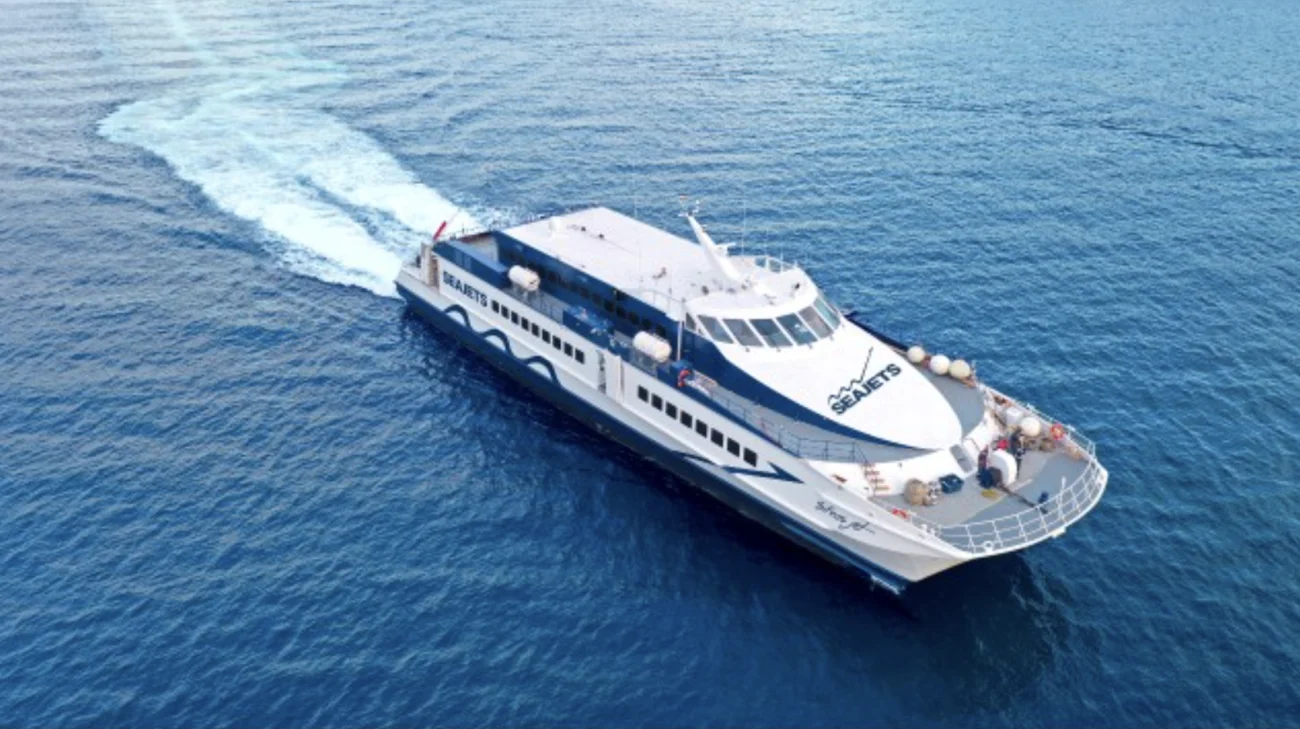
Fast ferries, often run by Seajets or Blue Star Ferries, are modern catamarans that can travel at nearly twice the speed of a conventional ferry. They cut your journey time significantly, which is useful if you are short on time or island hopping across several stops in one trip. The trade off is that tickets usually cost more, and in rough weather, the ride can feel less smooth than on a larger, slower ship.
Slow ferries, such as those run by Anek Superfast or Blue Star Ferries on their conventional routes, take longer to reach their destination, but they are usually cheaper and more stable in choppy seas. They also tend to have more space on board, including outdoor decks, cafes and, on longer routes, cabins for overnight journeys. If you are travelling with a car, a slow ferry is often the better option, as they generally have more vehicle capacity.
As a general rule, choose a fast ferry if your priority is saving time, and choose a slow ferry if your priority is saving money or you prefer a steadier journey. During the summer months in particular, book your ferry as early as you can, since popular routes and sailing times sell out quickly.
Ferry Companies Operating in the Cyclades
Blue Star Ferries is one of the largest and most established operators in Greece. It runs both conventional ferries and faster services, covering nearly every major route in the Cyclades, as well as connections to Crete and the Dodecanese. Its ships are known for being reliable and comfortable, making it a popular choice for families and travellers with vehicles.
Seajets specialises in high speed catamarans and is often the quickest way to move between islands. The company runs a wide network of summer routes, connecting smaller islands that are harder to reach on slower ferries.
Anek Superfast mainly covers longer distance routes, including connections between the Cyclades, Crete and mainland Greece. Its ships tend to be larger, with more onboard facilities, which suits travellers on overnight or longer journeys.
Fast Ferries and Golden Star Ferries are smaller operators that fill in useful gaps in the network, particularly on routes between neighbouring islands that are not always served by the bigger companies.
Each route page on this website lists which companies operate that specific journey, along with current schedules and prices, so you can compare your options before booking.
Cyclades Ferry Routes by Island
Below you will find ferry routes grouped by departure island. Select your starting point to see every destination you can reach directly, along with journey times and prices.
Santorini
Santorini is one of the busiest ports in the Cyclades, with direct ferries to Athens, Crete, the Dodecanese and most neighbouring islands.
- Ferry from Santorini to Amorgos
- Ferry from Santorini to Anafi
- Ferry from Santorini to Andros
- Ferry from Santorini to Athens (Piraeus)
- Ferry from Santorini to Athens (Rafina)
- Ferry from Santorini to Crete (Agios Nikolaos)
- Ferry from Santorini to Crete (Heraklion)
- Ferry from Santorini to Crete (Rethymno)
- Ferry from Santorini to Crete (Sitia)
- Ferry from Santorini to Folegandros
- Ferry from Santorini to Ios
- Ferry from Santorini to Kasos
- Ferry from Santorini to Kea
- Ferry from Santorini to Kimolos
- Ferry from Santorini to Koufonisia
- Ferry from Santorini to Kythnos
- Ferry from Santorini to Milos
- Ferry from Santorini to Mykonos
- Ferry from Santorini to Naxos
- Ferry from Santorini to Paros
- Ferry from Santorini to Rhodes
- Ferry from Santorini to Serifos
- Ferry from Santorini to Sifnos
- Ferry from Santorini to Sikinos
- Ferry from Santorini to Syros
- Ferry from Santorini to Tinos
Milos
Milos has one of the widest route networks in the Cyclades, with ferries reaching Athens, Crete, the Dodecanese and most neighbouring islands.
- Ferry from Milos to Amorgos (Katapola)
- Ferry from Milos to Anafi
- Ferry from Milos to Andros
- Ferry from Milos to Athens (Lavrio)
- Ferry from Milos to Athens (Piraeus)
- Ferry from Milos to Chalki
- Ferry from Milos to Crete (Chania)
- Ferry from Milos to Crete (Heraklion)
- Ferry from Milos to Crete (Rethymno)
- Ferry from Milos to Crete (Sitia)
- Ferry from Milos to Folegandros
- Ferry from Milos to Ios
- Ferry from Milos to Karpathos
- Ferry from Milos to Karpathos (Diafani)
- Ferry from Milos to Kasos
- Ferry from Milos to Kea
- Ferry from Milos to Kimolos
- Ferry from Milos to Koufonisia
- Ferry from Milos to Kythnos
- Ferry from Milos to Mykonos
- Ferry from Milos to Naxos
- Ferry from Milos to Paros
- Ferry from Milos to Rhodes
- Ferry from Milos to Serifos
- Ferry from Milos to Sifnos
- Ferry from Milos to Sikinos
- Ferry from Milos to Syros
- Ferry from Milos to Tinos
Amorgos
Amorgos, reached through its two ports of Katapola and Aegiali, connects to Athens, the Small Cyclades, and a wide range of islands further afield.
- Ferry from Amorgos to Amorgos (Aegiali)
- Ferry from Amorgos to Amorgos (Katapola)
- Ferry from Amorgos to Astypalea
- Ferry from Amorgos to Athens (Piraeus)
- Ferry from Amorgos to Crete (Heraklion)
- Ferry from Amorgos to Crete (Rethymno)
- Ferry from Amorgos to Donoussa (Small Cyclades)
- Ferry from Amorgos to Folegandros
- Ferry from Amorgos to Ios
- Ferry from Amorgos to Iraklia (Small Cyclades)
- Ferry from Amorgos to Kos
- Ferry from Amorgos to Koufonisia
- Ferry from Amorgos to Leros
- Ferry from Amorgos to Milos
- Ferry from Amorgos to Mykonos
- Ferry from Amorgos to Naxos
- Ferry from Amorgos to Paros
- Ferry from Amorgos to Patmos
- Ferry from Amorgos to Rhodes
- Ferry from Amorgos to Santorini
- Ferry from Amorgos to Schinoussa (Small Cyclades)
- Ferry from Amorgos to Serifos
- Ferry from Amorgos to Sifnos
- Ferry from Amorgos to Syros
Ios
Ios has strong summer connections to Santorini, Naxos and Athens, and is a popular stop for travellers moving between the northern and southern Cyclades.
- Ferry from Ios to Anafi
- Ferry from Ios to Andros
- Ferry from Ios to Athens (Lavrio)
- Ferry from Ios to Athens (Piraeus)
- Ferry from Ios to Athens (Rafina)
- Ferry from Ios to Crete (Heraklion)
- Ferry from Ios to Crete (Rethymno)
- Ferry from Ios to Folegandros
- Ferry from Ios to Kea
- Ferry from Ios to Kimolos
- Ferry from Ios to Koufonisia
- Ferry from Ios to Kythnos
- Ferry from Ios to Milos
- Ferry from Ios to Mykonos
- Ferry from Ios to Santorini
- Ferry from Ios to Serifos
- Ferry from Ios to Sikinos
- Ferry from Ios to Thirasia
- Ferry from Ios to Naxos
- Ferry from Ios to Paros
- Ferry from Ios to Sifnos
- Ferry from Ios to Syros
- Ferry from Ios to Tinos
Folegandros
Folegandros has a reliable network of ferries connecting it to Santorini, Ios, Athens and several smaller islands nearby.
- Ferry from Folegandros to Amorgos (Katapola)
- Ferry from Folegandros to Anafi
- Ferry from Folegandros to Athens (Lavrio)
- Ferry from Folegandros to Athens (Piraeus)
- Ferry from Folegandros to Crete (Heraklion)
- Ferry from Folegandros to Ios
- Ferry from Folegandros to Kea
- Ferry from Folegandros to Kimolos
- Ferry from Folegandros to Koufonisia
- Ferry from Folegandros to Kythnos
- Ferry from Folegandros to Milos
- Ferry from Folegandros to Mykonos
- Ferry from Folegandros to Naxos
- Ferry from Folegandros to Paros
- Ferry from Folegandros to Santorini
- Ferry from Folegandros to Serifos
- Ferry from Folegandros to Sifnos
- Ferry from Folegandros to Sikinos
- Ferry from Folegandros to Syros
- Ferry from Folegandros to Thirasia
Andros
Andros is well connected to Athens through the ports of Rafina and Lavrio, making it one of the quickest islands to reach from the mainland.
- Ferry from Andros to Athens (Lavrio)
- Ferry from Andros to Athens (Piraeus)
- Ferry from Andros to Athens (Rafina)
- Ferry from Andros to Evia (Karystos)
- Ferry from Andros to Evia (Marmari)
- Ferry from Andros to Ios
- Ferry from Andros to Kea
- Ferry from Andros to Kythnos
- Ferry from Andros to Mykonos
- Ferry from Andros to Naxos
- Ferry from Andros to Paros
- Ferry from Andros to Santorini
- Ferry from Andros to Syros
- Ferry from Andros to Tinos
Sifnos
Sifnos has useful connections to Athens and its neighbouring islands, with a dependable schedule throughout the year.
Mykonos
Mykonos connects easily to Athens as well as nearby islands, with frequent sailings throughout the summer.
- Ferry from Mykonos to Delos
- Ferry from Mykonos to Donoussa (Small Cyclades)
- Ferry from Mykonos to Iraklia (Small Cyclades)
- Ferry from Mykonos to Naxos
- Ferry from Mykonos to Paros
- Ferry from Mykonos to Santorini
- Ferry from Mykonos to Schinoussa (Small Cyclades)
- Ferry from Mykonos to Sifnos
- Ferry from Mykonos to Syros
- Ferry from Mykonos to Tinos
Naxos
Naxos sits at the centre of the Cyclades ferry network, making it one of the easiest islands to reach from almost anywhere in the region.
- Ferry from Naxos to Donoussa (Small Cyclades)
- Ferry from Naxos to Iraklia (Small Cyclades)
- Ferry from Naxos to Mykonos
- Ferry from Naxos to Paros
- Ferry from Naxos to Santorini
- Ferry from Naxos to Schinoussa (Small Cyclades)
- Ferry from Naxos to Sifnos
- Ferry from Naxos to Syros
- Ferry from Naxos to Tinos
Paros
Paros is a major hub for island hopping, with regular connections to Naxos, Santorini, Mykonos and many smaller islands.
Serifos
Serifos sits along the same route as Sifnos and Milos, with regular ferries from Athens and nearby islands.
Sikinos
Sikinos has a small but useful network of ferries linking it to Ios, Folegandros and Santorini.
Syros
Syros, the administrative capital of the Cyclades, connects to Tinos and other nearby islands.
Kimolos
Kimolos, a small island next to Milos, has short and regular crossings to its larger neighbour and to Sifnos.
Anafi
Anafi, one of the most remote Cyclades islands, connects mainly to Ios and Folegandros.
Koufonisia
Koufonisia, part of the Small Cyclades, connects to Naxos, Paros, Mykonos, Santorini and its quiet neighbouring islets.
- Ferry from Koufonisia to Donoussa (Small Cyclades)
- Ferry from Koufonisia to Iraklia (Small Cyclades)
- Ferry from Koufonisia to Mykonos
- Ferry from Koufonisia to Naxos
- Ferry from Koufonisia to Paros
- Ferry from Koufonisia to Santorini
- Ferry from Koufonisia to Schinoussa (Small Cyclades)
- Ferry from Koufonisia to Sifnos
- Ferry from Koufonisia to Syros
Ferries from Athens (Piraeus, Rafina and Lavrio)
Athens is the main gateway to the Cyclades, with ferries departing from three ports: Piraeus, Rafina and Lavrio, depending on the island you are heading to.
Best Time to Travel and Booking Tips
he Cyclades ferry network runs at its busiest between June and September, when the weather is warm and demand for travel is at its highest. During these months, most popular routes have several sailings a day, but tickets can sell out well in advance, especially in August. If you are travelling in high season, try to book your tickets at least two to three weeks ahead, particularly if you are bringing a car or travelling with a large group.
Outside of summer, from October to May, the number of sailings drops considerably, and some smaller routes may only run a few times a week. Winter travel is also more likely to be affected by strong winds, known locally as the Meltemi, which can lead to delays or cancellations, particularly on fast ferry routes. If you are travelling during this period, it is worth building some flexibility into your plans, and checking the schedule again closer to your travel date.
Whatever time of year you travel, arrive at the port at least 30 minutes before departure, and bring a printed or digital copy of your ticket along with valid identification.
Current Ferry / Ship / Vessels Status
Frequently Asked Questions FAQ about Cyclades Ferry
How much does a Cyclades ferry ticket cost?
Prices vary by route and ferry type, but most foot passenger tickets cost between 20 and 55 euros. Fast ferries usually cost more than slow, conventional ferries covering the same route.
Do I need to book my ferry in advance?
It is not always required, but it is strongly recommended, especially between June and September. Popular routes and preferred sailing times can sell out during peak season.
Can I take a car on the ferry?
Yes, most routes allow vehicles, though space is limited and should be booked well in advance. Conventional ferries generally have more vehicle capacity than fast catamarans.
What happens if my ferry is cancelled?
Ferries are sometimes cancelled due to strong winds or poor weather, particularly in winter. If this happens, your ticket is usually valid for the next available sailing, or you can request a refund through the ferry company or your booking provider.
How early should I arrive at the port?
Aim to arrive at least 30 minutes before your ferry is due to depart, and earlier if you are travelling with a vehicle.
Which is better, a fast ferry or a slow ferry?
It depends on what matters most to you. Choose a fast ferry if you want to save time, or a slow ferry if you prefer a lower price and a steadier journey.