Cities, Towns & Villages in Kythnos
Chora (Messaria)
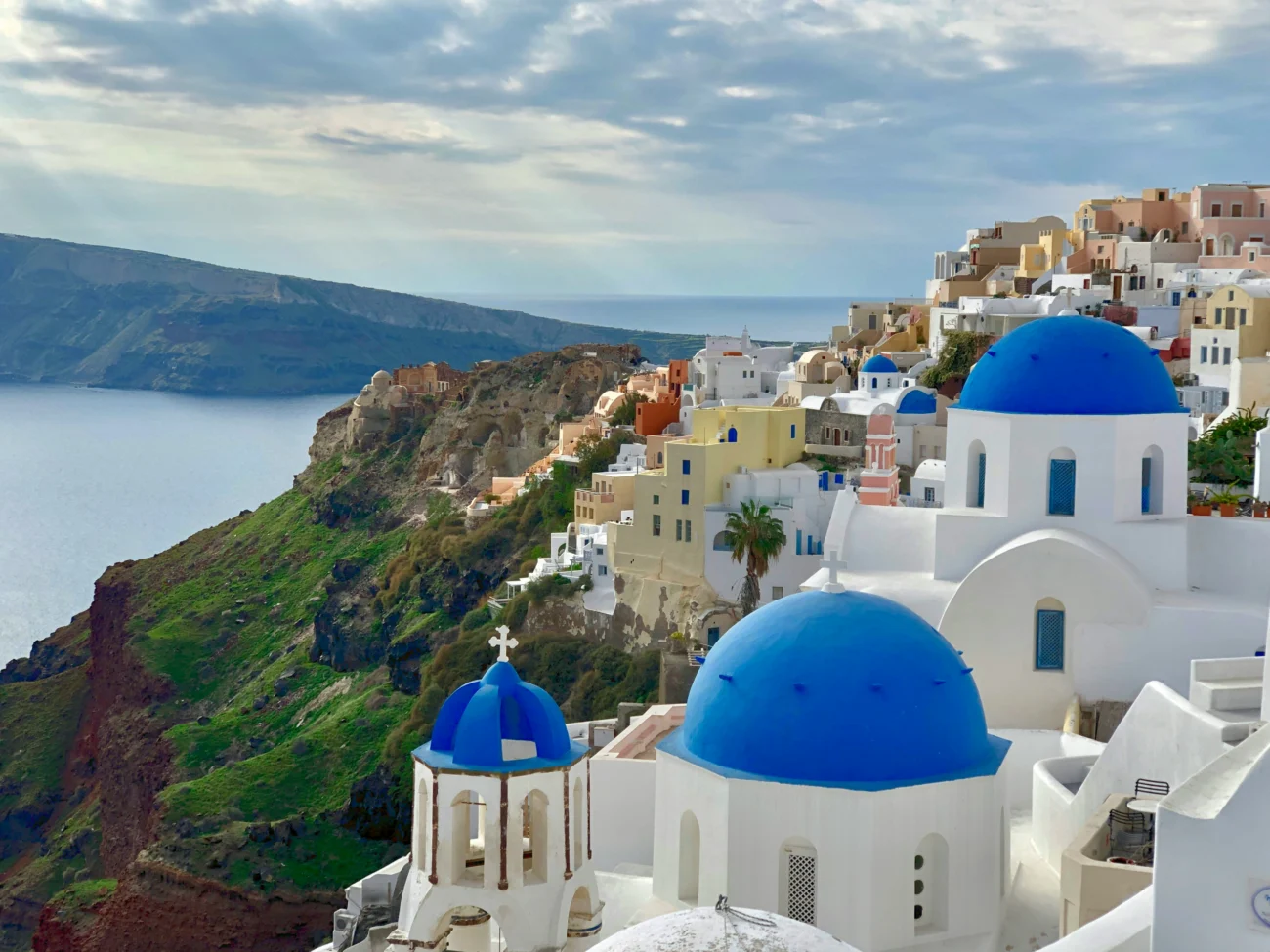
The island’s capital sits gracefully at the heart of Kythnos, a beautifully preserved Cycladic village that has changed very little over the centuries. Wander through its impossibly narrow marble lanes and you will find whitewashed houses with blue shutters, over 70 churches squeezed into a single small settlement, and a genuinely warm, unhurried atmosphere that feels a world away from the busier Cycladic islands. The Archaeological Museum is here too, well worth a visit to understand the deep history of the island. Chora is lively in the evenings with good tavernas and small bars that fill up pleasantly without ever feeling crowded.
Dryopida (Dryopis)
Also known locally as Chorio, Dryopida is arguably the most traditional and most visually striking village on the island. Unlike the typical flat roofed whitewashed buildings you see elsewhere in the Cyclades, Dryopida is famous for its distinctive red tiled roofs cascading down into a valley, giving it a truly unique appearance. The narrow stepped streets are too tight for any vehicle, which only adds to the charm. Beneath the village lies the spectacular Katafyki Cave, a natural cavern of impressive stalactites and stalagmites that locals used as a hiding place from pirates in centuries past. The village also has a lovely little bakery famous for traditional sweets and homemade desserts.
Loutra
Tucked into the northeastern coastline, Loutra is one of the most fascinating villages in all of the Cyclades thanks to its famous natural thermal springs. Mineral rich hot water bubbles up through the rocks right by the sea shore, creating warm natural pools where visitors can soak while watching the waves. The springs have been known since antiquity and were popular enough to attract King Otto and Queen Amalia of Greece in the nineteenth century. The original royal bathhouse still stands, and a modern spa facility now operates alongside the natural pools. Loutra also has a pretty beach, good waterfront tavernas and a relaxed, peaceful atmosphere that makes it ideal for those wanting a slower pace of life.
Merichas
This is the island’s main port and the first thing most visitors see when they arrive by ferry. Merichas is a lively, welcoming little harbour village on the western coast with a small sandy beach, a good selection of cafes, waterfront tavernas serving freshly caught fish and a working harbour where local fishermen still mend their nets each morning. It is the most practical base for exploring the rest of the island, with car and scooter hire, bus connections and boat services all departing from here. The nearby beach of Martinakia is an easy and pleasant walk from the port.
Kanala
This small, peaceful settlement on the southeastern coast is built around the beautiful Church of Panagia Kanala, one of the most revered pilgrimage churches in the Cyclades. It sits among pine trees overlooking a sheltered bay, creating a wonderfully calm and scenic spot. The beach below the church is lovely, with calm clear water and shade from the surrounding trees. On the 15th of August each year the village comes alive for the island’s biggest religious festival, drawing visitors and pilgrims from across Greece.
Main Ports in Kythnos
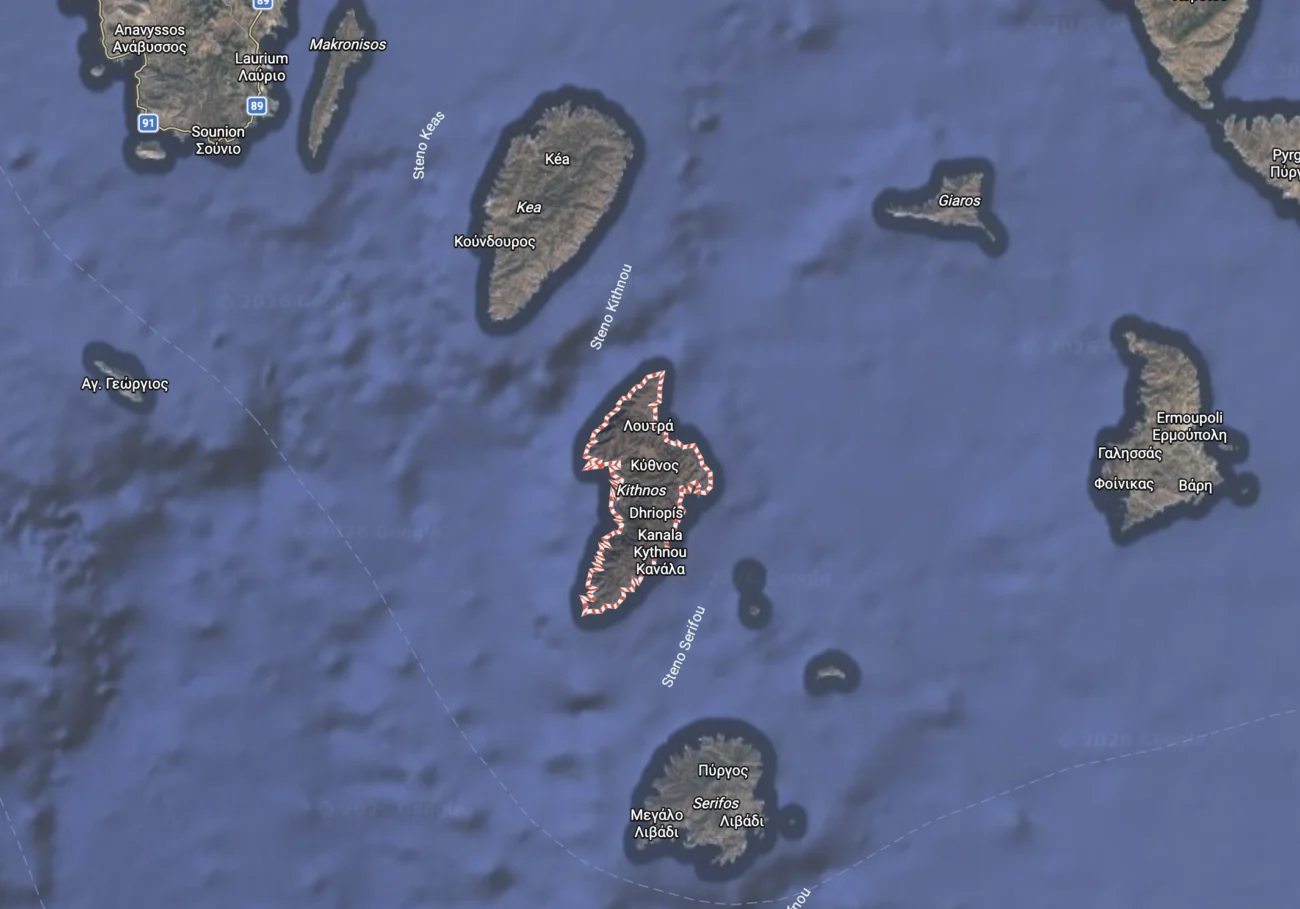
Merichas Port: Merichas is the one and only ferry port on Kythnos, sitting on the sheltered western coast of the island. It is a well connected and reliable port, protected from the prevailing winds that sweep through the Aegean in summer. Regular ferry services connect Merichas to the port of Piraeus in Athens, with journey times of roughly 2.5 to 3.5 hours depending on the ferry type, and to the port of Lavrio which is even closer at just 1.5 to 2.5 hours away. This makes Kythnos one of the most easily accessible of all the Cycladic islands from the mainland. The port is also connected by ferry to neighbouring islands including Kea, Serifos, Sifnos and Milos, making it a natural and convenient stop on any island hopping route through the Western Cyclades.
Getting around Kythnos
Getting around Kythnos is possible with a mix of buses, taxis, water taxis and vehicle rentals, but having your own wheels makes it much easier to explore the island fully. There is a local bus service that follows the two main roads, linking the port of Merichas with Chora, Loutra and Dryopida, and continuing to Kanala, with several departures each day in summer. This is useful for simple trips between the main villages and for getting to the hot springs or certain beaches, although services can feel limited compared with busier islands.
Taxis are available all day and cover most of the road network, and from Merichas you can also use sea taxis to reach popular spots such as Kolona beach and other bays that are hard to access by road. Many visitors choose to rent a scooter or small car to move more freely and reach quieter beaches and viewpoints, particularly because public transport does not serve every cove. Kythnos is also a good island for walking, with rural paths that cross valleys and lead down to remote sandy beaches, so you can often combine short bus or taxi rides with relaxed hikes from the main villages. Read More >>
How to get to Kythnos
Kythnos does not have an airport, which is precisely why it remains so peaceful and genuinely unspoilt. The island is reached entirely by sea, and the good news is that it sits very close to the Greek mainland, making it one of the quickest and easiest Cycladic islands to reach.
By Ferry from Lavrio: The fastest and most popular route from Athens is via the port of Lavrio, around 60 kilometres southeast of the city centre. Fast ferries take approximately 1.5 to 2.5 hours. Lavrio is well served by the KTEL bus from central Athens and is also reachable by taxi or private transfer. This is the recommended route if you are looking for the quickest crossing.
By Ferry from Piraeus: The main port of Piraeus also has regular ferry connections to Kythnos, with journey times of around 2.5 to 4 hours depending on the vessel and any intermediate stops. There are typically multiple departures per week during the summer season and daily sailings during peak months.
From Other Cycladic Islands: Kythnos is well placed for island hopping. Regular ferry connections run to and from Kea, Serifos, Sifnos and Milos throughout the summer. You can easily combine Kythnos with one or two other Western Cycladic islands on the same trip.
Nearest Airport: Athens International Airport (ATH) is the main hub for international arrivals. From the airport, you can take a taxi or bus to either Piraeus or Lavrio to connect with the ferry. Journey times from the airport to each port are roughly one hour.
Getting Around the Island: A local bus service connects Merichas, Chora, Loutra, Dryopida and Kanala. Renting a car or scooter gives you the most freedom to explore at your own pace and is highly recommended for reaching the more remote beaches. Taxis are available but limited in number, so booking ahead in July and August is advisable.
More attractions in Kythnos

Frequently asked questions (FAQ) about Kythnos
Is Kythnos a good destination for first time visitors to Greece?
Kythnos is a wonderful island but it truly shines for travellers who want to experience genuine, everyday Greek island life away from the crowds. If you are visiting Greece for the first time, combining Kythnos with a more well known island such as Santorini or Mykonos gives you a perfect contrast. However, if you simply want peace, beautiful beaches and authenticity from day one, Kythnos will not disappoint you at all.
When is the best time to visit Kythnos?
May through June and September through October are the ideal months to visit. The weather is warm and sunny, the sea is perfect for swimming, the island is quieter and accommodation prices are significantly more reasonable than in July and August. If you do visit in peak summer, bear in mind that the 15th of August is the island’s biggest religious festival and the island gets noticeably busier around this time.
How long does it take to get to Kythnos from Athens?
Kythnos is one of the closest Cycladic islands to Athens. The fastest route is by ferry from the port of Lavrio, which takes approximately 1.5 to 2.5 hours. Ferries from Piraeus take around 2.5 to 4 hours. There are no flights to Kythnos so all visitors arrive by sea.
What makes Kythnos different from other Cycladic islands?
Kythnos stands apart for several reasons. It has natural thermal springs at Loutra that are unique in the Cyclades, the famous Kolona double beach that is among the most photographed in Greece, a truly traditional village in Dryopida that feels completely untouched by tourism, and over 90 beaches scattered around the coastline. It is also one of the closest Cycladic islands to Athens, making it easy to reach without the need for lengthy journeys or connecting flights.
Is Kythnos expensive to visit?
Kythnos is considerably more affordable than the headline Cycladic destinations of Santorini and Mykonos. Accommodation, food and activities are all very reasonably priced, and many of the best experiences on the island such as visiting the thermal springs, walking around Dryopida and swimming at Kolona are either free or very low cost. Visiting in the shoulder season of May, June or September offers the best combination of good weather, available accommodation and excellent value for money.