Things to do in Amorgos
Climb to the Monastery of Panagia Hozoviotissa. The single reason most people come. Details below.
Walk the old footpaths. Amorgos has the best waymarked walking network in the Cyclades, a system of ancient stone paths connecting villages, monasteries and coves. The route from Chora down to Aegiali is the classic. Most walkers rate the island above anywhere else in the group.
See the wreck of the Olympia at Kalotaritissa. The Big Blue shipwreck on the southwestern tip.
Swim at Mouros. Dark pebbles, dramatic rock formations and underwater caves. The best snorkelling on the island.
Take the boat to Nikouria. A small uninhabited island off the northern coast with 3 sandy beaches and water clear enough to see the bottom at 10 metres. Boats run from Aegiali in season.
Walk up to the Kastro in Chora. The 13th century Venetian fortress above the capital, with the chapel of Kyra Leousa built inside it more than 15 centuries ago.
Visit Ancient Minoa. The Hellenistic settlement above Katapola, with a gymnasium and the remains of a temple. Free to walk around and almost always empty.
Visit Ancient Arkesini. The archaeological site and acropolis in the southwest, the least visited of the island’s ancient sites.
Eat at a village taverna in Langada or Tholaria. The 2 hillside villages above Aegiali Bay, both reached on foot if you want to earn the meal.
Drive the length of the island. From Aegiali in the north to Kalotaritissa in the southwest is about 1 hour of mountain road and the best drive in the Cyclades.
The Monastery of Panagia Hozoviotissa
The monastery is built into a sheer cliff face 300 metres above the sea on the southeastern coast, a white building 5 storeys tall and barely 5 metres deep, wedged into the rock. It was founded in the ninth century and rebuilt in 1088 by the Byzantine emperor Alexios Komnenos. Photographs do not prepare you for it.
Getting up there means climbing between 271 and 350 steps cut into the rock, depending on where you start counting. Take water and do not attempt it in the middle of the day in August. The local bus stops about a 10 minute walk away, so you do not need a car.
Dress code is enforced. Shoulders and knees covered for everyone, and no shorts for men. Wraps are usually available at the entrance but do not count on it. When you reach the top the monks traditionally offer visitors a glass of psimeni raki and a piece of loukoumi, which after that climb is a considerable kindness.
Villages and where to base yourself
Amorgos has 2 ports and you should choose between them deliberately, because they are 16 kilometres apart on a mountain road and swapping is not a casual thing.
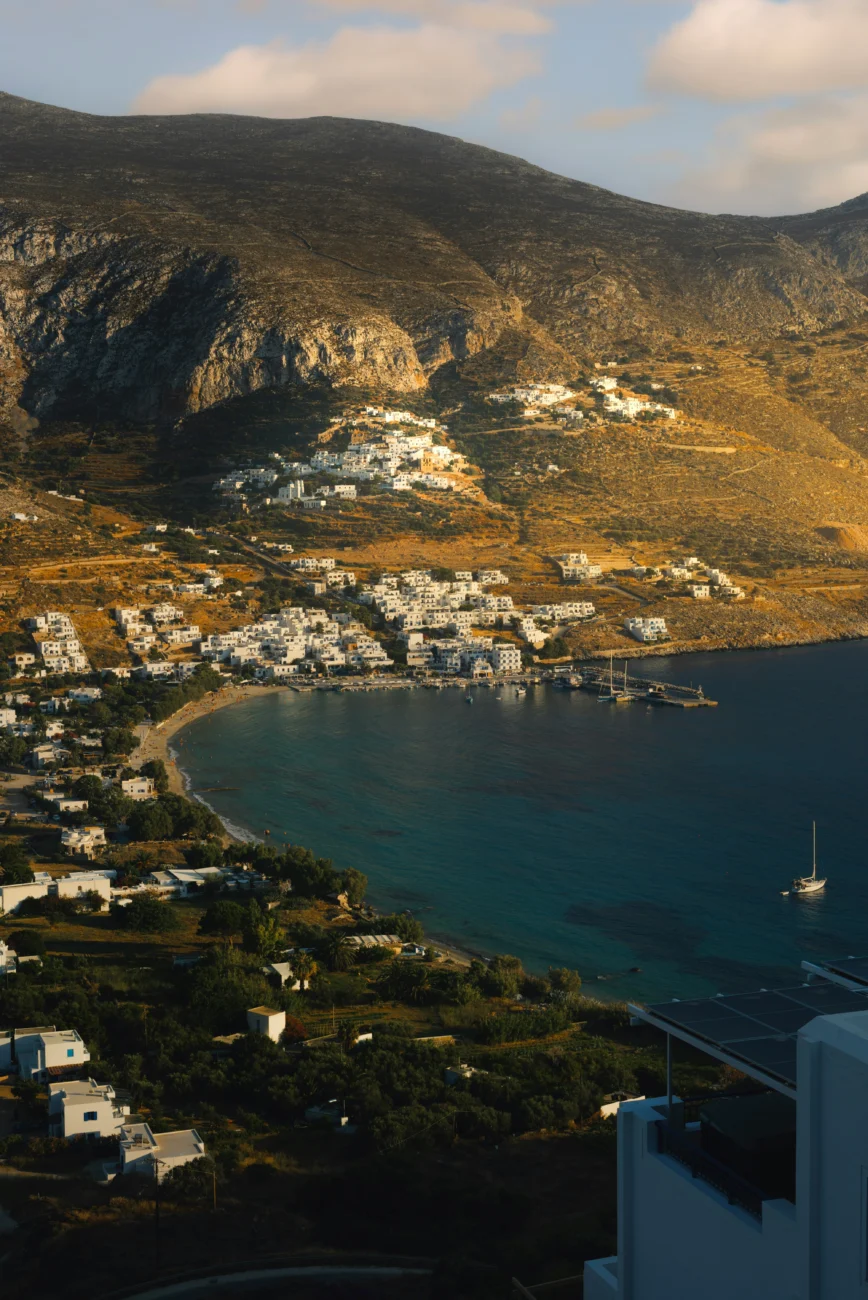
Katapola is the main port on the southwestern coast and the most central base. Ferries from Athens and the larger Cycladic islands arrive here, it is 5.5 kilometres from Chora, and the Express Skopelitis of Small Cyclades Lines runs from here to the neighbouring small islands. Choose Katapola if you want to reach the whole island easily and be near the capital.
Aegiali, also written Ormos Aegialis, is the northern port and the livelier of the 2. Roughly 150 people live here. It has the longest sandy beach on the island, shallow and safe for children, and the closest thing to a resort atmosphere Amorgos offers, with restaurants, bars, beach clubs and shops along the waterfront. Choose Aegiali if you want to walk out of your room onto a good beach and have somewhere to eat in the evening.
Chora, the capital, sits at 350 metres on the northeast side of Mount Prophet Elias with about 400 residents. It is widely held to be the most beautiful of all the Cycladic capitals, a maze of stone paved lanes and steps under a Venetian castle, with 2 squares, the Lower Square known as Loza with its great eucalyptus tree, and the Upper Square. It is 5.5 kilometres from Katapola and 16 kilometres from Aegiali, and the bus serves it regularly.
Tholaria is a mountain village on the hillside of Aegiali Bay, whitewashed and quiet, with walking paths running out of it in every direction.
Langada sits on the same bay beneath the highest mountains on the island. It is 1 of the larger villages, with cafes and tavernas serving proper village food, and the church of Panagia Epanochoriani nearby, celebrated every year on 15 August.
Potamos is a small village above Aegiali split into an upper and a lower half, about 3 kilometres from the port, with the best views over the bay and very few visitors.
Beaches
Aegiali is the widest sandy beach on the island, right at the northern port, shallow and easy for families.
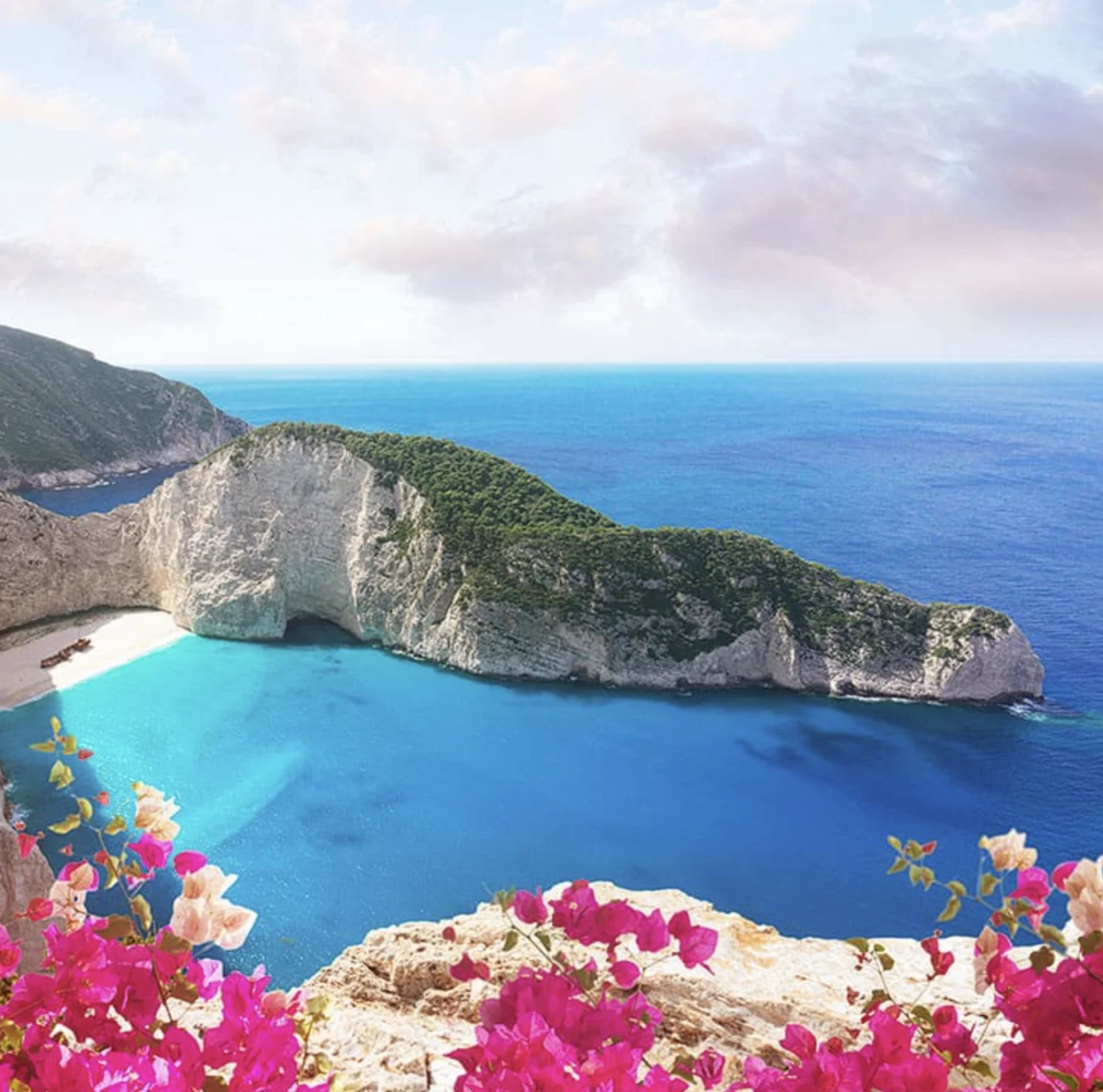
Kalotaritissa is a sheltered natural bay on the southern coast with calm water and the Olympia wreck offshore.
Mouros has dark pebbles, dramatic rock formations and sea caves, and the best snorkelling on Amorgos.
Nikouria is the uninhabited island off the north coast with 3 sandy beaches, reached by boat from Aegiali.
Maltezi and Agia Anna are the 2 small coves nearest Katapola, both reachable by boat taxi.
Getting around Amorgos
A public bus connects Katapola, Chora and Aegiali several times a day and stops within a 10 minute walk of the monastery. It is reliable and cheap, and for many visitors it is enough.
Taxis exist but there are very few of them. Book ahead in July and August.
A hire car or scooter is what opens up the island, particularly the Kato Meria region in the south, where the quieter beaches and the Olympia wreck are, and which the bus does not reach.
Full Guide: Getting Around AmorgosHow to get to Amorgos
There is no airport. Every visitor arrives by ferry.
Ferries run from Piraeus in Athens and from Naxos, Paros, Santorini and the smaller Cycladic islands. Conventional ferries from Athens take about 9 hours and high speed services about 6. Katapola is the primary port and handles most Athens sailings. Aegiali is the secondary port but is busier than that suggests, running up to 28 sailings a week and connecting the Cyclades to the Dodecanese.
Operators confirm the summer timetable between February and April each year, so plan around that. Between June and September book several weeks ahead, because sailings genuinely sell out and there is no alternative way of reaching the island.
Full Guide: How to get to AmorgosBest time to Visit
June and September are the best months. Temperatures are mild enough to walk, the sea is warm and the island is not full. June brings a lot of Scandinavian and French visitors, and September a broader mix.
August is peak. Accommodation is close to fully booked, the ferries are full and the walking is uncomfortable in the heat.
May and October are quieter still and very good for walking, though some businesses will be closed and the ferry timetable thins out.
Amorgos facts and figures
| Capital | Chora |
| Area | 126 square kilometres |
| Length | 32 kilometres |
| Width at the narrowest point | 3 kilometres |
| Population | about 2,000 residents |
| Visitors each year | about 100,000 |
| Ports | Katapola and Aegiali |
| Airport | none |
| Highest point | Mount Krikelos |
Important Contact Numbers for Amorgos
If you are travelling to Amorgos, it is worth keeping a few local numbers close by. The island is relaxed and welcoming, but having the right contact on hand can save you time if you ever need help. Below you will find the numbers we recommend saving before you arrive.
The country code for Greece is +30, and the local area code for Amorgos is 22850.
- Emergency number: 112
- Medical centre, Chora: 22850 71207
- Medical centre, Aegiali: 22850 73222
- Medical centre, Katapola: 22850 71805
- Pharmacy, Chora: 22850 74042
- Pharmacy, Aegiali: 22850 73173
- Police station, Chora: 22850 71210
- Port police, Katapola: 22850 71259
- Port police, Aegiali: 22850 73620
- Post office, Chora: 22850 71250
These numbers cover most situations you might come across during your stay, from a minor health concern to a question about ferry schedules at the port. We always suggest saving the medical centre and port police numbers for the area you are staying in, since each village on Amorgos has its own contact point.
Source: numbers gathered from the official Amorgos tourism guide.
More attractions in Amorgos
Frequently asked questions (FAQ) about Amorgos
What is the best time to visit Amorgos?
June and September offer ideal weather for hiking with mild temperatures and fewer crowds than July and August. June attracts many Scandinavian and French visitors while September sees a mix of nationalities. August sees peak tourism with near full occupancy. The island is quieter during spring and autumn making these excellent times for visitors seeking a more tranquil experience.
Is a car rental necessary on Amorgos?
A car or scooter rental is recommended but not essential. A local bus service connects the main ports of Aegiali and Katapola with Chora however it does not cover all areas or run frequently. Renting a vehicle gives freedom to explore the island’s beaches, villages and remote hiking trails particularly in the southern Kato Meria region which cannot be accessed by bus.
What makes Amorgos different from other Cycladic islands?
Amorgos provides an authentic Greek island experience compared to more popular nearby islands such as Mykonos, Naxos, Paros and Santorini. The island remains largely unspoiled by mass tourism with traditional family run businesses, fair prices and genuine hospitality. Life is calm and close knit yet the island offers significant cultural experiences through its picturesque Chora village, iconic monastery and rich archaeological heritage.
Can I visit the Panagia Hozoviotissa Monastery?
Yes the monastery is accessible and highly recommended. It was built in the ninth century and renovated in 1088. The structure is carved into a steep rock face 300 meters above the Aegean Sea. Access involves climbing 271 to 350 steps carved into the rock. The local bus makes stops about a 10 minute walk from the monastery making it accessible to most visitors.
What are the island’s best beaches?
Aegiali Beach has the widest sandy beach on the island suitable for swimming and relaxation. Kalotaritissa Beach located on the southern coast is a sheltered natural bay known for calm waters and picturesque views making it popular with families and couples. Mouros Beach features dramatic rock formations and dark pebbles with underwater caves ideal for swimming and snorkeling. Nikouria Island accessible by boat features three pristine sandy beaches with crystal clear waters perfect for diving and snorkeling.
How many days do you need in Amorgos?
Four to 5 days is the sensible minimum. The ferry from Athens takes 6 to 9 hours each way, so a shorter trip means spending most of it travelling. With 5 days you can walk the Chora to Aegiali path, visit the monastery, reach the southern beaches and still have a day doing nothing.
How do I get to Amorgos from the UK?
Fly to Athens, then take the ferry from Piraeus, which takes 6 to 9 hours. Alternatively fly to Naxos, Santorini or Mykonos and take a shorter island ferry from there. There are no flights to Amorgos, as the island has no airport.
Is Amorgos worth visiting?
Yes, if quiet is what you want. It has the best walking network in the Cyclades, the most dramatic monastery in Greece and beaches that stay uncrowded in August. It is the wrong choice if you want nightlife, a wide choice of restaurants or an easy journey.