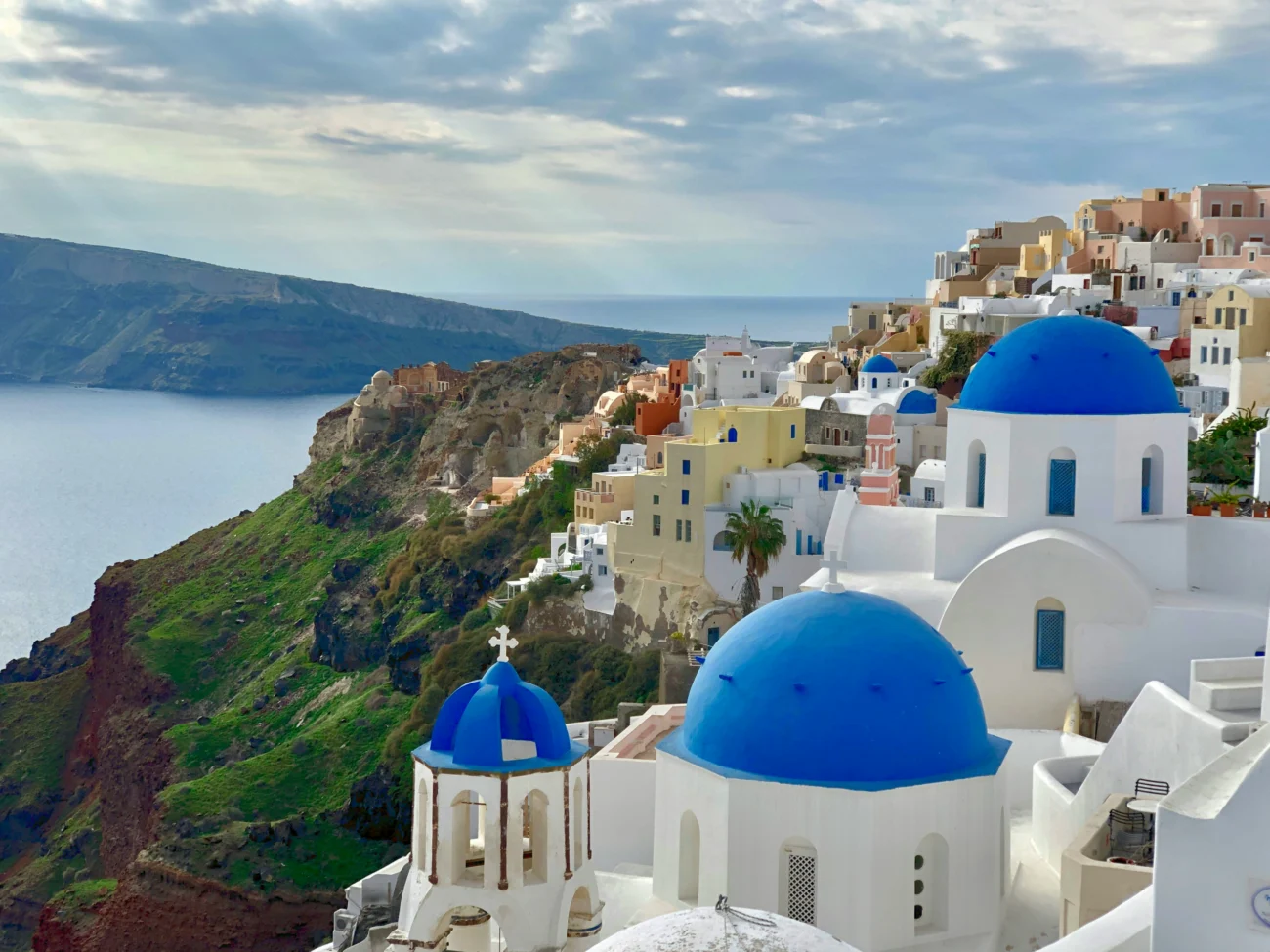
Quick facts
Best subject: the Panagia Hozoviotissa Monastery, a Byzantine monastery built directly into a cliff face, one of the most photographed buildings in the Cyclades.
Best sunset spot: Aegiali and its main beach, where the hillside villages of Tholaria and Lagada catch good evening light over the bay.
Best season for photography: May, June and September, when the light is clear and the walking routes to the monastery and the outlying villages are comfortable.
Golden hour: the monastery cliff is generally at its best in the morning, before the sun moves round and leaves the cliff face in shadow. Coastal and village shots work best in the standard golden hour, the 45 minutes or so before sunset.
Getting around: Amorgos is long and narrow, and its 2 ports, Katapola and Aegiali, sit at opposite ends of the island, so a rental car or scooter makes far more sense than the bus timetable if you want to reach several spots in one day. See getting around Amorgos and Amorgos taxi.
Is Amorgos worth visiting for photography
Amorgos is quieter and wilder than most of the Cyclades, a long, narrow island of bare mountains, cliffside monasteries and villages that still feel properly lived in rather than built for visitors. It is best known internationally as the setting for much of Luc Besson’s 1988 film The Big Blue, shot around Kalotaritissa Bay and Agia Anna near the monastery, and that same dramatic, undeveloped coastline is what makes it worth the extra effort to photograph.
Best photo spots in Amorgos
1. Panagia Hozoviotissa Monastery. Founded in the year 1088 and built straight into a sheer cliff face above the sea, this is the single most photographed sight on the island. Read more in our monastery guide.
2. Agios Pavlos Beach. The beach directly below the monastery cliffs, giving you the chance to frame the monastery, the cliff and the sea in one shot from sea level. See our guide to Agios Pavlos Beach.
3. Kalotaritissa Bay. A remote, sheltered bay at the island’s far eastern tip, one of the settings used in The Big Blue and still one of the least visited corners of Amorgos. See our guide to Kalotaritissa Beach.
4. Chora, Amorgos. The island’s whitewashed hilltop capital, built around a ruined thirteenth century Venetian kastro and a row of old windmills, with views down to the sea on both sides. Read more in our guide to Amorgos’s best villages.
5. Katapola. The island’s main port, a working harbour with 3 connected settlements around the bay and the ancient ruins of Minoa on the hill above. See our Katapola village guide.
6. Tholaria. A clifftop village above Aegiali, close to the ancient acropolis of Vigla and its Roman period rock cut tombs, with wide views back down over the bay. Read more in our Tholaria village guide.
7. The Mouros Beach sea caves. A dramatic stretch of cliffside sea caves on the coast near Mouros Beach, best seen by boat. See the Mouros Beach section of our top 5 caves in Amorgos guide.
8. Aegiali Bay from Tholaria or Lagada. The wide sweep of Aegiali’s beach and harbour, best photographed from higher up in the hillside villages above it. See our Aegiali village guide and our guide to Aegiali’s main beach.
Best time of day to photograph Amorgos
The Hozoviotissa monastery’s cliff is generally photographed in the morning, since many visitors find the cliff face falls into shadow later in the day. Arrive earlier rather than later if the monastery is your main reason for the trip.
For the coast and the villages, the standard rule applies, shoot in the 45 minutes or so before sunset for the warmest light, and stay a little longer for blue hour once the sun has gone down, when Aegiali and the hillside villages above it start to catch the last of the light over the bay.
Best season for photography in Amorgos
May, June and September are the most comfortable months, with clear light and manageable temperatures for the walking involved in reaching spots like the monastery, Vigla and Chora’s kastro.
July and August bring the strongest light along with the meltemi wind, which is worth planning around if you are on a boat near Kalotaritissa or Mouros, since it tends to pick up through the afternoon.
Amorgos is genuinely quiet outside the summer months, and while that can make for atmospheric, empty village photography, many tavernas and some accommodation close for the winter, and ferry connections become less frequent, so a shoulder season visit is generally the more practical choice for a photography trip.
Practical photography tips
Dress modestly for the monastery. Panagia Hozoviotissa is an active monastery, and shoulders and knees need to be covered to go inside, so plan your outfit accordingly if you want photographs of yourself there too.
Expect a lot of steps. The path up to the monastery is a long flight of steps cut into the cliff, and comfortable, grippy shoes make a real difference.
Check before shooting inside the chapel. Photography inside the monastery’s own chapel is sometimes restricted, so it is worth checking with the monks on the day rather than assuming it is allowed.
Check current drone rules before you fly. Greece follows the EU’s common drone regulations, which generally require operator registration for anything over 250 grams, and there are no fly zones around religious sites and archaeological areas such as ancient Minoa above Katapola. Rules can change, so check the current requirements from Greece’s Civil Aviation Authority before your trip.
Plan your fuel and water. Amorgos is a big island to cover by scooter or on foot between spots, with long stretches between villages, so carry more water than you think you need.
Book a local photographer
If you would rather leave the camera work to a professional, a local Amorgos photographer knows the light on the monastery cliff, the quiet corners of Kalotaritissa and the best time to catch each village at its best far better than a first visit ever could.
Explore more of Amorgos
Getting around Amorgos · How to get to Amorgos · Amorgos bus timetable · Amorgos taxi · Amorgos map · Amorgos weather · Best wineries and wine tastings in Amorgos · Best cheese tasting experiences in Amorgos · Best villas with a private pool in Amorgos
Back to the Amorgos island guide.