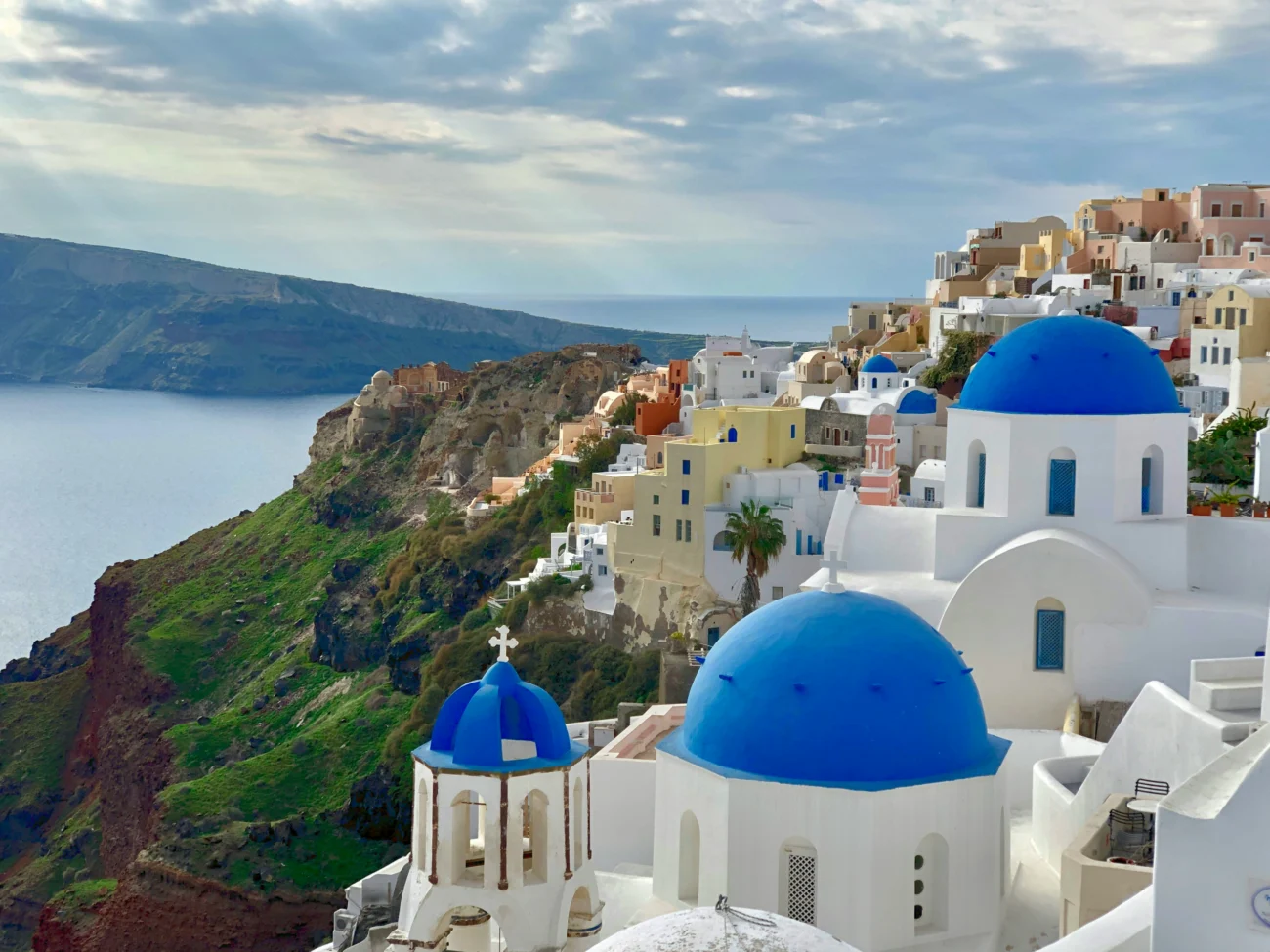
Amorgos does not have a single classic cone shaped volcano like Santorini, but the whole island sits in a very active volcanic and tectonic zone and is full of colourful volcanic rocks and dramatic cliffs shaped by ancient eruptions in the South Aegean Volcanic Arc. This means visitors can enjoy a powerful volcanic landscape in a calm and low key setting.
A. Volcano information
Amorgos lies at the south eastern edge of the Cyclades and forms part of the wider Santorini Amorgos volcanic and tectonic zone, where the African plate sinks under the Aegean plate and has fed powerful eruptions in neighbouring islands over hundreds of thousands of years. On Amorgos this long history appears in steep cliffs, caves and strange rock shapes, with bright white, red, yellow and dark rocks painting the slopes above the deep blue sea. The island itself is quiet and there is no open volcanic crater, but the land is cut by old faults and uplifted layers that remind you that the ground here has moved many times in the past. Recent earthquake swarms in the Santorini Amorgos region show that the deeper system is still active, although daily life on Amorgos remains relaxed and normal for visitors and locals.
B. Location
You can see the volcanic character of Amorgos across the whole island, but it is especially clear around the high spine of mountains such as Krikelos, Profitis Ilias and Korax, where rocky ridges fall straight down to the sea. The cliffs below the main village of Chora, on the way to the Monastery of Panagia Hozoviotissa, show dramatic rock walls and ledges that drop into deep water and make one of the most impressive views in the Cyclades. Coastal areas around Aegiali Bay and Agia Anna beach also reveal layered rocks, small caves and sharp formations that come from a mix of ancient volcanic deposits and later erosion by wind and waves.
C. How to get there
Amorgos is reached by ferry from Piraeus near Athens and from other Cycladic islands such as Naxos and Santorini, and boats arrive at the two ports of Katapola and Aegiali. From Katapola or Aegiali you can use the local bus network, a taxi or a hired car or scooter to reach Chora, the monastery, Aegiali and the main viewpoints over the cliffs and rock formations. Many old footpaths cross the island, and well signed hiking routes let you walk along the ridge, visit ancient sites and look closely at the rocks, so this is one of the best Greek islands for visitors who enjoy walking in a wild landscape.
D. Safety and things to carry
Most visitors only meet the volcanic nature of Amorgos through its cliffs and stony paths, so the main safety issues are common sense ones such as staying away from loose edges, not climbing unstable rock towers and keeping to marked trails. Because the island has steep ground and very little natural shade, you should carry plenty of water, a hat, sunscreen and proper walking shoes, especially if you plan to hike between villages or along the ridge. The wider Santorini Amorgos zone is seismically active and has produced strong earthquakes in the past, so it is wise to follow any local advice or notices about earth tremors, but hotels and authorities are used to this environment and normal trips remain safe for tourists.