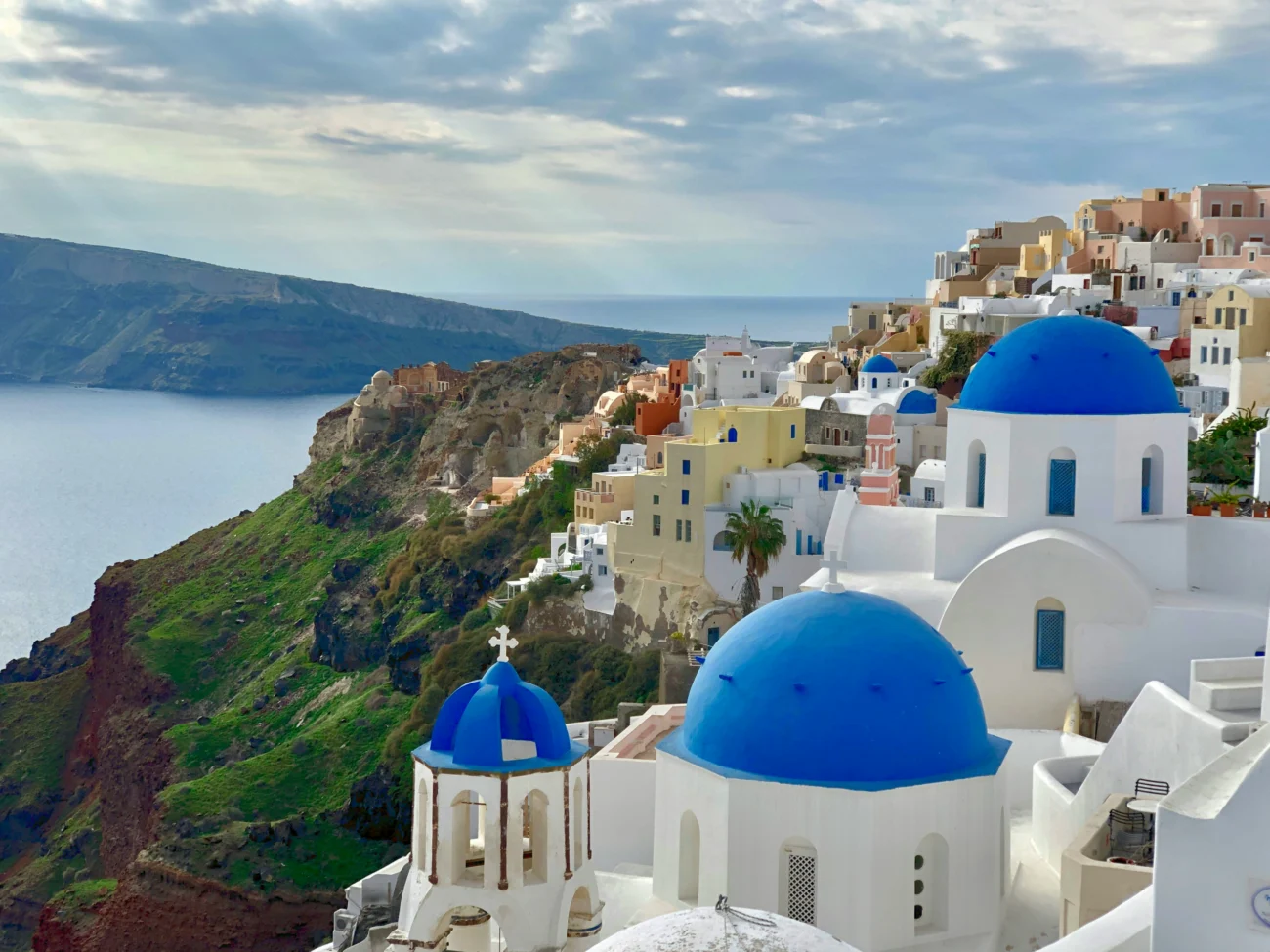
Santorini enjoys a classic Mediterranean climate. This means you can expect long hot dry summers and mild damp winters. The weather plays a huge role in how you experience the island, because conditions change dramatically throughout the year.
The warmest period runs from June to September. During these months, the island experiences high temperatures, brilliant sunshine and almost zero rainfall. July and August are the hottest months, with temperatures often reaching 30 degrees Celsius. The coolest period is from December to February, when temperatures drop to around 14 degrees Celsius and the island sees most of its annual rain.
Wind is also a major factor here. The famous Meltemi wind blows strongly during the peak summer months. This northerly wind helps to keep the heat comfortable, but it can occasionally affect boat trips. Understanding the local climate helps you plan the right clothes and pick the best time for your holiday.
Santorini Weather at a Glance
The island has two very distinct seasons. The hot summer season runs from May to October, while the cooler winter season lasts from November to April.
The weather is hottest in July and August. These two months are also the sunniest and the driest. Rain is incredibly rare during the summer peak. The coolest weather happens in January and February, which is also when rainfall is most likely. The wet season generally spans from November to March, bringing short showers rather than endless rain.
Winds can be strongest during July and August because of the summer breeze. However, you can also experience strong winter breezes between December and February. The general swimming season runs from June through to late October, when the Aegean Sea retains the summer heat.
| Month | Typical conditions | What it is good for |
| January | Cool and often rainy | Quiet photography and local life |
| February | Cool with winter showers | Enjoying empty villages and calm walks |
| March | Warming up slightly but still cool | Wildflowers and hiking |
| April | Mild and increasingly sunny | Easter celebrations and sightseeing |
| May | Warm and bright with rare rain | Comfortable touring and early beach days |
| June | Hot and very sunny | Beach days and guaranteed sunshine |
| July | Very hot and windy | Sunbathing and warm evenings |
| August | Peak heat and strongest winds | Beach clubs and warm sea swimming |
| September | Very warm but less intense heat | Swimming in warm water and exploring |
| October | Mild to warm with occasional rain | Late season sun and quiet beaches |
| November | Cooling down with mixed days | Hiking and exploring without crowds |
| December | Cool and noticeably wetter | Experiencing authentic winter village life |
Santorini Weather by Month
January
January is one of the coolest and wettest months of the year. Daytime temperatures usually hover around 14 degrees Celsius, dropping to around 10 degrees Celsius at night. You can expect about 9 days of rain throughout the month. The sun shines for around 4 hours per day. The sea temperature drops to 16 degrees Celsius, making it too cold for swimming. This is a very quiet travel period. Many hotels and restaurants close for the winter. It is an excellent time for travellers who want to see authentic local life and take dramatic photographs of the empty villages.
February
February remains deep in the winter season. Temperatures are very similar to January, with daytime highs around 14 degrees Celsius. Rainfall begins to decrease slightly, with roughly 7 rainy days expected. Sunshine hours increase to about 5 hours per day. The sea remains chilly at 15 degrees Celsius. The island is still very peaceful. High winds can occasionally sweep across the villages, making it feel colder than the thermometer suggests. This month suits visitors who enjoy brisk coastal walks and do not mind the limited choice of open tavernas.
March
March signals the beginning of spring. Temperatures slowly climb, reaching average highs of 16 degrees Celsius. The chance of rain drops further, and you will start to see more blue skies with around 6 hours of daily sunshine. The sea temperature stays around 15 degrees Celsius, so beach swimming is still off the agenda. The landscape becomes green and covered in wildflowers. This makes March a brilliant month for hiking along the coastal paths. A few more businesses begin to open their doors as the island prepares for the upcoming visitor season.
April
April brings a noticeable change to the climate. The weather becomes much milder, with daytime temperatures reaching up to 19 degrees Celsius. Rain is much less frequent, usually only falling on 3 or 4 days. You can enjoy around 8 hours of sunshine daily. The sea warms slightly to 17 degrees Celsius, though it remains bracing for most swimmers. This is a lovely time for visitors. The villages are lively again, especially around the Easter holiday. The comfortable temperatures make it perfect for exploring archaeological sites without suffering from the intense summer heat.
May
May is often considered one of the most pleasant months to visit. Temperatures rise to a lovely 23 degrees Celsius during the day. Rain is very rare, and you can expect almost 10 hours of bright sunshine daily. The sea temperature reaches 19 degrees Celsius. While still a little cool, many people start swimming during the warmer afternoons. The visitor numbers increase, but the island is not yet overcrowded. The weather is warm enough for sunbathing but cool enough for comfortable hiking and sightseeing. It is an ideal balance for a varied holiday.
June
June marks the start of the true hot summer. Daytime temperatures regularly hit 27 or 28 degrees Celsius. Rainfall is almost non existent during this month. The sun shines brightly for up to 11 hours per day. The Aegean Sea warms up to a very comfortable 22 degrees Celsius, making swimming incredibly popular. This is a busy travel period as the perfect beach weather arrives. The famous sunsets are clear and spectacular. June offers peak summer conditions just before the most intense heat and the strongest summer winds arrive.
July
July is the hottest month on the island. Average high temperatures sit around 29 to 30 degrees Celsius, and it often feels hotter in direct sunlight. You will see virtually zero rain and enjoy 12 hours of uninterrupted sunshine. The sea temperature reaches a delightful 24 degrees Celsius. The famous Meltemi wind often starts blowing in July. This helps to cool the air, making the intense heat much more bearable. July is extremely busy. It is the perfect month for dedicated beachgoers who want guaranteed heat and completely cloudless skies.
August
August shares the peak summer heat with July. Temperatures stay around 29 to 30 degrees Celsius. There is no rain at all, and the sun shines relentlessly. The sea temperature hits its annual peak at 25 degrees Celsius, offering perfectly warm swimming conditions. The Meltemi wind is usually at its strongest during August. This keeps the humidity very low. Because the sea is so warm and the weather so reliable, August is the busiest and most popular month for visitors. You must pack sun protection and stay hydrated while exploring the villages.
September
September is an incredibly popular month for returning visitors. The intense heat begins to soften, with high temperatures settling around 26 degrees Celsius. Rainfall remains very rare, usually limited to a single short shower near the end of the month. The sea holds onto all the summer heat, staying at a wonderfully warm 24 degrees Celsius. The Meltemi wind usually dies down, leaving calm and clear conditions. It is an excellent month for combining lazy beach days with comfortable sightseeing. The crowds lessen slightly, making the narrow streets easier to navigate.
October
October offers mild and very comfortable conditions. High temperatures average around 23 degrees Celsius. You might experience 3 or 4 days of rain as the autumn weather slowly approaches. However, you still get plenty of sunny days. The sea remains warm enough for swimming at 22 degrees Celsius. October is an excellent choice for visitors who want to avoid extreme heat and big crowds. The softer autumn light is fantastic for photography. You can easily spend the morning hiking and the afternoon relaxing by the sea.
November
November sees the transition back to winter. Temperatures drop to an average high of 19 degrees Celsius. Rainfall becomes more common, with around 5 or 6 rainy days expected. Sunshine reduces to about 5 hours per day. The sea cools to 19 degrees Celsius, and only the bravest visitors continue to swim. The island becomes much quieter as many seasonal businesses close down. It is a fantastic time for walking and exploring the local culture in peace. You will need a warm jacket for the evenings as the temperature drops quickly after sunset.
December
December brings true winter weather back to the island. High temperatures sit around 15 degrees Celsius. This is one of the wettest months, with up to 9 days of rain. Sunshine is limited to around 4 hours per day. The sea temperature drops to 17 degrees Celsius. The island feels very authentic and calm. While it is too cold for beach holidays, visitors who want a quiet retreat will enjoy the dramatic winter skies and the peaceful atmosphere. You must pack warm layers and waterproof clothing if you plan to visit now.
Wind and Meltemi
The Meltemi is a strong dry northerly wind that blows across the Aegean Sea. If you visit the Cyclades during the peak summer months, you will almost certainly experience it. This wind is caused by a large pressure difference between the hot Asian landmass and the cooler areas of Europe.
The Meltemi usually begins in July and reaches its peak strength in August. It blows constantly for days at a time. While it can occur at night, the wind is generally strongest during the afternoon and tends to die down slightly as the sun sets.
For visitors, the Meltemi can feel like a mixed blessing. On days when temperatures approach 30 degrees Celsius, this strong breeze acts like natural air conditioning. It prevents the island from feeling unbearably hot and sticky. It keeps the sky completely clear and blows away any humidity. However, a sunny day can still feel very windy. You might need to hold onto your hat, and reading a newspaper on the beach can become impossible.
The wind has a big impact on your beach days. The villages on the western side, which sit high on the cliff edge, take the full force of the wind. However, the eastern and southern beaches are slightly different. The island has a specific geography that helps shelter certain areas. Beaches like Perissa and Kamari sit behind large hills that block the northerly gusts. The water here remains calmer when the Meltemi is blowing hard.
Swimming on the northern beaches can become difficult during a strong Meltemi because the wind whips up choppy waves. Always look for southern facing beaches if you want calm water on a windy day.
Hiking can be wonderful during a Meltemi because the breeze stops you from overheating. You must simply be careful on exposed cliff paths where sudden gusts can catch you by surprise.
Finally, wind direction and strength can affect boat trips and ferries. Fast catamaran ferries are sometimes delayed when the wind reaches very high speeds. Traditional large ferries are rarely affected. You should not worry that your holiday will be ruined by ferry cancellations, but you should always check with your operator for official updates if the sea looks particularly rough.
Weather for Activities
Beach days
For the best beach days, you want high temperatures and plenty of sunshine. June through to September provides guaranteed beach weather. The air temperature stays between 26 and 30 degrees Celsius. Rain is incredibly rare during these months. On very windy days in July and August, the sand can blow around on exposed beaches. To have the most comfortable experience during strong winds, you should visit the beaches on the south and east coasts. These areas are shielded by the mountains, making the heat feel stronger and the sand stay still.
Swimming
The swimming season typically runs from June to October. In June, the water reaches 22 degrees Celsius, which feels refreshing. By August, the sea temperature peaks at 25 degrees Celsius. September is arguably the best swimming month because the water retains maximum heat while the air temperature becomes slightly softer. Wind plays a huge role in swimming comfort. When the northerly wind blows strongly, the sea on the north coast becomes wavy. For the calmest swimming experience, stick to the southern beaches where the water stays flat and clear.
Hiking and walking
The absolute best weather for hiking occurs in April, May, October and November. During these months, temperatures sit comfortably between 19 and 23 degrees Celsius. The sun is bright but the UV levels are much less intense than in midsummer. If you choose to hike during July or August, you must start very early in the morning. The lack of shade on the trails makes afternoon walking extremely hot and difficult. A gentle breeze is always welcome when walking, but be careful on high ridges during strong wind days.
Boat trips and sailing
Boat trips are most enjoyable on clear sunny days with light winds. May, June and September usually offer the calmest sea conditions. During July and August, the strong northerly winds can make catamaran sailing quite bumpy. The waves can splash over the decks on smaller vessels. Most tour boats will change their routes to sail along the sheltered southern coast when the wind is high. Always check your operator for the latest sailing information, as they monitor the sea conditions expertly every morning.
Sightseeing and photography
Exploring the famous villages is most comfortable in May, September and October. The heat is entirely manageable, allowing you to climb the countless steps without exhaustion. The brilliant sunshine highlights the white buildings perfectly. Photographers often prefer the softer light of October and April. In peak summer, the midday sun creates very harsh shadows, and the stone paths radiate heat. If you visit in winter, the dramatic grey skies and sudden rain showers can create incredibly moody and unique photographs of the landscape.
Best Time to Visit for Weather
Choosing the best time to visit depends entirely on what you want to do. The island offers completely different experiences based on the season.
Best months for hot beach weather
If your main goal is to sunbathe and experience deep summer heat, you should visit in July or August. These months guarantee completely cloudless skies and temperatures around 30 degrees Celsius. You will not see a drop of rain. The strong summer wind will keep you from feeling too sticky while you lie on the sunbeds. June is also excellent for hot weather, offering slightly softer heat before the peak summer wind arrives.
Best months for swimming
September is the ultimate month for swimming. The sea has spent the entire summer absorbing the intense heat, reaching a peak of 24 or 25 degrees Celsius. The air temperature is warm but comfortable. The intense summer winds usually calm down in September, leaving the water flat and crystal clear. August is also fantastic for warm water, though the beaches will be much busier. October remains a great choice for late season swimming, as the water stays surprisingly warm.
Best months for hiking
Hikers should target the spring and autumn months. April and May are spectacular because the temperatures sit around 19 to 23 degrees Celsius. The hillsides are covered in green grass and wild flowers. October is equally brilliant for walking, offering warm days and cool evenings. You can hike the famous path between the villages at midday without risking sunstroke. November is also highly recommended for serious walkers who want completely empty trails and do not mind a short rain shower.
Best months for sightseeing
If you want to explore the archaeological sites, visit the museums and wander the narrow streets, aim for May or October. The weather is warm enough for summer clothing during the day, but you will not feel overwhelmed by extreme heat. The light is beautiful, and you can comfortably spend hours outside. April is also fantastic for sightseeing, especially if you want to witness the atmospheric Easter traditions under mild spring skies.
Best months for fewer crowds and milder weather
Travellers who dislike intense heat and large groups should consider March, April or November. During these months, you will need a light jacket, and you might experience occasional rain. However, the mild weather allows you to see the authentic side of the island. You will have the famous viewpoints entirely to yourself. The atmosphere is calm, the air is fresh, and you can appreciate the magnificent landscape in total peace.
What to Pack for Santorini Weather
Packing correctly will make your trip much more comfortable. Your suitcase will look very different depending on when you travel.
If you are visiting between June and September, pack lightweight summer clothing. Bring breathable fabrics like cotton and linen. You will need swimwear, sunglasses and a high quality sun cream. Even in peak summer, it is incredibly useful to pack a light windbreaker jacket. The evening breezes can feel surprisingly cool after a hot day on the beach.
For trips in April, May or October, layers are essential. Bring short sleeve tops for the warm sunny afternoons, but ensure you have a warm jumper and trousers for the evenings. The temperature drops noticeably as soon as the sun goes down. A light rain jacket is a sensible addition, just in case you catch a short spring or autumn shower.
Winter visitors travelling between November and March must pack for colder weather. Bring a warm coat, waterproof shoes and thick jumpers. While you will still see the sun, the wind can make the air feel very chilly. You will not need swimwear, but you will certainly need an umbrella.
What is the hottest month in Santorini?
July and August are the hottest months. The average daytime temperature reaches around 29 to 30 degrees Celsius. On completely clear days with no wind, the heat can feel even stronger. The intense sunshine makes these months perfect for dedicated beach holidays.
Does it rain in Santorini during summer?
It is extremely rare to see rain during the peak summer months. June, July and August usually record zero rainy days. The landscape becomes very dry. You can confidently plan outdoor dinners and boat trips without worrying about summer showers.
Is the sea warm enough for swimming in May?
In May, the sea temperature is around 19 degrees Celsius. This is generally too cool for a long relaxed swim. However, on hot sunny afternoons, a quick dip can feel incredibly refreshing. Most visitors prefer to wait until June for proper beach swimming.
When does the Meltemi wind start blowing?
The strong northerly wind typically begins in July and blows most frequently during August. It can last for a few days at a time. The wind is completely normal and helps to keep the extreme summer heat at a comfortable level.
Is Santorini warm in October?
Yes, October is wonderfully warm. Daytime temperatures often reach 23 degrees Celsius. The sea remains warm from the summer, making it a great month for swimming. You might see a few cloudy days or short showers, but it is generally a fantastic time to visit.
What is the coldest month on the island?
January and February share the lowest temperatures. The daytime high is usually around 14 degrees Celsius, dropping to 10 degrees Celsius at night. These are also the wettest months, so you will need warm clothes and a waterproof jacket.
Will the wind cancel my ferry to Santorini?
Large conventional ferries are very rarely cancelled because of the wind. Smaller fast catamaran ferries are more sensitive to choppy waves. If the wind is extremely strong, fast ferries might be delayed for safety. Always check with your ticket provider for live updates.
Can I sunbathe in April?
You can easily sunbathe on a sheltered beach during a sunny afternoon in April. The temperature often reaches 19 degrees Celsius. However, the weather can change quickly. You will definitely need warmer clothes for the evening, and the sea is too cold for swimming.
Are there mosquitoes on the island?
Mosquitoes can be present, particularly on calm warm evenings from May to September. They are less of an issue when the summer winds are blowing strongly. It is always sensible to pack a standard repellent for your evening meals.