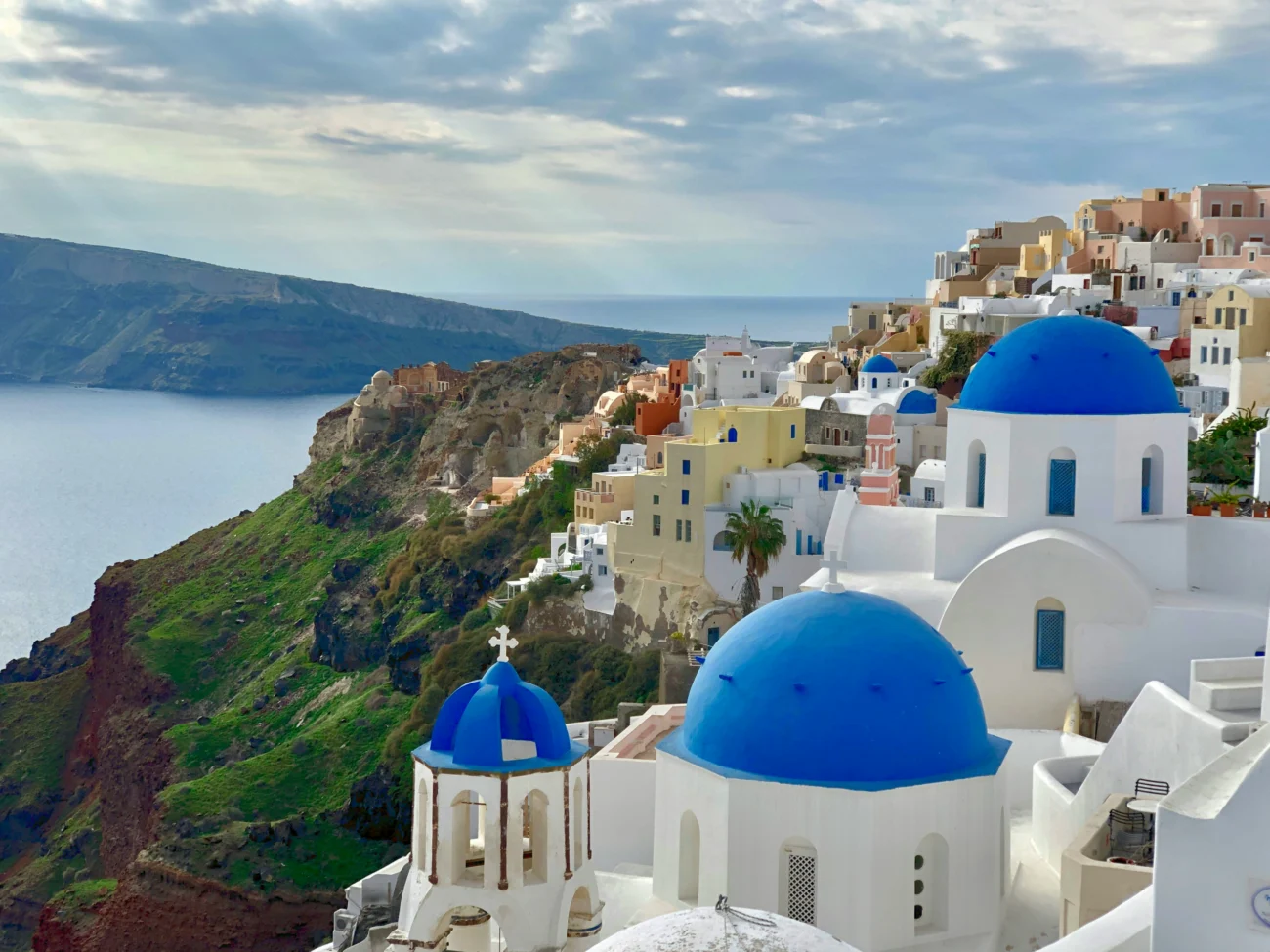
Santorini is the most photographed island in the world. The caldera, the blue domes, the cliff-top villages glowing in the last light of the evening: these images have circled the globe so many times that arriving on the island can feel almost like visiting a place you already know. What the photographs never show is the food. And the food, shaped by one of the most extraordinary agricultural environments on earth, is quietly remarkable.
The volcanic soil of Santorini produces ingredients of exceptional quality and entirely distinctive character. Tomatoes here have a lycopene content unlike those grown anywhere else, concentrated and sweet and almost wine-like in their intensity. The fava split peas, grown on the island for over three thousand years, carry an earthy sweetness entirely their own. The Assyrtiko grape, drawing minerals from volcanic rock in the driest farming conditions in Greece, produces white wines that have become benchmarks for the entire Mediterranean. And from the island’s goats and sheep, grazing on a landscape of pumice, wild herbs and sea fennel, comes Chlorotyri, the only cheese in the world that belongs entirely and exclusively to Santorini.
Chlorotyri is a fresh, soft, spreadable goat’s milk cheese of remarkable delicacy. Made in small batches by local producers, it has a short shelf life of only a few days, which is why it rarely travels further than the island’s own kitchens and taverna tables. Its flavour is clean and slightly sour, a direct reflection of the island’s mineral-rich milk and its simple, unadorned production method. It is the centrepiece of the traditional Santorini salad, replacing feta in a way that makes the familiar feel entirely new. In 2024, the Cycladic cheesemaking tradition was inscribed on the National Inventory of Intangible Cultural Heritage of Greece, recognising a living dairy culture that Santorini carries with the same volcanic intensity it brings to everything it produces. These are the five best experiences.
Table of Contents
1. Anydro Farm Tour with Cooking Class and Wine Tasting
Overall Information
The Anydro Farm Tour is the single most complete and most authentically Santorinian food experience available on the island, combining a visit to a working organic farm, a guided tasting at a family winery, a hands-on cooking class and a full introduction to the island’s agricultural heritage in a single five and a half hour experience. Anydro Farm is one of the most celebrated small food producers in Santorini, producing and exporting a range of local organic products including its tomato caviar paste, which has attracted the attention of international food writers and critics since its launch. The farm sits in the virtually undiscovered south-eastern part of the island, accessed by a dirt road and surrounded by pumice stone canyons and traditional farmlands that look entirely unchanged from how they would have appeared a century ago. The experience is led by Petros Oikonomou, the producer, who introduces visitors to the extraordinary reality of waterless farming on Santorini: how cherry tomatoes, fava beans, white aubergines and capers are grown without irrigation in volcanic soil that holds everything a plant needs in its mineral content alone. Local cheese, including Chlorotyri when available from local producers, appears throughout the tasting component of the tour paired with barley rusks, local olive oil and the island’s own wines at Canava Gavalas winery. The cooking class that follows puts everything in the context of a real Santorinian meal, and the combination of farm, winery, kitchen and table in a single experience is one of the finest food days available anywhere in the Cyclades.
Location and How to Get There
The Anydro Farm Tour departs from the bus station in Fira, 847 00, Santorini, Greece, with transport by air-conditioned minivan to Megalochori village, Canava Gavalas winery and the Anydro Farm. The tour is operated by Argyros Travel and is bookable at argyrostravel.com. The meeting point is the bus station in Fira and hotel pickup is available from selected hotels on the island. The experience runs for approximately five and a half hours and is available with groups of up to ten people. Advance booking is essential, as the small group size means places fill quickly throughout the season. The tour operates in all weather conditions and requires a moderate amount of walking on uneven terrain. Comfortable shoes, sun protection and a light jacket for the evening are recommended.
Services and Experiences
The experience begins in Megalochori, Santorini’s most beautiful traditional agricultural village, where the group walks through the kadounia, the stone labyrinthine pathways that run between the Canaves, the traditional underground wine cellars carved into the volcanic rock. The atmosphere in Megalochori is the Santorini that the postcard images entirely miss: intimate, intensely local and entirely focused on the business of growing things in difficult conditions. At Canava Gavalas, one of the island’s oldest family-run wineries following centuries of Santorinian tradition, a tasting of four local wine varieties is served alongside local delicacies including Greek cheese and barley rusks. The Chlorotyri, when it appears at this table paired with a glass of Assyrtiko, is one of those combinations that makes you understand immediately why certain foods and certain wines belong to the same landscape. The farm tour that follows is a complete education in volcanic agriculture, and the cooking class puts everything into practice, teaching participants to make tomatokeftedes, traditional Greek salad with local tomatoes and cheese, fava and other seasonal dishes directly from ingredients harvested from the farm that morning.
2. Santorini Family Farm Food and Wine Tour, Megalochori
Overall Information
The Santorini Family Farm Food and Wine Tour is a guided small-group experience operated by Argyros Travel that combines the agricultural heart of Santorini with an introduction to its food and wine culture in a format that is accessible, educational and genuinely enjoyable from the first minute. The tour visits Megalochori village, the underground Canaves wine cellars, Canava Gavalas winery and a working family farm, giving participants a complete picture of how food and drink are produced on an island that makes extraordinary things happen in conditions of extreme austerity. The cheese component of the experience is woven throughout the tasting, with local Santorinian cheese including Chlorotyri served alongside the island’s wines, rusks, tomatoes and capers in combinations that are entirely authentic and entirely specific to this place. The experience is rated 10 out of 10 by visitors and is consistently described as one of the most memorable food experiences available on the island.
Location and How to Get There
The tour departs from the bus station at Fira, 847 00, Santorini, Greece. Hotel pickup is available from selected hotels. Bookings are made through Argyros Travel at argyrostravel.com and through Expedia and Pelago at standard travel booking platforms. The experience lasts approximately five and a half hours and accommodates groups of up to ten people. Advance booking is strongly recommended throughout the summer season. The tour operates in all weather conditions and is not wheelchair accessible. Comfortable shoes, sun protection and layered clothing are recommended.
Services and Experiences
The tour focuses on the experience of Santorinian food culture from the ground upwards, beginning with the agricultural landscape of Megalochori and the traditional wine cellars before moving to the winery for the tasting and then to the farm for a hands-on encounter with the island’s unique growing conditions. Local cheese is served throughout the tasting with wine and traditional accompaniments, and the guide explains the specific qualities of Chlorotyri and its role in Santorinian cooking, the relationship between the volcanic soil and the flavour of the island’s dairy products and the best ways to enjoy each cheese variety in the context of a meal. The combination of cultural context, wine education and genuine food tasting makes this one of the most rounded and most informative cheese-adjacent experiences available on the island for visitors who want depth alongside pleasure.
3. Canava Gavalas Winery Tasting, Megalochori
Overall Information
Canava Gavalas is one of Santorini’s oldest and most respected family wineries, with a history rooted in the traditional Santorinian method of cave-based wine production that stretches back to a tradition of centuries. Located in Megalochori village, the winery produces a range of wines from the island’s indigenous Assyrtiko, Athiri and Aidani grape varieties using techniques that reflect the extraordinary volcanic terroir of Santorini in every glass. It is also one of the most reliable and most enjoyable places on the island to encounter Chlorotyri in its most natural context: paired simply with local wine, olive oil and barley rusks in the cool, cave-like atmosphere of a traditional Santorinian Canava. The cheese pairing at Gavalas is not an afterthought or a commercial add-on. It is a continuation of a tradition in which local cheese and local wine have always been served together because they come from the same place, the same animals grazing on the same volcanic landscape that produces the same mineral-rich flavours in everything it grows.
Location and How to Get There
Canava Gavalas Winery is located in Megalochori, Santorini, 847 00, Greece. The telephone number is 0030 22860 82552 and the website is gavalas-winery.gr. Megalochori is approximately eight kilometres south of Fira, reachable by hire car or scooter in approximately fifteen minutes, or by the regular bus service that runs from the main bus station in Fira. The winery is open for tastings throughout the day during the summer season. Advance booking for private or group tastings is recommended and is available through the website.
Services and Experiences
The Canava Gavalas tasting experience is one of the most atmospheric in Santorini, conducted in the traditional underground cave cellars where the volcanic stone walls keep the temperature perfectly stable throughout the year and where the smell of wine and stone creates an immediate and powerful sense of place. The tasting covers the full range of Gavalas wines, from the crisp and mineral Assyrtiko through the floral Athiri to the gold-coloured Nykteri and the deep, amber Vinsanto, and at each stage local cheese and traditional accompaniments arrive at the table. The Chlorotyri, served simply on a piece of barley rusk with a drizzle of the island’s own olive oil, tastes exactly right in this setting: the slight sourness of the cheese and the mineral precision of the Assyrtiko find a balance that could only exist here, on this island, with these specific ingredients. For the single most direct and most beautiful introduction to Santorinian cheese in its natural context, this is the experience to seek out.
4. Metaxi Mas Restaurant, Exo Gonia
Overall Information
Metaxi Mas is the restaurant that serious food lovers visiting Santorini consistently place at the top of their lists, and it has maintained that position for long enough that the reputation is entirely earned. Located in the quiet village of Exo Gonia in the island’s agricultural heartland, away from the cliff-top spectacle of Oia and the tourist energy of Fira, Metaxi Mas serves the most honest and most deeply rooted Santorinian food available at any table on the island. This is not a restaurant that cooks to impress visitors with views or design. It cooks to express, with complete confidence and complete skill, the food that has always been made on this island from these ingredients. Chlorotyri appears on the menu in its most proper forms: in the traditional Santorini salad alongside the island’s own tomatoes, capers and barley rusk, and as a standalone meze with olive oil and fresh herbs. The rabbit stew with eggs and kefalotyri, one of the island’s most traditional dishes, arrives with the cheese woven into the sauce in a way that adds a salty, umami depth entirely its own. This is the Santorinian cheese experience in the finest possible kitchen context.
Location and How to Get There
Metaxi Mas is located in Exo Gonia village, Santorini, 847 00, Greece. The telephone number is 0030 22860 31323. Exo Gonia is approximately five kilometres south-east of Fira, reachable by hire car or taxi in approximately ten minutes. The restaurant is open for lunch and dinner throughout the season. Reservations are absolutely essential, particularly during July and August when the island is at peak capacity and this restaurant fills weeks in advance. Book as early as possible and confirm your reservation directly by telephone on the day of your visit.
Services and Experiences
The menu at Metaxi Mas is a masterclass in Santorinian food culture, built from ingredients that the kitchen sources directly from island producers and farmers including the Nomikos Estate, the 2024 Gastronomos Award winner for traditional production, which supplies fava beans, pistachios and tomatoes from native seeds grown with minimal intervention. The cheese selection draws from local Santorinian producers, with Chlorotyri appearing in the traditional salad and as a standalone meze with a directness and simplicity that immediately communicates its quality. The apochti, the island’s own version of cured pork loin, seasoned with black pepper and cinnamon and served alongside local cheese and wine, is one of the finest meze combinations on the island. The tomatokeftedes made with the farm’s own cherry tomatoes, the fava served warm with olive oil and capers from the island’s own caper plants, and the desserts built around local honey and dried fruit create a meal that is entirely of Santorini and entirely magnificent. No visit to the island is complete without it.
5. Nomikos Estate, Pyrgos
Overall Information
The Nomikos Estate is the most significant producer of traditional Santorinian agricultural products on the island and the recipient of the 2024 Gastronomos Quality Award for traditional production, recognition that reflects its extraordinary commitment to growing local varieties of fava beans, pistachios and cherry tomatoes from native seeds with minimal intervention, following farming practices that are as close to the traditional Santorinian agricultural method as any commercial operation on the island achieves. While the Nomikos Estate is principally celebrated for its agricultural rather than its dairy production, it occupies a central position in the Santorinian food experience because it supplies the finest kitchens on the island with the ingredients that sit alongside local cheese on every table that matters. The tomatoes that appear under the Chlorotyri in the Santorini salad, the fava that accompanies the cheese meze and the capers that decorate every traditional plate were grown in this volcanic soil, and visiting the estate gives you the most direct possible understanding of the extraordinary agricultural conditions that give Santorinian cheese its specific character and context.
Location and How to Get There
Nomikos Estate is located in Pyrgos, Santorini, 847 00, Greece. Pyrgos is the highest village on the island, approximately seven kilometres south-east of Fira, reachable by hire car or scooter in fifteen minutes or by the regular bus from Fira bus station. Contact the estate directly before visiting to confirm current opening hours and the availability of a farm visit or product tasting, as the estate operates primarily as a working farm and producer. The estate’s products are widely available in specialist food shops across the island and at the finest restaurants, making it possible to encounter the full range without a visit to the property if timing or availability is difficult.
Services and Experiences
A visit to the Nomikos Estate provides an extraordinary context for the entire Santorinian food experience. Walking through the volcanic farmland in which the island’s cherry tomatoes, fava beans and capers are grown, understanding how waterless farming in pumice-rich soil concentrates flavour to a degree entirely impossible in conventionally irrigated agriculture, transforms the way every subsequent Santorinian meal tastes. The estate offers product tastings of its full range alongside local cheese, olive oil and wine, creating a tasting experience that encapsulates the volcanic terroir of Santorini in a single spread. The combination of the estate’s award-winning tomato products, the island’s wild capers, local honey and Chlorotyri served with a glass of Assyrtiko is as pure and as complete a statement of Santorinian food culture as you will encounter anywhere on the island.
The Cheeses of Santorini: A Quick Guide
Santorini’s cheese culture is smaller in volume than that of Naxos, Mykonos or Paros, but what it produces is entirely its own and entirely worth seeking out. Here is what to look for.
- Chlorotyri is the only cheese that belongs entirely to Santorini and to no other island. Made from goat’s milk in small batches by local producers, it is soft, spreadable and slightly sour, with a clean, mineral freshness that reflects the volcanic landscape and wild herbs on which the island’s goats graze. It has a shelf life of only a few days, which means it is rarely found outside the island and is always best eaten on the day of production. It is the essential ingredient in the traditional Santorini salad, replacing feta in a way that makes every other version of the dish feel incomplete.
- Kefalotyri appears in the island’s most traditional dishes, most notably in the rabbit stew with eggs and cheese that is one of Santorini’s oldest and most characterful recipes. It adds a salty, concentrated depth to sauces and slow-cooked dishes that no other cheese achieves quite as effectively.
- Apochti-paired cheese mezes are a distinctive Santorinian tradition, with local cheese served alongside the island’s own cured pork loin in a combination that brings together the two most characterful preserved foods on the island in a single, deeply satisfying meze plate.
- Feta in the volcanic context takes on additional meaning on Santorini when it is served with the island’s own tomatoes, capers and olive oil, the specific quality of those accompanying ingredients elevating a familiar cheese into something that tastes genuinely and memorably of this place.
Tips for Cheese Lovers Visiting Santorini
- Order the Santorini salad at every traditional taverna you visit. The version made with Chlorotyri rather than feta costs slightly more and is entirely worth the difference. When it appears on the menu, it signals immediately that the kitchen is sourcing locally and taking its ingredients seriously.
- Book the Anydro Farm Tour if you want the most complete and most satisfying single food day available on the island. The combination of farm, winery, cooking class and table in five hours is exceptional value and exceptional depth.
- Visit Canava Gavalas in Megalochori for the most atmospheric and most traditional cheese and wine pairing on the island. The Chlorotyri with Assyrtiko tasted in those underground stone cellars is one of the finest simple combinations available anywhere in the Cyclades.
- Reserve at Metaxi Mas as early as possible. This is the finest traditional restaurant on the island and it fills completely throughout the summer. Book before you leave home.
- Look for Chlorotyri at the local markets in Fira and Pyrgos early in the morning, when the day’s production from local family producers arrives fresh. It sells quickly and is gone by midday.
- Try the apochti and cheese meze at any traditional taverna in the island’s inland villages, particularly Pyrgos, Megalochori and Exo Gonia, where the food is less tourist-facing and the ingredients more reliably local.
- The best time to visit Santorini for the full cheese experience is between May and October, with early summer offering the finest and most plentiful Chlorotyri production and late summer bringing the harvest season that gives the island’s entire food culture its greatest intensity.
Santorini will dazzle you before you taste anything. The view from the caldera at sunset, the white walls, the deep blue of the sea far below: it is as beautiful as you were told it would be. But stay past the photographs. Go south to Megalochori. Sit in a Canava with a glass of Assyrtiko and a piece of Chlorotyri on a barley rusk and olive oil. Go to Exo Gonia for dinner at Metaxi Mas and let the kitchen show you what this volcanic soil actually produces when someone knows exactly what to do with it. The view from the caldera is magnificent. The food, for those who seek it, is extraordinary.