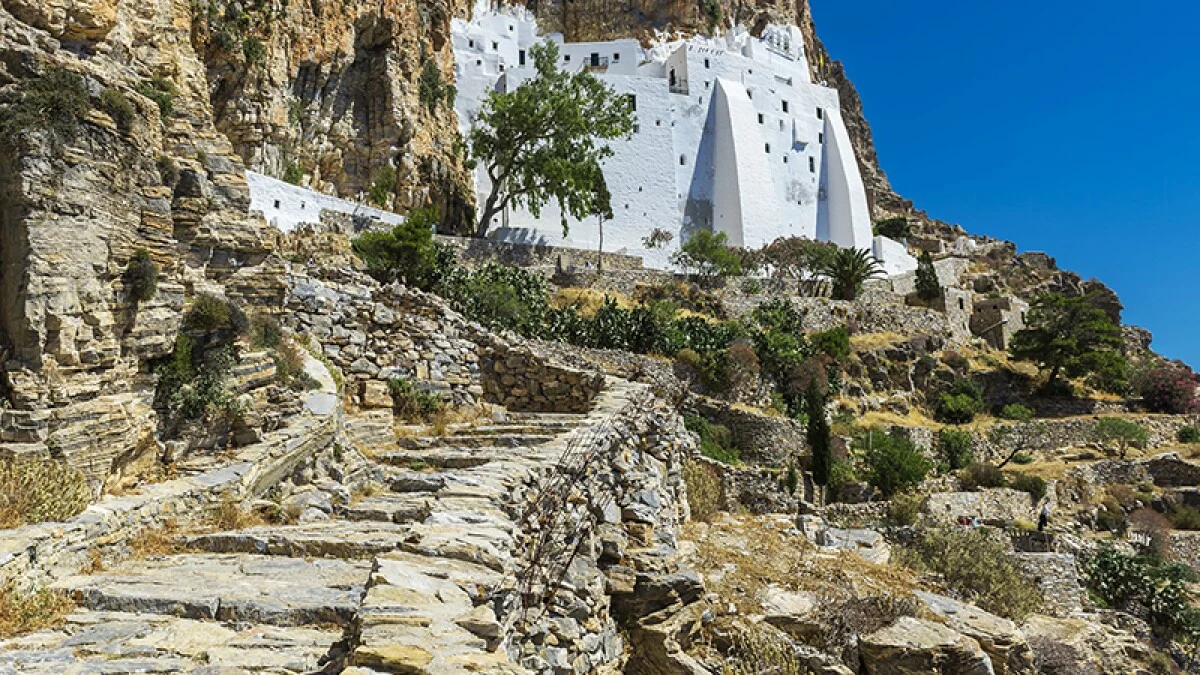
Panagia Hozoviotissa Monastery
About
The Panagia Hozoviotissa Monastery is the second oldest active monastery in Greece, built in 1017 and renovated in 1088 by Byzantine Emperor Alexios I Komnenos. This 11th century Orthodox monastery clings dramatically to a sheer cliff face 300 metres above the Aegean Sea on the island of Amorgos. The monastery was constructed to house and protect a sacred icon of the Virgin Mary believed to have miraculously arrived from Palestine on an unmanned boat. The building is remarkably engineered with eight levels carved and built directly into the rock, resembling a chest of drawers from certain angles. Only 40 metres long and 5 metres wide, it contains 72 rooms including monastic cells, kitchens, chapels and treasuries. Today, three monks serve as guardians of this architectural marvel and welcome visitors with hospitality and respect. The monastery remains an active religious site and one of the most important ecclesiastic monuments in Greece. For most visitors to Amorgos, this is an absolute must see attraction.
Highlights
- Dramatically cliffside architecture built directly into the rock face 300 metres above the Aegean Sea
- Ancient religious icon of Panagia (Virgin Mary) dating to the 15th century with sacred history from Palestine
- Eight interconnected levels of the monastery connected by narrow stone staircases carved into the rock
- Panoramic Aegean Sea views from the monastery balconies and highest chapel windows
- Warm monastic hospitality where monks serve traditional raki, loukoumi sweets and Greek coffee
- Ecclesiastical relics exhibition displaying manuscripts, gospels, vestments and religious treasures from the 10th to 19th century
- Master builder’s iron chisel, a sacred relic said to have miraculous significance in the monastery’s placement
- 350 stone steps leading upward with views at every turn creating a physical journey
Where it is
The monastery is located on the steep southern coast of Amorgos, built dramatically into the cliff face 300 metres above sea level. It is positioned between Chora village and Agia Anna beach. The monastery is approximately 2 kilometres south of Chora, the main town. You can see the white monastery clinging to the rock face when looking south from Chora. It is visible from the sea as a patch of bright white against the dark rock. From Chora, the monastery is downhill approximately 20 to 30 minutes walking time depending on fitness level.
Getting there
By Car
From Chora, drive south toward Agia Anna beach following signs for the monastery. Park your car or motorcycle at the monastery gates. Climb the 300 paved stone steps upward to reach the monastery entrance. The walk from parking to entrance takes 10 to 15 minutes depending on fitness level and pace.
By Taxi
Book a taxi from Chora or any accommodation. The taxi driver can take you to the monastery parking gates. From there, climb the 300 stone steps to the monastery entrance. Taxis are available at Chora main square or you can ask your accommodation to arrange one. Typical taxi fare is 15 to 20 euros from Chora.
By Ferry
Ferry service operates from Naxos and Paros to Amorgos ports at Katapola and Aegiali. Journey times are 2.5 to 4 hours. From the ferry ports, you need to arrange transport by bus, taxi or car to reach Chora. Then proceed to the monastery by car, taxi or on foot.
By Public Transport
The KTEL public bus service connects Katapola ferry port and Aegiali to Chora. Specific buses run from Chora to the monastery and Agia Anna beach at 10:15, 12:00, 13:15, 16:15 and 18:15. The bus stops at the monastery gates. From the gates, climb the 300 stone steps to reach the entrance.
Opening hours
Monday to Sunday: 08:00 to 13:00 and 17:00 to 19:00. The monastery is closed from 14:00 to 17:00 each day. Winter hours may vary, so it is advisable to call ahead.
Tickets
Entry to the main monastery areas is free. There is a small 3 euro fee to visit the museum section and the ecclesiastical relics exhibition. You do not need to purchase tickets in advance. Simply arrive during opening hours and pay the fee at the entrance if you wish to visit the museum.
Best time to visit
October through May offers comfortable climbing temperatures and fewer crowds. Early morning visits at sunrise provide golden light and solitude before daily visitors arrive. The monastery celebrates on November 21st with the Presentation of the Virgin Mary festival, featuring processions and traditional feasting. Spring and summer offer warm weather and clear views of the Aegean Sea, though crowds are significantly larger.
What visitors say
Visitors consistently praise the Panagia Hozoviotissa Monastery as an awe inspiring spiritual experience that justifies every physical effort required to reach it. The monastery holds an exceptional 4.8 out of 5 rating on TripAdvisor with over 1,200 reviews, with 86 percent rating it as excellent or very good. Visitors frequently describe the climb as challenging but rewarding, with the 300 steps becoming less daunting once inside the incredible interior. Many travellers report feeling deeply moved by the sacred atmosphere, ancient architecture and breathtaking panoramic views. The warm hospitality of the monks who serve raki and sweets is consistently mentioned as memorable and genuine. Most visitors appreciate the dress code requirements as appropriate respect for the religious site. Common themes in reviews include the monastery being a transcendental place, a work of art, and worth every step regardless of religious beliefs. Some visitors mention the summer heat making the climb strenuous, but the views and spiritual experience override any physical discomfort. Visitors also appreciate that the site remains relatively uncommercialised and authentic compared to other popular tourist attractions.