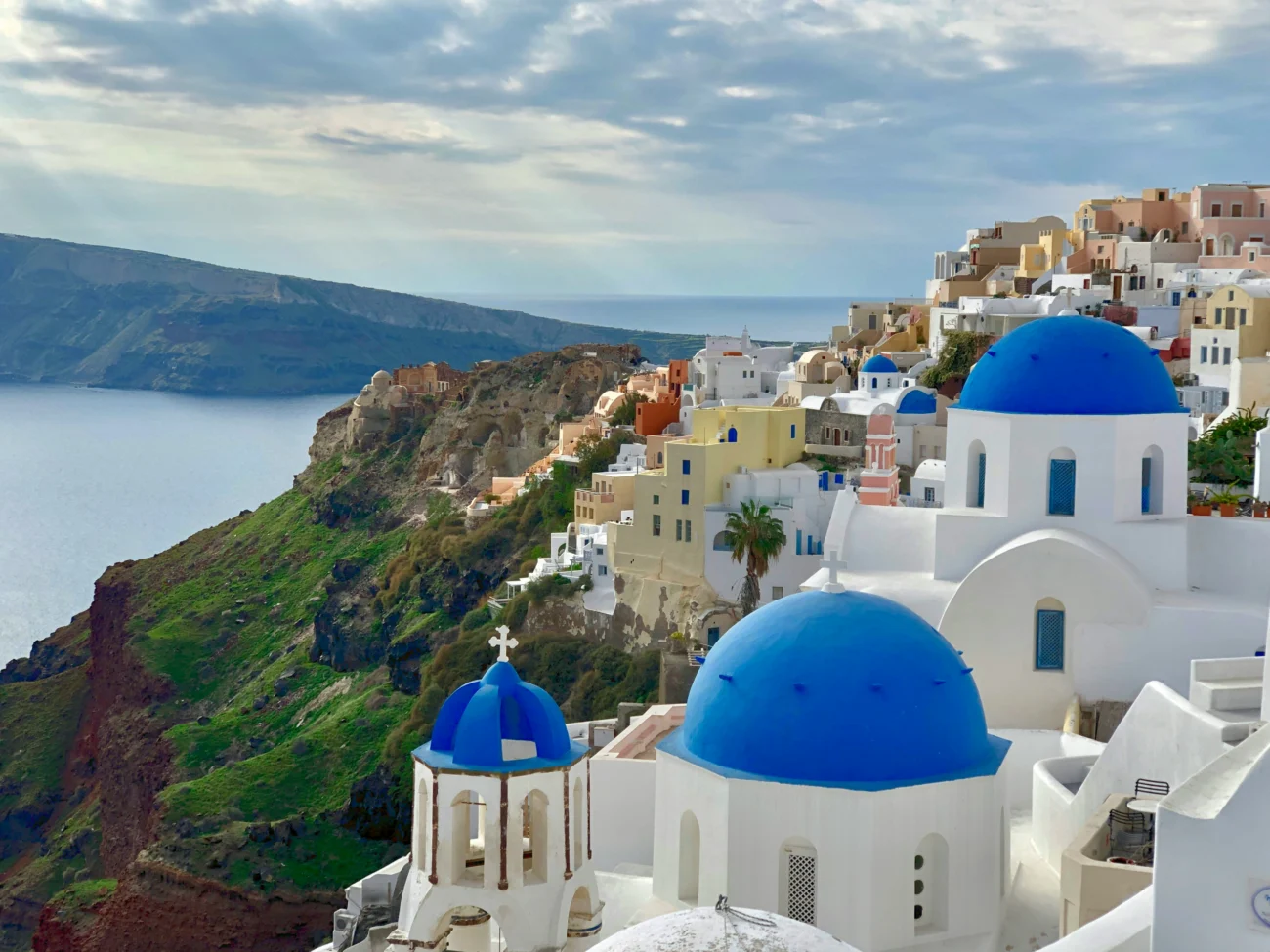
At a glance: Northeastern Amorgos, on a hillside about 3 kilometres north of Aegiali port and around 18 kilometres from Chora, at an altitude of 182 metres. A small, whitewashed village with archways and narrow cobbled alleys, built near the acropolis of the ancient city of Aegiali. Best suited to travellers who want genuine village life, sweeping views over the bay below and a real taverna scene without the crowds of the coast.
Is Tholaria worth visiting
Tholaria offers a proper hillside alternative to staying down at the port, and it rewards the short climb up from Aegiali. Whitewashed houses, stone archways and cobbled streets make up a village that still feels lived in, with residents mainly working in agriculture and traditional trades rather than tourism. The name comes from vaulted tombs of the Roman period found in the area, and the village stands close to Vigla, the acropolis of the ancient city of Aegiali, with a history of habitation stretching back to the 10th century BC. It suits travellers who want quiet, authentic village life with genuinely good views over Aegiali and Kampos bay below.
Highlights
- Sweeping views over the bay of Aegiali and Kampos from the village’s hillside position
- Traditional Cycladic architecture, with archways, whitewashed houses and cobbled streets
- Proximity to Vigla, the acropolis of the ancient city of Aegiali, with habitation dating back to the 10th century BC
- The Roman period vaulted tombs that give the village its name
- A genuine, lived in atmosphere, with locals mainly engaged in agriculture and traditional professions
A village named for Roman tombs, built on an ancient acropolis
Tholaria takes its name from the vaulted tombs, known as tholoi, dating from the Roman period and found in the surrounding area. That burial history sits alongside a much longer story of settlement here, with archaeological evidence pointing to habitation since the 10th century BC. The village is built close to Vigla, the hill that served as the acropolis of the ancient city of Aegiali, giving Tholaria a genuine claim to some of the oldest continuous settlement history on this side of the island, well before the modern port below it ever developed.
Where Tholaria is
Getting to Tholaria
From Aegiali: Tholaria is about 3 kilometres away, a short 10 minute drive uphill, or a walkable climb for those who prefer it.
From Chora: Around 18 kilometres away.
By bus or taxi: See getting around Amorgos and Amorgos taxi for prices and booking details, or the Amorgos bus timetable for scheduled services.
Arriving on Amorgos: For ferry routes and journey times to the island, start with how to get to Amorgos.
Where to eat
Tholaria has a small but genuine taverna scene, including a long standing family run kitchen using mostly homegrown produce, worth the short trip up from Aegiali for a change of scenery and a quieter setting.
Where to stay
Tholaria suits travellers who want a peaceful, elevated base with sea views, close enough to Aegiali for the beach and the port but away from the busier waterfront. For a private villa with a pool elsewhere on Amorgos, see Amorgos villas with a private pool.
Beaches near Tholaria
Mikri Vlychada Beach, a secluded pebble beach with clear water, lies down the hill from the village. Aegiali’s main beach is also within easy reach at the port below.
Best time to visit
Spring and autumn suit Tholaria particularly well, with cooler temperatures for the climb up from Aegiali and clearer views over the bay. In peak summer, the village stays notably quieter than the coast, making it a good early evening trip for dinner with a view as the light fades.
Continue exploring Amorgos
See more of the island’s villages on the Amorgos villages guide, or head back to the Amorgos island guide for beaches, ferries and getting around.