Table of Contents
Getting around Tinos does not have to be stressful! Whether you are here to visit the famous Panagia Evangelistria church, explore picturesque marble villages, swim at secluded beaches, or wander through ancient stone paths connecting traditional communities, this guide will help you choose the best transportation options, understand local travel times, and discover insider tips that make exploring simple and enjoyable.
Tinos is a beautiful island in the northern Cyclades measuring 195 square kilometres with over 48 traditional villages scattered across rolling hills and mountains. The island has two ferry ports near Tinos Town, which is the main hub for all transport. From Tinos Town (also called Chora), you can reach nearby villages in under an hour by bus, taxi, or car. The furthest villages like Pyrgos and Panormos sit about 20 to 25 kilometres away and take roughly 30 minutes by car or up to an hour and a half by bus.
Transport planning matters on Tinos because the island rewards exploration. The villages are not all lined up in one area. Instead, they are nestled in valleys, perched on hillsides, and hidden along mountain roads. Getting from one place to another determines how much of the island you actually see and experience. A traveller without a vehicle might feel confined to Tinos Town and a few main routes. Conversely, someone with independence can hop between artistic villages, stop at unmarked beaches, and discover countryside tavernas that locals use every day. Understanding your transport options before you arrive helps you make the most of your time here.
Do You Actually Need a Vehicle on Tinos?
This is the most important question every visitor faces when planning their Tinos trip. The answer depends on what you want to do and where you want to stay.
Walkability of Main Towns
Tinos Town itself is very walkable. The port sits just outside the town centre, and most hotels, cafes, and restaurants cluster within easy walking distance. The town has narrow cobbled streets, local shops, and plenty of tavernas within a short stroll. If you spend your entire visit in Tinos Town and only take a few day trips on the bus, you absolutely do not need your own vehicle. Walking around Chora is pleasant, especially in the early morning or late afternoon when the streets are less crowded.
Smaller villages like Volax and Panormos are also walkable once you arrive. Their village centres have a compact feel, and you can wander the stone-paved streets and visit local shops without a car. However, getting between villages and reaching beaches is where transport becomes crucial.
Island Size and Travel Times Between Key Spots
At 195 square kilometres, Tinos feels intimate compared to larger Cycladic islands like Crete or Naxos. Yet this manageable size is deceptive. The island has a complex network of winding mountain roads connecting 48 villages. You could spend three days exploring and barely scratch the surface. Key attractions sit at varying distances from Tinos Town:
- Pyrgos, the famous marble village, lies 23 kilometres away and takes about 37 minutes by car or one hour and 32 minutes by bus.
- Volax, the striking village known for giant boulders and basket weaving, sits 13 kilometres away and takes 15 minutes by taxi or 18 minutes by bus.
- Panormos, a charming coastal village with a sandy beach, requires similar travel times.
- Smaller villages and secluded beaches can sit 20 to 40 kilometres from town depending on their location.
Public Transport Reality Check
Tinos has one of the best public bus systems in the Cyclades. The KTEL buses are reliable, cheap, and cover most villages and beaches. However, the bus system comes with trade-offs. Buses run on fixed schedules that change seasonally. In peak summer, you might have four services daily to popular villages like Volax. In spring or autumn, you might only see two or three. Evening buses are rare, and night transport is minimal. This means if you miss a bus, you might wait several hours for the next one.
The bus is ideal for day trips from your hotel and for travellers on a tight budget. It is less ideal if you want to explore multiple villages in one day, stop at unexpected viewpoints, or have flexibility with your timing.
| Traveller Type | Best Transport Option |
|---|---|
| Budget backpacker staying in Tinos Town | Bus and walk |
| Family with luggage exploring 3-4 spots daily | Rental car or private transfer |
| Adventure seeker who values flexibility | Scooter or ATV |
| Senior or traveller needing accessibility | Taxi or private transfer with assistance |
| Group of 4 or more splitting costs | Private transfer or rental car |
Transport Options: A Detailed Breakdown
A) Renting a Vehicle on Tinos
Renting a car, scooter, or ATV gives you independence and the ability to explore at your own pace. Rental agencies dot Tinos Town, especially near the port. Many companies will have your vehicle waiting when you arrive, which saves you a taxi fare from the port to the rental office.
Car Rentals
Renting a car is the most popular way to explore Tinos. The roads are generally well maintained with good asphalt surfaces connecting major villages and beaches. You will find a good network of signed routes, though some mountain roads are narrow and winding.
Costs: The average daily rate for a small car ranges from €20 to €36 per day depending on the season. February offers the cheapest rates, averaging around €19 per day, whilst August peak season climbs to €65 per day. A standard small car rental typically includes basic insurance coverage, though you can add extra protection for around €5 per day.
When to Book: Book at least one week in advance if you are arriving during July or August. Advance booking during peak season guarantees availability and often gives better rates than walk-in prices. In shoulder seasons like April, May, September, and October, you can usually book a few days ahead.
Insurance Tips: Check whether your booking includes third party liability insurance, which is mandatory in Greece. Collision damage waiver is optional but recommended if you are unfamiliar with Greek driving habits. Read the rental agreement carefully and note any existing scratches or dents on the vehicle before you drive away.
Road Quality and Local Driving: Tinos roads are well maintained overall. The main routes to villages are excellent. However, some secondary roads become narrow, winding, and steep, particularly in the interior mountains. A few roads to remote beaches are unpaved dirt tracks. Greek drivers are typically fast and impatient, especially near towns. Drive defensively, stick to speed limits, and be prepared for sudden overtakes. Drive slowly through villages and watch for parked cars, market stalls, and pedestrians.
Parking: Free parking is available near most beaches and in village squares. Tinos Town has designated paid parking areas near the harbour, costing roughly €1.50 per hour. During peak summer season, parking near the main seafront and market areas fills up quickly. Arrive early in the morning, or park slightly outside the busy centre and walk in.
Scooters and Motorbikes
Scooter and motorbike rentals offer a middle ground between the freedom of a car and the simplicity of public transport. Riding a scooter through Tinos’ winding mountain roads with sea views is thrilling. You get easy parking in every village and can explore tight alleyways impossible to navigate by car.
Costs: Scooter rentals average €20 to €35 per day. Motorbikes and larger bikes cost more. Tinos Riders, located in Tinos Town near the port, is a well-established rental company offering quick, safe service.
Licence Requirements: You need a valid motorcycle licence corresponding to your bike’s engine size. A 50cc scooter requires a car licence (category B) or a motorcycle category AM license. For 125cc machines, you need an A1 or A2 licence. Larger bikes require a full A category motorcycle licence. Always carry your licence and an International Driving Permit if you are from outside the EU.
Road Conditions: The same advice about narrow, winding roads applies to scooters. Be cautious on mountain passes, especially in summer when roads get busy. Watch for loose gravel and potholes. Wear proper protective gear including a helmet, which is mandatory and enforced.
ATVs and Quad Bikes
ATVs and quad bikes offer excellent terrain capability if you want to explore rough mountain tracks or visit truly remote beaches. They sit between scooter fun and car practicality.
Costs: Quad and ATV rentals average around €76 per day, making them pricier than cars or scooters. However, they access tracks that regular cars cannot handle safely.
Best For: Travellers seeking adventure, small groups, and those wanting to reach secluded beaches on unpaved roads.
Electric Bikes and E-Bikes
Electric bikes are becoming available on some Greek islands, though availability on Tinos is limited compared to larger destinations. They are excellent for exploring at a slower pace, enjoying the landscape, and reaching villages within 10 to 15 kilometres of town. Check rental agencies near the port for current e-bike options.
B) Public Bus System: KTEL Tinos
The KTEL bus system is Tinos’ backbone for public transport. Buses are affordable, regular, and run by professional drivers who know every village and back road.
How the System Works
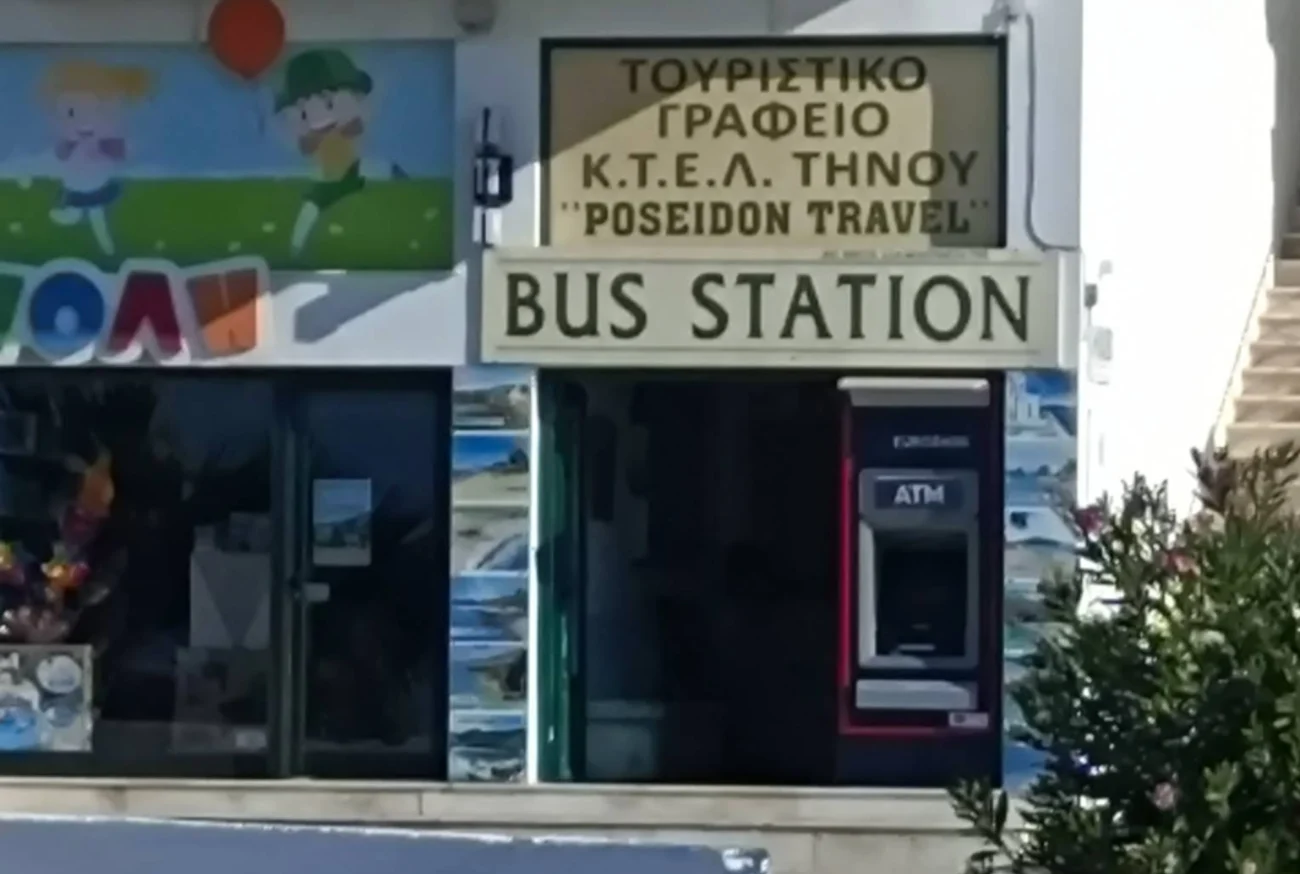
The central bus station (Stathmo) sits in Tinos Town, a short walk from the port. From here, five main routes fan out across the island serving 52 stops. The longest route covers 24 kilometres and passes through 14 stops, connecting Tinos Town to villages like Tripotamos, Kampos, Tarampados, Kardiani, Usternia, Pyrgos, Marlas, and Panormos. Other routes serve villages like Volax, Falantados, and Kionia.
Bus staff at the station are genuinely helpful. Staff members will ask where you are headed and point you towards the correct bus and platform. This is especially useful if you are unfamiliar with the Greek timetables or route codes.
Tinos Bus Timetable
Buses run on seasonal schedules. In peak summer (June to September), services are most frequent. The most popular routes see four to six departures daily. For example, buses to Volax or Falantados run four times daily in summer. Buses to Pyrgos run twice daily.
Outside peak season, frequency drops significantly. Spring and autumn might see only two or three daily services to popular destinations. Winter services are reduced further. Always check the official KTEL website at kteltinou.gr before planning your day, as schedules adjust based on demand and school holidays.
How to Read Local Timetables: Greek bus timetables are posted in Greek and sometimes English. Key words to know are “Αναχώρηση” (departure) and “Άφιξη” (arrival). Times are in 24-hour format. Note which days the bus runs (weekdays, weekends, or daily). Some routes run only during summer months.
Costs and Payment
Bus fares range from €3 to €4 per trip depending on distance. A short hop within the main town costs less than €1. A longer journey to Pyrgos costs €3.80 to €4. Payment is by cash directly to the driver, although some buses are beginning to accept card payments. Always carry small coins and notes just in case.
Pros and Cons
Pros: Buses are incredibly cheap, typically €3 to €4 per journey. They are frequent enough in summer for effective village hopping. Staff are helpful and buses are well maintained. You avoid the stress of driving unfamiliar roads. Buses connect most villages and popular beaches.
Cons: Buses can fill up quickly during August when pilgrimages bring thousands to the island. If you miss a bus, you might wait hours for the next one. Evening service is limited. Late-night returns from villages are rare. Buses do not stop at unmarked viewpoints or quiet beaches you might spot from the road.
Best Routes for Beach Hopping and Village Tours
The route from Tinos Town to Pyrgos via Usternia and Kardiani is superb for village exploration. You pass through multiple settlements, each with unique character, local tavernas, and art galleries. The route to Volax takes just 18 minutes and delivers you to one of Tinos’ most unusual landscapes. Buses to Panormos serve beach-goers seeking a coastal village atmosphere.
For beach access, ask your hotel staff or the bus station which buses serve beaches like Agios Sostis, Kolymbithra, or Agios Ioannis. Some beaches have direct bus service, whilst others require a short walk from the nearest village.
C) Taxis and Ride Services
Taxis are convenient but expensive on Tinos. The island has a limited taxi fleet, which means high demand in peak season and waiting times can be frustrating.
Finding Taxis
Taxis are stationed at the port, around Tinos Town, and in larger villages. You can request a taxi to your location, or you can book in advance through Aegean Taxi, a professional service operating across the island.
Read More: Taxi Services in Tinos
Booking Services
Aegean Taxi offers 24/7 booking through:
- Phone: +30 215 215 4000
- WhatsApp: Instant messaging for bookings
- App: Download the Aegean Taxi app from iOS or Google Play stores
- Online: Book through their website at aegeantaxi.com
Booking by WhatsApp directly with local taxi drivers is often cheaper than booking through your hotel, which typically adds a commission.
Ride-Hailing Apps
Traditional Uber does not operate on Tinos. However, Aegean Taxi functions similarly to a ride-hailing service, with upfront pricing and app-based booking.
Insider Tips
Pre-booking a taxi is essential during August, especially around August 15th when religious pilgrims flood the island. If you show up expecting to hail a taxi on the street, you might wait an hour or more. Instead, book the evening before or ask your hotel to arrange transport.
D) Private Transfers
Private transfer services offer white-glove service for airport arrivals, port pickups, or custom island tours. A professional driver handles navigation, parking, and local recommendations.
When Private Transfers Make Sense
Private transfers are worth considering if you are travelling as a family with luggage, arriving by ferry late in the evening, booking a group tour of the island, or simply wanting to avoid the stress of driving.
Cost and Booking
Aegean Taxi and Trippy.gr are established transfer providers. Costs are typically higher than taxis but lower than hiring a taxi for an entire day. For a standard airport or port pickup, expect to pay €50 to €100 depending on your destination. Full-day island tours with a private driver cost more but offer unlimited stops and insider local knowledge.
Book transfer services at least 24 hours in advance through their websites or phone numbers.
E) Walking and Historic Stone Paths
Tinos is renowned among hikers for its ancient network of stone-paved paths called kalderimia or monopatia. These paths connected villages for centuries before modern roads existed. They wind through countryside, link remote hamlets, and offer stunning views across valleys and towards the sea.
Walkable Areas
Tinos Town and larger villages like Pyrgos, Volax, and Panormos have charming walkable centres with narrow white-washed streets, village squares, and local shops. Walking the village streets is the best way to feel the local atmosphere and spot hidden art galleries, small museums, and family-run tavernas.
Historic Trail Walking
The stone paths are an experience unto themselves. Many are well maintained and marked with red and white paint blazes. Popular trails include the circular walk through villages like Mamados, Mali, Koumelas, and Marlas, which takes approximately two and a half hours and passes through stunning open landscape with good views.
The Livada Beach trail is a scenic coastal route taking about 40 minutes each way and finishing at a natural pebble beach framed by unusual rock formations.
Best Times and Conditions
Walk early morning or late afternoon to avoid midday heat, especially in July and August. Spring and autumn are ideal. Bring plenty of water, sun protection, and wear comfortable walking shoes with good grip because many paths are steep and have loose stones. Some paths cross terrain with limited shade, so plan accordingly.
F) Boat and Water Transport
Tinos’ coastline offers hidden beaches and sea caves accessible only by boat. This unique transport option is something most island guides overlook.
Water Taxis and Caiques
Small wooden fishing boats called caiques operate from Tinos Town port during summer months. They offer trips to remote beaches on the southern coastline that are difficult or impossible to reach by car. These beaches are perfect for swimming, snorkelling, and experiencing pristine, uncrowded environments.
Service is typically daytime only and depends on weather. Boats cannot operate during high winds or rough seas, which occasionally happens in summer when the Meltemi wind picks up.
Sailing and Yacht Tours
Several companies operate sailing yacht tours around Tinos. Half-day tours last approximately four hours and visit secluded beaches, coastal villages, and scenic viewpoints. You can swim, snorkel, and enjoy onboard meals prepared with local ingredients. Full-day tours offer more extensive exploration and often include lunch and drinks.
Tours depart early morning and are typically limited to days with favourable weather. Prices vary but typically cost €80 to €150 per person for half-day experiences and more for full-day adventures.
How to Book
Ask at your hotel reception, the port information office, or search online for companies offering sailing tours from Tinos. Book at least one day in advance, especially in peak season.
Summary: Choosing Your Transport Method
Tinos rewards thoughtful transport planning. The island does not overwhelm with complexity, but picking the right option for your style and duration makes the difference between a good visit and an unforgettable one. Budget travellers and those staying in Tinos Town can get by with buses and walking. Families and groups benefit from car rental. Adventure seekers thrive on scooters and walking trails. Luxury travellers appreciate private transfers.
Whatever you choose, you will discover that Tinos remains refreshingly authentic because it requires a bit of effort to explore. The reward is genuine connection with 48 traditional villages, stunning landscapes, and a culture that has remained largely unchanged for generations.