Santorini has a mix of natural caves, sea caves and traditional cave homes that give visitors some really special places to explore. Below are five of the most interesting cave experiences you can visit around the island, written in the format from your prompt.
Table of Contents
Zoodochos Pigi Cave
A. Cave Information
Zoodochos Pigi is a small but very atmospheric natural cave built into the rocky slope above Kamari, on the old path that climbs towards Ancient Thira. Inside the cave you find a cool spring that has long been known as one of the very few natural sources of fresh drinking water on Santorini. The cave is about twenty five metres long and has low dripstone formations, with a shallow channel and rock cuttings that show how the water was once managed and guided to the entrance. At the mouth of the cave stands a whitewashed chapel dedicated to Zoodochos Pigi, with stone benches and a resting area where travellers used to pause on their way up or down the mountain. The atmosphere feels peaceful and old fashioned, and when you step back outside you are rewarded with wide views over Kamari beach and the deep blue Aegean Sea below.
B. Location
The cave sits on the southern end of the cliffs behind Kamari resort, roughly halfway along the historic footpath that links Kamari with the hilltop ruins of Ancient Thira. It is tucked into the eastern slope of Profitis Ilias mountain, above the last houses of Kamari and just below the main archaeological area. From Kamari you will see the small white chapel clinging to the rock wall high above the village, marking the spot of the cave and spring.
C. How to get there
To reach Zoodochos Pigi Cave you start in Kamari and follow the signed walking path that climbs towards Ancient Thira rather than the main asphalt road. The route zigzags steeply up the rocky slope, but it is a well made cobbled path that most reasonably fit visitors can handle at a slow and steady pace. After about thirty minutes of uphill walking you arrive at the white church terrace, where a small door in the rock leads into the cave and spring. If you are visiting Ancient Thira first you can also walk down from the top and stop at the cave on your descent towards Kamari.
D. Safety and Things to Carry
The path is steep with loose stones in places, so good closed shoes with grip are essential and simple beach sandals are not a good idea. In summer the sun can be strong on the exposed slope, so bring drinking water, a hat and sun protection, and try to avoid the hottest midday hours. The cave interior is quite dark and sometimes the gate may be closed, so a small torch on your phone helps you see the spring and the rock floor safely when it is open. Take care around the wet surfaces near the water channel, as they can be slippery, and keep children close by on the terrace edge because of the drop and the steep path.
Akrotiri Sea Caves
A. Cave Information
Along the wild south coast of Santorini, near Akrotiri village, the sea has carved a series of small caves and arches into the coloured volcanic cliffs. These sea caves sit close to famous spots such as Red Beach, White Beach and the dark lava outcrop known as Black Mountain, where layers of red, white and black rock create striking shapes. When the sun is high, the light reflects off the clear water and makes the cave walls glow in shades of blue and turquoise, which you really notice when you paddle right inside in a kayak. Guided trips along this coastline often combine easy kayaking with snorkelling, cliff jumping for the brave and relaxed swimming stops in quiet coves away from the main crowds. It is one of the best ways to experience Santorini’s volcanic landscape from sea level and to see how wind and waves have shaped the island’s cliffs over time.
B. Location
The sea caves lie off the south western peninsula of Santorini, along the stretch of coast between Akrotiri beach, Red Beach, Kambia Beach and White Beach. Most tours explore the waters just offshore from the village of Akrotiri, staying close to the base of the cliffs where the rock formations and small inlets are most impressive. The area sits a short drive from the Akrotiri archaeological site and the famous Akrotiri lighthouse, so you can easily combine coastal time with cultural visits in the same part of the island.
C. How to get there
The simplest way to visit the Akrotiri sea caves is to book a small group sea kayaking or boat tour that starts on Akrotiri beach or nearby Red Beach. Tour operators usually offer hotel pick up and drop off from main resorts such as Fira, Oia, Kamari, Perissa and Perivolos, so you do not need your own transport. If you have a hire car you can drive to Akrotiri village, park near the beach or the signed sea kayak base by the water and meet your guide at the starting point. Once on the water the guide will lead the group along the coast, taking you in and out of the caves and stopping at quiet beaches for swimming and a picnic.
D. Safety and Things to Carry
Sea cave tours include qualified guides, safety briefing and all technical equipment such as kayaks, buoyancy aids, dry bags and snorkelling gear. You should still be comfortable in the water and able to manage gentle paddling for a couple of hours, even though no previous kayaking experience is required. Wear a swimsuit under light clothing, bring a towel, reef friendly sunscreen and sunglasses with a strap, as reflections from the water can be strong. Water shoes or secure sandals are helpful for getting in and out of the kayaks on rocky beaches, and you may want a light windproof layer in case the breeze picks up on the open sea.
Koutsoyannopoulos Wine Museum Cave
A. Cave Information
The Koutsoyannopoulos Wine Museum is set inside a long underground cave that tells the story of winemaking on Santorini from the sixteen hundreds onwards. The family who run the winery carved a natural lava cave eight metres below the surface into a three hundred metre labyrinth, filling it with historic tools, photographs and life size scenes that show how wine was once made and transported. As you walk through the tunnel like passages you pass old grape presses, wooden barrels, distilling equipment and dioramas of vine growers working in the fields or loading carts, all lit softly to keep the original cave feeling. An audio guide in many languages explains each stage of production and gives background on how the volcanic soil and strong winds of Santorini shaped the local wine style. At the end of the cave route a staircase brings you back up to the modern tasting room, where you can sample several wines made by the same family winery today.
B. Location
The wine museum cave sits in the village of Vothonas, in the centre of Santorini a short drive from Fira and close to the main island road. It is surrounded by vineyards and traditional low stone walls, so you really feel you are in the heart of the wine growing area when you arrive. The entrance to the museum is at ground level, with steps leading down into the cave beneath the winery buildings.
C. How to get there
You can reach Koutsoyannopoulos Wine Museum easily by car or taxi from Fira, Kamari or other central villages by following signs for Vothonas and the wine museum. Many organised island tours that focus on wine also include a stop here, combining the cave museum visit with tastings at several wineries. There is on site parking for visitors, and local buses that run between Fira and the eastern coast have stops near Vothonas, from where you can walk a short distance to the entrance. Once inside you buy a ticket, descend the stairs into the cave and follow the marked route with your audio guide until you return to the tasting area.
D. Safety and Things to Carry
The cave museum is well lit and has a level walking path, so it is suitable for most visitors, although some may find the underground setting a little enclosed. Comfortable shoes are helpful because you will be walking slowly through three hundred metres of tunnels while you look at the exhibits. The temperature underground stays fairly cool compared with outside, so you might like to carry a light layer if you visit on a very hot summer day. If you plan to enjoy a full wine tasting afterwards it is wise not to drive and instead use a tour, taxi or bus, and always drink water along with the samples.
Oia Cave Houses
A. Cave Information
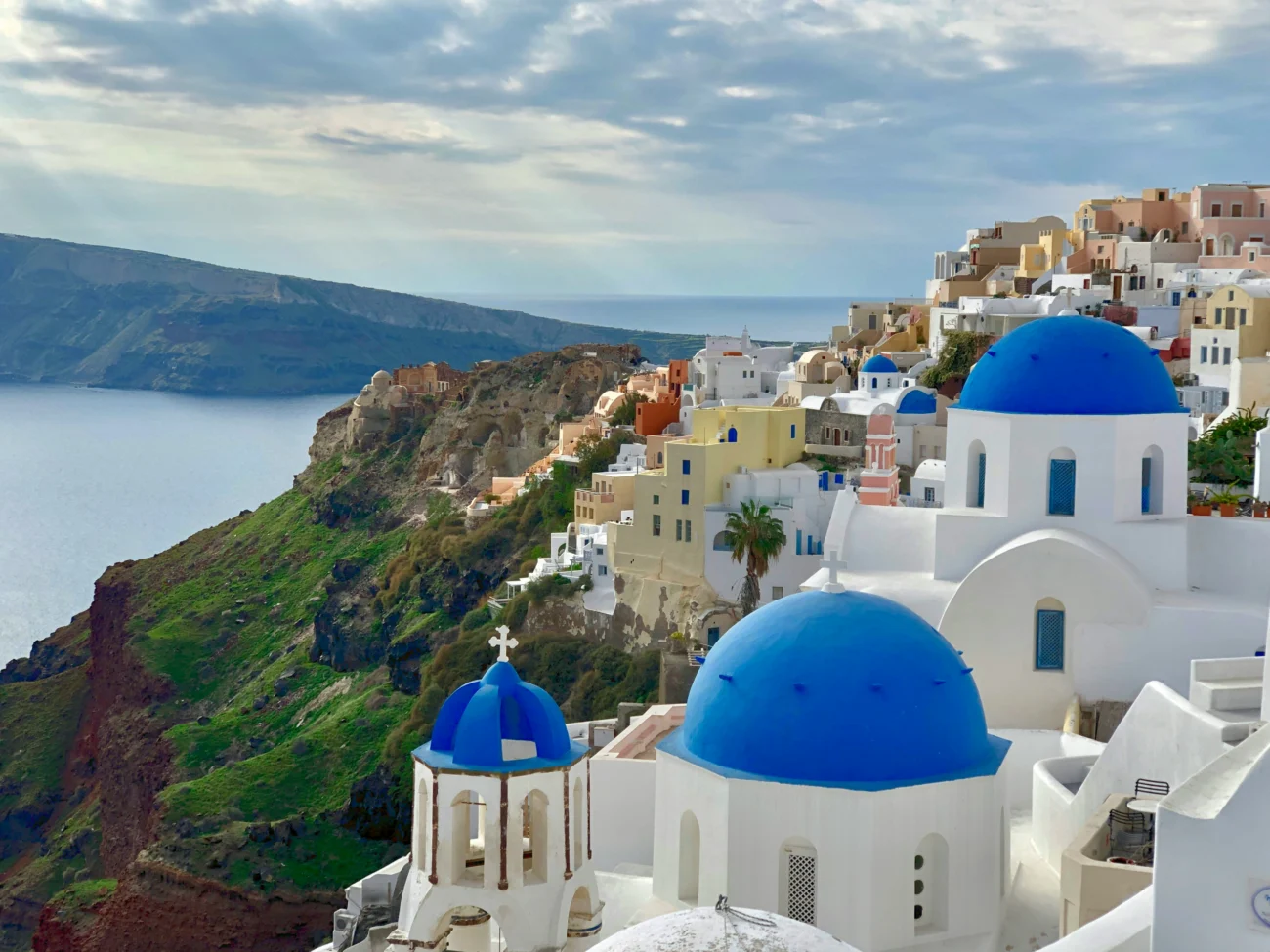
The famous white cave houses of Oia are carved straight into the volcanic cliffs of Santorini’s caldera and are known locally as yposkafa, meaning places dug into the rock. They began as simple one room dwellings for poor sailors and crew, who used the soft volcanic earth to create long vaulted rooms that were cheap to build, easy to heat and naturally cool in summer. The porous pumice rich rock is a poor conductor of heat and sound, so these cave homes stayed comfortable through winter winds and hot weather and also proved very resistant to earthquakes. Over time many of the old cave houses have been carefully restored and turned into stylish suites, villas and boutique cave hotels with private terraces and sometimes cave pools looking over the caldera. Staying or even just walking among these white cave homes gives a real sense of how Santorini’s people adapted their architecture to the island’s steep cliffs and limited building land.
B. Location
Most cave houses are found in the village of Oia at the northern tip of Santorini, clinging to the inside rim of the caldera above Ammoudi Bay and the open sea. You see them cascading down the cliff below the main pedestrian street, where the yards and roofs of one home often form the terrace of the next. Similar cave style homes and hotels also appear along the caldera edge in Imerovigli, Firostefani and parts of Fira, but Oia has the greatest concentration and is the most photographed.
C. How to get there
From Fira you can reach Oia by bus, taxi or hire car along the main road that follows the spine of the island, with regular public buses running especially in high season. Once in Oia you explore on foot, following the main marble path and then descending steps into the neighbourhoods where the cave houses and cave hotels are built into the cliff. Many properties are only accessible by stairways and narrow lanes, so you should be ready for some uphill and downhill walking as you move between viewpoints. If you are not staying in a cave hotel you can still enjoy the views from public paths and terraces, or book a café or restaurant with a balcony set among the cave homes.
D. Safety and Things to Carry
The steps around Oia’s cave house areas can be steep and sometimes crowded, so wear comfortable closed shoes and take your time, especially when walking back up to the main street. In summer the sun can be intense on the white surfaces, so bring water, a hat and sunscreen, and consider visiting early in the morning or later in the afternoon. If you have heavy luggage and are staying in a cave suite it may need to be carried down many steps, so check in advance whether your hotel offers porter service. Always respect private terraces and pools, since many of the prettiest cave homes are actually guest suites, and follow any local guidelines about noise in these close packed neighbourhoods.
Traditional Cave Settlement
A. Cave Information
Away from the busy caldera edge there are traditional cave settlements where homes and storage rooms have been carved into the softer volcanic deposits of the island’s interior. These villages grew up in sheltered gullies and ravines, where people tunnelled into the earth to create simple arched rooms and narrow lanes that stay protected from the strong Aegean winds. On some guided tours you can still walk through one of these secluded cave settlements, following cobbled paths past whitewashed cave houses, old wine cellars and a blue domed church set among the rocks. The feeling is very different from the polished resorts of the caldera, and gives a glimpse of rural Santorini life and the way villagers used the landforms to create homes, storage and animal shelters. Photographers in particular enjoy the play of light and shadow on the curved walls, tunnels and staircases that twist through the settlement.
B. Location
These cave style villages lie in the central part of Santorini, in the countryside between major hubs such as Fira, Mesaria and Vothonas. One of them is visited on certain wine and cave tours, which describe it as a hidden settlement formed within the lava deposits, with a blue domed church and narrow cobblestone streets. Because they are small and residential, they do not always appear clearly marked on tourist maps, which helps keep them quiet and authentic.
C. How to get there
The easiest way to visit a traditional cave settlement is to join an organised excursion that includes a short walking stop in one of these villages. Wine and cave tours often collect guests from their accommodation, visit wineries and the wine museum cave, and then drive on to the cave settlement for a guided stroll and photographs. If you are exploring by car you can drive through the interior roads around Mesaria and Vothonas and look for signs or viewpoints over old cave districts, but organised visits are kinder to residents and avoid parking problems in narrow lanes.
D. Safety and Things to Carry
The cobbled streets and paths of the cave settlements can be uneven and sometimes quite steep, so closed shoes with good grip are important for a relaxed visit. Many alleys are narrow and shared with local residents, so keep noise low, be respectful when taking pictures and follow your guide’s advice about which areas are private. In summer it is still warm even in the sheltered gullies, so carry drinking water and sun protection, although the cave rooms and arches do offer welcome shade. Because the streets are compact, large bags or pushchairs can be awkward, so try to travel light when you walk through these historic districts