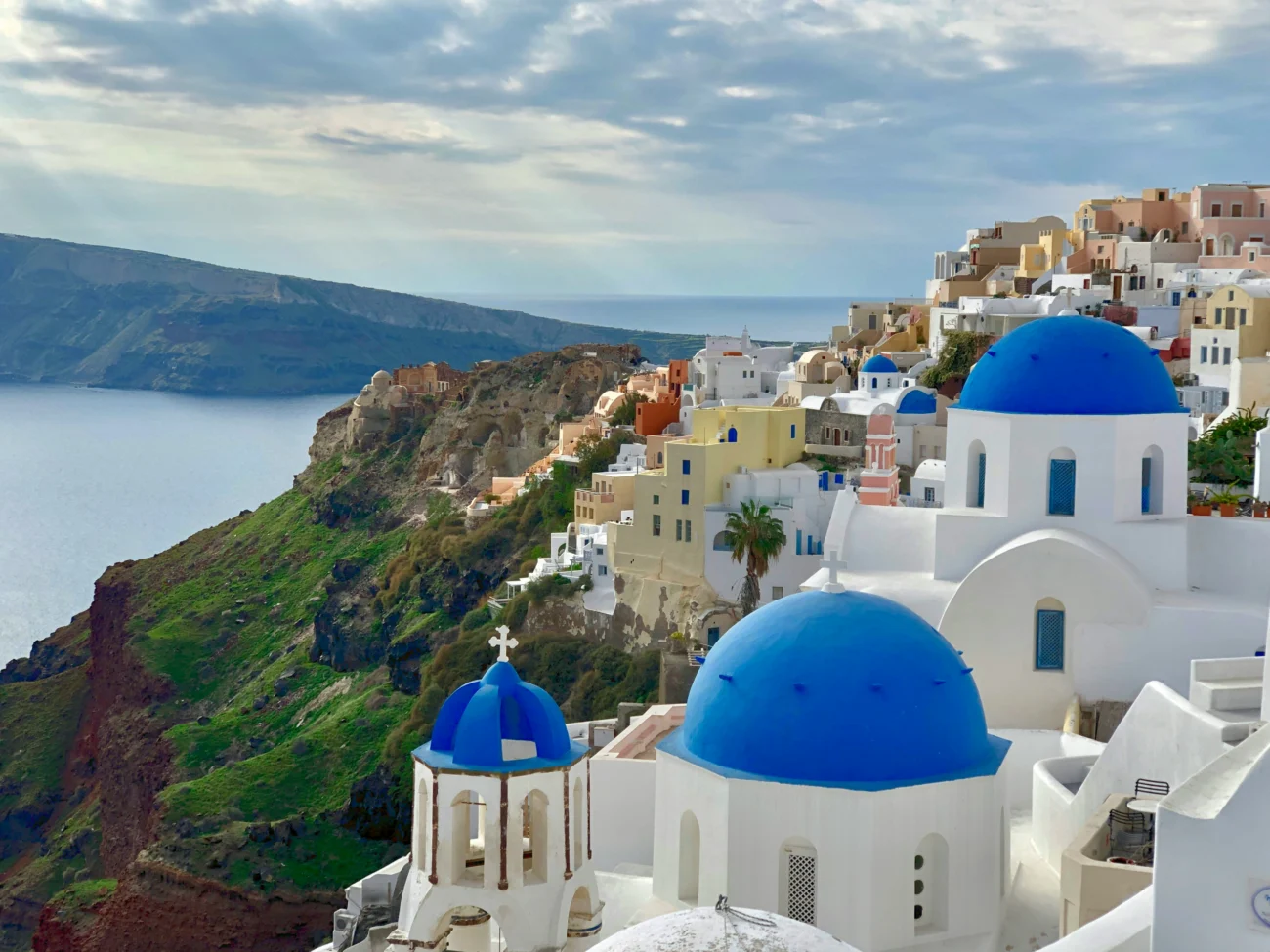
Mykonos is not a volcanic island and there are no live or dead volcanoes or volcanic craters anywhere on the island itself. The bedrock is mainly granite and other crystalline rocks, and the land has been shaped over time by strong Aegean winds and the sea rather than by eruptions. This is why the landscape feels low, rounded and rocky, without the high caldera cliffs and dark lava fields that you see in famous volcanic islands such as Santorini or Milos. For visitors, this means Mykonos is a safe, stable island with beautiful beaches, whitewashed villages and clear water, but it is not a place where you can walk inside a volcanic crater. If you are very interested in volcanoes, you can still use Mykonos as a base and plan day trips or short breaks to nearby volcanic islands, which combine well with a Cyclades holiday.
Location
Mykonos sits in the heart of the Cyclades group in the central Aegean Sea, between Tinos, Syros, Paros and Naxos, around one hundred and fifty kilometres east of Athens. It belongs to the northern and central Cyclades, which are rich in granite, marble and other hard rocks, unlike the southern Cyclades such as Milos and Thera that lie on the volcanic arc and have strong volcanic rocks and hot springs. This position makes Mykonos easy to reach and an ideal starting point if you want to see both classic whitewashed island scenery and, on a separate trip, the dramatic volcanic landscapes further south.
How to get there
Since there is no volcano on Mykonos, travellers usually reach the island for its beaches, nightlife and charming town, then arrange a separate trip to visit a real volcano elsewhere in the Aegean. Mykonos has an airport with regular flights from Athens and seasonal flights from many European cities, as well as a busy port that connects by ferry to Piraeus, Rafina and other Cycladic islands. From Mykonos you can book ferry crossings or organised excursions to volcanic destinations such as Santorini or Milos, where you can join boat tours to islands like Nea Kameni and walk on active or dormant volcanic terrain.
Safety and things to carry
Because there is no volcano on Mykonos, there are no special volcanic safety rules to follow on the island beyond normal seaside and hiking common sense. If you decide to visit a nearby volcanic island on a day trip, you should wear sturdy closed shoes to walk on rough lava surfaces, carry drinking water, sun cream, a hat and light clothing, because there is often little shade and the dark rocks can feel very hot in summer. It is also wise to follow local guide advice, stay on marked paths around any crater and respect warning signs, as volcanic areas can have hot steam vents and unstable ground in places even when there is no sign of an eruption.