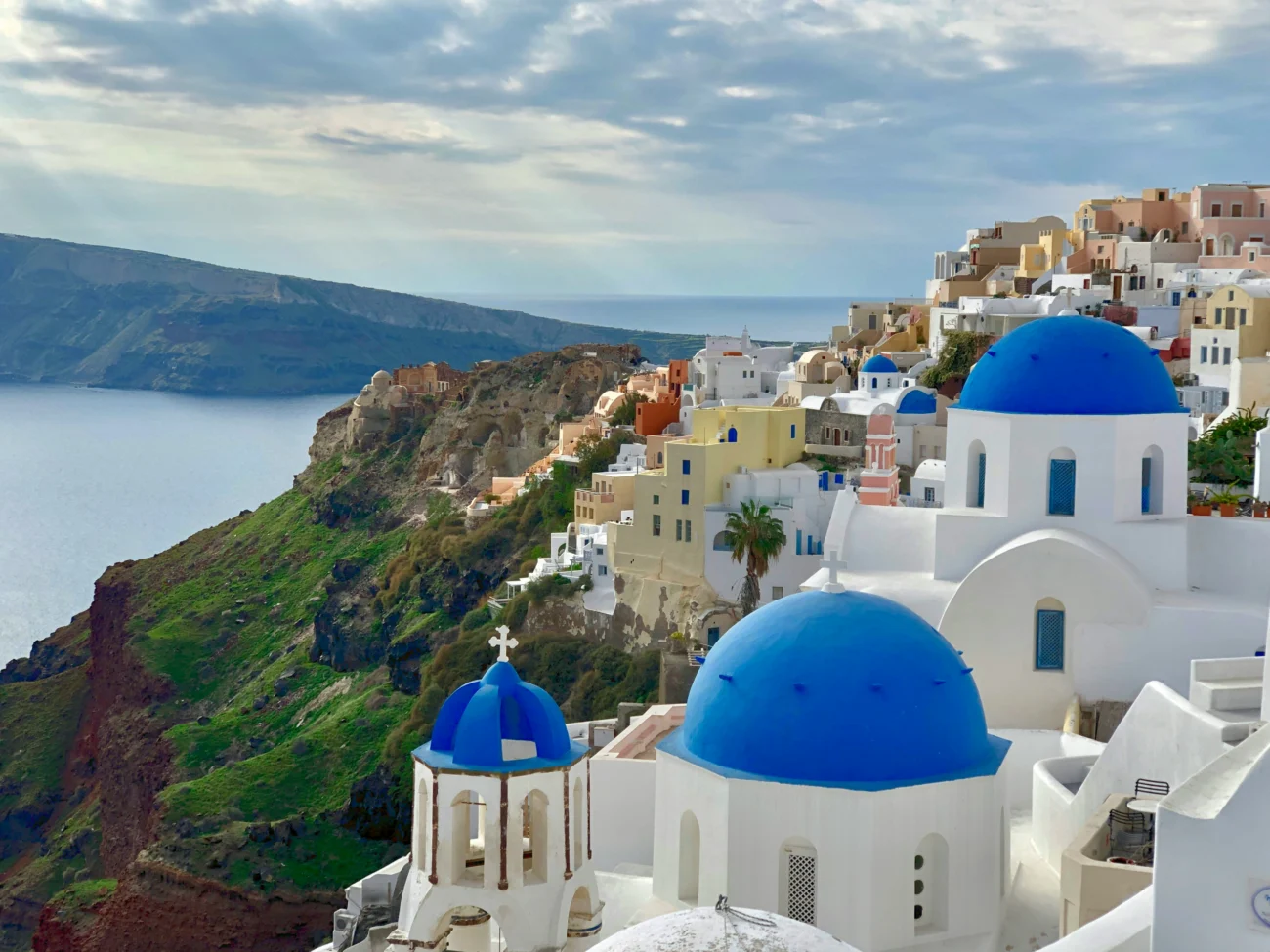
There is a particular kind of magic that belongs exclusively to very small islands, and Koufonisia has more of it than almost anywhere else in the Cyclades. This tiny cluster of two islands sitting between Naxos and Amorgos in the eastern Cyclades is the kind of place where the biggest decision of your day really is which cove to swim in next, and where the most sophisticated piece of technology you will encounter is the fishing boat that delivered your dinner to the harbour this morning. Koufonisia is flat, compact and almost entirely free of motor vehicles, which means you walk or cycle everywhere, you know the faces at the harbour within a day of arriving, and you eat some of the finest and most honest food in the Greek islands.
Koufonisia is not a cheese island in the organised, visitor-facing sense of Ios or Naxos. There is no dedicated cheese dairy with a tasting room and a booking system. What exists instead is something more honest and more deeply satisfying: a family that has been making cheese by hand from their own animals for as long as anyone can remember, serving it directly at their table to visitors who are lucky enough to find it. The xinomizithra, the ladotiri aged in olive oil, the feta made from their own cows and goats on a wood fire, all made by Yiayia Anna whose recipe has never needed writing down because it has never needed to change. In 2024, the ancient tradition of cheesemaking across the Cyclades was inscribed on the National Inventory of Intangible Cultural Heritage of Greece, recognition that speaks directly to the kind of living, personal, family-rooted dairy culture that Koufonisia embodies so completely. These are the five best experiences for anyone who wants to discover it. 🧀
Table of Contents
1. Mixalios Grill House, Ano Koufonisi
Overall Information
Mixalios Grill House is the single most important cheese experience on Koufonisia and one of the most genuinely moving food experiences available anywhere in the Small Cyclades. This family-owned restaurant, which opened in 1999, is built around a farming philosophy that most restaurants in the world only pretend to have. Every ingredient served here comes either from the family’s own farms on Ano Koufonisi, Kato Koufonisi and the island of Keros, or from trusted neighbours on nearby Naxos. The cheese is made by Yiayia Anna, the family grandmother, entirely by hand from the cow and goat milk produced by the family’s own animals, cooked on a wood fire using a traditional recipe that has been in the family for generations. Three types of cheese appear on the table: the xinomizithra, a soft white sour cheese that is not heavy and carries a clean, refreshing tang; the ladotiri, a sharp hard cheese aged in olive oil with an intensity and depth that makes it one of the finest examples of this style anywhere in the Cyclades; and the family’s own feta, made from the milk of their cows and goats and carrying a freshness and character that no supermarket product can approach. Yiayia Anna also makes the rakomelo served at the table, a warming sweet liqueur of raki, cinnamon and honey that is the perfect way to end a meal that has already felt like a genuine privilege. Koufonisia does not offer a formal cheese tourism experience in the modern sense. But Mixalios is something better: a place where the cheese is made the way it has always been made, by someone who has never needed anyone to tell them why what they produce is extraordinary.
Location
Mixalios Grill House is located in the main village of Ano Koufonisi, Koufonisia, 843 00, Greece. The restaurant is set within the village, accessible on foot from anywhere on the small island, and its tables look out across the harbour in the warm evening light that makes every meal on Koufonisia feel like an event. The family’s history is woven into the physical landscape of both islands. Mixalios, the grandfather after whom the restaurant is named, grew up on Kato Koufonisi, the uninhabited lower island, where he still maintains his farm with goats and sheep. Every single day, without exception and in all seasons, Mixalios takes his boat at five in the morning to cross to Kato Koufonisi to care for the animals before returning at sunset. The family also keeps goats on the uninhabited island of Keros, where the animals graze completely freely on wild vegetation alongside the only freshwater well on the island, down to which all the animals descend from the mountains to drink. Giannis, the owner, has additional small farms on Ano Koufonisi where he raises cows, free-range roosters and pigs, all fed on grain he grows himself on his own land on both islands. The cheese that Yiayia Anna makes from this milk is the direct product of that extraordinary daily commitment.
How to Get There
Koufonisia is reached by regular ferry services from Piraeus, from Naxos, from Amorgos and from other Cycladic islands including Ios, Folegandros and Sikinos. The crossing from Piraeus takes approximately eight to nine hours by standard ferry, and there are faster connections available during the summer season. From Naxos, the crossing takes approximately one and a half hours. On arrival at the port of Ano Koufonisi, the village is immediately accessible on foot and the entire island is walkable. There are no cars on Koufonisia in any meaningful sense, and the restaurant is reached simply by walking through the village lanes. Mixalios Grill House is open for dinner from 5pm until midnight throughout the summer season. Because this is one of the most loved and most consistently praised restaurants on the island, and because Koufonisia fills up completely during July and August, arriving early or contacting the restaurant in advance to reserve a table is strongly recommended. The warmth of the family’s welcome is such that turning up without a reservation is always worth attempting, but planning ahead is the wiser approach during peak season.
Services and Experiences
A meal at Mixalios Grill House is a food experience of a kind that the word restaurant barely does justice to. You are not eating in a commercial establishment in any conventional sense. You are sitting down at a table where the ingredients were raised by the family, the cheese was made this morning by the grandmother, the rakomelo was prepared from the family’s own raki and honey, and the spirit of genuine hospitality that pervades every aspect of the evening is entirely real rather than performed. The cheese begins the meal, as it should. The xinomizithra arrives soft, white and tangy, wonderful eaten simply with the bread that comes to the table and a drizzle of local honey if you ask for it. The ladotiri, aged in olive oil with a sharpness that builds slowly on the palate into something deeply satisfying and complex, is the cheese that most visitors remember longest. The feta, made from the family’s own cows and goats, has the kind of freshness and milky intensity that makes every piece of commercially produced feta you have ever eaten feel like a pale imitation. The grilled meats that follow, from the family’s own animals, are exceptional in the way that meat from animals that have lived well and been raised with genuine care always is. The ibex from Keros, when available, is among the most remarkable and distinctive meat dishes you will encounter anywhere in the Cyclades, rich and flavourful from the wild vegetation of that extraordinary uninhabited island. Maria, Giannis’s wife, makes the halfes pastries herself, semolina confections with cinnamon and syrup topped with her own carrot spoon sweet, a detail that perfectly encapsulates the spirit of a restaurant where nothing is bought in and everything is made by someone in the family. This is not just a meal. It is an encounter with a way of life.
2. Sorokos Restaurant, Ano Koufonisi
Overall Information
Sorokos is one of the most celebrated restaurants on Koufonisia and represents the finest expression of the island’s culinary tradition in a setting that combines exceptional food with one of the most beautiful waterfront views in the Small Cyclades. The restaurant has built its reputation over many years on the quality of its fish and seafood, which are sourced directly from the island’s fishing community, but it is the way Sorokos treats local cheese as an essential and honoured part of its menu that makes it particularly relevant to any visitor who wants to understand the full depth of Koufonisian food culture. The xinomizithra from local producers appears consistently on the menu, used both as a standalone meze and as a core ingredient in the island’s traditional dishes. The combination of the freshest possible seafood with the island’s own tangy, creamy cheese, eaten at a table a few metres from the water as the sun drops behind the neighbouring islands, is one of those simple food experiences that you find yourself trying to describe to other people for years afterwards.
Location
Sorokos Restaurant is located on the waterfront of Ano Koufonisi, Koufonisia, 843 00, Greece. The restaurant sits directly on the harbourside promenade of the main village, with tables that look out across the bay towards Kato Koufonisi and the open Aegean beyond. The setting is one of the most naturally beautiful of any restaurant in the Cyclades, combining the elemental simplicity of a whitewashed waterfront building with a view that changes character throughout the day from the bright clarity of the midday light to the extraordinary warm pinks and oranges of the Koufonisia sunset, which is considered by many regular visitors to be among the finest in the islands. The harbourside location also means that the fish and seafood arriving from the morning boats are visible and verifiable, which adds a dimension of trust and immediacy to the menu that more urban dining environments can never replicate.
How to Get There
Sorokos is located on the main harbourfront of Ano Koufonisi and is reachable entirely on foot from anywhere in the village or from the ferry port. No directions are required beyond arriving at the island and walking along the waterfront. The restaurant is open for lunch and dinner throughout the summer season. Reservations during the peak summer months of July and August are strongly recommended as the harbourfront tables fill quickly, particularly in the evenings when the sunset view makes every table on the waterfront one of the most desirable dining positions in the Cyclades. Ask your accommodation host on arrival for the current contact details, as local recommendations are always the most reliable and up to date guide to reserving a table at any of the island’s best restaurants.
Services and Experiences
Sorokos delivers the Koufonisian food experience at its most complete and most visually spectacular. The menu is structured around what the boats bring in each morning, which means it changes daily and reflects the genuine rhythm of the island’s fishing community rather than the demands of a fixed tourist menu. Local xinomizithra cheese appears on the meze table alongside capers from the island, local olives, fresh bread and the house’s own olive oil, creating a starter combination that immediately establishes the quality of what is to follow. The cheese here is sourced from local family producers and carries the specific character of Koufonisian goat and sheep milk, tangier and more refreshing than its equivalents on larger neighbouring islands, a reflection of the particular wild herbs and coastal vegetation on which the island’s animals graze. The grilled octopus, sun-dried and then charcoal-fired in the traditional Cycladic manner, is one of the finest versions of this dish available anywhere on the island. The lobster pasta, a celebration dish that several Koufonisia tavernas prepare as their signature, is exceptional here when the local karavida is available, and the combination of the lobster’s sweetness with the briny depth of the Aegean and the slight richness of the tomato sauce is entirely unforgettable. Eating this at sunset on the waterfront with a piece of local cheese and a cold glass of wine is the Koufonisia experience distilled to its most perfect form.
3. Captain Nikolas Taverna, Ano Koufonisi
Overall Information
Captain Nikolas is one of the most popular and most consistently excellent tavernas on Koufonisia, beloved by returning visitors who come back year after year for the combination of honest cooking, generous portions and the kind of warm, slightly chaotic hospitality that makes Greek island tavernas feel irreplaceable. The kitchen here is rooted entirely in the island’s traditional food culture, and cheese plays an essential supporting role across the entire menu in exactly the way it should in any genuinely local Cycladic kitchen. The xinomizithra from local producers is served as a meze, used in the traditional cheese pie that is one of the taverna’s most popular starters, and appears in the horiatiki village salad in a form that is immediately distinctive from anything produced off the island. Captain Nikolas is the kind of place where the locals eat alongside the visitors and where the menu reflects what is genuinely available and in season rather than what a tourist demographic is assumed to want. That honesty is the foundation of everything that makes it worth seeking out.
Location
Captain Nikolas Taverna is located in the main village of Ano Koufonisi, Koufonisia, 843 00, Greece. The taverna is a well-established fixture of the village’s eating scene and is accessible on foot from anywhere on the island. The setting, like all of Koufonisia’s best places to eat, is simple, honest and entirely focused on the pleasure of the table rather than on any kind of decorative ambition. Tables spill out into the lane in the evenings, the sound of conversation fills the warm night air and the combination of the island’s extraordinary food and the communal ease of a village where everyone feels at home creates an atmosphere that no design-led restaurant in a larger city can manufacture. Ask at your accommodation or from any local resident for the current location of the best table in the house, as on an island this small, the knowledge of which seat catches the evening breeze is the kind of insider intelligence that genuinely improves your evening.
How to Get There
Captain Nikolas is reachable entirely on foot from anywhere in the village of Ano Koufonisi. The island has almost no motor traffic and everything in the main settlement is within a short and pleasant walk of everything else. The taverna is open for lunch and dinner throughout the summer season. During July and August, when Koufonisia operates at full capacity and the village fills with visitors from across Europe, arriving early for dinner or asking your accommodation host to make a call on your behalf is the most reliable way to secure a table. The informal, welcoming atmosphere of the taverna means that even on the busiest nights, the kitchen finds a way to feed everyone who arrives with a genuine appetite and an open spirit.
Services and Experiences
Captain Nikolas offers the traditional Koufonisian taverna experience in its most accessible and most immediately satisfying form. The cheese meze at the start of a meal here is a genuine introduction to the island’s dairy character: xinomizithra served with a drizzle of the island’s thyme and wildflower honey is a combination that captures something essential about the Cycladic relationship between dairy and the land, and the contrast between the cheese’s refreshing tang and the honey’s floral sweetness is one of those simple pairings that you find yourself reaching for again and again across the course of a meal. The traditional cheese pie made with local mizithra and fresh mint is another essential starter, the thin pastry crisp from the pan and the filling warm and fragrant, exactly the kind of dish that proves why the simplest preparations are always the ones that carry the most meaning. The fresh fish dishes that follow are outstanding, prepared with the directness and confidence of a kitchen that has been cooking fish this way for decades and needs no instruction in how to make it beautiful. The seafood platter, when available, showcases the extraordinary range and quality of what the island’s fishing boats bring in each day. The patatato, the traditional festive meat dish of beef in tomato sauce with potatoes that is a speciality of the Small Cyclades, is available at certain times of year and is among the finest versions of this classic you will encounter in the entire region.
4. To Kavouras Taverna, Ano Koufonisi
Overall Information
To Kavouras is a family-run taverna on Koufonisia that has earned its devoted following through the combination of genuinely homemade mezes, excellent fresh fish and a warmly informal atmosphere that feels like being welcomed into a family kitchen rather than a professional restaurant. The name means the crab, an appropriate and endearing choice for a taverna on an island this deeply connected to the sea. The cheese element of the To Kavouras experience is woven into the meze culture that defines how the taverna feeds its guests: small plates arrive at the table in a spirit of generosity and abundance that is entirely characteristic of how the islands’ best family tavernas operate, and the local xinomizithra, feta and occasionally a piece of harder local cheese are always among the first things to appear. The kitchen treats these cheeses with the casual reverence of people who have grown up eating them and who understand instinctively how they fit into a meal, which is always the most reliable indicator of genuine quality.
Location
To Kavouras Taverna is located in the main village of Ano Koufonisi, Koufonisia, 843 00, Greece. Like all of the island’s best eating places, it is entirely reachable on foot and sits within the close-knit community of the village where the distinction between resident and regular visitor has been pleasantly blurred by years of returning guests who come back to the same tables, the same kitchen and the same warmth of welcome every summer. The taverna operates in the evenings throughout the summer season, and the particular pleasure of sitting down at a To Kavouras table as the light softens over the Aegean and the first plates begin to arrive is one of those experiences that makes Koufonisia the irresistible and deeply personal destination that its most devoted visitors describe with such consistent affection.
How to Get There
To Kavouras is reachable entirely on foot from the ferry port or from any accommodation in the village. The island’s walkable scale means that every taverna, every beach and every shop is connected by a network of lanes and paths that you will know by heart within twenty-four hours of arriving. The taverna is open for dinner throughout the summer season. During the peak weeks of July and August, when the island operates well above its comfortable capacity and every table on every terrace fills quickly after sunset, arriving early or asking your accommodation host to help with a reservation is the most sensible approach. The To Kavouras philosophy of generous portions and homemade food means that the experience is worth every effort required to secure a table.
Services and Experiences
To Kavouras delivers the meze-led cheese experience in its most convivial and most personally generous form. The meal begins the way all great taverna meals should, with a series of small plates arriving without ceremony and covering the table in a way that immediately communicates the kitchen’s priorities: freshness, generosity and a complete absence of pretension. The xinomizithra meze, served simply with olive oil and oregano and a piece of the house bread, is the opening statement of a kitchen that knows exactly what it has and exactly why it matters. The saganaki, the pan-fried hard cheese that is one of the most beloved meze dishes in the Greek islands, is made here with a local harder cheese that carries a depth and character well beyond the generic graviera that most tourist tavernas use, and the combination of the crisp golden crust and the molten, intensely flavoured interior is one of those simple pleasures that makes sitting around a Greek island table one of the great joys of travel. The fresh fish that follows is impeccably sourced and simply prepared, and the combination of the cheese-forward meze table, the extraordinary seafood and the homemade sweets that complete the meal, particularly the pasteli made with local honey and sesame seeds, creates a Koufonisian dining experience of real warmth and real substance.
5. The Farmstead Cheese Tradition of Kato Koufonisi and Keros
Overall Information
The most distinctive and genuinely original cheese experience available in Koufonisia is not found in a restaurant or a shop. It is found in understanding and seeking out the farmstead tradition that produces the cheese in the first place, a tradition centred on the uninhabited lower island of Kato Koufonisi and the wild deserted island of Keros, where the Prasinos family and other island farming families have kept goats, sheep and cattle for generations in conditions of extraordinary natural purity. Kato Koufonisi, reachable from Ano Koufonisi by a short boat ride of fifteen to twenty minutes, is one of the most beautiful and least visited places in the entire Cyclades. Its beaches are among the finest in Greece and its ancient ruins, including Roman villas, baths and a sanctuary of Apollo, speak to a history of habitation and prosperity that gives the island a remarkable atmospheric quality. But it is the farming tradition that makes Kato Koufonisi relevant to any serious food lover. Mixalios Prasinos makes his daily crossing to Kato Koufonisi at five in the morning, every day of the year, to tend the goats and sheep that graze freely across the island’s terrain. The Keros connection is equally extraordinary: the goats that roam Keros feed on a unique wild vegetation that locals describe as being full of milk, meaning the plants are so nutritious and so aromatic that the meat and milk of these animals carry a character unlike anything produced by animals on more managed terrain.
Location
Kato Koufonisi is reached by small boat from the harbour of Ano Koufonisi, 843 00, Greece. The crossing takes approximately fifteen to twenty minutes and boats run regularly throughout the day during the summer season. The island has no permanent inhabitants, no roads, no shops and no accommodation beyond a single seasonal taverna that operates on the beach during the summer months. Its appeal is entirely natural and entirely genuine, and arriving there after the short crossing from Ano Koufonisi feels like stepping into a wilder and more elemental world just minutes from one of the busiest small islands in the Cyclades. Keros is not publicly accessible due to its status as an active archaeological site of great significance, but its influence on the cheese and meat of Koufonisia is felt every time you sit down at a Mixalios table and taste the produce of animals that have grazed on its extraordinary terrain.
How to Get There
Boats to Kato Koufonisi depart from the main harbour of Ano Koufonisi throughout the day during the summer season, with departures typically every hour or two depending on demand. The crossing is inexpensive and takes approximately fifteen to twenty minutes. Ask at the harbour on arrival for the current boat schedule and prices. Comfortable sandals or shoes suitable for walking on sandy paths are recommended, and taking a bag with water, sun protection and a picnic of local cheese, bread and honey for the beach is one of the most deeply enjoyable things you can do with a morning on Koufonisia. The cheese you buy from Mixalios the evening before tastes entirely different and entirely better when eaten on a deserted beach on Kato Koufonisi with the sound of the Aegean and the sight of the goats somewhere on the hillside above you. There is no better context in which to understand why this cheese exists and why it tastes the way it does.
Services and Experiences
The Kato Koufonisi farmstead experience is entirely self-directed and entirely dependent on the genuine curiosity of the visitor. Arriving at Kato Koufonisi with a piece of ladotiri aged in olive oil from the Mixalios kitchen, a handful of local paximadi rusks and a small jar of Koufonisian thyme honey and sitting down on the beach to eat them in sight of the goats that produced the milk is a cheese experience of genuine simplicity and genuine power. The seasonal taverna on the beach at Kato Koufonisi, which operates during the summer months, serves simple food including fresh fish and traditional mezes with local cheese, and the combination of that simplicity with the extraordinary setting of the uninhabited island is one of the most memorable dining experiences available in the Small Cyclades. For those who want to understand the full story behind the cheese they have been eating at Mixalios, talking to Giannis Prasinos at the restaurant about the farming tradition and the daily rhythm of life that connects Ano Koufonisi, Kato Koufonisi and Keros is the most direct and most rewarding education in Koufonisian food culture available to any visitor. The family’s openness about their farming practices and their genuine pride in what they produce makes every conversation about the cheese and the animals feel like a privilege rather than a transaction.
The Cheeses of Koufonisia: A Quick Guide
Koufonisia produces a small but genuinely distinctive range of cheeses from the goats, sheep and cattle of its family farms. Here is what to look for and what to expect from each one.
- Xinomizithra is the signature cheese of Koufonisia and the defining dairy flavour of the Small Cyclades. It is a soft, white, slightly sour fresh cheese made from goat and sheep milk, lighter and less fatty than feta, with a clean tang and a refreshing quality that makes it ideal for the island’s warm summer climate. It appears in salads, in cheese pies with fresh mint and simply as a meze with honey and bread.
- Ladotiri is a hard, sharp cheese aged in olive oil, developing an intensity and depth over its ageing period that makes it one of the most distinctive and memorable cheeses of the Small Cyclades. The Koufonisian version, made from the family’s own cow and goat milk and aged in olive oil by Yiayia Anna, is exceptional and is the cheese that most visitors to Mixalios remember with the greatest pleasure.
- Feta from local milk is not the branded commercial product of a mainland dairy. At Mixalios, it is made from the family’s own cows and goats on a wood fire using a traditional recipe, and the difference in freshness, character and flavour compared with mass-produced feta is immediately and vividly apparent.
- Kopanisti is produced in small quantities by family producers across the Small Cyclades including Koufonisia, a soft, fermented and spreadable cheese with a spicy, pungent character that is traditionally served as a meze and is completely addictive on warm bread.
- Anthotyro is a fresh, soft and milky whey cheese made from the residual milk of the cheese production process, gentle and delicate and wonderful with a spoonful of thyme honey as a simple dessert or breakfast.
Tips for Cheese Lovers Visiting Koufonisia
Koufonisia is a cheese destination unlike any other in the Cyclades precisely because its dairy culture is not organised for visitors. It lives entirely within the daily life of the island’s farming families, and finding it requires nothing more than genuine curiosity, a willingness to ask and the patience to let the island reveal itself at its own pace. Here is what to keep in mind.
- Go to Mixalios for dinner and ask about the cheese. This is the single most important piece of advice for any food lover visiting Koufonisia. Yiayia Anna’s xinomizithra, ladotiri and feta are the finest dairy products on the island and they are only available at this table. Ask Giannis about how the cheese is made and where the animals graze. He will tell you everything, with enormous pride and warmth.
- Take the boat to Kato Koufonisi. Buy a piece of ladotiri and some paximadi from Mixalios the evening before, collect a small jar of local honey from any village shop, and eat your cheese picnic on a deserted beach in sight of the goats on the hillside. This is the most direct and most beautiful way to understand the connection between the Koufonisian landscape and the cheese it produces.
- Look for xinomizithra on every menu. This is the cheese that defines the Small Cyclades and its appearance on the menu of any taverna on Koufonisia is an immediate sign that the kitchen is using genuinely local ingredients. The quality varies between producers but the character of Koufonisian xinomizithra is always distinctive, tangier and fresher than its equivalents from larger neighbouring islands.
- Ask your accommodation host where the best local cheese is available to buy in the village. On an island this small, the most reliable food knowledge is always personal rather than published, and the person who lets you into your room in the morning is invariably the most valuable source of culinary intelligence on the island.
- Try the pasteli. These small sesame and honey bars, made with local thyme honey and toasted sesame and traditionally wrapped in lemon leaves, are one of the finest sweet accompaniments to a piece of aged hard cheese that the Cyclades produces. They are available from village shops and from several of the island’s tavernas and are one of the most genuinely local and genuinely delicious things you will eat on Koufonisia.
- The best time to visit Koufonisia for the full cheese experience is between May and October, with the late spring and early summer months offering the freshest and most delicate milk cheeses and the late summer bringing the most developed and most intensely flavoured aged varieties.
Koufonisia does not have a cheese dairy with a tasting menu and a gift shop. It has something far more rare and far more worth seeking out: a family that gets up at five in the morning every single day to cross to an uninhabited island and tend their animals, a grandmother who makes cheese on a wood fire from the milk of those same animals, and a table where you can sit down in the evening and taste the direct result of that extraordinary daily commitment. That is what genuine cheese culture looks like, and Koufonisia is one of the last places in the Cyclades where you can still find it in its most honest and most uncompromised form.