Cities, Towns & Villages in Serifos
Chora
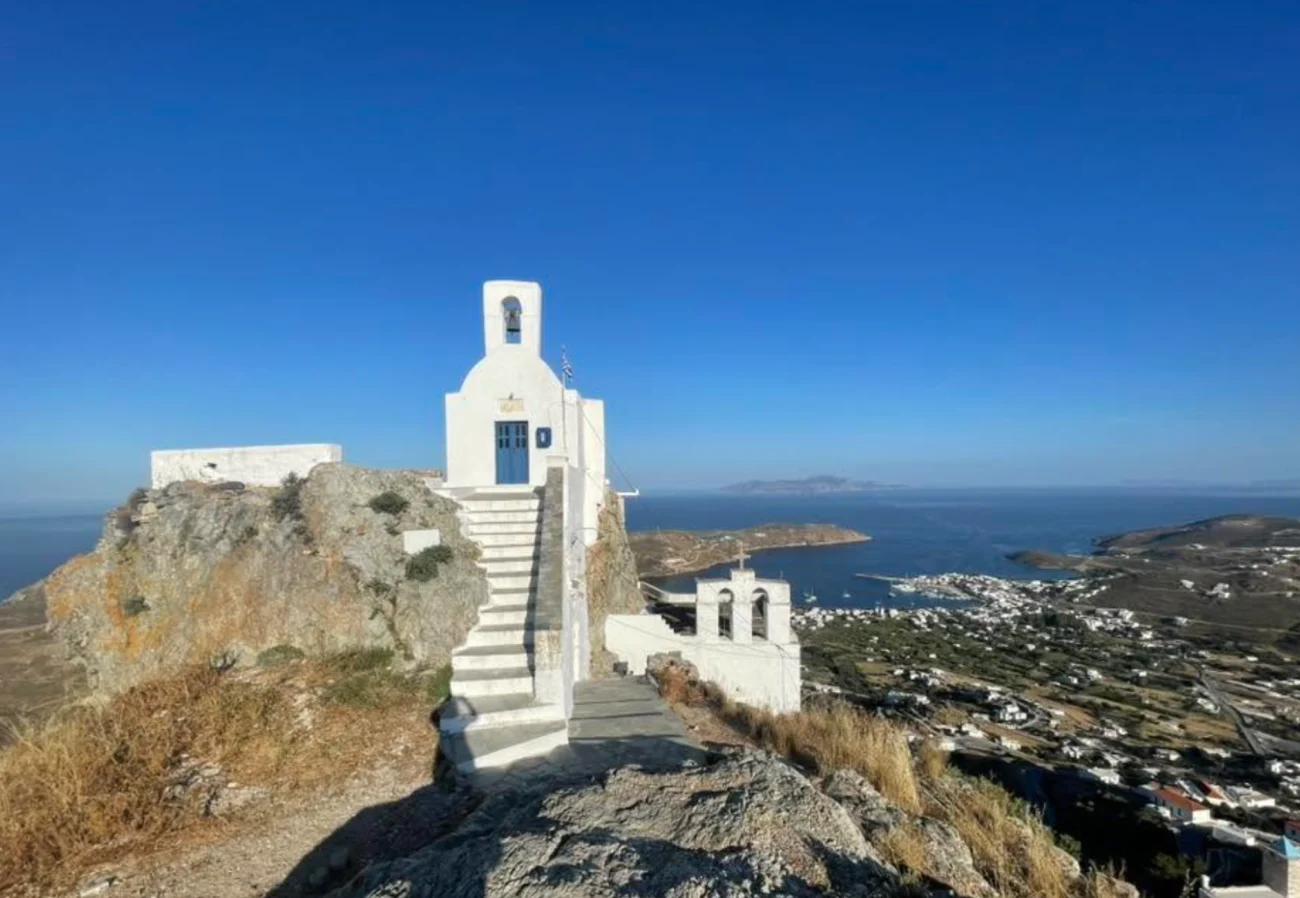
Perched dramatically on a rocky hilltop high above the port of Livadi, Chora is without question one of the most striking and beautiful capital towns in the entire Cyclades. The approach alone is unforgettable, a winding zigzag road climbing sharply upward until the village appears above you in a cascade of whitewashed houses, old windmills and ancient stone lanes. Once you step out of your vehicle and continue on foot, the town reveals itself through a maze of narrow stepped alleys, traditional tavernas, small squares where cats doze in the afternoon heat and churches around what feels like every corner. At the very top of Chora sit the ruins of a Venetian castle built in the fifteenth century, offering sweeping 360 degree views across the Aegean that are genuinely difficult to leave. At sunset the whole hilltop turns golden, and the experience of sitting in one of the village squares as the light fades is something you will carry with you long after you leave. The Archaeological Museum and Folklore Museum are both located here and well worth an hour of your time.
Livadi
Livadi is the island’s main port settlement, sitting in a sheltered bay on the southeastern coast. Unlike many port towns in the Cyclades, Livadi is genuinely pleasant to spend time in rather than simply pass through. It has a long sandy beach, a cheerful waterfront lined with cafes, fish tavernas and small bars, and a good selection of accommodation ranging from family guesthouses to boutique hotels. The nearby Livadakia beach is an easy and enjoyable walk from the port, making it an excellent base for visitors who want quick access to both the water and the ferry connections. Local boat hire companies operate from the harbour, making it easy to explore the more remote beaches by sea. The view looking back up at Chora from the beach is one of the most photographed images in the Western Cyclades.
Megalo Livadi
Tucked away on the southwestern coast, Megalo Livadi is a small, strikingly quiet village with a fascinating and rather moving history. This is where the island’s iron ore was loaded onto ships during the mining era that defined Serifos from antiquity right through to the 1960s. The ruins of the old mining infrastructure, including wagons, loading platforms and iron gantries, still stand along the waterfront as silent reminders of an industrial past. It was also here in 1916 that Greek workers staged the country’s very first organised workers strike, a moment of huge historical significance. Today Megalo Livadi is a peaceful spot with a lovely sandy beach, a handful of tavernas and a quietly powerful atmosphere that makes it feel unlike anywhere else on the island.
Koutalas
This small fishing village on the southern coast sits in a large sheltered bay alongside the beaches of Ganema and Sykamia. It is a wonderfully unhurried place with a shingle beach, a handful of old style tavernas and a genuine working fishing community that gives it an authentic, lived in feel. Above the village sits the evocatively named Kastro tis Grias (Castle of the Old Woman), perched on a dramatic rocky outcrop and offering extraordinary views over the southern coastline. Nearby there is also a fascinating cave with stalactites and stalagmites and the ancient White Tower, Aspros Pyrgos, a round marble watchtower dating back to the late classical period of Greek antiquity.
Panagia
A beautifully traditional inland village in the northern part of the island, Panagia is built around an ancient Byzantine church of the same name that dates back to somewhere between 950 and 1000 AD, with remarkable fourteenth century murals still visible inside. The village is quiet, genuine and off the beaten path, exactly the kind of place that rewards travellers who venture beyond the coast. The fortified Monastery of the Taxiarchs, dedicated to the Archangels Michael and Gabriel and built in 1572, sits just outside the village and is one of the most historically important and visually stunning buildings on the island. The monastery was fortified specifically to withstand pirate raids and still feels impressively fortress like when you approach it today.
Main Ports in Serifos
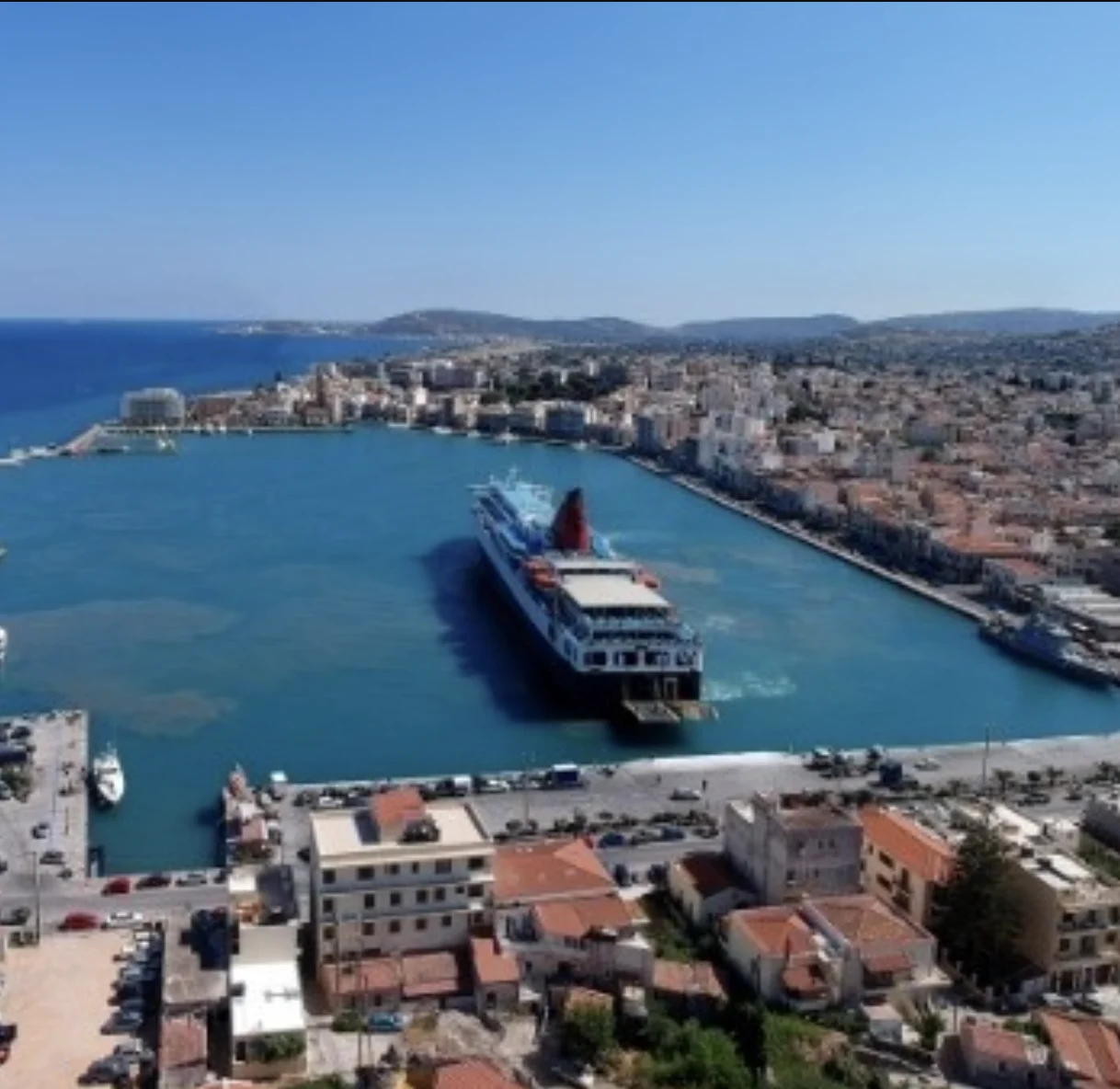
Livadi Port: Livadi is the one and only ferry port on Serifos, sitting on the sheltered southeastern coastline of the island. It is the gateway for all visitors arriving by ferry and is one of the most pleasant and well equipped ports in the Western Cyclades. The harbour is protected from the dominant summer winds, making arrivals and departures reliable throughout the season. Regular ferry services connect Livadi to the port of Piraeus in Athens, with fast ferry crossings taking around 2 to 2.5 hours and conventional ferry services taking approximately 4.5 to 5 hours. The port is also well connected to neighbouring Cycladic islands including Kythnos to the north, Sifnos to the south in just 20 to 30 minutes, Milos in around 1 to 2 hours, Syros and Kimolos. Car hire, scooter rental, bus services and boat excursions all depart from or near the port, making Livadi the practical and logistical heart of the island.
Getting around Serifos
Getting around Serifos is fairly simple, but the best option depends on whether you want to stay near the port and Chora or explore more remote beaches and viewpoints. There is a public bus that runs regularly between Livadi, the main port, and Chora on the hill, and in the main summer months some routes extend to villages and selected beaches, so you can move between the two main centres without needing to drive.
Beyond this, many visitors choose to rent a small car or scooter in Livadi because the island’s bus coverage is limited and a vehicle makes it much easier to reach quieter bays and viewpoints along the single main road that loops around Serifos. Taxis operate from Livadi and can be booked to reach villages or beaches when buses are not convenient, and local agencies also offer boat trips and sea taxis to coves that are difficult to access by land. Serifos is popular with walkers, and there is a dense network of old paths linking Chora, villages like Panagia and Galani, mining sites and hidden beaches, so it is very common to combine short bus or taxi rides with hikes that reveal the island’s more rugged side.
How to get to Serifos
Serifos has no airport, which is a large part of what keeps it beautifully wild and free from the kind of mass tourism that has transformed its more accessible neighbours. All visitors arrive by sea, and the ferry journey itself across the Aegean is a genuinely enjoyable part of the experience.
By Ferry from Piraeus (Athens): The main route to Serifos is from the port of Piraeus. Fast ferry services operated by companies such as Seajets take around 2 to 2.5 hours, while conventional ferries take approximately 4.5 to 5 hours with stops along the way. During the summer season there are daily departures and sometimes multiple sailings per day. Tickets start from around 37 euros one way depending on the type of vessel and how far in advance you book.
By Ferry from Lavrio: Ferries from the port of Lavrio, located around 60 kilometres southeast of central Athens, also serve Serifos and are worth considering if you are already in the southern part of Attica. Journey times are broadly similar to those from Piraeus.
From Other Cycladic Islands: Serifos is ideally positioned for island hopping through the Western Cyclades. Sifnos is just 20 to 30 minutes away by fast ferry, making it an effortless combination. Kythnos to the north takes around one hour, Milos is roughly 1 to 2 hours, and connections also run to Syros, Kimolos and Paros during the summer season.
Nearest Airport: Athens International Airport (ATH) is the closest major international hub. From the airport, a taxi or bus to Piraeus takes approximately one hour, from where you can catch your ferry to Serifos. Alternatively, a taxi or transfer to Lavrio takes a similar amount of time.
Getting Around the Island: A local bus service connects Livadi, Chora, Megalo Livadi, Koutalas, Panagia and Galani. However, renting a car, scooter or ATV is very strongly recommended if you want to explore the island properly and reach the more remote beaches. The coastal roads are spectacular and driving around Serifos is genuinely one of the highlights of a visit. There are only four taxis on the island so booking ahead is essential during July and August.
More attractions in Serifos
Frequently asked questions (FAQ) about Serifos
Is Serifos a good island for beach lovers?
Serifos is outstanding for beach lovers. The island has over 70 beaches ranging from long golden sandy stretches to tiny secluded pebble coves and dramatic rocky bays. Most are uncrowded even at the height of summer, and the water throughout the island is remarkably clear. Psili Ammos, Agios Sostis, Ganema, Sykamia and Vagia are among the finest, and renting a car or scooter to work your way around them over several days is one of the most enjoyable ways to spend time on the island.
When is the best time to visit Serifos?
June through to mid September is the ideal time to visit, with the shoulder months of late May, early June and September being particularly appealing for those who want warm weather, a swimmable sea and fewer crowds. July and August are the busiest and hottest months but Serifos remains far calmer than headline Cycladic destinations like Mykonos or Santorini even at its busiest. The island is mostly closed from October through to April.
How do you get from Athens to Serifos?
There are no flights to Serifos. The best way is by ferry from the port of Piraeus in Athens. Fast ferries take around 2 to 2.5 hours and operate daily during the summer months. Conventional ferries take approximately 4.5 to 5 hours. Ferries also run from the port of Lavrio in southern Attica. Athens International Airport is around one hour from Piraeus by taxi or bus.
What makes Serifos different from other Cycladic islands?
Serifos stands apart from the rest of the Cyclades in several genuinely unique ways. Its rugged, iron rich landscape and dramatic hilltop Chora give it a wildness that feels very different from the more polished islands nearby. Its mining history is remarkable, producing both the first workers strike in Greek history and a fascinating set of industrial ruins at Megalo Livadi. Add over 70 varied beaches, a fortified sixteenth century monastery, ancient watchtowers, mythological connections to Perseus and some of the most authentic taverna culture in the islands, and Serifos simply has no real equivalent anywhere in the Cyclades.
Is Serifos suitable for families with children?
Serifos is a wonderful family destination. The beaches at Livadakia, Ganema and Megali Ammos near Kanala offer calm, shallow water that is safe and enjoyable for younger children. The port of Livadi has good facilities, reliable accommodation and easy access to food and services. The local bus connects the main areas and car hire makes family exploration straightforward and enjoyable. The island is quiet, safe and unhurried, exactly the sort of environment where families can truly relax and enjoy a genuine Greek island holiday.