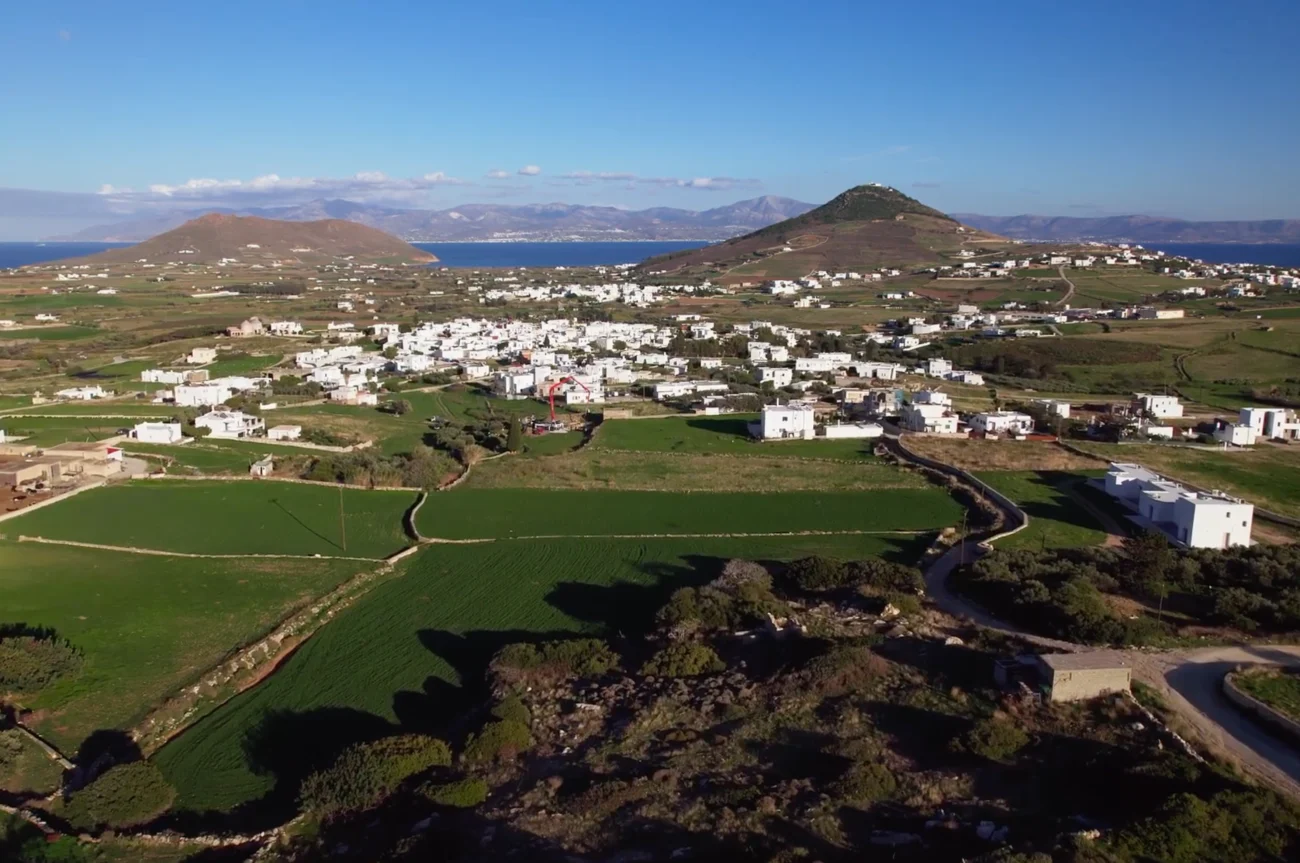
At a glance: East side of Paros, around 16 kilometres from Parikia, next to Marpissa. A quiet farming village built among olive terraces, best known as the end point of the ancient Byzantine Road from Lefkes. Best suited to travellers arriving on foot after the walk, or anyone who wants a genuinely local village away from the coast.
Is Prodromos worth visiting
Prodromos was called Dragoulas until 1953, when it took its present name from the village church of Agios Ioannis Prodromos. It has the low key, working feel of an inland farming settlement rather than a resort, with fragments of ancient masonry built into some of the house walls and the coats of arms of old Venetian families still visible above a few doorways. Most visitors arrive here on foot, at the end of the Byzantine Road from Lefkes, and the village makes a natural place to stop for a meal before heading on to the coast.
Highlights
- The house walls built with fragments of ancient temples and older buildings, visible if you look closely as you walk through the village
- The coats of arms of Venetian aristocratic families displayed above some of the older houses
- The end of the Byzantine Road, arriving from Lefkes through olive groves and terraced fields
- The renovated windmills just outside the village, now used as houses
- The short drive down to Kalogeros Beach, one of the more distinctive beaches on this side of Paros
The Byzantine Road from Lefkes
Prodromos sits at the far end of the Byzantine Road, the marble paved path more than 1,000 years old that once connected Paros’s monasteries and remains the oldest continuously used route on the island. Walkers arriving from Lefkes cover around 3.5 kilometres of terraced hillside, stone farm huts and centuries old olive trees before the path opens out into the edges of Prodromos itself, making the two villages a natural pair to visit together.
Where Prodromos is
Getting to Prodromos
From Parikia port: Prodromos is around 16 kilometres away, roughly 20 to 25 minutes by taxi or car.
On foot: Via the Byzantine Road from Lefkes, around 3.5 kilometres and 1 hour of walking, mostly downhill.
By bus: Buses connect Parikia to this side of the island via Marpissa and Prodromos in season. Check current routes and times on the Paros bus timetable.
By car or taxi: See getting around Paros and Paros taxi for prices and booking details.
Arriving on Paros: For ferry routes and journey times to the island, start with how to get to Paros.
Where to eat
Prodromos has a small number of tavernas serving traditional, home style food, a natural stop for lunch after the Byzantine Road walk. It is generally quieter and better value than the tavernas in the more visited coastal villages nearby.
Where to stay
Accommodation in Prodromos itself is limited, mostly small rooms within the village. Most visitors base themselves in nearby Marpissa or on the coast at Piso Livadi and visit Prodromos for the walk and a meal. For a private villa with a pool elsewhere on Paros, see Paros villas with a private pool.
Beaches near Prodromos
Kalogeros Beach, known for its natural clay, is around 10 to 15 minutes away by car. Molos and Tsoukalia beaches are also nearby, though neither yet has its own detailed guide on this site.
Best time to visit
Spring and autumn are the best seasons for the walk from Lefkes, with cooler temperatures and clear light over the olive terraces. In summer, an early morning start avoids the midday heat on the exposed sections of the path.
How do I get from Parikia to Prodromos?
Around 16 kilometres, roughly 20 to 25 minutes by taxi or car.
How long does the walk from Lefkes to Prodromos take?
About 1 hour to cover the 3.5 kilometre Byzantine Road, mostly downhill through olive groves.
Why is it called Prodromos?
The village was originally called Dragoulas and took its current name in 1953, from the church of Agios Ioannis Prodromos built there at the time.
Is Prodromos worth visiting on its own, without the walk from Lefkes?
It is a genuine, low key farming village rather than a major sight in itself, so it suits travellers already in the area or walking the Byzantine Road more than a dedicated trip.