
Table of Contents
Getting around Paros doesn’t have to be stressful. Whether you are here for sun-soaked beaches, charming whitewashed villages, ancient history, or peaceful mountain trails, this guide will help you pick the best ways to move around, discover local insider tips, and understand how long journeys actually take. Paros is a relatively small island in the Greek Cyclades, and most destinations sit less than a 30 minute drive from each other. This makes planning simple and flexible, which means you can truly explore at your own pace.
The main transport hubs on Paros are Parikia (the capital and primary ferry port where most visitors arrive), Naoussa (the northern chic fishing village), and the Paros Airport located about 11 kilometres southwest of Parikia. The island has a good network of local buses, reliable taxi services, and car rental options. Understanding which transport method works best for your style of travel is the key to enjoying your time here. Some visitors thrive on buses and walking, while others prefer the freedom and comfort of a rental car or scooter. Transport planning matters on Paros because it shapes how much of the island you will see, how much you will spend, and how stressed or relaxed your holiday feels.
Do You Really Need a Vehicle on Paros?
This is the most important question every visitor asks themselves. The answer depends on where you stay and what you want to do.
If you stay in Parikia or Naoussa and keep your activities close to these towns, you absolutely do not need a vehicle. Both towns feature beautiful cobblestone streets with countless shops, restaurants, bars, and cultural sites within walking distance. You can easily spend a whole day wandering the narrow alleys, discovering hidden courtyards with colourful flowers, and soaking in the authentic Cycladic atmosphere. The main towns are compact and pedestrian friendly, with most places within a 20 minute walk.
However, Paros is a fairly large island for the Cyclades, and its best spots are spread out across the coast and interior. If you want to visit multiple beaches (like Kolymbithres, Golden Beach, and Piso Livadi), explore the inland marble quarries near Marathi, hike the famous Byzantine Road between Lefkes and Prodromos, or discover quiet fishing villages like Marpissa, then a vehicle becomes very useful. Without one, you will spend a lot of time waiting for buses and planning your day around timetables rather than enjoying experiences.
The bus system on Paros is generally reliable during summer, but services are reduced significantly in winter and can fill up quickly during peak season. Taxis are always available but add up in cost if you take multiple rides. Many first time visitors find a middle ground works best: use buses for main routes between towns, walk when staying in town, and rent a vehicle for 2 to 3 days if they want to explore deeper.
Transportation Recommendation by Traveller Type
| Traveller Type | Best Option | Why This Works |
|---|---|---|
| Budget backpacker | Bus and walking | Cheapest option at €2 to €3.50 per journey; main towns fully walkable |
| Family with luggage | Rental car or private transfer | Comfort, flexibility, luggage space for multiple stops; airport pickup eliminates stress |
| Adventure seeker | Scooter or ATV | Fun, nimble, easy parking; access to narrow village roads and coastal viewpoints |
| Senior traveller or accessibility needs | Taxi or private transfer | No physical demands; door to door service; guaranteed seating |
| Couple on romantic getaway | Scooter or mix of bus and taxi | Freedom for scenic routes; romantic for two; easy parking; budget flexible |
| Group of friends (4+) | Rental car or private transfer | Cost splits across people; convenient for day trips; can set own schedule |
Transportation Options – Your Complete Breakdown
A) Renting a Vehicle on Paros
Renting a car, scooter, or ATV is the most popular choice for visitors who want independence and flexibility to explore the full island. Roads on Paros are generally well maintained compared to other Greek islands, though some village streets are narrow and winding with sharp turns. Read More: Taxi Services in Paros
Car Rentals
Automatic cars start from around €16 per day in low season and can rise to €25 to €40 per day in peak July and August. Several rental companies operate from Parikia port and the airport, including Golden Car Rental, Notos Rent a Car, and others. Cars give you shade, storage for beach bags and purchases, air conditioning, and the ability to make spontaneous stops. This is especially valuable if you are travelling with kids, elderly relatives, or anyone who finds the heat demanding.
When renting a car in peak season (June to September), book at least 2 to 3 weeks in advance. Last minute rentals cost significantly more and may not have your preferred vehicle type. Insurance is mandatory in Greece. Most rental companies include basic third-party insurance, but we strongly recommend paying extra for collision damage waiver or full coverage if this is your first time driving abroad. Road quality is good, but some interior mountain roads are steep and require careful driving. Parking in Parikia and Naoussa during summer is very scarce and can be frustrating. It’s common to park 5 to 10 minutes walk away from town centres and walk the rest. Many restaurants and hotels offer free parking if you dine or stay with them, so always ask.
Driving in Paros follows standard European rules: drive on the right, yield to traffic in roundabouts, and respect posted speed limits. Local driving style is fairly relaxed outside of peak season, but summer brings congestion in town centres and popular beach roads. Some drivers park illegally on narrow streets, creating bottlenecks, so extra patience helps.
Scooters and Motorbikes
Scooters and 125cc to 150cc motorbikes are hugely popular on Paros. A 125cc scooter typically rents for €20 per day, while 150cc models cost around €25 per day. They are nimble, fun, and brilliant for couples or solo travellers. Scooters easily navigate narrow village streets and fit into tight parking spots that cars cannot reach. The wind in your hair and views as you ride along coastal roads create memories that driving a car often cannot match.
However, scooters require a valid driving licence and comfort with two wheeled vehicles. Wearing helmets is legally mandatory. Road conditions include some steep hills and sharp turns, so inexperienced riders should consider staying on main routes rather than exploring steep mountain villages. Petrol is inexpensive, typically costing just a few euros to fill a scooter tank.
ATVs and Quads
ATVs (All Terrain Vehicles) ranging from 250cc to 520cc are available from several rental companies and cost around €25 to €40 per day depending on engine size. ATVs offer more stability than scooters, better ground clearance for rough tracks, and more seating or storage. Some riders use ATVs for true off road exploration, though most roads in Paros are paved or well maintained gravel. Smaller ATVs (50cc to 125cc) can be ridden with a standard car licence, but larger ones require an ATV or motorcycle licence. Always check the rental company’s requirements before booking.
Electric Vehicles and E Bikes
E-bikes are becoming more common on Paros as rental shops respond to demand for quieter, more environmentally friendly options. These battery powered bicycles make longer distances easier, especially on hills. E-bikes typically rent for €15 to €25 per day and can travel 30 to 50 kilometres on a single charge. Charging stations exist in Parikia and Naoussa. This option suits couples or families who want exercise and fresh air but prefer not to struggle on steep climbs in summer heat.
Insider Tips for Vehicle Rentals
Book insurance carefully. Greek rental companies often bundle basic cover, but paying extra for collision damage waiver (typically €8 to €15 per day) gives genuine peace of mind on narrow roads.
Petrol is cheapest in Parikia and Naoussa. Never let your tank fall below half full when heading to remote villages, as petrol stations are sparse in the interior.
Get a detailed map or download offline maps on your phone before driving inland. Not all narrow village roads appear on standard GPS, and mobile signal drops in some areas.
Check tyre condition and tread. Rental companies should provide roadworthy vehicles, but a quick look before driving away prevents problems later.
Parking fees rarely exist on Paros, but free spaces vanish during summer midday (11am to 4pm). Arrive early or late to find parking easily. Some towns use informal payment systems (small cash tips to informal parking attendants) or honour system payments.
Keep your rental documents, insurance details, and the rental company phone number accessible at all times. Police occasionally ask for documents during routine checks.
B) Public Bus System – The Reliable and Budget Friendly Option
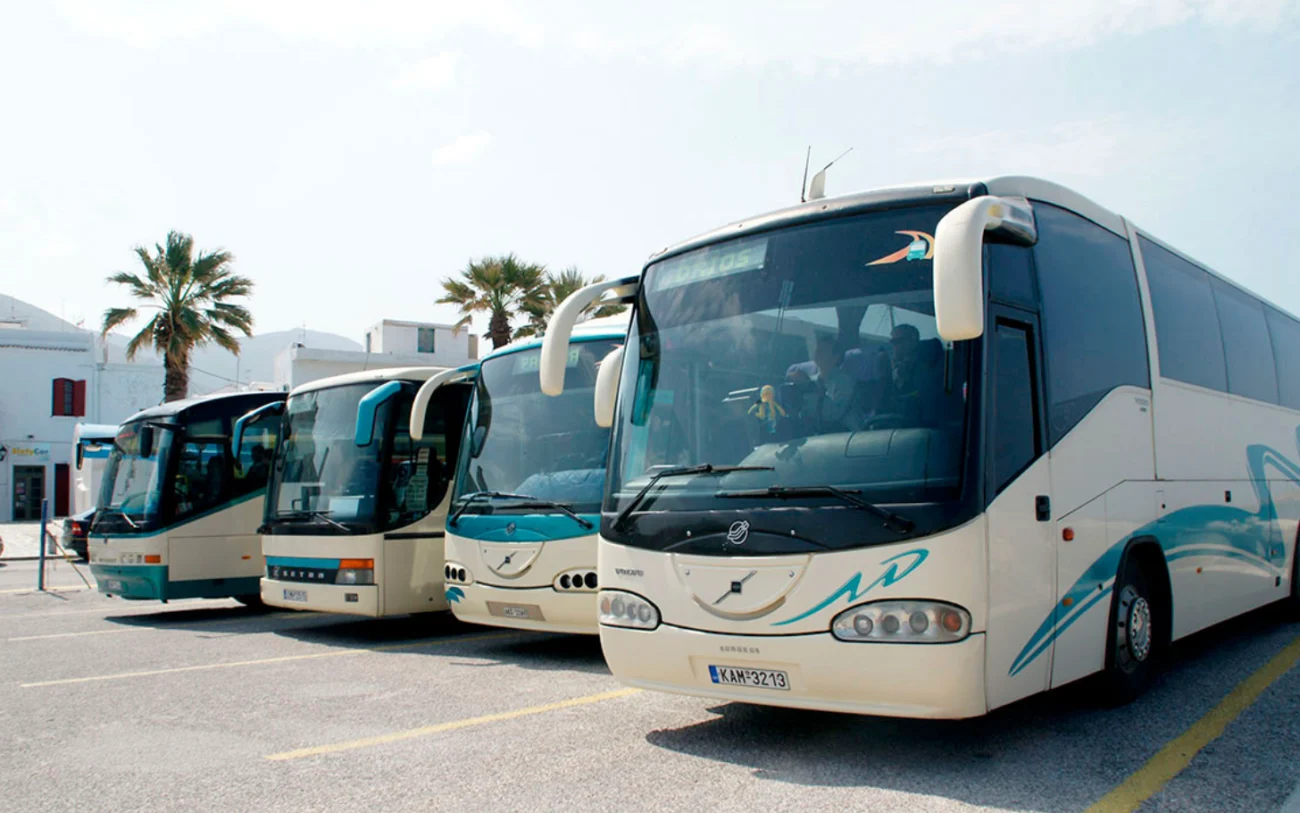
Paros has an excellent public bus system operated by KTEL Parou. Buses are the cheapest way to travel and connect nearly all towns, villages, and major beaches. For budget conscious travellers or those comfortable with slightly less flexibility, buses are often the best choice.
Where the Bus System Works
The main bus terminal is located in Parikia, roughly 200 metres (about a 1 minute walk) south of the ferry port, right near the iconic Paros Windmill. From here, buses depart regularly to Naoussa, Lefkes, Piso Livadi, Golden Beach, Aliki, Pounta (for the Antiparos ferry), and numerous smaller villages. Each route is numbered and well signposted, though signs are sometimes in Greek only. Learning a few Greek words for destinations helps, but staff at the terminal speak enough English to point you toward the correct bus.
Typical Routes and Timetable Examples
From Parikia, the bus to Naoussa runs multiple times daily, with summer schedules offering departures roughly every hour (sometimes every 30 minutes during peak season). Journey time is about 20 minutes. The route to Lefkes also departs several times daily, taking about 25 to 35 minutes depending on stops. Summer schedules are much more frequent than winter, with winter seeing perhaps 2 to 4 departures per day on main routes instead of 5 to 8 during summer.
The bus to Antiparos ferry at Pounta costs €2 and runs about once per hour in summer. Golden Beach and other southern beaches have direct buses from Parikia, though frequency varies.
Ticket Prices and How to Buy
Tickets cost between €2 and €3.50 depending on distance travelled. Short hops within Parikia to nearby villages cost €2, while longer journeys to Golden Beach or far villages cost €3 to €3.50. Tickets purchased in advance at the Parikia terminal kiosk are cheaper than tickets bought on board, which cost €2.50 to €3.50. A day pass offering unlimited bus travel for 24 hours costs €10 and is worth buying if you plan multiple journeys in one day.
You can check the official KTEL Parou website at ktelparou.gr for exact timetables. Print these or take a screenshot before your trip, as relying solely on Google Maps sometimes gives outdated information.
Seasonal Changes and When Buses Get Busy
From mid June to mid September, bus frequency is highest and most reliable. Winter months (November to March) see significantly reduced services, sometimes with only 1 to 2 buses per day on minor routes. This is crucial to know if visiting in shoulder seasons. Many travellers arrive assuming year round frequent service and become frustrated during May, September, and winter months.
Summer buses fill extremely quickly, especially when ferries arrive in Parikia. If you are arriving by ferry, get off quickly and head straight to the bus terminal to purchase your ticket. Even if the bus you want is full, another will arrive within 15 to 30 minutes. Don’t panic, but also don’t delay. Arriving on the earlier ferry (if multiple times are available) means less crowded buses later.
Buses have luggage storage underneath and are air conditioned, which is genuinely valuable in summer heat. Expect crowding but not dangerous conditions.
Insider Tips for Bus Travel
Ask hotel staff about bus timetables when you arrive. Print or screenshot the KTEL website schedule for your specific routes, as local buses sometimes change without online updates.
Bring small notes or coins. Bus drivers may not have change for large notes, and the terminal kiosk sometimes runs out of change during busy times.
During summer, timing your beach visits outside peak hours (11am to 4pm) reduces bus crowding and guarantees you a seat. Early morning or late afternoon buses are significantly quieter.
Ask locals or hotel staff which buses fill first. Popular beach routes during summer often have queues, while less famous beaches have nearly empty buses.
Buses to Naoussa from Parikia arrive at a terminus about a 5 minute walk from the town centre, so add walking time to your journey plans.
Read More: Paros Bus Timetable
C) Taxis and Ride Services
Taxis are available throughout Paros and provide a middle ground between buses and car rentals, especially useful for short journeys or late night travel.
Finding Taxis and Typical Costs
You can hail taxis on streets in Parikia or Naoussa, find them at designated taxi ranks (usually near the ferry port or bus terminal), or call dispatch services. Several reliable companies operate WhatsApp and phone booking: Paros Taxi Karousos (+30 694 413 8995), Happy Move Paros (+30 694 241 1341), and Aegean Taxi offer English speaking drivers and 24/7 booking.
Taxi fares are regulated by the Greek government and use a taximeter system. The base fare is €3.50. During daylight hours (05:00 to 24:00), each kilometre costs €0.70. Night time hours (00:00 to 05:00) double this to €1.40 per kilometre. Airport to Parikia costs roughly €25 during the day and €28 at night. Parikia to Naoussa runs about €18 to €22 depending on the exact pickup and drop off points.
Booking Tips and Insider Knowledge
Pre-booking a taxi via WhatsApp (increasingly common) or phone often results in slightly better pricing than hailing a street taxi, because the driver does not spend time cruising looking for fares. WhatsApp booking is genuinely convenient: simply text a company with your pickup location, destination, and preferred time, and they confirm availability.
Never accept a flat fee offer from a taxi driver unless you get it in writing and confirm the meter will not be used. While some drivers offer flat rates (especially for airport pickups), these are often higher than what the meter would charge.
Ride sharing apps like Beat and iMove operate in the Cyclades, but availability on Paros is limited compared to Athens. Taxi companies remain the more reliable option.
Taxis are genuinely useful for night arrivals (ferries that dock in the evening), airport pickups with lots of luggage, or if a group splits a fare for a longer journey. For a single person or couple taking a short inner town journey, the bus is usually cheaper.
D) Private Transfers – Maximum Comfort and Convenience
Private transfers involve pre-booking a driver and vehicle to pick you up from the airport or ferry port and take you directly to your accommodation. This option is becoming increasingly popular with families and groups wanting stress free arrivals.
When Private Transfers Make Sense
Private transfers are ideal for families with small children, groups with large luggage, elderly travellers, or anyone arriving late at night when bus and taxi availability is uncertain. A pre-booked transfer costs roughly €40 to €50 from the airport to Parikia (compared to €25 by taxi), but eliminates the hassle of finding correct buses, queuing, or negotiating with taxi drivers. Your driver meets you with a name sign in the arrivals hall, helps with luggage, and drives directly to your hotel.
Companies like Welcome Pickups, Aegean Taxi, and private villa operators all offer transfer services. Many hotels and villa companies include free or discounted transfers as part of package deals, so ask when booking accommodation.
Multi day private transfers are also available. You can hire a driver for a full day (typically €80 to €120) to take you around the island, visiting multiple beaches and villages at your own pace, stopping for photos and meals whenever you wish. This works well for groups splitting the cost.
E) Walking and Local Paths – Explore Like a Local
Walking is underrated on Paros, especially in the main towns and for exploring the island’s only significant hiking trail.
Walkable Areas and Town Exploration
Parikia and Naoussa are entirely walkable once you are in the town centres. Both feature narrow cobblestone streets, charming alleys, hidden courtyards, tiny churches, cafes tucked into corners, and shops selling everything from tourist trinkets to genuine local crafts. The best way to experience these places is to abandon your planned route and simply wander. You will stumble upon tiny tavernas, beautiful views from unexpected viewpoints, and locals’ favourite spots that no guidebook mentions. Wear comfortable walking shoes with good grip, because ancient cobblestones are beautiful but genuinely slippery when wet.
Parikia’s main square near the windmill is the heart of the town, and from here, dozens of paths lead deeper into the maze. Naoussa’s harbour front is equally charming, with excellent restaurants overlooking the fishing boats and sunset views that justify the trip alone.
The Byzantine Road – Paros’s Best Hiking Experience
The Byzantine Road (also called the Byzantine Way) connects the villages of Lefkes and Prodromos and is Paros’s most famous walking trail. This 2.3 mile trail follows an ancient marble paved path used for centuries by local villagers to move between communities. Donkey hooves and generations of walkers have polished the marble, creating a trail that is genuinely beautiful and manageable for most fitness levels.
The hike takes 1 to 1.5 hours depending on pace and photo stops. It is mostly downhill if starting from Lefkes (a medieval hilltop village worth exploring for 30 to 60 minutes before or after the hike). The path winds through olive groves, passes views toward Naxos and the Aegean, and descends into peaceful countryside untouched by coastal tourism. The trail is easy to follow, with stone markers and signposts, though finding the exact starting point requires a bit of navigation. Pin the starting coordinates on Google Maps or ask locals for directions.
Best times to hike are early morning (7am to 9am) or late afternoon (5pm to 7pm) to avoid midday heat. Bring water, sunscreen, and a hat. Some sections pass through partial shade under olive trees, but significant portions are fully exposed. Walking poles help on steep downhill sections if you prefer extra stability.
Practical Walking Tips
Walking in main towns is safe and straightforward. Paths are well lit at night and locals are helpful if you get lost (which is easy in the maze like alleys). Wearing shoes with good grip matters because even “new” cobblestones can be slippery, especially in summer when oil from cooking surfaces some streets.
Walking between towns (for example, from Parikia to Naoussa along the coast) is not practical due to distance and lack of formal pathways. Stick to walking within town centres or taking the Byzantine Road hike.
F) Boat and Water Transport – Unique Options for Beaches
While not a primary transport method, water options exist for specific journeys, especially beach hopping and visits to neighbouring islands.
Water Taxis and Beach Shuttles
Small water taxis operate from Parikia harbour to various beaches during summer months, though frequency is seasonal and weather dependent. These are fun for adventures but not reliable for scheduled transport.
Organized boat tours are far more common. Companies operate daily cruises from Pounta Beach (on southern Paros, accessible by bus from Parikia) to Antiparos’s Blue Lagoon, other nearby islands, and scenic swimming stops. These typically cost €35 to €50, include snorkelling gear and lunch, and run with fixed daily schedules. Tours are brilliant for families, groups wanting a structured experience, and anyone wanting to see more of the Cyclades in a single day.
Ferry to Antiparos
A car ferry runs from Pounta (accessible by bus, 20 minute journey from Parikia) to Antiparos roughly every 30 minutes during summer. The 10 minute ferry costs €2 and runs regularly. This is genuinely convenient if you want to day trip to Antiparos without hiring a vehicle.
Travel Times Between Major Destinations
Understanding how long journeys actually take helps plan your days realistically.
From Parikia (the main port)
- To Naoussa by bus: 20 minutes, €2. By car: 15 minutes. By taxi: 15 minutes, approximately €18 to €22.
- To Lefkes by bus: 25 to 35 minutes, €2.50. By car: 25 minutes.
- To Golden Beach by bus: 40 to 50 minutes, €3. By car: 35 minutes.
- To Piso Livadi (village) by bus: 35 to 45 minutes, €2.50. By car: 30 minutes.
- To Byzantine Road trailhead (Lefkes) by bus: 25 to 35 minutes. Once there, the hike is 1 to 1.5 hours.
From Naoussa
- To Parikia: reverse of above (20 mins by bus, 15 by car).
- To Lefkes: 20 to 30 minutes by bus or car via inland route.
- To Marble Quarries (Marathi): 25 to 35 minutes by car or scooter.
Travel Distances
Most major destinations are under 30 minutes by car, making Paros genuinely easy to navigate. The furthest point to furthest point (say, Parikia to the northeastern coast beaches) takes roughly 45 minutes to 1 hour. This small scale is one of Paros’s greatest strengths for visitors.
Choosing Your Transport Strategy
The best transport approach depends on your exact circumstances:
If staying 3 days or less in one location (Parikia or Naoussa): Use buses for day trips and walk to explore the town. Total daily transport cost: €5 to €15.
If staying 4 to 7 days and want to explore the full island: Rent a car or scooter for 2 to 3 days and use buses for other journeys. This balances cost, flexibility, and experiences. Total daily cost: €10 to €30.
If staying 7+ days: Rent a vehicle for your full stay if budget allows. The flexibility and spontaneity justify the cost, especially for exploring interior villages, marble quarries, and hiking trails. Alternatively, mix 2 to 3 rental days with bus days to reduce costs.
If arriving with luggage and uncertainty about accommodation: Book a private transfer from the airport to your hotel (€40 to €50), then decide on vehicles once settled. This removes first-day stress.
If you are not a confident driver or uncomfortable with narrow European roads: Rely on buses and taxis. Paros’s bus system is genuinely reliable enough for a full island experience.