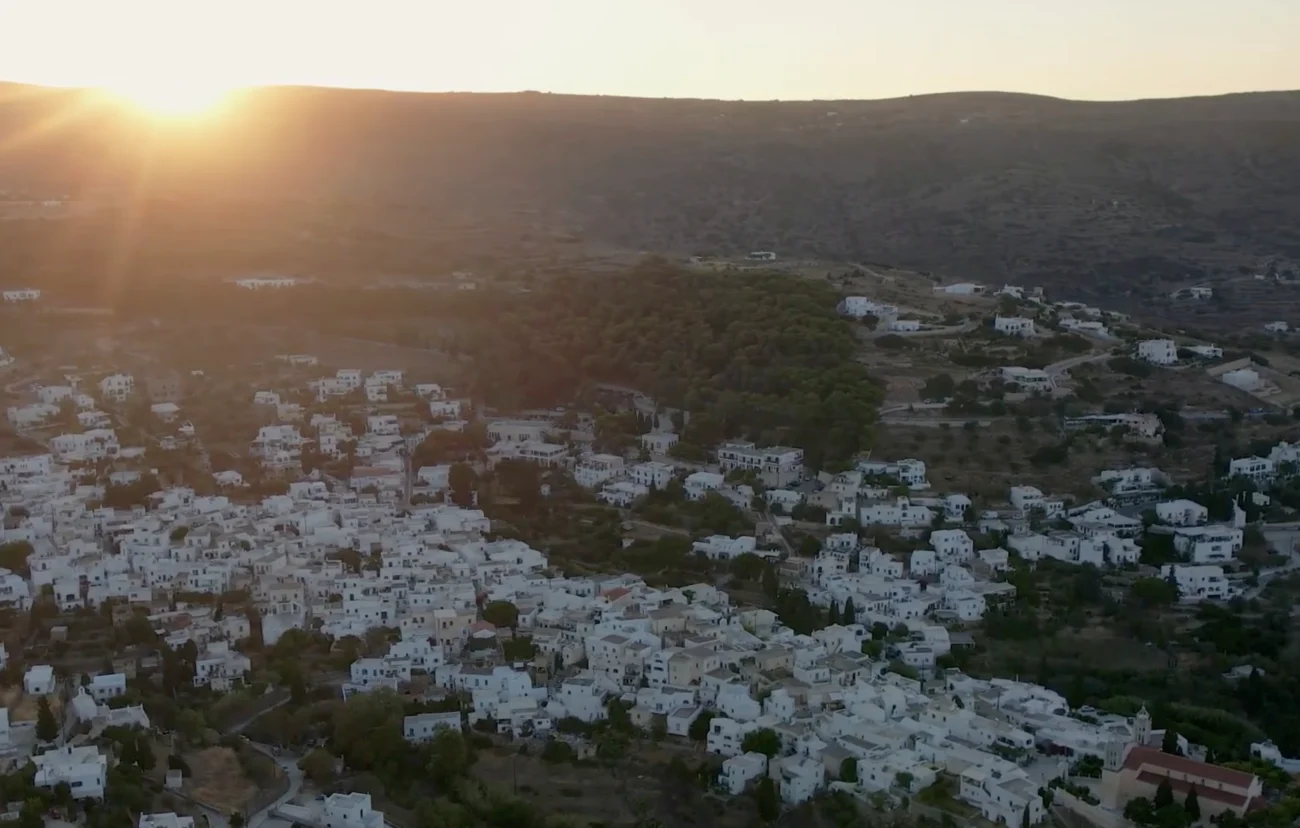
At a glance: Central Paros, on a hillside 11 kilometres south east of Parikia, about 20 minutes by road. Known for its marble paved lanes, its position as the island’s former capital and the start of the Byzantine Road hiking trail. Best suited to travellers who want a quieter, inland village with genuine history rather than a harbour scene.
Is Lefkes worth visiting
Lefkes was built inland and uphill for a reason. When pirate raids were a real threat to the Cyclades, the villagers moved their capital away from the coast and into the hills, and the result is one of the best preserved traditional villages on Paros, largely untouched by the beach town development found elsewhere on the island. Narrow marble paved streets wind between whitewashed houses covered in bougainvillea, and the village looks out over olive groves towards the sea. There is less to do here in the way of nightlife or shopping than in Naoussa or Parikia, and that is the point. Lefkes suits an afternoon of slow walking, a coffee in the square, and the start of one of the best hikes on the island.
Highlights
- The Panagia Ekatontapiliani church, known locally as the church of the 100 doors, at the heart of the village
- The marble paved lanes of the old town, largely closed to cars and shaded by the buildings on either side
- The village square, with cafes looking out over the valley below
- The start of the Byzantine Road, one of the oldest and best preserved footpaths in the Cyclades
- Panoramic views back towards Parikia and, on a clear day, across to neighbouring islands
Where the name comes from
Lefkes takes its name from the Greek word for poplar trees, which once grew in numbers around the village, not from marble. The marble connection comes instead from the paving underfoot and from Paros’s long history as a source of prized white marble, quarried inland from here for thousands of years. Local tradition holds that Lefkes was first settled in the 15th century, with some of its founding families arriving from Crete.
The Byzantine Road
The village is the starting point for the Byzantine Road, a marble paved path more than 1,000 years old that runs about 3.5 kilometres to the village of Prodromos. The walk takes around 1 hour and passes through olive groves with views across the valley to the sea, making it one of the most rewarding short hikes on Paros and a good reason to build extra time into a visit to Lefkes.
Where Lefkes is
Getting to Lefkes
From Parikia port: Lefkes is 11 kilometres away, around 20 minutes by taxi, car or the island bus.
By bus: Regular buses connect Parikia to Lefkes through the day in high season. Check current times on the Paros bus timetable.
By car or taxi: A hire car makes it easy to combine Lefkes with the Byzantine Road and the villages beyond it. See getting around Paros and Paros taxi for prices and booking details.
Arriving on Paros: For ferry routes and journey times to the island itself, start with how to get to Paros.
Where to eat
The village square and the streets around it hold a small number of traditional tavernas serving Cycladic dishes, generally quieter and less expensive than the harbourside restaurants in Naoussa or Parikia. Lefkes is a good stop for a long, unhurried lunch before or after the Byzantine Road walk.
Where to stay
Lefkes has fewer places to stay than the coastal villages, mostly small guesthouses and rooms within the old town, which suits travellers who want a quiet base away from the beach crowds. For a private villa elsewhere on the island, see Paros villas with a private pool.
Beaches near Lefkes
Lefkes itself is inland, but the Byzantine Road leads down towards Prodromos, from where several beaches are within easy reach, including Kalogeros Beach, known for its natural clay. Molos and Tsoukalia beaches are also nearby, though neither yet has its own detailed guide on this site.
Best time to visit
Spring and fall are the most comfortable seasons for the walk to Prodromos, with cooler temperatures for hiking. In July and August the village itself stays pleasant even at the height of summer, since its hillside position and marble streets keep it noticeably cooler than the coast.
How do I get from Parikia to Lefkes?
Lefkes is 11 kilometres from Parikia, around 20 minutes by taxi or car and a similar time by the regular island bus in high season.
Is Lefkes worth visiting if I only have a few days on Paros?
Yes, particularly if you enjoy walking or want to see a side of the island away from the beaches. A half day covers the village and a walk along part of the Byzantine Road.
How long is the Byzantine Road walk from Lefkes?
The full route to Prodromos is about 3.5 kilometres and takes around 1 hour at a steady pace, mostly downhill and shaded by olive groves.
Why is Lefkes called a marble village if its name means poplar trees?
The name comes from poplar trees that once grew locally, while the marble reputation comes from the paved streets underfoot and the island’s long history of marble quarrying nearby.