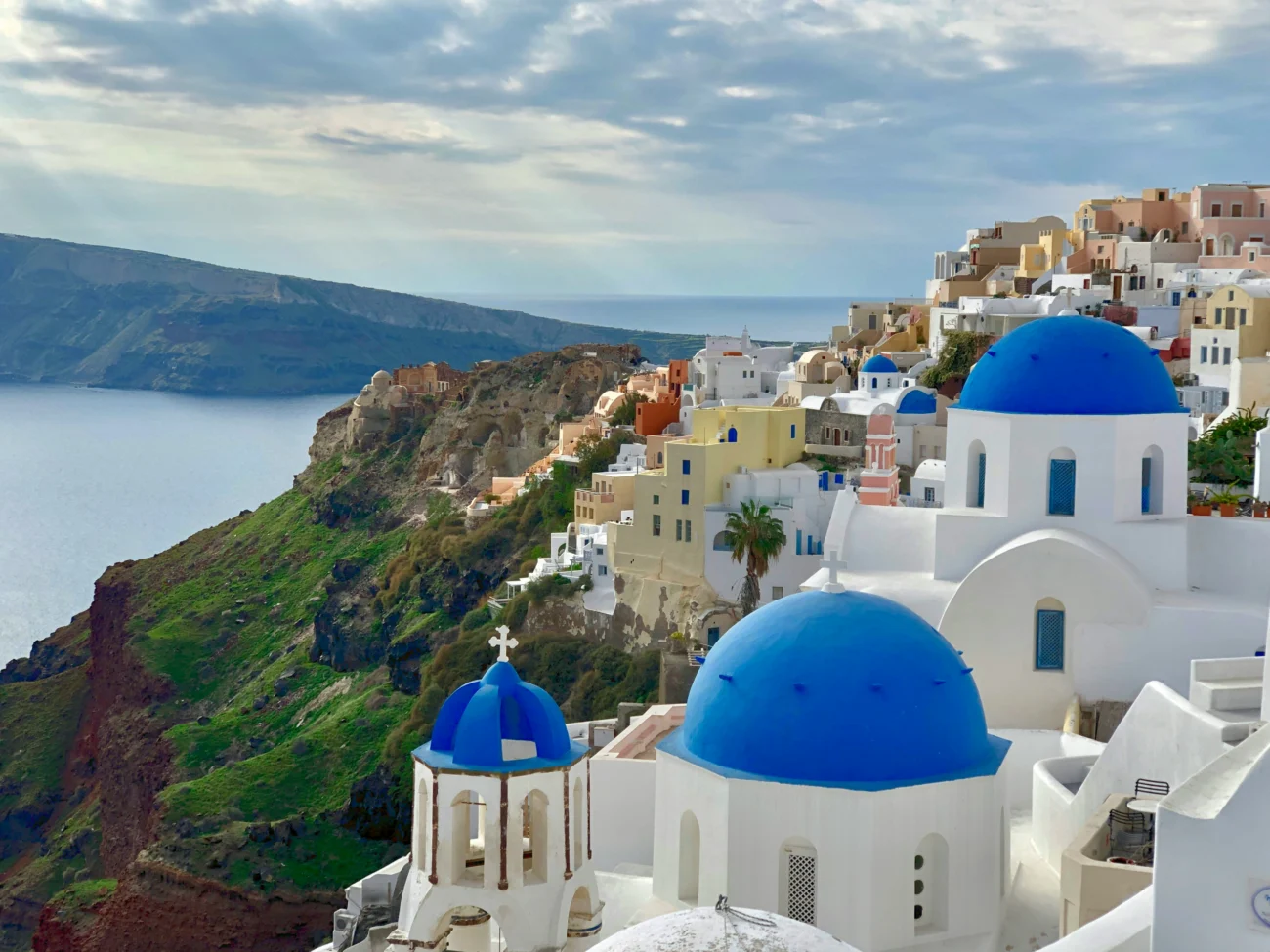
Naxos has the longest beaches in the Cyclades and it is not even close. The west coast runs in an almost unbroken strip of sand from Agios Georgios Beach right next to Naxos Town all the way south past Agios Prokopios, Agia Anna, Plaka, and on to Pyrgaki. That is roughly 10 kilometres of sand, and in places you can walk for 20 minutes without seeing a single building.
The island is the largest in the Cyclades, and its size means you get variety that smaller islands simply cannot match. The main west coast strip is sandy, shallow, and sheltered from the meltemi wind. The south coast around Alyko has wilder, more remote beaches backed by cedar woodland. And scattered around the rest of the coastline there are rocky coves and hidden bays that most visitors never find.
Naxos Town sits on the northwest coast, with the Portara, the Temple of Apollo, standing on the headland above the port. Most visitors base themselves in town or along the Agios Prokopios to Plaka strip, and buses run regularly between them. Check the Naxos bus timetable for routes and the how to get to Naxos page for ferry and flight connections.
Which Naxos Beach Suits You
Families with young children: Agios Georgios Beach is the town beach, walkable from Naxos Town in 5 minutes. The water is knee deep for a long way out and there are tavernas, cafes, and shops right behind the sand. You could not make it easier for families.
The beach everyone talks about: Agios Prokopios Beach regularly appears in “best beach in Greece” lists. It is a long crescent of fine white sand with clear shallow water and enough sunbed operators and beach bars to keep things comfortable without feeling crowded.
Long walks on empty sand: Plaka Beach stretches for several kilometres south of Agia Anna. The northern end has a handful of beach bars. Keep walking south and the people thin out until you have the sand to yourself. This is the beach for those who want space.
Windsurfing and kitesurfing: Mikri Vigla Beach is split into 2 sides by a rocky headland. The south side catches the meltemi wind perfectly and is one of the best windsurfing spots in the Cyclades, with professional schools and equipment hire on the sand.
Something wild and off the beaten path: Alyko Beach on the south coast sits behind a protected cedar forest. There are no sunbeds, no bars, and the beach has a rugged, untouched feel. An abandoned hotel in the dunes behind the beach adds to the atmosphere.
Close to the nightlife: Agia Anna Beach is a compact sandy beach between Agios Prokopios and Plaka with a cluster of restaurants and bars right behind it. It is the social hub of the west coast beach strip.
A quiet swim near a mountain village: Panormos Beach on the southeast coast is nowhere near the main tourist strip. It is a broad, empty bay with views across to the mountains, reached by a drive through the interior past villages like Filoti and Apeiranthos.
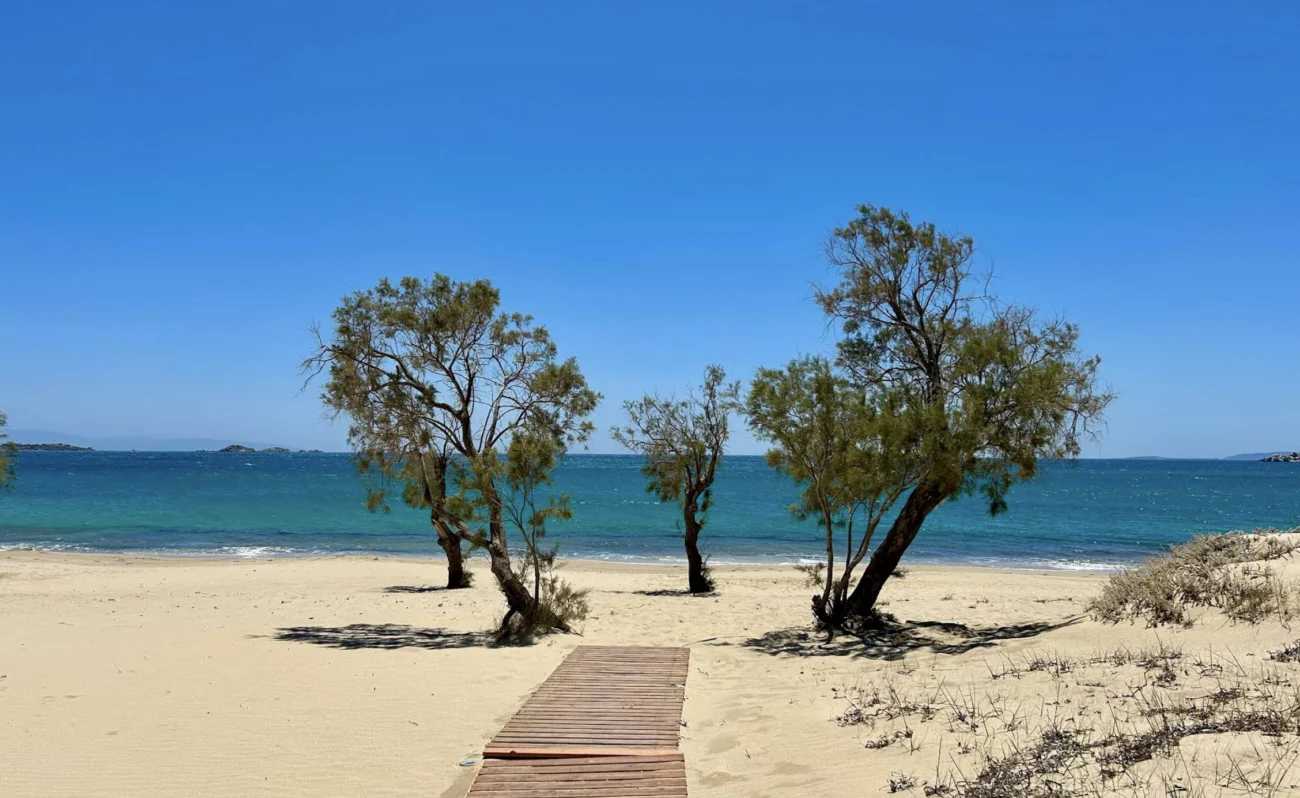
Plaka Beach
Plaka Beach consistently emerges as the number one choice across multiple travel platforms, and for compelling reasons. Stretching 4 kilometres along the western coast, it represents the longest uninterrupted sandy beach on the island. The defining characteristic that visitors rave about is its fine golden sand combined with crystal clear turquoise waters that rival the
Planning Your Beach Days on Naxos
The west coast beach strip from Agios Georgios to Pyrgaki is where most people spend their time, and buses run the route frequently during summer. You can also rent a car and drive the coast road, stopping at whichever beach catches your eye. The south and east coast beaches, including Panormos and Alyko, need a car or the Naxos taxi service to reach.
The Naxos map shows all beach locations, and the Naxos photography guide covers the best times and angles for capturing the coastline. Between beach days, the mountain villages of Chalki, Apeiranthos, and Koronos are well worth a half day trip, and the getting around Naxos page covers every transport option. For the full picture, see our main Naxos island guide.