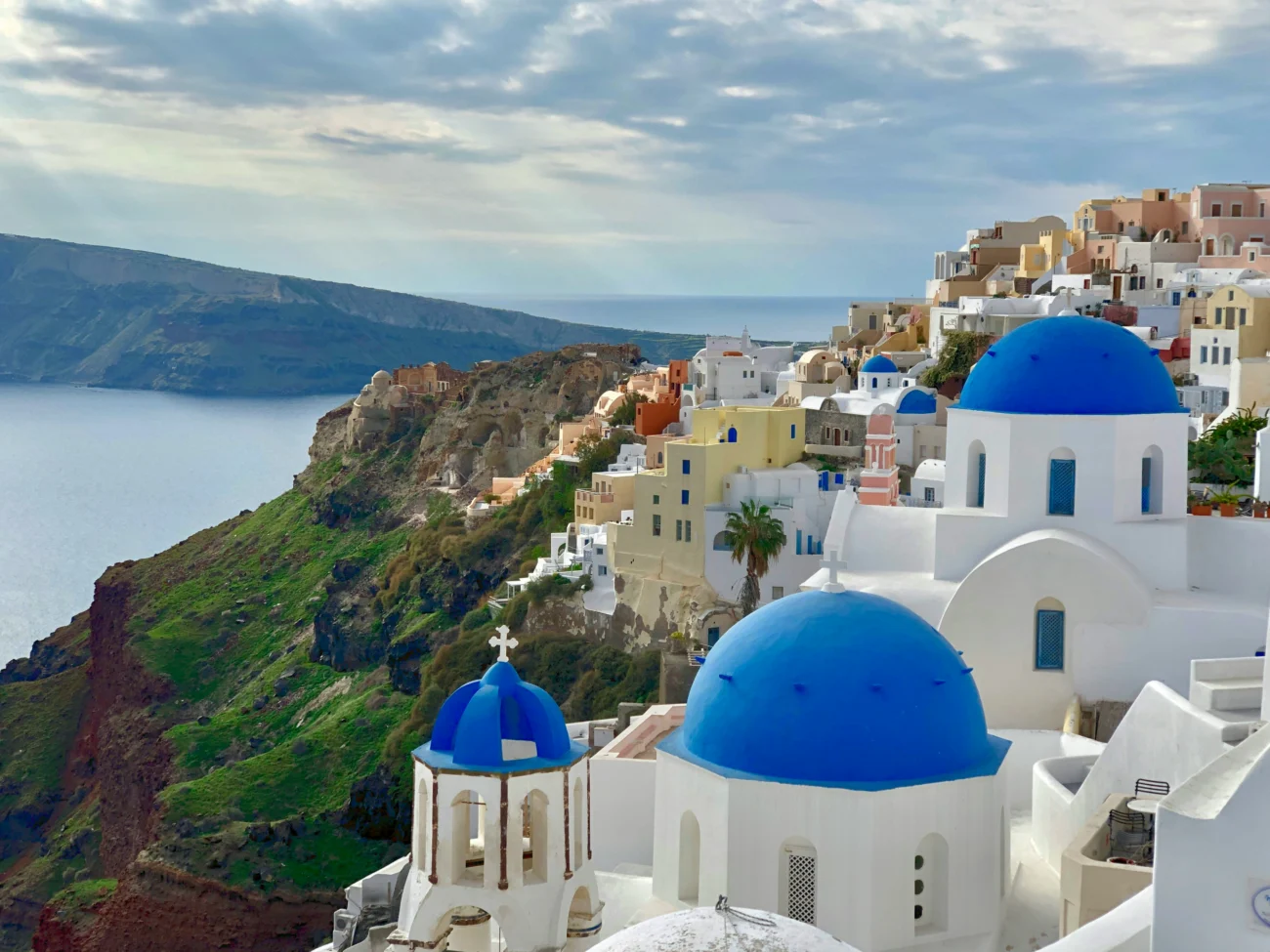
Folegandros is one of the most beautiful and unspoilt islands in the Cyclades, a small place of dramatic cliffs, a stunning clifftop capital and a slow, unhurried pace that has kept the crowds away. For years it was known mostly to Greek travellers and the sailing community, and while more people have discovered it, it still feels a world away from Santorini and Mykonos. This is an island for wandering, swimming in clear water, walking the old paths and watching the sunset from a clifftop church. There is not a long list of big sights, and that is the point. Here is what to do when you visit.
The best things to do in Folegandros at a glance
- Explore Chora, one of the most beautiful clifftop capitals in Greece, with its medieval Kastro quarter
- Walk up to the Church of Panagia for the island’s best views and its famous sunset
- Take a boat trip to Katergo beach, the finest beach on the island, reached by sea or a rugged hike
- Swim at Agali beach and hike along the coast to the chapel cove of Agios Nikolaos
- Discover Ano Meria, the traditional farming village at the quiet end of the island
- Hike the old trails, including the path to the Aspropounta Lighthouse
- See the Chrysospilia cave from the water, with its ancient Greek inscriptions
- Watch the sunset from Panagia or the quieter Chrysopigi church
The main things to do in Folegandros
Explore Chora and the medieval Kastro
Chora is the reason many people fall in love with Folegandros. The clifftop capital sits high above the sea, and it is regularly named one of the most beautiful villages in the whole of Greece. It is built around a series of linked squares, shaded by trees and lined with tavernas and small shops, with an atmosphere that is social and relaxed rather than touristy.
At the heart of Chora is the Kastro, the medieval quarter, a ring of tall houses whose outer walls once formed the village’s defensive wall against pirates. It has survived largely unchanged for around 600 years, and walking through its narrow lanes gives you a real sense of how island life was lived for centuries. The village is car free in its centre, which means the evenings in the squares are quiet and unhurried, and this is one of the great pleasures of staying on the island. A guided evening walk through the Kastro is one of the best ways to understand the history of the place on your first night.
Walk up to the Church of Panagia
Above Chora, a winding zigzag path carved into the rock leads up to the Church of Panagia, set on a dramatic plateau overlooking the village and the sea. This is one of the most iconic settings in Greece, the whitewashed church against the deep blue sky, with nothing but the Aegean stretching to the horizon. The climb is steep but takes only ten to fifteen minutes, and the view back over Chora and the southern Aegean is the best on the island.
Panagia is the most popular place to watch the sunset on Folegandros, so get there early to find a good spot, as even on an island this quiet it draws a crowd in summer. During the festival on 15 August, the zigzag path is lit with lanterns, which is a magical sight. Beneath the church lie the foundations of an ancient sanctuary, a reminder that this dramatic spot has been sacred for thousands of years. The photography from up here is superb at any time of day.
Take a boat trip to Katergo beach
Katergo is the finest beach on Folegandros, a strip of white pebbles and crystal clear, deep water at the south eastern tip of the island, framed by high cliffs. It is one of the most beautiful and unspoilt beaches in the Cyclades, and reaching it is part of the appeal. There is no road. You get there either on a short boat trip from the port at Karavostasis, or on a rugged hike of around 40 minutes from the Livadi area, which is steep and partly unmarked but rewards you with beautiful coastal views.
The boat trip is the easier option and a lovely outing in itself, passing along the dramatic coastline. Because Katergo has almost no facilities, come prepared with water, snacks and shade if you want it. The sea here is deep and dazzlingly clear, ideal for swimming and snorkelling, and there are a couple of tiny islets nearby that stronger swimmers can reach.
Swim at Agali and hike to Agios Nikolaos
Agali, sometimes written Angali, is the main sandy beach on the west coast and one of the most popular places to swim on the island, with golden sand, clear water and a few tavernas right behind the beach. It is reachable by road and by the seasonal beach boats, which makes it the easiest good beach to get to from Chora.
From Agali, one of the best short walks on the island leads along the coast to the quieter cove of Agios Nikolaos, an easy hike of around 20 minutes with lovely views of the coastline along the way. Agios Nikolaos is an unorganised beach of sand and shingle, shaded by trees, with a tiny whitewashed chapel and a couple of tavernas where you can have a coffee or lunch. You can also reach it by boat from Agali if you would rather not walk. The clear, calm water of the little bay makes it a wonderful spot for a swim away from the busier beaches.
Discover Ano Meria
At the far western end of the island, Ano Meria is a completely different Folegandros from the polished Chora. It is a traditional farming village, a scattering of houses and farmsteads spread along the road, where life still moves at an old, slow pace. At first the houses may look almost uninhabited, but people live and farm here as they have for generations.
Ano Meria is worth visiting for a taste of the working, rural side of the island. There are a couple of traditional tavernas serving local farm food, a small folklore museum, and old churches dotted around. A guided walk through Ano Meria with a visit to local producers and a farm to table meal is one of the more authentic experiences on the island. The western end of the island around the village also has some of the quietest beaches and walking.
Hike the old trails
Folegandros keeps a network of old stone footpaths that once linked the villages, the farms and the beaches before the roads were built, and walking them is one of the best things to do on the island. One of the finest routes leads out towards the Aspropounta Lighthouse on the south coast, a beautiful old lighthouse in a remote setting reached on a marked trail. Other paths link Chora to the beaches and lead out through Ano Meria to the quiet western coves.
The walking is best in the morning or the late afternoon, as the summer sun is fierce and there is little shade. Take water, a hat and proper shoes. The paths give you the wild, empty side of Folegandros that you do not see from the villages, and the coastal views are spectacular.
See the Chrysospilia cave
Below the Church of Panagia, hidden in the cliffs, is the Chrysospilia cave, one of the most intriguing sites on the island. The cave has impressive stalactites and stalagmites, but its real fascination is the ancient Greek male names inscribed on its walls and roof, some dating back to the 4th century BC, thought to be linked to ancient coming of age rituals. The cave is reached only by boat, and at the time of writing it is not open to visitors for archaeological reasons, but boat trips along the coast pass by it and you can see its dramatic setting in the cliffs from the water.
Watch the sunset
Folegandros is one of the best islands for sunsets, and you have a choice of spots. The Church of Panagia above Chora is the famous one, with the sun setting over the sea beyond the village. For somewhere quieter, the church of Chrysopigi is reached by an easy road and a short walk, and from the path below it you can often find yourself alone watching the sun drop straight into the Aegean. Both are magical, and on a longer stay it is worth seeing both.
Taste the local food
For an island its size, Folegandros has a surprisingly good food scene, particularly in Chora where several excellent restaurants serve creative takes on traditional Cycladic cooking in the garden squares. Local specialities to look for include matsata, a handmade pasta traditionally served with rooster or rabbit, and the island’s cheeses and honey. The farm food in Ano Meria is the most traditional, cooked with produce grown on the surrounding land.
Go scuba diving
The calm, clear waters around Folegandros are excellent for scuba diving, and there is a dive centre in Chora that organises dives for beginners and certified divers alike. The underwater scenery, with its caves, rock formations and clear visibility, is a good reason to get beneath the surface, and even snorkelling off the beaches at Katergo and Agios Nikolaos rewards you with clear water and marine life.
Best things to do in Folegandros for…
Couples
Folegandros is one of the most romantic islands in the Cyclades. Wander the medieval Kastro in Chora, watch the sunset from the Church of Panagia, take the boat to Katergo for a swim in the deep blue, and have dinner in one of the garden squares of Chora in the evening. The island’s quiet, unhurried atmosphere is made for couples who want beauty over nightlife.
First-time visitors
For a first visit, focus on the essentials: explore Chora and its Kastro, walk up to the Church of Panagia for the sunset, take a boat trip or hike to Katergo, and swim at Agali and Agios Nikolaos. A guided walk of the Kastro on your first evening helps you understand the place. That gives you the heart of what makes Folegandros special.
Walkers
The old trails are one of the best reasons to visit. The path to the Aspropounta Lighthouse, the hike from Agali to Agios Nikolaos, and the walks out through Ano Meria give you the wild, empty side of the island. Walk in the cooler parts of the day and take plenty of water.
Those seeking quiet
Folegandros is already quiet, but for the quietest experience head to Ano Meria and the western end of the island, watch the sunset from Chrysopigi rather than Panagia, and seek out the coves reached only on foot or by boat. Check the Folegandros weather page before travelling, as the island can be exposed to the wind.
Planning your visit
The main things to do on Folegandros cluster around Chora and the coast below it, with Ano Meria at the quieter western end and the beaches spread along the coast, several reached only by boat or on foot. A bus links the port at Karavostasis, Chora and Ano Meria through the day in summer, and the beach boats from Karavostasis and Agali reach the coves without a car. A scooter or small car helps for exploring at your own pace. See our guides to getting around Folegandros and taxi and car hire for details.
To decide where to base yourself for the things you most want to do, read our guide on where to stay in Folegandros. To plan your arrival, see how to get to Folegandros and the main ferry page. To see how everything on the island fits together, use the Folegandros map, and for the wider region, the Greek islands map shows how Folegandros connects to the rest of the Cyclades.