
Greek island hopping is the best way to see the Cyclades. Instead of staying put for a fortnight, you travel between two, three or four islands by ferry, changing the scenery, the beaches and the pace as you go. One island might be busy and glamorous, the next quiet and traditional, and the boat ride between them is part of the fun.
Table of Contents
This guide shows you how to do it properly. You will find ready made routes for different lengths of trip, honest advice on which islands to combine, and clear ferry tips so you avoid the common mistakes. Whether this is your first time or your fifth, the aim is the same: less time stuck on boats, more time enjoying the islands.
What is Greek island hopping?
Island hopping simply means basing yourself on more than one island during a single trip, travelling between them by ferry. In the Cyclades this is easy to do, because the islands sit close together and the ferry network is busy through the summer. You are not tied to a cruise ship or a fixed schedule. You book your own ferries, choose your own islands and stay as long as you like on each one.
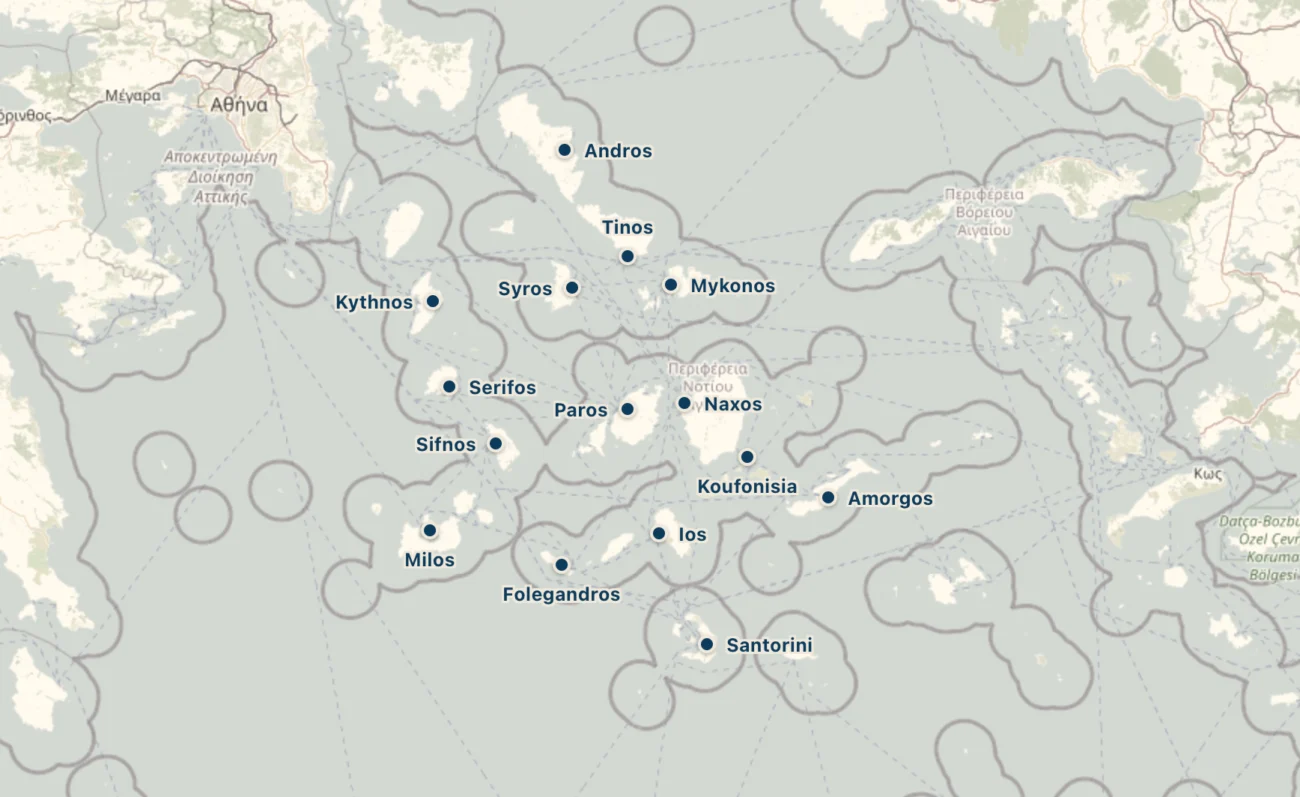
The Cyclades are the classic island hopping group for a reason. The islands are varied, the crossings are often short, and the ferries run frequently between the main ports from late spring to early autumn. You can put together a route that mixes the famous names with the quieter islands, and change the balance to suit the kind of holiday you want. To see how the islands sit in relation to each other, start with our Greek islands map.
How to plan a Greek island hopping trip
A good route comes down to a few simple rules. Get these right and the rest falls into place.
Choose islands that sit close together. This is the most important rule. The time you spend on ferries is time you are not on a beach. Islands in the same cluster are quick to travel between, while islands at opposite ends of the group can mean half a day of travel. Our map shows which islands are near each other.
Do not try to see too much. The most common mistake is packing in too many islands. Four islands in a week sounds exciting but leaves you constantly packing, catching ferries and finding your feet again. Two islands in a week, or three in ten days, is a far more relaxing pace.
Stay at least three nights on each island. Two nights means one full day, which is rarely enough. Three nights gives you two full days to actually settle in, find the good beaches and eat well.
Book ferries in advance in peak season. In July and August the popular fast ferries sell out, especially the routes to and from Santorini. Booking ahead saves you stress and often money. See live times and routes on our ferry page.
Start and end near an airport. Plan your route so you begin and finish on an island with an airport, or leave time to get back to Athens. The five Cyclades islands with airports are Santorini, Mykonos, Naxos, Paros and Milos.
See the islands on the map
Tap a port on the map above to see ferry routes
Ferries from
Before you fix a route, look at how the islands cluster. Naxos and Paros sit right next to each other in the centre. The western islands, Milos, Sifnos and Serifos, form their own easy chain. Mykonos and Tinos are a short hop apart in the north. Keeping your islands within one cluster, then adding a single bigger name if you want it, is the secret to a relaxed route.
Greek island hopping routes
Here are four ready made routes, each built around a different length of trip and a different mood. Use them as they are, or adjust them to suit you.
The classic first timer route: 7 days
Naxos (3 nights) to Santorini (3 nights)
This is the perfect first Cyclades trip. Start on Naxos, the largest and most rounded island, with long sandy beaches, a lively main town and mountain villages inland. After three nights, take the ferry south to Santorini for the famous caldera views and the sunset at Oia. Naxos gives you the relaxed, real side of the Cyclades, and Santorini gives you the showstopper to finish on. Both have airports, so you can fly home from Santorini.
The balanced route: 10 days
Paros (3 nights) to Naxos (3 nights) to Santorini (3 nights)
Ten days lets you add Paros at the start. Paros is a friendly all rounder with the pretty town of Naoussa and good beaches, and it is a major ferry hub so it is easy to reach from Athens. From there it is a very short hop to neighbouring Naxos, then south to Santorini to finish. Three central islands, short crossings, and a natural build up from easy going to spectacular.
The quiet route: 10 days
Milos (3 nights) to Sifnos (3 nights) to Serifos (3 nights)
If crowds are not your thing, the western islands are a quieter world. Begin on Milos, with its extraordinary volcanic beaches and the sea caves at Kleftiko. Move north to Sifnos, loved for its food and its footpaths, then on to peaceful Serifos with its dramatic hilltop town. These three sit in a neat line, so the ferries between them are short, and you will see a side of the Cyclades most visitors miss.
The two week grand tour: 14 days
Mykonos (3 nights) to Paros (3 nights) to Naxos (4 nights) to Santorini (4 nights)
With two weeks you can combine the biggest names with real time to relax. Start on glamorous Mykonos, with its windmills, its old town and its beach clubs. Sail south to Paros, then to central Naxos with four nights to explore its beaches and mountain villages, and finish with four nights on Santorini. This route covers the four best known islands while keeping every crossing manageable.
Best islands for island hopping
Some islands make better hopping bases than others, usually because they have frequent ferries and sit centrally.
Naxos and Paros are the best bases in the whole group. They sit in the middle, they have airports, and ferries run from them to almost everywhere. If you want to take day trips or short hops without long journeys back, base yourself on one of these.
Santorini and Mykonos are best added to a route rather than used as hubs. They are wonderful to visit but busier and pricier, so many people enjoy them most as a highlight at the start or end of a trip.
The western and northern islands, like Milos, Sifnos, Syros and Tinos, are best combined with their close neighbours rather than with islands on the far side of the group.
Ferry tips for island hopping
The ferries are the part first timers worry about most, but they are straightforward once you know how they work.
There are two main types. Fast ferries are quicker and more expensive, and they can be cancelled in strong winds. Conventional car ferries are slower and cheaper, and they cope better with rough weather. On longer crossings, many people prefer the slower ferries for the comfort and the deck space.
Book ahead in July and August, when the popular routes fill up. In spring and autumn you have more flexibility, though schedules thin out, so always check the times before you commit to a route. Ferries can be delayed or cancelled in high winds, so it is wise not to plan a tight ferry connection on the same day as your flight home. Leave a buffer.
For live ferry times, routes and booking, use our ferry page, which shows the current connections between all the islands.
When is the best time to go island hopping?
The island hopping season runs from May to early October, because that is when the ferries run most often. July and August are the hottest and busiest months, with the fullest schedules but the biggest crowds and the highest prices. June and September are the sweet spot for most people, with warm seas, plenty of sun and more room to breathe. May and early October are quieter and cheaper, but the ferry timetable is thinner, so routes need a little more planning.
Start planning your route
The best island hopping trips are the simple ones. Pick two or three islands that sit close together, give yourself at least three nights on each, and leave time to do very little. Start with the Greek islands map to see which islands pair well, read the full guide for any island that appeals on our islands page, and check your crossings on the ferry page. Get those three things right and the Cyclades will do the rest.
Frequently asked questions
How many days do you need for Greek island hopping?
A week is enough for two islands at a relaxed pace. Ten days lets you enjoy three, and two weeks is ideal for three or four with real time on each. Whatever the length, resist the urge to add one more island than you have time for.
What are the best Greek islands to island hop?
Is Greek island hopping expensive?
Do I need to book ferries in advance?
In July and August, yes, especially on the busy routes to and from Santorini, which sell out. In spring and autumn you have more freedom, but it is still wise to check times ahead, as schedules are thinner. See current routes on our ferry page.
Can you island hop in Greece without a plan?
You can in quiet season, turning up and buying tickets as you go, which suits flexible travellers. In peak summer it is risky, because ferries and accommodation fill up. Most people book at least their first island and their ferries in advance, then leave a little room for spontaneity.