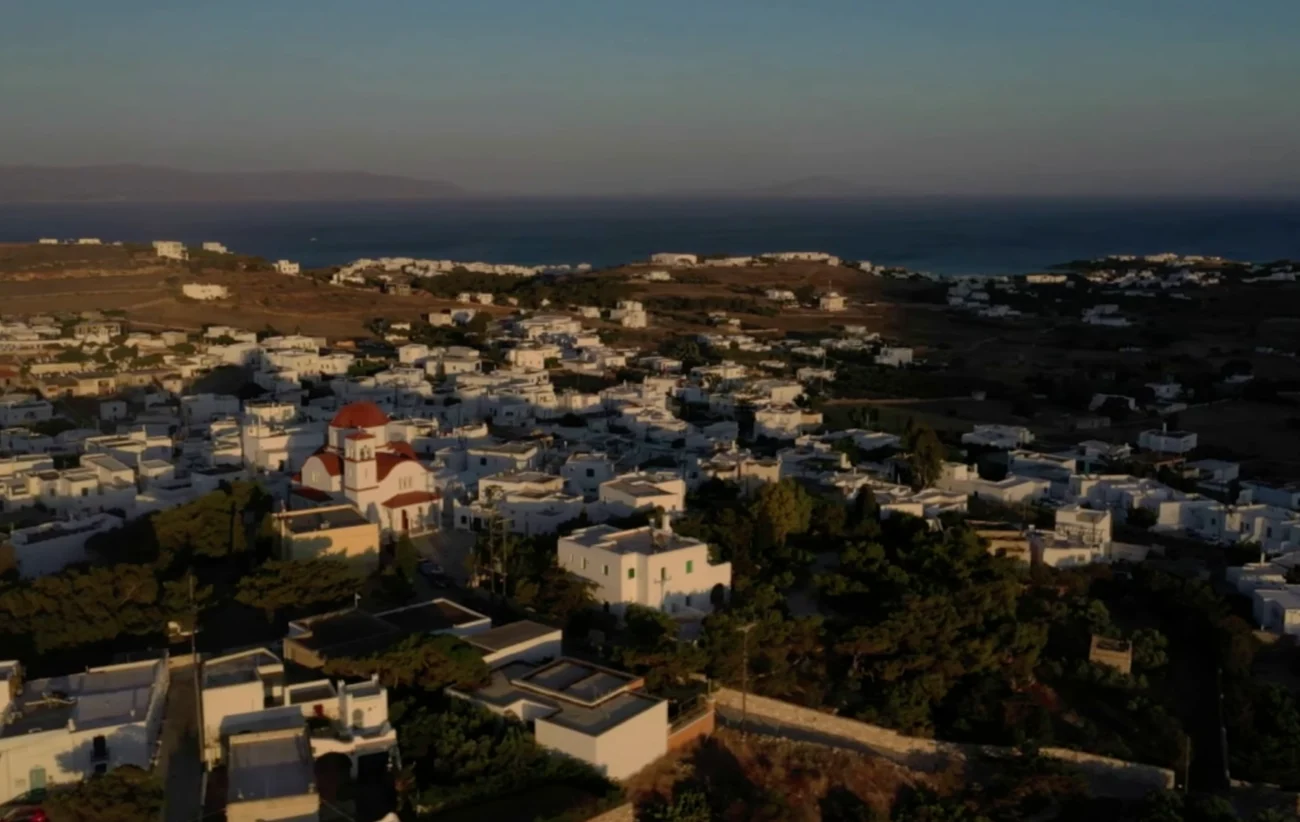
At a glance: East side of Paros, built on a hill 19 kilometres from Parikia, near the villages of Prodromos and Marmara. Known for its four windmills, the ruins of a Venetian castle, and the monastery of Agios Antonios on the hill above it. Best suited to travellers who want genuine village history rather than a beach base, with the coast still only a few minutes away.
Is Marpissa worth visiting
Marpissa was known as Tsipidos until 1926, and it still feels like a village that grew up around daily life rather than tourism. Whitewashed houses from the 16th and 17th centuries line cobbled alleys and arched vaults, climbing the hillside towards the ruins of a castle with a genuinely dramatic history. It suits an unhurried couple of hours on foot, and works well as a stop on the way to or from the beaches at Piso Livadi, only a few minutes down the hill.
Highlights
- The four windmills at the entrance to the village, among the most photographed sights on Paros
- The ruins of the Venetian castle on the hill of Kefalos, completed in the early 15th century
- The monastery of Agios Antonios, on the summit above the village, looking out over the fertile plains of the east coast
- The old churches of Agios Dimitrios, Mesosporitissa, Evangelistria and Agios Modestos, scattered through the village
- The short drive down to Piso Livadi, one of the closest beaches to any inland village on Paros
A castle with a pirate history
The castle at Kefalos was built by the Venetians, with its outer wall raised around 1500 under Nicolo I Sommaripa, the Venetian lord of Paros at the time. It did not hold forever. In 1537, the same year Naoussa’s harbour castle fell, Marpissa’s castle is believed to have been besieged and taken by the Ottoman corsair Barbarossa, part of a wave of raids that swept across the Cyclades that year. The monastery of Agios Antonios later took the hill above the ruins, operating from 1642 under its first abbot, Anthimos Skordilis.
Where Marpissa is
Getting to Marpissa
From Parikia port: Marpissa is around 19 kilometres away, roughly 25 to 30 minutes by taxi or car.
By bus: Buses connect Parikia to this side of the island via Prodromos and Marpissa in season. Check current routes and times on the Paros bus timetable.
By car or taxi: See getting around Paros and Paros taxi for prices and booking details.
Arriving on Paros: For ferry routes and journey times to the island, start with how to get to Paros.
Where to eat
Marpissa has a small number of traditional tavernas serving simple, local food, quieter than the coastal villages nearby. For a wider choice, Piso Livadi’s harbourfront restaurants are only a short drive away.
Where to stay
Accommodation in Marpissa itself is limited, mostly small guesthouses within the old village, which suits travellers who want to be based somewhere quiet with the beaches still close by. For a private villa with a pool elsewhere on Paros, see Paros villas with a private pool.
Beaches near Marpissa
Piso Livadi, the nearest coast, is only 1.5 to 2.5 kilometres away and reachable in a couple of minutes by car, though it does not yet have its own detailed guide on this site. Kalogeros Beach, near the neighbouring village of Prodromos, is also within easy reach and known for its natural clay.
Best time to visit
Spring and autumn are the most comfortable seasons for walking around the village and up towards the monastery, with cooler temperatures than midsummer. In July and August, Marpissa stays noticeably quieter than the beach villages nearby, which makes it a good choice for a shaded midday stop even at the height of the season.
How do I get from Parikia to Marpissa?
Around 19 kilometres, roughly 25 to 30 minutes by taxi or car.
Is Marpissa close to the beach?
Yes, despite being an inland hill village. Piso Livadi is only 1.5 to 2.5 kilometres away, a couple of minutes by car.
What was Marpissa’s old name?
The village was called Tsipidos until 1926, when it took the name Marpissa.
Is the castle in Marpissa still standing?
Only ruins remain today. The castle was built by the Venetians in the early 15th century and is believed to have fallen to the pirate Barbarossa in 1537, the same year Naoussa’s harbour castle was also taken.