
Table of Contents
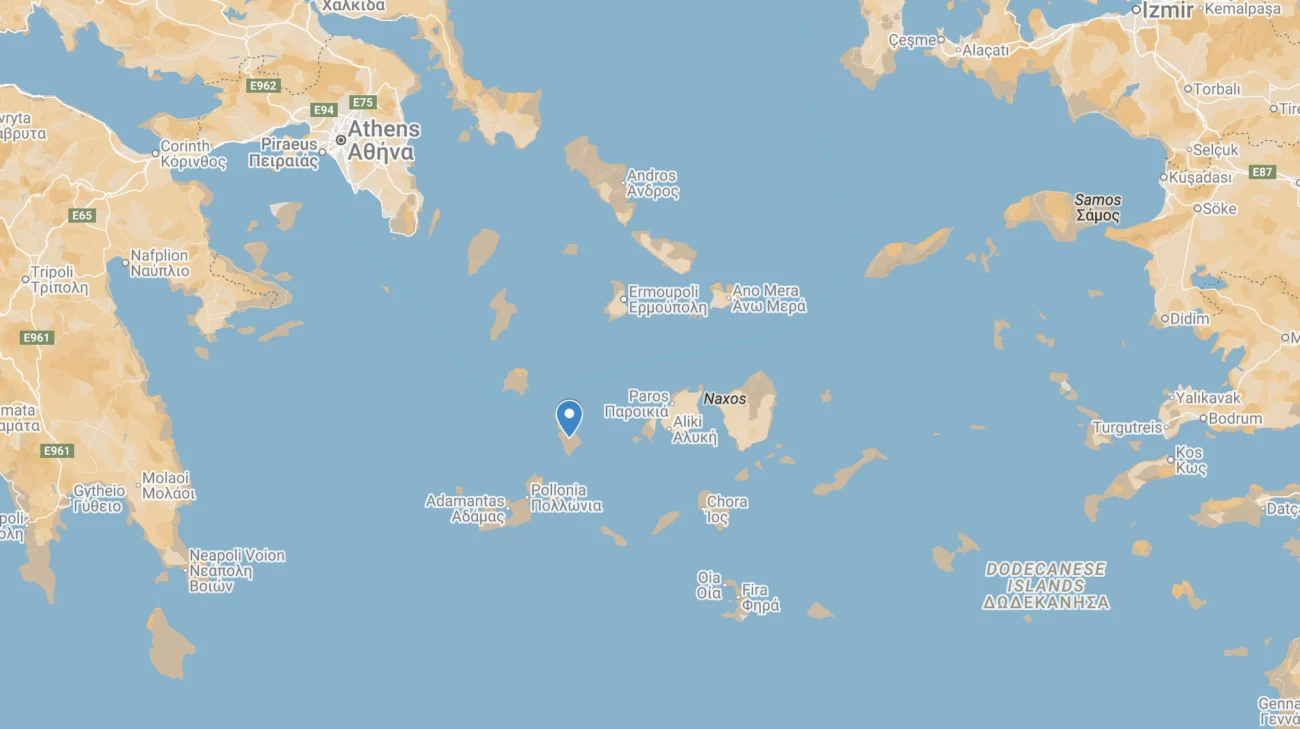
Getting around Sifnos does not have to be stressful. Whether you are here for dramatic clifftop monasteries, long sandy beaches, ancient hiking trails, or charming whitewashed villages, this guide will help you pick the best transportation options, understand local tips, and figure out realistic travel times. Sifnos is a small but wonderfully varied island in the heart of the Cyclades, located about 100 kilometres southeast of Athens. The island has no airport, which means all visitors arrive by ferry from the port of Piraeus in Athens or from neighbouring islands like Milos, Serifos, and Paros. The main hub for transport is the capital town of Apollonia, located in the centre of the island about five kilometres up a winding mountain road from the main port at Kamares. Most attractions, villages, and beaches are within 30 minutes of each other by car or about 20 to 30 minutes by local bus.
Transport planning matters on Sifnos because the island is served by a limited number of taxis (only about 10 total), a seasonal bus system, and narrow mountain roads that require confident driving. Unlike busier Greek islands with airports, Sifnos remains refreshingly quiet and authentic, but this also means fewer transport options and more need for advance planning, especially outside the peak summer months.
Do You Need a Vehicle on Sifnos?
This is the key decision point that every visitor to Sifnos faces early on. The answer depends on where you stay and what you want to see.
Walkability of Main Towns
If you stay in one of the main villages like Apollonia, Artemonas, or Kamares, you can explore your immediate surroundings entirely on foot. These villages feature narrow cobblestone streets lined with traditional whitewashed houses, small shops, tavernas, and cafes. The walk from Apollonia to Artemonas is only 1.5 kilometres and takes about one hour of easy strolling. These towns are compact and human-scaled. You will spend plenty of time wandering, getting lost in pleasant ways, and discovering hidden squares and local restaurants without needing a vehicle.
However, wandering is slow and you may want to visit a different village or beach each day. This is where transport decisions become important.
Island Size and Travel Distances
Sifnos is small enough that even the most remote villages and beaches are at most 30 minutes away from the centre. Kamares (the port) to Apollonia takes 15 to 20 minutes by car or bus. Apollonia to Platis Gialos, the island’s most popular and longest beach, takes only 15 to 20 minutes by car. Kamares to Platis Gialos takes around 25 minutes. Because distances are short, you can base yourself in one village and day trip to several different locations without exhausting yourself.
Public Transport Quality
Sifnos has a reliable local bus system called KTEL that operates year-round. During the summer months from June to September, buses run almost hourly during daytime hours between the main villages and beaches, with reduced service in the evening (every couple of hours). In winter and shoulder seasons, the bus frequency drops sharply to just two or three buses per day, often timed around school hours. This seasonal variation is crucial to know before you book your trip.
The buses are affordable (€2 per ride, paid in cash to the driver), reliable, and connect all the main destinations. If you stay in Apollonia or another central location and are flexible about your schedule, you can absolutely get around Sifnos using only the bus and walking. Many visitors do this successfully. However, if you want to explore remote beaches, take spontaneous day trips, or travel outside of bus operating hours, you will need either a rental vehicle or a taxi.
| Traveller Type | Best Option | Why |
|---|---|---|
| Budget backpacker | Bus plus walking | Cheapest option; buses cover all main spots |
| Family with luggage | Car rental or private transfer | Flexibility and space for belongings |
| Adventure seeker | Scooter or ATV | Freedom to explore; more fun on winding roads |
| Senior or accessibility needs | Taxi or private transfer | Door-to-door service; no walking required |
| Couple, flexible schedule | Bus or scooter | Can manage with either depending on ambition |
Transport Options: Detailed Breakdown
A) Renting a Vehicle
Cars
Renting a car is the most flexible way to explore Sifnos, but it comes with trade-offs. The roads on Sifnos are generally well-maintained but narrow, winding, and steep, especially as you climb from the coast to the mountain villages. Many rental cars use manual transmissions, which can be challenging if you are not comfortable driving stick shift. The local driving style is relaxed but sometimes unpredictable, and parking in village centres can be tight.
Most car rental companies are based in Kamares near the port, Apollonia in the centre, and at some of the main beach towns like Platis Gialos and Vathi. Major rental companies offer drop-off at your accommodation for a small fee.
Seasonal pricing for cars (2026):
| Season | Dates | Small Car (Suzuki Celerio) | Medium Car | Larger Vehicle |
|---|---|---|---|---|
| Low season | Jan-Apr, Nov-Dec | €35/day | €40/day | €65/day |
| Shoulder | May, Oct | €45/day | €50/day | €80/day |
| Mid season | June, Sept 7-22 | €50/day | €60/day | €95/day |
| Peak season | July 23-Sept 6 | €70/day | €75/day | €105/day |
These are daily rates. Additional charges include pick-up fees (€6 from Kamares, €10 from Apollonia, €15 from beaches during peak season), drop-off fees on the same scale, and optional insurance. Booking in advance during summer is essential as rental fleets are small and fill up quickly.
Insider tips for car rental:
Peak season booking matters enormously. If you are travelling in July or August, book your car at least two weeks in advance. Many companies require a credit card deposit and will ask for your driving licence and a copy of your passport. Double-check that your home country driving licence is valid in Greece. Non-EU drivers should carry an International Driving Permit.
Insurance is not optional. Ask the rental company about their collision damage waiver. Roads on Sifnos have tight curves and steep sections. Many visitors scratch or damage rental cars, and you will be liable unless you purchase additional coverage. The cost is typically €10 to €15 per day but worth every euro.
Parking can be challenging in the villages. Kamares has paid parking near the port. Apollonia has limited free parking on the outskirts but very little in the centre. Most visitors park in a nearby village and walk. Petrol stations exist at two locations in Apollonia and one in Katavati. Fuel is moderately priced compared to the rest of Europe but more expensive than mainland Greece.
Scooters and Motorbikes
For couples or solo travellers, renting a scooter or motorbike is a fun and practical alternative to a car. Scooters are cheaper (€25 to €35 per day in low season, rising to €50 to €75 in peak summer), easier to park, and give you more freedom to explore winding village roads and narrow paths. Many visitors who have rented scooters on Sifnos describe the experience as liberating and more enjoyable than driving a car.
However, scooters require confident riders and come with higher safety risks on steep, winding roads. If you rent a scooter, plan to use a taxi to and from the ferry with your luggage. Wearing protective gear including a proper helmet is non-negotiable. Most rental companies provide helmets but bring your own protective jacket and gloves if you have them.
Scooter rental companies operate in Apollonia (such as Rent a Motor Bike Yannis, which stocks modern SYM scooters in 50cc and 125cc models) and in Kamares.
ATVs and Quad Bikes
Several rental companies offer ATVs and quad bikes, which split the difference between a scooter and a car. They offer more stability than a motorbike, easier steering than a car, and good agility on narrow roads. They are also available for €25 to €40 per day depending on season. The same luggage and safety advice applies.
Electric Vehicles and E-Bikes
For environmentally conscious travellers, Sifnos has embraced electric options. Four public EV charging stations exist across the island (in Kamares, Apollonia, Artemonas, and Platis Gialos), each with two charging spaces. If you are driving an electric rental car, these stations will keep you topped up. Charging is affordable and the island’s short distances mean electric vehicles are practical. Some international rental companies at larger airports in the Cyclades (such as Mykonos) offer electric cars, though availability on Sifnos is currently limited.
For getting around without driving, Sifnos Bike Experience in Apollonia rents and operates electric bicycles. These high-end e-bikes feature powerful motors that make climbing Sifnos’s numerous hills effortless, even for riders with average fitness. Rental costs €25 to €35 per day depending on duration. The bikes are from HAIBIKE and come with proper safety equipment including helmets and protective gear. E-bikes are ideal if you want to cover more distance than walking but prefer a slower, more immersive way to explore than a car.
B) Public Bus System (KTEL Local Buses)
The KTEL bus system is Sifnos’s backbone for public transport. Understanding how it works will save you frustration and money.
Main Routes and Coverage
KTEL operates 6 main routes covering approximately 30 bus stops across the island. All routes converge at Apollonia, which serves as the main hub and where all buses turn around. Key routes include connections from Kamares (port) to Apollonia, from Apollonia to the beaches at Platis Gialos and Vathi, from Apollonia to the north-coast villages of Artemonas and Cheronissos, and routes to smaller villages like Katavati, Faros, and Kastro.
The longest route runs from Faros on the east coast to Artemonas on the north and covers over 10 kilometres with 9 stops. The shortest route connects Kastro to a local institution and covers 3 kilometres with 4 stops.
Summer Schedule (June to September)
During the peak summer months, buses run almost hourly during daytime hours (roughly 7:00 AM to 9:00 PM) between main villages and beaches. Evening and nighttime service is less frequent, with buses every couple of hours. This schedule allows you to visit multiple villages and beaches in a single day and return to your base by evening. The buses are comfortable with air conditioning, though they can get crowded during peak hours, especially during and after ferry arrivals.
Winter Schedule (November to March)
In winter, bus frequency drops dramatically to accommodate the much lower number of visitors and align with school schedules. Most days see only two or three buses, typically one early morning service from Kamares to Apollonia (often around 7:15 AM) and one or two early afternoon return services from Apollonia (often at 1:30 PM and 2:30 PM). This limited schedule means your day trip activities must revolve around these times. Many winter visitors planning to use only buses find themselves either stuck waiting for long periods between buses or committing to an overnight stay in a different village.
If you are visiting Sifnos in shoulder seasons like May or October, bus frequency falls between summer and winter levels. Schedules change week-to-week during these transition periods, so always ask your accommodation host for the current timetable rather than relying on published schedules.
Fares and How to Pay
A single bus ride costs €2, paid in cash directly to the driver as you board. No tickets are issued. Have small bills ready. The buses do not make change for large notes, so have exact or close-to-exact coins and notes. Day passes or weekly passes are not currently available, so each trip is charged individually.
Practical Bus Tips
Always check the current timetable with your hotel or accommodation. The official KTEL website posts schedules, but they change seasonally and occasionally week-to-week. Your accommodation host will have the most up-to-date paper timetable or will know the approximate times from experience.
Buses are most crowded immediately after ferry arrivals at Kamares. If you are arriving on a ferry and want to take a bus to Apollonia, wait 15 to 20 minutes for the surge of passengers to clear.
If you are planning a day trip by bus, arrive at the bus stop at least 10 minutes early. Buses are generally reliable but can occasionally fill to capacity and leave passengers behind during peak season. Popular routes, especially between Kamares and Apollonia and to Platis Gialos, fill up quickly.
The bus station in Apollonia is also a good source of local information. Staff speak Greek and limited English but can often help you understand onward connections if you ask politely. Apollonia is a good place to spend an hour or two between buses while waiting for an onward connection.
C) Taxis and Ride-Hailing Services
Taxis on Sifnos are limited in number (only about 10 total on the entire island) but are reliable, affordable, and a good option for getting to the ferry port, carrying luggage, or taking a spontaneous trip.
Finding and Booking a Taxi
Taxis are not hailed on the street as easily as in larger cities. Instead, you should book in advance either through your hotel, by phone, or increasingly by WhatsApp message to a local driver. Several taxi drivers have mobile numbers and respond to WhatsApp, which is often faster and more reliable than phone calls, which can be answered slowly or go to voicemail.
A list of taxi phone numbers for major operators includes Mitilinaios (22840 31216), Kalogirou (22840 31661 or WhatsApp 6944742652), Gerontopoulos (22840 31626 or 6944444904), and several others based primarily in Apollonia.
The Aegean Taxi app, which covers many Greek islands, offers online booking, phone booking, and WhatsApp booking 24/7 for various Cyclades islands. Check if it covers Sifnos when you arrive.
Typical Rates
Standard taxi fares on Sifnos range from €10 to €20 for most journeys around the island. A typical ride from Kamares to Apollonia costs around €15. Rides from Apollonia to the beaches at Platis Gialos or Vathi also cost €15 to €20. Fares are metered but can also be quoted flat rates for known routes. Always confirm the fare or ask if the meter will be used before you get in, especially if picking up a taxi outside your hotel, as some drivers may try to overcharge tourists unfamiliar with local rates.
Money and Payment
Bring cash. Not all taxis on Sifnos have card readers, and even those that do may have equipment that does not work reliably due to poor mobile signal in some areas. ATMs exist in Apollonia and Kamares. It is wise to withdraw cash upon arrival.
Insider Tips
Booking a taxi in advance via WhatsApp from a local driver is often cheaper than calling through your hotel or having the hotel arrange one. Hotels add commission, while direct driver contact means the driver gets the full fare and may offer a better rate. Ask your accommodation host for a driver’s WhatsApp number when you arrive.
If you use a taxi frequently during your stay, save the driver’s number and consider asking if they would be available as a personal driver for the day. Many Sifnos taxi drivers will pick you up on call and become your informal guide and transport for longer excursions, with negotiated daily rates. This is common practice and often works out cheaper than multiple individual rides.
Taxis on Sifnos can be slower to arrive during ferry times, especially when the port is busy. Plan extra time if you need to catch a ferry.
D) Private Transfers and Boat Taxis
Private transfers are useful if you are arriving with heavy luggage, travelling as a group, or arriving on a late ferry when public buses have stopped.
When to Use Private Transfers
Private transfer services pick you up at the ferry port and take you directly to your accommodation. This eliminates the need to navigate unfamiliar villages with luggage or wait for buses. Private transfers are particularly valuable for families, groups, senior travellers, or anyone with mobility limitations.
Cost and Booking
Private transfer costs vary depending on distance and party size but typically range from €40 to €80 for a ride from Kamares to the main villages. Many hotels and villa rental agencies offer transfer arrangements or can recommend reliable companies. Booking in advance through your accommodation is usually more reliable and cheaper than arranging transfers upon arrival.
Boat Taxis and Water Transfers
For a unique experience and access to remote beaches, several companies operate private boat transfers and sea taxis from Sifnos. These sleek speedboats can reach secluded coves and beaches that are not accessible by road, including shuttle services between nearby islands.
Companies such as Bloomarine and A La Mer operate private RIB (rigid inflatable boat) transfers from Sifnos to neighbouring islands like Milos (40 minutes), Kimolos (40 minutes), and Serifos (60 minutes), as well as boat cruises that circle the island with swimming stops at hidden beaches. The boats are modern, safe, and comfortable with dry cabin space for luggage. Transfers accommodate 1 to 9 people and costs start from approximately €30 to €50 per person for standard routes, with custom transfers available at negotiated rates.
These services are ideal if you are island hopping within the Cyclades or want to explore Sifnos’s less accessible coastline.
E) Walking and Local Paths
Walking is one of the best ways to explore Sifnos and experience the island’s genuine character.
Walkable Towns and Villages
All of the main towns are best explored on foot. Apollonia, the capital, is entirely pedestrian-friendly with narrow lanes, small squares, tavernas, and shops. Artemonas, just 1.5 kilometres away, is equally charming and can be reached by a pleasant 45-minute to one-hour walk downhill from Apollonia or uphill in about the same time. Kamares, the port village, is small and compact with a long sandy beach perfect for a leisurely afternoon walk. Kastro, the medieval former capital on the eastern coast, is perched dramatically on a hilltop and requires steep climbing but rewards you with spectacular views and a glimpse of authentic Cycladic architecture.
The main street through Apollonia, called the steno (meaning narrow), is particularly atmospheric and considered the cosmopolitan heart of Sifnos, lined with shops, cafes, and tavernas. Most of it is cobblestone and quite steep, so wear comfortable walking shoes.
The Sifnos Trail System
Sifnos boasts one of Europe’s best-organized trail networks, consisting of 19 professionally marked hiking paths. Some of these trails date back 3000 years and were used by ancient farmers, miners, and soldiers. In 2015, the Municipality of Sifnos, in collaboration with Paths of Greece, installed modern signage on all major trails, making Sifnos one of the best-marked hiking destinations in Greece.
All trails are marked with distinctive red and white paint stripes and have informational signs at trailheads and intersections showing route duration, distance, connections to other trails, and nearby bus stops. You can hike from a starting point and arrive at a bus stop to return to your base, making the trail system accessible even without a car.
Popular hikes include the Eternal Capitals route connecting Apollonia and Artemonas through archaeological sites and agricultural landscapes, the Kastro route offering cultural heritage and dramatic coastal views, and the challenging route to Mount Profitis Ilias at the island’s highest point. Walk times range from 1.5 hours for gentle village connections to 4 to 5 hours for mountain circuits.
A detailed hiking map is available at the bookshop in Apollonia and through the official Sifnos Trails website (sifnostrails.com). The terrain includes cobblestone paths, dirt tracks, and rocky sections. In summer, you will encounter bright sun and minimal shade, so bring plenty of water, sunscreen, and a hat. Spring hikes are particularly rewarding as wildflowers bloom across the hillsides. Winter hiking is possible but rain can make paths muddy and slippery.
Best Times for Walking
Early morning or late afternoon walks avoid the midday heat. The siesta period (roughly 2:00 PM to 5:00 PM) is when many businesses close and the villages become very quiet, which can be lovely for solitary walks but means fewer cafes and restaurants are open. Spring (April-May) and autumn (September-October) offer the best weather for longer walks, with moderate temperatures and lower humidity than summer.
Practical Considerations
Wear sturdy walking shoes or hiking boots. Cobblestones are uneven, paths include exposed roots and rocks, and some trails have steep sections. The sun is intense, especially at midday and in July-August, so plan walks for early morning or late afternoon.
Carry water always. Refill opportunities exist in villages but are less frequent on remote trails. Bring at least two litres per person for longer hikes.
Some paths include long sections with no shade. A wide-brimmed hat, long-sleeved shirt for sun protection, and sunscreen rated SPF 50 or higher are essential.
F) Boat Tours and Beach Shuttles
Exploring Sifnos from the water offers a completely different perspective and access to beaches that cannot be reached by road.
Boat Tours Around the Island
Several tour operators offer full-day and half-day boat tours that circle the island, stopping at hidden coves, sea caves, and secluded swimming beaches. These tours typically depart from Kamares or nearby ports and include a meal cooked on board, with stops for swimming and snorkelling. Tours run daily during summer and operate less frequently in shoulder and winter seasons.
The advantage of a boat tour is that you see Sifnos’s dramatic coastline with its cliffside monasteries, rocky outcrops, and turquoise waters while spending minimal effort getting around. Most tours last 5 to 8 hours and cost €60 to €100 per person depending on inclusions.
Beach Shuttles and Water Taxis
During summer months, small water shuttles operate between some of Sifnos’s beaches, particularly in the south where several popular sandy beaches are relatively close together. The frequency and availability of these shuttles vary year-to-year and season-to-season, so ask your accommodation or the tourism office in Kamares for current offerings.
Private boat taxis are also available to take you to remote beaches for a negotiated fee. This is ideal if you want an entire beach to yourself or want to reach an otherwise inaccessible cove.
Summary: Which Option is Right for You?
| Situation | Best Transport | Budget Estimate | Pros | Cons |
|---|---|---|---|---|
| Staying in Apollonia, relaxed pace | Bus and walking | €30-50 total | Cheapest, authentic experience, good exercise | Limited timing, less flexibility |
| Family, 1 week, exploring multiple beaches | Car rental | €300-500 (car) + petrol | Maximum flexibility, comfort, can carry picnic supplies | Road stress, parking hassle, rental costs |
| Couple, active, want adventure | Scooter or ATV | €150-300 (rental) | Fun, easy parking, more thrilling, cheaper than car | Safety risk, poor weather issues, luggage limits |
| Arriving late ferry, elderly, large luggage | Private transfer plus taxis | €100+ for transfer | Door-to-door convenience, no stress | Most expensive, less independent |
| Island hopper, want to reach Milos/Kimolos | Boat taxi | €200-400 (transfer) | Scenic, unique, access to other islands | Weather-dependent, costs add up |
| Environmentally conscious, scenic explorer | E-bike tours and walking | €100-200 | Sustainable, slow travel, great exercise, memorable | Weather dependent, more time needed |
Final Practical Advice
Before you arrive on Sifnos, download a copy of the current bus timetable (available from sifnaiko-fos.gr or ask your accommodation to email one). Take screenshots of taxi numbers and save them to your phone. Download the offline maps feature in Google Maps or use an app like Maps.me, which works without mobile data.
Once you arrive at Kamares, take a moment to get oriented. Walk the small port area, locate the bus stop (usually clearly marked), visit the tourist information office if open, and consider taking a taxi or bus to your accommodation on your first journey. Ask your accommodation host for recommendations on the best transport method for your specific plans. Local knowledge is invaluable and hosts are usually happy to advise.
Bring cash and a bank card. Not all transport operators accept cards and mobile signal can be patchy in remote areas. ATMs exist in the main villages.
Most importantly, embrace the slower pace of island life. Part of the joy of Sifnos is that it is small, quiet, and difficult to reach by car alone. This forces visitors to slow down, walk more, and discover hidden gems that those rushing between major tourist sites miss. Whether you choose buses, hiking, taxis, or a rental car, you are going to fall in love with this remarkable island.