
Table of Contents
Paros is famous for its stunning beaches and vibrant nightlife, but the true heart of the island beats in its charming traditional villages. Away from the crowded coastal resorts, these picturesque settlements offer visitors an authentic glimpse of Cycladic life, complete with whitewashed houses, narrow marble-paved streets, and warm local hospitality.
Lefkes Village: The Jewel of Paros
Lefkes stands as the most beautiful village on Paros Island, and it’s easy to see why once you arrive. Perched at 300 meters above sea level in the island’s verdant interior, this historic village is surrounded by olive groves and pine forests that blanket the surrounding hills. The village offers sweeping panoramic views across the Aegean Sea, stretching all the way to the neighboring island of Naxos.
Why Lefkes is Special
Lefkes earned its reputation as Paros’ most picturesque village not just for its stunning architecture, but for its fascinating history. Established in the 17th century, Lefkes served as the first capital of Paros. Its strategic inland location protected residents from the pirate raids that plagued coastal settlements during the medieval period. Even today, this hidden gem remains largely sheltered from mass tourism, creating an atmosphere that feels like stepping back in time.
The village’s defining characteristics are its narrow marble-paved streets lined with traditional Cycladic and Venetian architecture. Whitewashed cube-shaped houses with blue shutters and vibrant bougainvillea flowers tumble over garden walls. The main pedestrian-only streets preserve a sense of tranquility that persists even when day-trippers arrive around mid-morning.
Must-See Attractions in Lefkes
Church of Agia Triada (Holy Trinity)
The most prominent landmark in Lefkes is the Church of Agia Triada, an impressive Byzantine church constructed from the fine white marble Paros is famous for. The church houses rare and valuable religious icons and stands as a testament to the village’s deep spiritual heritage.
Traditional Windmills
Scattered throughout Lefkes are the traditional stone windmills that once powered the village’s grain production. These charming structures provide perfect photo opportunities and offer insight into the agricultural practices that sustained the island for centuries.
Neoclassical Buildings
The central street, known as Rhamnos, showcases stunning neoclassical architecture with traditional laundries and intricate architectural details that reflect the village’s prosperity during the 18th and 19th centuries.
Folklore Museum
Managed by the Cultural Association “Yria,” this museum exhibits tools, textiles, and artifacts that provide insight into traditional Parian life. The collection tells the story of how islanders lived and worked over generations.
The Byzantine Road Hiking Trail
One of Lefkes’ greatest treasures is the Byzantine Road, a well-preserved marble-paved footpath dating back over 1,000 years. This historic trail once connected the village of Marpissa with Lefkes, passing through olive groves and vineyards. The path is one of the oldest roads on Paros and offers hikers a scenic journey through the island’s interior landscape.
Several hiking routes depart from Lefkes:
- Route 1 (5km, 3 hours): An easy walk to the lower village of Prodromos
- Route 2 (9km, 5 hours): A moderate hike to Ag. Kyriaki Monastery and Rachi Hill
- Route 3 (15km, 5 hours): A challenging hike through the island’s interior
The hiking map and directional signs are located in the main square, making it easy to navigate these ancient paths.
Where to Stay and Eat in Lefkes
Lefkes offers more affordable accommodation options than the busy coastal towns of Parikia or Naoussa, while still providing high-quality service. The Olive Mill Guesthouse is a beautifully renovated historic building with soundproofed rooms and free parking. For families and groups, Agiasa Villas offer spacious three and four-bedroom houses with private pools and hot tubs.
The village boasts several traditional tavernas serving authentic Parian cuisine. Local specialties include chickpea fritters, grilled octopus, and the island’s renowned cheeses. Many restaurants offer views across the island and down to the sea, creating the perfect setting for a leisurely meal.
How to Get to Lefkes
Lefkes is located approximately 11 kilometers southeast of Parikia and 20 minutes from the harbor town of Naoussa. Public buses run hourly from Parikia (2 euros). For those with rental cars or taxis, the drive takes about 20-40 minutes depending on traffic and your starting point. Adventurous travelers can also reach Lefkes by bicycle, though the mountainous terrain requires good fitness levels.
Naoussa: The Chic Fishing Village
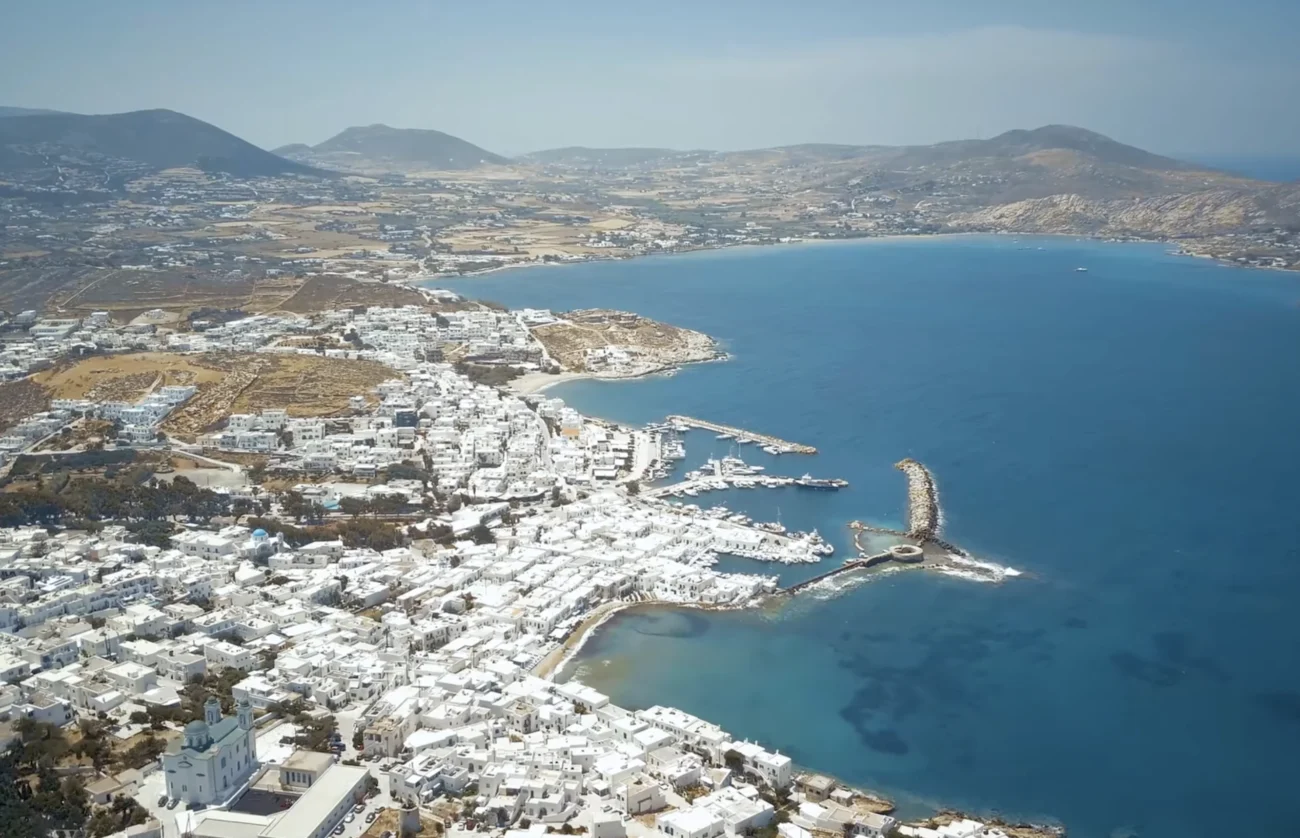
Naoussa is widely considered one of the prettiest villages in the entire Cyclades. Located in a large bay on the northern coast of Paros, this charming fishing village has managed to maintain its authentic character despite its popularity with tourists.
The Heart of Naoussa: The Old Port
The centerpiece of Naoussa is its picturesque old harbor, where traditional wooden fishing boats are moored in tight rows against a backdrop of Venetian mansions and Orthodox churches. The harbor comes alive at sunset, when the golden light illuminates the whitewashed buildings and reflects off the water, creating unforgettable photo opportunities.
The narrow, stone-paved alleyways form a labyrinth of passages where whitewashed houses with vibrant bougainvillea flowers create classic Cycladic scenes. Tucked into quiet corners are small Orthodox chapels, courtyards overflowing with flowers, and traditional coffee shops serving local delicacies.
Key Attractions in Naoussa
Venetian Kastelli
The remains of a 15th-century Venetian fortress stand at the entrance of Naoussa’s old harbor. Built to defend the settlement from pirate attacks during medieval times, the partially sunken structure still offers impressive views of the marina and surrounding area. A stone path leads to the ruins, though the passage can be slippery during high tides. The fortress is surrounded by traditional fishing boats, creating an exceptionally photogenic setting, especially at sunset.
Agioi Anagyroi Church
Dominating the Naoussa skyline is the Holy Church of the Assumption of the Virgin Mary, locally known as Agioi Anagyroi. Built on a hillside overlooking the bay, this impressive church was funded entirely by local residents. While not ancient, it holds great cultural importance and offers stunning views of the town and harbor below, particularly beautiful at sunset.
Naoussa Marina and Waterfront
The bustling marina hosts everything from traditional fishing boats to luxury yachts. Water taxis depart from here to nearby beaches including Kolymbithres, Monastiri, and Santa Maria. At night, the area transforms into a vibrant dining scene with waterfront restaurants and bars that capture the energy of Cycladic nightlife.
Beaches Near Naoussa
Naoussa serves as an excellent base for beach exploration. Nearby Kolymbithres Beach features distinctive rock formations and is reachable by water taxi. Monastiri Beach is part of the beautiful Paros Park protected nature reserve. Santa Maria Beach offers a more relaxed atmosphere with shallow waters suitable for families.
Dining and Nightlife
Naoussa boasts some of the finest restaurants in the Cyclades. The narrow streets host upscale boutiques, traditional tavernas, and craft cocktail bars. The waterfront dining scene is particularly renowned, offering fresh seafood and traditional Greek dishes alongside spectacular harbor views.
The village offers vibrant nightlife with bars and clubs that range from relaxed traditional cafes to modern venues catering to a younger crowd.
Getting to Naoussa
Naoussa is located about 10 kilometers north of Parikia, just a 15-20 minute drive or a short bus ride from the capital. It’s also approximately 20 minutes from Lefkes village.
Prodromos: A Hidden Treasure
Prodromos is a picturesque, traditional settlement located on Paros’ east side, approximately 16 kilometers from Parikia. This charming village remains somewhat undiscovered compared to Lefkes and Naoussa, making it an excellent choice for travelers seeking authentic village experiences without crowds.
The Character of Prodromos
The village gets its name from the Church of Agios Ioannis Prodromos, built in 1953 and decorated with stunning icons. Every year on June 23rd, Prodromos becomes the epicenter of one of Paros’ most important celebrations dedicated to this church.
The village’s entrance is an architectural statement: a vaulted arch with a bell tower that prevents vehicle entry into the settlement’s pedestrian core. This arch marks the beginning of quintessential Cycladic architecture with cube-shaped whitewashed homes built close together, domed passageways, delightful chapels, and beautiful churches throughout the narrow cobblestone streets.
What to Experience in Prodromos
Walking through Prodromos’ narrow passageways immerses visitors in authentic village charm. Small courtyards burst with bright flowers, providing colorful contrast to the stark white walls. Traditional cafes serve local specialties and offer genuine island hospitality.
The Byzantine Path
The village is crossed by the famous Byzantine path, featuring ancient marble slabs that connected Marpissa and Lefkes in antiquity. This marble-paved path, over 1,000 years old and stretching 3.5 kilometers, runs parallel to the modern road. It winds through olive groves and vineyards, offering an immersive nature experience as you walk toward Lefkes.
Nearby Beaches
From Prodromos, visitors enjoy easy access to several beautiful beaches including Molos, Kalogeros, and the beach at Tsoukalia. These sandy shores remain less crowded than Paros’ northern beaches.
Piso Livadi: The Authentic Fishing Village
Piso Livadi on the southeastern coast of Paros offers an authentic fishing village experience. Located on the east coast and naturally protected from northerly winds, this charming settlement centers around a delightful harbor where large fishing caiques moor.
The Fishing Port Experience
The harbor is encircled by whitewashed buildings and is home to numerous traditional taverns and bars serving fresh seafood and local ouzo. Fishermen’s boats bobbing in the bay create a picturesque Mediterranean scene. The village is also the departure point for many excursion boats heading to nearby Cycladic islands including Naxos, Amorgos, and Santorini during summer months.
Piso Livadi Beaches
A soft sandy beach stretches along the bay, popular with families due to its shallow, calm, wind-protected waters. The morning hours often see families with small children playing in the sand. The beach features sunbeds and umbrellas, with restaurants and cafes nearby where you can order coffee or cocktails while relaxing on the sand.
Dining in Piso Livadi
Halaris restaurant stands as one of the most famous establishments not just in Piso Livadi but on all of Paros. Located on the village’s main pedestrian street, it’s celebrated for fish dishes and excellent Greek delicacies prepared with modern techniques. Try the orzo, shrimp pasta, and fresh tuna fillet accompanied by Parian souma, the island’s famous local grape drink.
Location and Access
Piso Livadi sits on the east coast, approximately 17 kilometers southeast of Parikia. It’s conveniently near the famous Golden Beach (Chrysi Akti), making it an ideal base for beach enthusiasts.
Parikia: The Capital Village
Parikia is the capital and main port of Paros Island, yet it remains one of the loveliest villages on the island. As one of the most typical Cycladic settlements, Parikia is distinguished by its narrow cobbled paths, old churches, small shops, and striking blue-and-white houses.
Historical Significance
The village’s history stretches back to ancient times, with monuments throughout Parikia reflecting its former glory as a major naval power in the Aegean. The city was home to Manto Mavrogenous, the heroine of the Greek War of Independence (1821-1829), whose statue stands in the village today.
Key Attractions in Parikia
The Church of Panagia Ekatontapiliani
The original church was built in the 4th century AD, making it one of the best-preserved Paleo-Christian monuments in Greece. Over centuries, it underwent numerous renovations incorporating Paleochristian, Byzantine, and post-Byzantine architectural styles. Notably, some architectural elements were crafted from marble remnants of ancient Parian temples, reflecting early Christian practices.
The Frankish Castle (Parikia Castle)
Built in 1260 during Venetian rule as part of the Duchy of Naxos by Duke Marco Sanudo, the castle utilized marble sourced from ancient Greek temples. Within its confines stands the Christian Orthodox Church of Agios Constantinos, a testament to the island’s layered history.
Old Town Exploration
Parikia’s Old Town labyrinth of alleyways, whitewashed buildings, and lush bougainvillea creates one of the most charming villages in the Cyclades. Visitors can easily spend several days leisurely exploring the atmospheric streets, discovering hidden chapels, traditional shops, and welcoming tavernas.
Waterfront and Port
The preserved windmill in the port and the lively waterfront cafeterias and restaurants attract many visitors. The waterfront offers vibrant nightlife and relaxed dining scenes.
Getting Around Parikia
As the main port of Paros, Parikia is where most visitors arrive by ferry from Athens or other Cycladic islands. It serves as the transportation hub for the entire island, with buses connecting to villages throughout Paros.
Marpissa: The Village of Windmills
Marpissa is a tiny village on Paros’ west coast that can be explored in roughly an hour. The village is home to several lovely churches, cobbled passageways, and scenic lanes. Most distinctively, Marpissa is known for its iconic windmills.
The Windmills of Marpissa
One of the most characteristic pictures of Paros features four historic windmills in Marpissa’s central square. These structures were designated as “historically preserved monuments” in 1989 because they represent important samples of the pre-industrial era. Their preservation contributes to maintaining the historical memory of this place.
There were originally five windmills in Marpissa:
- Kaloudas’ heirs windmill
- Emmanuel Agouros windmill
- Stavros and Konstantinos Melanitis windmill
- Irene Perantinou windmill
- Ag. Gioka windmill
The Agouros family windmill is a visiting site during the “Routes in Marpissa” festival. It is a stone-built structure with a circular floor plan, standing 8 meters high with a wooden conical rooftop. It belonged to the Agouros family from the beginning of the 19th century and stopped operating in the mid-20th century. Four generations of millers worked within its walls, preserving traditional milling techniques.
Exploring Marpissa
The village square serves as the starting point for scenic paths leading to locations of magnificent natural beauty, old monasteries, and traditional churches. This quiet settlement offers an authentic village experience far from tourist crowds.
Aliki: The Relaxed Coastal Village
Aliki is probably the most well-known coastal settlement of Paros after Parikia and Naoussa. Located on the island’s south coast, approximately 14 kilometers from the capital and 20 kilometers from Naoussa, this charming fishing village combines coastal beauty with authentic seafood dining.
Aliki’s Fishing Port
With a large fleet of caique boats mooring in the bay, Aliki’s restaurants and taverns are supplied daily with delicious fresh catch. The fishing port itself is a small working harbor where you can observe traditional fishing practices. The waterfront is lined with restaurants serving grilled fish, octopus, and traditional Greek specialties.
Beaches in Aliki
Aliki offers three distinct beaches:
Agios Nikolaos Beach
Located north of Aliki and named after a small church, this pebbled beach is not organized but features trees offering natural shade and sports facilities including basketball and tennis courts. The area behind the beach provides ample parking.
Main Beach (Aliki Beach)
The most beautiful of the three, this well-organized beach features sunbeds and umbrellas. Trees provide natural shade for those preferring it to beach equipment. All restaurants and taverns are located near this beach, making it easy to grab food and drinks.
Piso Aliki
An unorganized pebbled beach with plentiful tree cover providing natural shade. Plenty of parking is available, and a tavern operates nearby.
The Museum of Cycladic Folklore
If spending time relaxing on Aliki’s beaches, visitors can also explore the Museum of Cycladic Folklore. This unique museum features handmade miniatures created from materials sourced only from the Cycladic islands, offering insight into traditional island craftsmanship.
Drios: The Quiet Fishing Village
Drios is a small fishing village located on the east coast of Paros, surrounded by various nice sandy beaches. Almost always quiet except during August’s peak tourism season, Drios combines the charm of a traditional fishing village with easy access to beautiful beaches and water activities.
The village is close to several beautiful beaches including Glyfa and Drios Beach, making it ideal for those seeking a quiet base for beach exploration.
Planning Your Village Visits
Best Time to Visit
Spring through autumn offers the most pleasant weather for exploring Paros’ villages. Summer (June-August) brings peak tourism and crowds, while spring and fall provide pleasant temperatures with fewer visitors. Many villages hold traditional festivals and celebrations throughout the year, including Lefkes’ Karavola Festival in late August celebrating the local snail delicacy.
Getting Around
Paros has a reliable local bus system connecting the main villages. Buses run regularly between Parikia and other settlements, with hourly services to Lefkes. A rental car or scooter provides flexibility for exploring multiple villages in a day. Taxis are available but more expensive than public transport.
Combining Village Visits
Many visitors structure their Paros experience around a combination of villages. A typical itinerary might include a morning in Lefkes, an afternoon hike on the Byzantine Road to Prodromos, an evening in Naoussa for sunset and dinner, and a final day exploring the fishing villages of Piso Livadi and Aliki before returning to Parikia for ferry connections.
Accommodation Options Across Villages
Each village offers different accommodation styles suited to various travel styles and budgets:
Luxury Options: Parocks Luxury Hotel near Lefkes, Acoya Suites in Aliki
Boutique Hotels: Properties in Naoussa and Parikia offer character-filled stays
Family Villas: Agiasa Villas in Lefkes and Villa Le Sable in Aliki cater to groups
Traditional Guesthouses: The Olive Mill Guesthouse in Lefkes provides authentic stays in restored historic buildings
Conclusion
The villages of Paros offer visitors an authentic Mediterranean experience far removed from crowded beach resorts. Whether exploring the historic streets of Lefkes, watching sunset over Naoussa’s harbor, dining on fresh seafood in Piso Livadi, or wandering the windmill-studded square of Marpissa, each village tells a unique story of Cycladic life.
These settlements showcase the best of Greek island culture: warm hospitality, stunning natural beauty, traditional architecture, and the timeless pace of village life. Whether you’re a history enthusiast, nature lover, foodie, or photographer, Paros’ villages provide the authentic Cycladic experience that makes Greek islands so magical.
Plan your visit, bring comfortable walking shoes, and prepare to discover why visitors return to these charming villages again and again, sometimes falling in love with them enough to extend their stay indefinitely.