
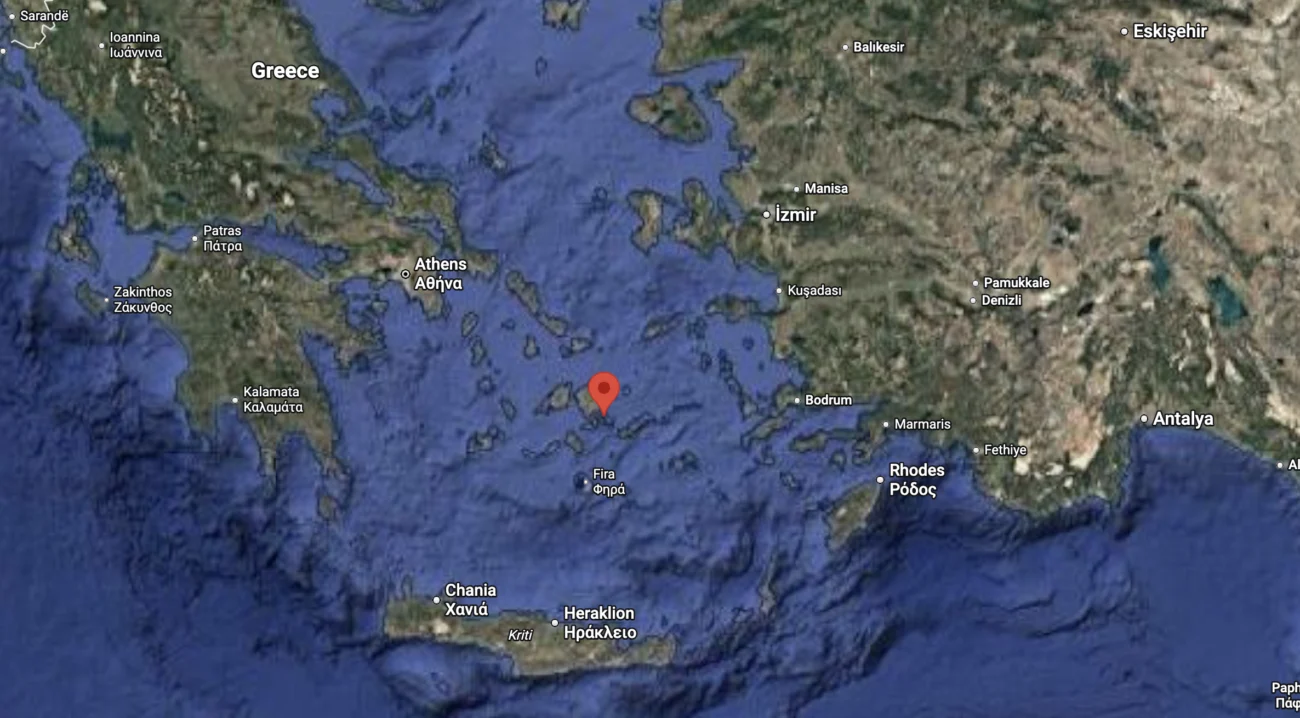
Koufonisia is actually made up of two main islands which are Pano Koufonisi and Kato Koufonisi. Pano Koufonisi is the inhabited one where the ferries dock and where the main village of Chora is located. Kato Koufonisi is almost uninhabited and offers a wilder experience. Both islands are blessed with incredible caves. Some are sea caves that you can swim into while others are open chasms in the ground that lead to secret beaches.
Visiting these caves is not just about seeing a hole in a rock. It is about the journey to get there. The island of Pano Koufonisi is small enough that you can walk everywhere. There are no paved roads leading directly to the caves so you must follow the coastal paths. This adds to the sense of adventure. You are walking the same paths that islanders have walked for generations. The air smells of wild thyme and sea salt. The only sounds are the waves crashing against the cliffs and the bells of goats grazing in the fields.
This report will guide you through the top five best caves in Koufonisia. It is designed for the traveler who wants to explore the island in depth. We will cover everything you need to know about each cave including its history and geology and exactly how to find it. We will also provide crucial safety information because the beauty of these caves comes with natural hazards that you must respect. Whether you are a strong swimmer looking to dive into an underwater cavern or a hiker who wants to admire the view from above this guide will help you plan the perfect adventure in the Hollow Islands.
Table of Contents
1. Ksylompatis Caves
A: Cave Information
The Ksylompatis Caves are arguably the most spectacular natural feature on the entire coastline of Pano Koufonisi. These are two distinct sea caves located at the northern tip of the island where the cliffs rise vertically from the deep blue sea. The relentless force of the north wind has carved these openings deep into the white limestone rock over thousands of years.
The first cave is known as a through cave because it is open on both ends. This allows bold swimmers to enter from one side and swim all the way through the tunnel to emerge on the other side. The water inside glows with an electric blue hue that has to be seen to be believed. The sensation of swimming through the rock is akin to flying through a blue cathedral. The walls are smooth in places and jagged in others which tells the story of the erosive power of the sea.
The second cave is different. It is a blind cave that does not have an exit but it hides a wonderful secret. At the very back of this dark cavern there is a tiny sandy beach. This hidden beach offers a rare chance to relax in complete solitude surrounded by rock walls and the sound of lapping water. It is a place of immense beauty and mystery. The caves are situated in an area that is exposed to the elements which keeps the water pristine and clear. The interplay of light and shadow within these caves creates a visual spectacle that changes throughout the day as the sun moves across the sky.
B: Location
You will find the Ksylompatis Caves on the northeastern coast of Pano Koufonisi. They are situated roughly one hundred and fifty metres north of the famous Pori Beach which is the largest and most popular sandy beach on the island. The caves are located in a rugged area known as Xylobatis Cove. This area is far removed from the main village of Chora which gives it a wild and remote atmosphere.
The cliffs here are steep and jagged and they drop straight down into the sea. The caves are at sea level at the base of these cliffs. Because they face north they are directly exposed to the prevailing Meltemi winds. This means the sea here can often be rough with waves crashing against the cave entrances. However on calm days the water is flat and crystal clear. You cannot see the interior of the caves from the cliff top. You must either swim into them or peer over the edge of the cliff to see the dark openings against the turquoise water. It is a dramatic setting that feels like the edge of the world.
C: How to Get There
Getting to the Ksylompatis Caves involves a journey across the island that is an adventure in itself. You have two main options to reach the general area and then a specific method to access the caves themselves.
By Foot from Chora: The most rewarding way to reach the caves is to hike. Start at the main village of Chora. Follow the coastal road that heads east past the main port. You will walk past a series of beaches including Finikas and Fanos and Platia Pounda. Continue along the coastal trail until you reach the large sandy bay of Pori Beach. This walk will take you about forty five minutes to one hour depending on your pace. Once you arrive at Pori Beach walk to the far northern end of the sand. You will see a path that leads up onto the rocky headland. Follow this trail for about one hundred and fifty metres. The terrain here is rocky and uneven. Keep the sea on your right hand side. You will eventually reach the edge of the cliffs at Xylobatis Cove. From here you can look down at the caves. To enter them you must climb down the rocks to the water level. There is no official staircase. You have to carefully pick your way down the sharp limestone rocks. Once you are at water level you can swim into the cave entrances.
By Sea Bus: If you prefer not to walk the whole way you can take the sea bus from the port in Chora. The boat runs frequently throughout the day during the summer months. Purchase a ticket to Pori Beach. The boat ride offers lovely views of the coastline. Once the boat drops you off at the pier in Pori you simply walk to the north end of the beach and follow the trail up the headland as described above.
By Private Boat: The easiest way to enter the caves is by a small private boat. You can rent one in the marina at Chora. With a boat you can navigate right up to the cave entrances and jump straight into the water. This avoids the difficult climb down the cliffs.
D: Safety and Things to Carry
Safety is paramount when visiting the Ksylompatis Caves. The area is wild and unmanaged. There are no lifeguards and no safety rails.
Safety Advice: The most important factor is the wind. The caves face north which is the direction of the strong Meltemi wind. If it is a windy day do not attempt to swim in the caves. The waves can be very powerful and they can smash a swimmer against the sharp rock walls. Only swim here when the sea is perfectly calm. The currents outside the caves can also be strong so you need to be a confident swimmer. The seabed is rocky and uneven. There are sea urchins and sharp stones so be careful where you put your feet. Do not dive headfirst from the cliffs unless you have checked the depth of the water yourself as there are submerged rocks that you cannot see from above. If you climb down the cliff take your time. The rocks can be slippery with sea spray and they are often sharp enough to cut skin.
Things to Carry:
- Sturdy Footwear: Do not hike in flip flops. Wear trainers or hiking sandals with a good grip for the walk from Pori and the climb down the rocks.
- Water Shoes: These are essential. The rocks in and around the caves are very sharp. Water shoes will protect your feet from cuts and sea urchins.
- Water and Food: There are no shops at the caves. The nearest canteen is back at Pori Beach. Bring plenty of water to stay hydrated in the hot sun.
- Snorkel and Mask: The underwater scenery is stunning. A mask will allow you to see the rock formations and fish underwater.
- Sun Protection: There is no shade on the headland. Wear a hat and sunglasses and apply plenty of high factor sun cream.
- First Aid Kit: Carry a small kit with plasters and antiseptic in case you get a small cut on the rocks.
2. Gala Beach (The Milk Cave)
A: Cave Information
Gala Beach is one of the most unusual geological formations you will find in Greece. It is not a typical beach and it is not a typical cave. It is a mix of both. The name Gala means milk in the Greek language. This name comes from the appearance of the water inside the cave. When the sea is rough the waves crash into the confined space and churn up the white sediment from the bottom. This turns the water a milky white colour.
The formation is essentially an open air sea cave. It looks like a giant hole in the ground that connects to the sea through a narrow archway. Inside this hole there is a tiny pebble beach. It feels like a secret swimming pool that nature has created just for you. The high rock walls that surround the tiny beach create a natural amphitheatre. The sound of the waves echoes against the stone walls to create a mesmerizing acoustic effect. It is also known locally as Tripiti which means the hole. This refers to the massive opening in the ground that reveals the hidden beach below.
B: Location
Gala is located on the island of Pano Koufonisi on the chaotic northeastern tip of the land. It sits on the small peninsula that juts out into the sea just past Pori Beach. It is very close to the Ksylompatis Caves so many visitors combine the two sights in one trip. The location is completely concealed from the open sea. You could sail past it in a boat and never know it was there because the opening is hidden by massive boulders. It is also hidden from the land until you are standing right on top of it. It is a true hidden gem in every sense of the word. The area around Gala is barren and rocky with very little vegetation. It feels like a lunar landscape that drops suddenly into the sea.
C: How to Get There
Finding Gala can be a bit of a treasure hunt because it is not visible from a distance.
From Pori Beach: Start at Pori Beach. Walk to the northern end of the beach where the sand ends and the rocks begin. You will see a narrow footpath winding its way along the coast. Follow this path eastwards towards the tip of the cape. Do not head towards the high cliffs of Ksylompatis which are to the left. Instead keep to the right side of the headland. The walk is short and will only take about ten minutes from the beach. Keep your eyes on the ground to your left. You will suddenly come across a massive crater in the rock. This is Gala.
Getting Down: Once you find the crater you have to get down into it to reach the beach. There is no staircase. You have to scramble down the sloping rock face. The path down is on the left side of the crater as you face the sea. It is steep and requires you to use your hands for balance. It is not a technical climb but it does require a reasonable level of fitness and agility.
Swimming In: On a very calm day it is possible to swim into Gala from the open sea. You would enter the water from the rocks outside the headland and swim through the narrow archway under the cliff. This is a magical way to arrive but it should only be attempted by strong swimmers and only when there are no waves.
D: Safety and Things to Carry
Gala is a beautiful place but it can be a trap if you are not careful.
Safety Advice: The descent into the cave is the first hazard. The rocks are worn smooth by the wind and the feet of many visitors. They can be very slippery. Take your time and make sure you have a secure footing before you move. Do not attempt to go down if you have mobility issues or if you are carrying heavy bags. The second hazard is the sea itself. The archway that connects Gala to the open sea acts like a funnel. When the waves come in they are compressed and speed up. This creates a strong surge of water. Do not try to swim out through the archway if there is any swell. The current can drag you out and smash you against the outer rocks. Even inside the cave the water can rise and fall rapidly with the surge. Be aware of the tide and the waves. Finally there is very little space on the tiny beach. If it is crowded be careful not to knock into others or dislodge stones from the walls.
Things to Carry:
- Backpack: You need your hands free to climb down the rocks. Do not carry a tote bag or a cooler in your hand. Put everything in a backpack that straps securely to your back.
- Grippy Shoes: Wear trainers or approach shoes. Flip flops are dangerous on the smooth slope down to the beach.
- Camera: The light inside the cave is incredible. The contrast between the white water and the brown rock makes for amazing photos. A waterproof camera or a GoPro is ideal.
- Dry Bag: If you plan to swim through the arch keep your valuables in a floating dry bag.
- Towel: The pebbles on the beach are hard. A thick towel will make sitting much more comfortable.
3. The Devils Eye (Mati tou Diavolou)
A: Cave Information
The Devils Eye is a captivating geological feature that showcases the raw power of the ocean. It is known in Greek as Mati tou Diavolou. This is not a cave that you can enter and explore in the traditional sense. It is a sea cave with a hole in its roof. The entrance to the cave is low and at sea level. Inside the cave the water rushes in with every wave. The pressure of the incoming water forces it up through the hole in the rock roof. This creates a powerful swirling whirlpool effect that looks like a blinking eye.
Sea currents constantly fill the hole with foaming water only to suck it back down again seconds later. The sound is like a deep sigh or a roar from the earth itself. It is a spellbinding phenomenon to watch. The power of the suction is immense. It serves as a reminder of the forces that shaped these islands. While you cannot swim inside the whirlpool viewing it from the rock ledge above provides a thrill that you will not forget. The formation is difficult to find because the entrance is not visible from the main path which adds to its allure as a secret spot.
B: Location
The Devils Eye is located on the scenic coastal path between Platia Pounda Beach and Pori Beach. It is hidden among the rocks on the right side of the headland as you approach Pori. Specifically it is situated on the coastline known as the path to Pori. The cave is difficult to spot from the main trail because the opening is horizontal in the ground rather than vertical in a cliff face. It lies just past the famous Pisina natural pool if you are walking from Chora. The surrounding landscape is low lying rocky terrain with sharp limestone formations that have been sculpted by the sea spray.
C: How to Get There
Access to the Devils Eye is via the main coastal hiking trail of Pano Koufonisi.
Hiking from Platia Pounda: Follow the path from Platia Pounda Beach heading northeast towards Pori. The trail hugs the edge of the low cliffs. You will first pass the natural swimming pool called Pisina. Keep walking for another few hundred metres. As you near the large bay of Pori start looking closely at the rocks near the edge of the sea. You are looking for a section where the path veers slightly towards a rocky outcrop. You might see other travelers standing and looking down into the ground.
Finding the Entrance: To see the cave entrance you have to leave the main path and walk carefully over the sharp rocks towards the waters edge. You will find a low opening that looks like a small cave mouth. You have to stoop down to see inside. The hole or the Eye itself is located just to the right of this entrance. You can stand on the sturdy rocks above the hole and look directly down into the churning water.
D: Safety and Things to Carry
This is a sightseeing spot rather than a swimming spot. The primary safety rule here is to look but do not touch.
Safety Advice: Do not under any circumstances attempt to jump into the Devils Eye. The currents inside the hole are extremely violent. The water is sucked down with great force and creates a vortex that could easily trap a swimmer underwater. There are submerged rocks inside the hole that you cannot see. It is a death trap for swimmers. Stay on the dry rocks above. Be careful when walking near the edge as the rock can be brittle or slippery with salt spray. Keep a close hold on children and do not let them run near the opening. The waves can sometimes surge up unexpectedly high so stand back from the very edge to avoid being swept off your feet.
Things to Carry:
- Walking Shoes: The terrain is jagged limestone. Good soles are needed to protect your feet.
- Camera with Strap: You will want to take photos of the swirling water. Make sure your camera or phone has a strap. If you drop it into the Devils Eye it is gone forever.
- Windbreaker: This part of the coast is often battered by strong winds. A light jacket will keep you warm while you watch the waves.
- Water: It is a hot walk with no shade. Carry a reusable water bottle.
4. Pisina (The Natural Pool)
A: Cave Information
Pisina means swimming pool in Greek and this name is perfectly descriptive. It is a natural hollow carved into the rocky coastline that resembles a luxury private pool. While it is primarily a rock pool it qualifies as a cave system because of its connection to the sea. The pool is not fed by waves crashing over the top. Instead it is fed by a large underwater cave passage. This passage connects the bottom of the pool to the open sea. The water enters through this subterranean tunnel which keeps the pool crystal clear and constantly refreshed.
The water is a mesmerizing shade of emerald green. Legend has it that this pool was created by Poseidon the god of the sea. He made it as a gift for the Nereids who were sea nymphs so that they could have a safe and beautiful place to play away from the rough waves. It is a geological wonder that offers one of the most unique swimming experiences in the Cyclades.
B: Location
Pisina is located on the eastern coast of Pano Koufonisi. It sits roughly halfway between the beach of Platia Pounda (often called Italida) and Pori Beach. It is right on the edge of the low cliff walk. The location is completely exposed to the elements with no trees or shade nearby. The rock surrounding the pool is flat and jagged which makes it a stark contrast to the soft sandy beaches nearby. It overlooks the channel between Koufonisi and the uninhabited island of Keros.
C: How to Get There
Pisina is one of the most accessible geological features on the island.
Walking the Coastal Path: From Chora simply follow the coast road east. Pass the main beach then Finikas and Fanos. When you reach the end of Platia Pounda beach pick up the footpath that continues along the cliff edge. The walk from Platia Pounda takes about fifteen to twenty minutes. The path is flat and easy to follow. You will see the pool on your right hand side. It looks like a perfect circle cut out of the rock.
By Sea Taxi: You cannot take a boat directly into the pool. However you can take a sea taxi to Platia Pounda or Pori and then walk along the coast to reach Pisina. It is located roughly in the middle of these two drop off points.
D: Safety and Things to Carry
Pisina is a wonderful place to swim but it has hidden dangers.
Safety Advice: The pool is deep enough for jumping but you must check the water level first. The most dangerous feature is the underwater cave passage. Experienced divers sometimes swim through this passage to exit into the open sea. This is extremely risky. The passage is narrow and the currents can be unpredictable. If you get stuck or run out of breath the consequences are fatal. Do not attempt to swim through the tunnel unless you are a highly trained freediver with local knowledge. For regular swimmers enjoy the pool itself. Be careful when climbing out. The walls of the pool are sharp rock and can be slippery. Sea urchins often cling to the sides of the underwater walls so watch where you put your hands and feet.
Things to Carry:
- Diving Mask: This is the most important item. You need a mask to see the underwater cave opening and to avoid the sharp rocks and sea urchins. The clarity of the water makes for excellent viewing.
- Thick Towel or Mat: The rocks around the pool are very uncomfortable to sit on. A thick mat will protect you from the sharp edges.
- Sunscreen: There is zero shade here. You will be fully exposed to the sun.
- GoPro: The underwater perspective of the cave tunnel is fantastic for photography.
5. The Sea Caves of Glaronisi
A: Cave Information
To complete the list of the best caves in Koufonisia we must look slightly offshore to the islet of Glaronisi. Glaronisi means Seagull Island. It is a tiny uninhabited rock located between Pano Koufonisi and Kato Koufonisi. This islet is famous for its sea caves. The eastern coast of Glaronisi features a cluster of dramatic rock formations known as the Pillars of Glaronisi. Here the sea has eroded the coastline into a series of deep caves and arches.
These caves are true sea caves. They are filled with translucent water that shimmers with shades of blue and green. They are home to seabirds and various marine life. Unlike the walking caves of the main island these caves are purely a maritime experience. They offer a sense of exploration and discovery that makes you feel like an early explorer charting unknown waters. The geology here is fascinating with layers of rock visible in the steep walls of the caves.
B: Location
Glaronisi is located in the middle of the sea triangle formed by Pano Koufonisi and Kato Koufonisi and the larger island of Keros. It is about a ten minute boat ride from the port of Chora. The caves are located specifically on the eastern and southern sides of the islet. These areas are sheltered from the north wind but can be exposed to swells coming from the south. The islet itself is a protected Natura 2000 area which means it is recognized for its environmental importance and natural beauty.
C: How to Get There
Since Glaronisi is an island you can only reach these caves by boat.
Excursion Boats: The easiest way is to book a trip on one of the excursion boats that leave from the main marina in Chora. Many captains offer day trips that circle Pano Koufonisi and Kato Koufonisi and include a stop at Glaronisi. Look for boats like the Prasinos or other local caiques. They will often stop the engines right outside the caves to allow passengers to jump in and swim.
Private Rental: For more freedom you can rent a small private boat or a RIB (rigid inflatable boat) from Chora. This allows you to explore the caves at your own pace. You can navigate the boat close to the entrances and drop anchor to snorkel.
Sea Kayak:
For the very fit and adventurous it is possible to sea kayak to Glaronisi from Pano Koufonisi on a calm day. This allows you to paddle right into the smaller caves that boats cannot reach. However you must be an experienced paddler to cross the open water channel.
D: Safety and Things to Carry
Visiting offshore caves requires extra preparation.
Safety Advice: The main danger here is boat traffic. This is a popular spot and there may be many boats manoeuvring around the caves. Always carry a marker buoy if you are swimming away from your boat so that other captains can see you. Be aware of the currents in the channel between the islands. They can be strong. Do not swim too far inside the deep caves if you are alone. The darkness can be disorienting and the swell can rise unexpectedly. If you are renting a boat ensure you know how to anchor securely so your boat does not drift onto the rocks while you are swimming.
Things to Carry:
- Fins: Fins are very helpful here. They give you the power to swim against currents and explore the deeper caves with ease.
- Underwater Camera: The light rays piercing the water in these sea caves create spectacular photos.
- Water and Snacks: There are no facilities on Glaronisi. You must bring everything you need with you.
- Sun Hat and Shirt: Reflection from the sea is strong. Wear a rash guard or t shirt while swimming to prevent sunburn on your back.
- Dry Bag: Keep your phone and keys dry on the boat ride.
Detailed Table of Cave Features
The following table provides a quick reference comparison of the five caves discussed above.
| Feature | Ksylompatis Caves | Gala Beach | Devil’s Eye | Pisina | Glaronisi Caves |
| Type | Sea Cave (Through & Blind) | Open-Air Chasm / Beach | Sea Cave with Blowhole | Natural Pool / Sinkhole | Offshore Sea Caves |
| Access | Hike / Swim / Boat | Hike & Scramble | Hike (View Only) | Hike | Boat Only |
| Difficulty | High (Climbing/Swimming) | Moderate (Scramble) | Easy Walk | Easy Walk | Moderate (Boat/Swim) |
| Best Feature | Swimming through rock | Hidden beach inside | Swirling vortex water | Emerald green water | Translucent water & arches |
| Wind Exposure | High (North Wind) | High (North Wind) | High (North Wind) | High (East Coast) | Moderate (Sheltered East) |
| Distance from Chora | ~4 km | ~4 km | ~2.5 km | ~2 km | ~1.5 km (by sea) |
Comprehensive Safety and Travel Guide for Koufonisia Caves
Understanding the Environment
Koufonisia is part of the Small Cyclades. This group of islands is known for its dry climate and strong winds. The landscape is arid and the sun is intense. When you set out to explore these caves you are entering a wild environment. There are no railings or warning signs or rangers. You are responsible for your own safety.
The Meltemi Wind
The most significant factor in your planning should be the Meltemi. This is a strong dry north wind that blows across the Aegean Sea primarily in July and August. It can reach gale force.
- Impact on Caves: Most of the top caves like Ksylompatis and Gala face north or northeast. When the Meltemi is blowing these caves become dangerous. Huge waves crash into the openings turning them into washing machines of white water. Do not attempt to swim in or near these caves during a strong north wind.
- Hiking: The wind can make hiking along the cliffs perilous. A sudden gust can knock you off balance. Stay well back from the edge.
Footwear and Gear
The rock in Koufonisia is limestone. It is sharp and abrasive.
- No Flip Flops: Never hike to the caves in flip flops. They provide no support and slip easily on the dusty trails. Wear sturdy trainers or hiking sandals with a toe guard.
- Water Shoes: The seabed in the caves is not soft sand. It is rock covered in algae and barnacles. Sea urchins are very common. Stepping on a sea urchin can ruin your holiday. Always wear rubber water shoes when entering the water at rocky spots like Pisina or Gala.
Hydration and Sun
There is virtually no shade on the island. The hike to Pori and the caves is fully exposed.
- Water: Carry at least 1.5 litres of water per person.
- Timing: Try to visit the caves early in the morning or late in the afternoon to avoid the midday heat. The light is also better for photography at these times.
Respecting Nature
These caves are fragile geological formations.
- Do Not Touch: Avoid touching stalactites or delicate rock formations.
- No Litter: Pack out everything you pack in. Even an orange peel takes months to decompose in this dry climate.
- Wildlife: You may see lizards or seabirds. Observe them from a distance.
Emergency Contact
Koufonisia has a small medical centre but for serious injuries evacuation to Naxos or Athens is required.
- Emergency Number: 112 (European Emergency Number).
- Local Medical Centre: Make a note of the local doctor’s number upon arrival in Chora.
By following this guide you will be able to explore the hidden depths of Koufonisia safely and enjoy the breathtaking beauty of the Hollow Islands. These caves offer a glimpse into the raw power of nature and provide memories that will last a lifetime. Enjoy your adventure in the Greek underground.