Quick Facts
Location: Central Folegandros, 3.5 kilometres from Karavostasis port Elevation: 200 metres above sea level Population: Approximately 425 (year round) Character: Medieval clifftop capital with car free lanes, Venetian Kastro, and the iconic Church of Panagia GPS: 36.6222, 24.9014
Is It Worth Visiting
Chora Folegandros is one of the most beautiful small villages in the entire Cyclades and there is no exaggeration in that. The combination of a 13th century fortified Kastro, 3 interconnected squares shaded by bougainvillea, and a clifftop setting 200 metres above the Aegean makes it unlike anything else in the Greek islands. If you visit Folegandros for just 1 day, Chora is where you should spend it.
Highlights
The Kastro
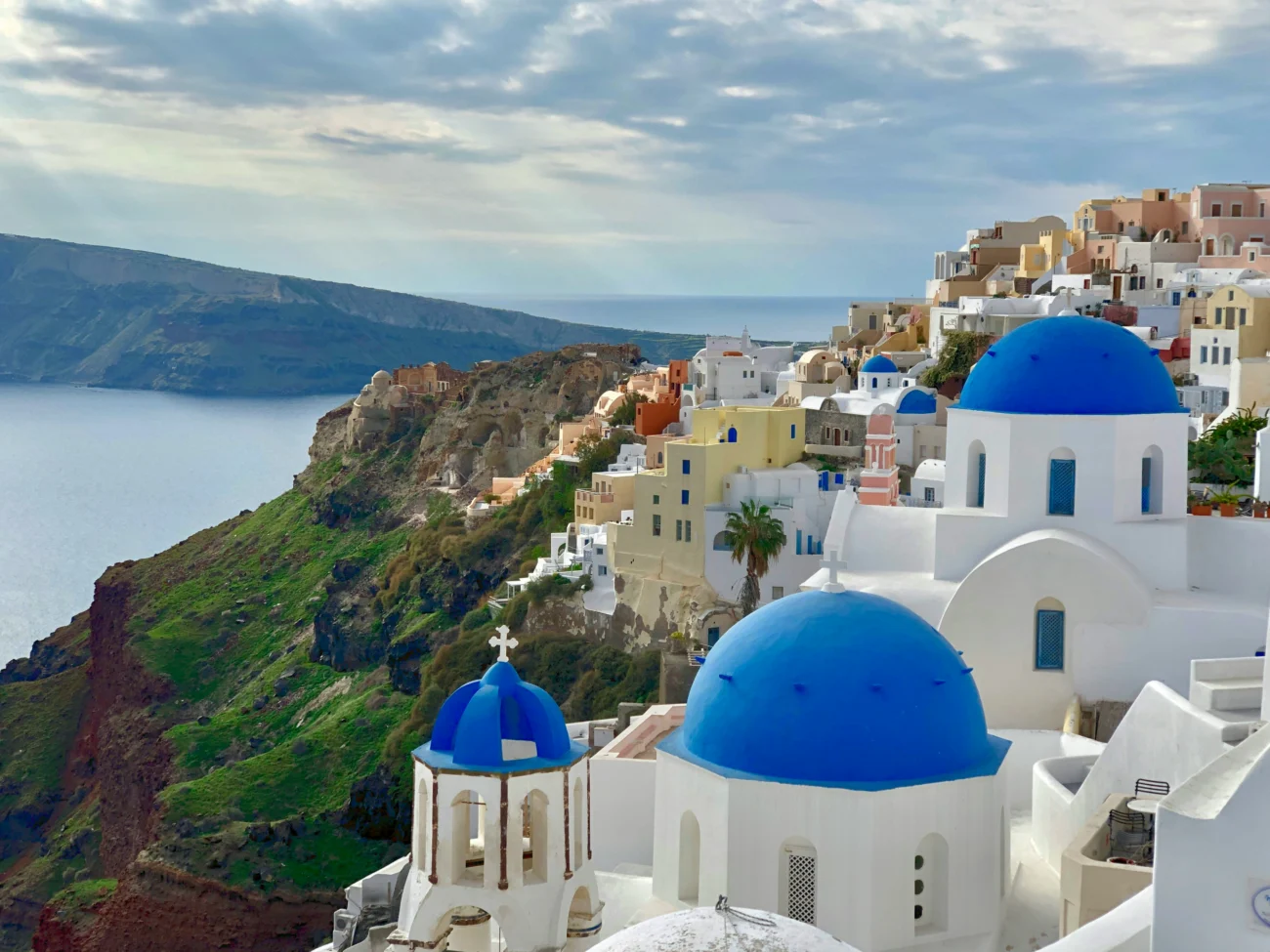
The oldest part of Chora dates back to 1212, built by Marco Sanudo, the Duke of Naxos. It is one of the best preserved medieval fortress settlements in the Cyclades. The houses themselves form the outer walls, with their back facades acting as a continuous defensive barrier. You enter through 2 stone arcades, the Loggia and the Paraporti. Inside, the lanes are barely a metre wide, with whitewashed walls, blue green shutters, and potted plants on every step. The Kastro has been continuously inhabited for over 800 years.
Church of Panagia
The whitewashed Church of the Dormition of the Virgin sits on a dramatic clifftop plateau above Chora, reached by a zigzag stone path. The walk up takes about 20 minutes and the views from the terrace at the top are some of the finest in the Aegean. On clear days you can see Sikinos to the east. This is the most popular sunset walk on Folegandros, and the path is lit at night for the walk back down. The church itself is modest inside. The exterior and the view are the reason to come.
The Squares
Chora’s social life revolves around 3 connected squares. Pounta is the main one, with taverna tables under trees and the cliff edge dropping away to the sea below. Dounavi sits in the centre with a centuries old plane tree. Piatsa connects to Dounavi through the Church of Agios Nikolaos. Evenings here are what Folegandros is about. Morning coffee, long lunches, late dinners under the stars.
Getting There
Ferries arrive at Karavostasis, the port on the east coast. A bus runs from the port to Chora throughout the day during summer. The ride takes about 10 minutes. You can also walk up, but the road is steep and 3.5 kilometres long with no shade. A taxi is another option. Check the Folegandros bus timetable and the how to get to Folegandros page for ferry schedules.
Map
Where to Eat
Chora has a handful of tavernas concentrated around the main squares. Pounta square is the centre of evening dining. The food on Folegandros leans traditional, with local dishes like matsata (handmade pasta with rooster or goat) appearing on most menus. Prices are reasonable compared to better known islands.
Where to Stay
Most accommodation on Folegandros is in or around Chora. Small hotels, guesthouses, and rooms occupy the lanes around the Kastro and the main squares. There are no large resorts on the island. Book well ahead for July and August because Folegandros has a limited number of beds and fills up quickly.
Nearby Beaches
Chora sits on a cliff with no direct beach access below. The nearest beaches are reached from Karavostasis (Vardia Beach, a short walk) or from Ano Meria (Agali Beach, by path or boat). Katergo Beach, the most famous on the island, is accessible only by boat from Karavostasis.
Best Time to Visit
Late May through June and September through early October are ideal. Chora is quieter, the weather is warm enough for swimming, and the evening light on the Kastro walls is at its best. July and August are busy by Folegandros standards, though still far quieter than Santorini or Mykonos.
Explore more of the island in our Folegandros guide and the Folegandros map.