
Table of Contents
Beach Type and Experience
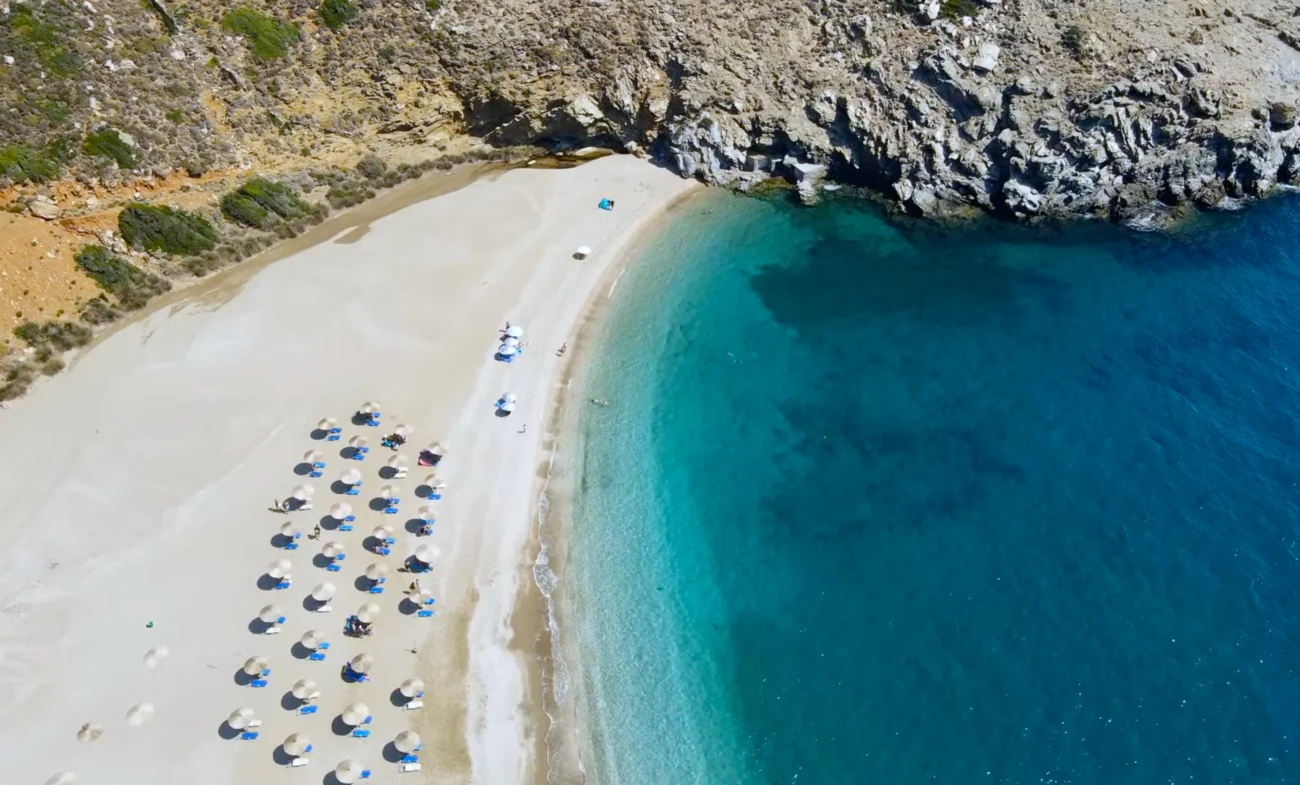
Zorkos Beach is an extraordinary place that feels like stepping into a painting. The beach has a distinctive character with white pebbles that cover much of the shoreline alongside sections of golden sand. The combination creates a striking contrast with the turquoise waters, making it one of the most visually stunning beaches on Andros. The pebbles are smooth but firm, so many visitors prefer to wear water shoes or sandals when walking along the shore, though the sand areas near the organised section remain comfortable for bare feet.
One of the most remarkable aspects of Zorkos is how uncrowded it remains despite its extraordinary beauty and large size. The beach stretches wide across the bay, naturally distributing visitors throughout the space so that even during peak summer months the beach never feels overwhelmed. You can find quiet spots away from the small crowd of sunbathers without much effort. The beach appeals equally to those seeking organised comfort with sunbeds and a restaurant as well as to independent travellers who prefer to place their own umbrellas and relax in solitude.
The beach structure shows a split personality. Half of the beach features coarse sand mixed with pebbles, while the other half transitions predominantly to pebbles. This variation means different sections suit different preferences. Some visitors love the sound and feel of pebbles, while others prefer sandy areas. You will definitely find your preferred spot somewhere along this lengthy shoreline.
Zorkos Beach is not an ideal destination for young children due to water depth characteristics, though families can certainly visit. The waters deepen rapidly with a sharp slope as you enter, meaning water progression from shallow to deep happens quickly rather than gradually. Most families with very small children choose the western beaches of Andros such as Batsi or Golden Sand Beach, which offer shallow waters that are better suited to children learning to swim. However, families with older children and teenagers who are confident swimmers absolutely love Zorkos.
The beach has a traditional and natural atmosphere rather than a party or music focused environment. You will not find loud beach bars with music or nightlife entertainment here. Instead, the emphasis remains on natural beauty, peaceful swimming, and the remarkable landscape. This makes Zorkos perfect for couples, groups of friends seeking a relaxing day, and anyone who values tranquillity and unspoiled surroundings.
Regarding nudism, Zorkos Beach is a traditional, non-designated beach where clothing is expected. The beach is not known as a nudist destination, and visitors should dress appropriately. There are no nudist areas or clothing optional sections at Zorkos.
For wheelchair users and people with mobility challenges, Zorkos Beach presents significant accessibility difficulties. The final stretch of road is unpaved and rough with hairpin turns. Even though it is theoretically possible in a standard car with careful driving, the road conditions would prevent wheelchair access from the parking area to the beach. There are no wheelchair accessible facilities, ramps, or adapted pathways at the beach itself. The toilet facilities are basic and not adapted for wheelchair users. If disability access is important, other Andros beaches offer better options, though none of the island’s beaches currently provide comprehensive wheelchair facilities. This is an area where Andros is less developed compared to some other Greek islands.
Water Quality and Conditions
The waters at Zorkos Beach are genuinely extraordinary. They display multiple shades of blue and green depending on depth and light conditions. Shallow areas near the shore shimmer in turquoise hues, while deeper waters reveal darker blues and jade greens. The clarity is exceptional, making this beach excellent for snorkeling and underwater photography. Divers and snorkeling enthusiasts consistently praise the visibility and the natural underwater features including rock formations and small caves accessible from the beach.
Water temperature follows seasonal patterns that make Zorkos suitable for swimming during specific months. From June through September represents the optimal swimming season. In June, the water temperature averages around 22 degrees Celsius or 72 degrees Fahrenheit, which feels pleasant for most swimmers. By July and August, the water warms to approximately 25 to 26 degrees Celsius or 78 to 79 degrees Fahrenheit, reaching its warmest and most comfortable conditions. September maintains similar warm temperatures around 24 to 25 degrees Celsius or 75 to 77 degrees Fahrenheit. The waters are still swimmable in May and October when temperatures range from 18 to 22 degrees Celsius, though a wetsuit provides comfort for those sensitive to cooler water.
The beach experiences both calm days and rough conditions depending on wind patterns. A northerly wind called the Meltemi dominates many summer days and significantly affects Zorkos. When Meltemi winds blow from the north with strength, the bay becomes choppy with waves that can be quite strong. During these conditions, swimming is challenging and potentially unsafe for non experienced swimmers. The water develops a rough chop, sand blows onto the beach area, and the overall experience deteriorates substantially. Experienced swimmers and surfers sometimes enjoy the challenge, but most casual swimmers should avoid Zorkos on Meltemi days. This is one weakness of Zorkos compared to sheltered western beaches. Visitors must check wind forecasts and either visit on calm days or choose a different beach if strong northerly winds are predicted.
On calm days, the waters are remarkably peaceful and perfect for swimming. The clarity of the water combined with the gentle slope of the sea bottom in shallow areas creates ideal snorkeling conditions. Visitors regularly spot small fish, sea creatures, and interesting rock formations just by walking a short distance into the water.
Safety considerations are important at Zorkos. The beach has a rapid depth change as mentioned, so strong swimmers find it perfect while beginners and non swimmers should exercise extreme caution or stay in very shallow water near shore. During Meltemi wind conditions, waves can be dangerous for all swimmers. Occasionally, visitors report jellyfish in the water, particularly during certain periods of the year. Bringing water shoes helps protect feet from the pebbles and also provides protection if you step on unfamiliar underwater objects.
The beach bottom consists of pebbles and rocks in many areas rather than sand, so entering the water requires care. Some visitors describe needing several minutes to find comfortable entry points between rocks. Water shoes make this process much easier and are highly recommended.
The outstanding water quality and clarity make Zorkos one of Andros’s premier beaches for those who prioritise water conditions and want genuinely crystal clear swimming and snorkeling. However, wind sensitivity means this beach is not consistently perfect throughout summer. Calm days reward you with paradise, while Meltemi days can make the beach unpleasant.
Accessibility and Getting There
Zorkos Beach sits on the northeastern side of Andros Island, positioned above the port town of Gavrio and situated above the village of Varidi. The precise location is approximately 17 kilometres from Gavrio Port, 24 kilometres from the village of Batsi, and about 49 kilometres from Chora, which serves as the capital of Andros.
Getting to Zorkos requires a car or scooter, as there is no public bus service to the beach. The drive takes approximately 40 minutes from Gavrio, though exact time varies based on traffic and road conditions. The journey itself becomes part of the experience, as you wind through mountainous terrain with increasingly striking sea views.
The road to Zorkos splits into two sections. For the majority of the journey from Gavrio, the road is paved asphalt in good condition. This main road section is straightforward to navigate and suitable for any standard vehicle. However, the final 3 to 4 kilometres transition to an unpaved dirt road. This unpaved section includes several hairpin turns and descends steeply toward the beach. Many visitors describe this section as rustic but manageable in a normal car, provided you drive slowly and carefully.
Some older Google Maps navigation systems may direct you along an even worse alternative route that follows a mountain ridge with poor road conditions and dangerous cliff edges without protection. If using GPS navigation, it is worth ignoring the worst route suggestions and following local signs instead, which direct visitors to the better maintained dirt road descent.
The dirt road presents the primary challenge to reaching Zorkos. While it is feasible with a standard vehicle and even possible on motorcycles and scooters, success requires careful slow driving. Vehicles with lower ground clearance might scrape occasionally, but the road remains passable. This barrier of a challenging final approach actually helps keep Zorkos less crowded than it would otherwise be, since many visitors choose easier beaches when roads prove difficult.
Parking is abundantly available at Zorkos Beach. The large parking area near the beach provides free parking with no fees or restrictions. During even busy August weekends, the ample parking space rarely reaches capacity. This is a significant advantage compared to some other popular Andros beaches where parking fills quickly. You can almost always find a convenient parking space close to the beach access.
From the parking area, the walk to the beach is short and straightforward. The organised part of the beach with the restaurant and sunbeds is immediately accessible. Other sections of the beach are equally close. The dirt parking area itself is manageable and parking does not require special driving skills beyond basic control.
Facilities and Amenities
Zorkos Beach offers a modest but adequate selection of facilities. The beach is partially organised, with one dedicated area providing structured amenities. The other sections remain free and unorganised, which appeals to visitors who prefer independence.
Food and drink options centre around the traditional taverna located right on the beach overlooking the water. This taverna is considered very welcoming and serves Greek food using local ingredients where possible. The atmosphere is relaxed and genuinely friendly. The taverna opens at around 1:30 in the afternoon, though exact opening times occasionally vary seasonally and by day. This opening time means early morning visitors arriving before 1:30 will not find food service, only basic drinks from a small beach kiosk. If you arrive very early and expect meal service, you may be disappointed and should plan accordingly by bringing food or eating elsewhere first.
There is also a second taverna available up the hillside above the beach. This restaurant offers similar traditional Greek cuisine and opens earlier in the day than the beachside option, making it useful if you visit early morning. Prices across both establishments are reasonable and typical for Greek beach tavernas. Visitors report paying around 3 to 5 euros for coffee or beer at the beach bar, with full meals from the taverna costing between 10 to 20 euros depending on selections. Seafood dishes tend toward the higher end of this range. The tavernas provide good value for money compared to many tourist destination restaurants throughout Greece.
Sunbeds and umbrellas are available for rent at the organised section of the beach. The typical cost is around 12 euros for a set including one umbrella and two sunbed loungers, though prices fluctuate slightly depending on specific items rented and exact timing of your visit. Some visitors report occasional price variations of 1 to 2 euros above or below this standard rate. The sunbed rental includes access to these items but usually does not include food or drink. You are free to bring your own picnic and use the sunbed space, paying only for the furniture rental. This arrangement suits budget conscious travellers.
The beach itself provides natural shade through large surrounding rocks and boulders, though this shade is limited in quantity. Only a small percentage of the beach area benefits from shade, so most visitors either rent umbrellas or bring their own shade solution. The surrounding landscape features sparse vegetation and trees, but these are scattered rather than dense. The rocky environment does not provide extensive natural shade trees like sandy beaches sometimes offer. Sunscreen protection is essential due to the intense Mediterranean sun and the limited shade options.
Fresh water is available through the toilet facilities, though water fountains for drinking are not prominently advertised. Visitors should check with beach staff about accessing fresh water if needed. Bringing your own water is prudent, as relying on finding fresh water availability could be disappointing.
Toilet facilities exist on the beach and are described as basic but functional. The toilets service both the organised beach area and general visitors. Cleanliness is generally adequate, though facilities are simple rather than modern or luxurious. Changing rooms and shower facilities are available to rinse off salt water after swimming. These are appreciated additions but simple in design. There are no fancy amenities like heated showers or elaborate changing facilities, but basic freshwater rinse options exist.
Overall, Zorkos provides the essentials for a day at the beach without being elaborately developed. Food and drink are available at reasonable prices, sunbeds can be rented affordably, and basic facilities meet visitor needs. The beach suits those who prefer a traditional atmosphere with simple amenities over heavily developed resort style beaches with extensive commercial offerings.
Activities and Special Features
Zorkos Beach excels as a destination for water based activities beyond simple swimming and sunbathing. The crystal clear waters and rocky underwater landscape create outstanding opportunities for snorkeling. The clarity allows visibility of the sea bottom and marine life from just a few metres offshore. You can spot small colourful fish, various sea creatures, and interesting rock formations immediately upon entering the water. No special boat trip is required; snorkeling opportunities exist directly from the beach itself.
The beach features natural underwater features including rock formations and caves that can be explored by experienced swimmers and snorkelers. These underwater caves and rock features add interest and adventure to water exploration. Visitors enthusiastically report finding interesting underwater structures and marine life during snorkeling sessions. The visibility is exceptional, making underwater photography quite rewarding.
Diving opportunities exist for certified divers. Some diving centers on Andros offer courses and guided dives, and experienced divers can arrange dives at Zorkos. The rocky underwater landscape and reasonable depths provide good diving conditions. While there is no dive shop directly at Zorkos Beach, it is accessible as a dive destination with prior arrangements made at diving centers located in larger towns such as Gavrio or Batsi.
Hiking trails connect to Zorkos Beach and the surrounding area. One particularly notable trail is Hiking Trail 20, which runs from Zorkos Beach to Trypes Cave, providing a short scenic coastal walk with sea views and leading to a natural sea cave. This type of hiking access allows visitors to combine beach time with walking and exploration of the wider landscape.
The surrounding rocky and mountainous landscape creates dramatic scenic photo opportunities. The contrast between the white pebbles, turquoise water, and rocky cliffs creates a visually striking environment that photographers find compelling. Many consider Zorkos to be one of the most photogenic beaches on the island. Sunrise and sunset photography is particularly rewarding when weather permits, with dramatic light illuminating the cliffs and water.
The natural landscape features including the distinctive white pebbles, turquoise waters, and surrounding rocky terrain create an exotic aesthetic that many visitors describe using words like unbelievable and like a painting come to life. This combination of elements makes Zorkos one of the most striking Greek beaches purely from a visual standpoint.
Wildlife viewing opportunities include possibilities for seeing various sea birds and possibly marine creatures, though visitor reports of specific wildlife sightings are not extensive. The beach is part of a larger Andros ecosystem, and the remote location means some wildlife viewing is possible, though sightings are not guaranteed.
Practical Information
The best time to visit Zorkos Beach depends partly on weather and wind patterns. Early morning visits from opening until late afternoon tend to experience calmer conditions compared to afternoon hours when Meltemi winds typically strengthen. If possible, visiting Zorkos on days when weather forecasts predict light winds from southern or eastern directions ensures the best experience. Strong northerly wind days should be avoided entirely, as conditions become uncomfortable even for strong swimmers.
Seasonally, June through September represents the optimal visiting period. July and August offer the warmest water and most reliable sunny weather, though these months also bring the most summer visitors and the greatest likelihood of Meltemi winds. June and September provide pleasant weather and warm water without the peak season intensity, making them excellent months. May and October are possible but require wetsuit consideration due to cooler water temperatures.
What to bring requires consideration based on the beach environment. Sunscreen is absolutely essential due to the intense Mediterranean sun and the limited shade at Zorkos. Many visitors report severe sunburn from underestimating sun intensity, especially on reflective pebble beaches where sunlight bounces from the white stones. Wearing a hat, sunglasses, and light covering clothes provides additional protection.
Water shoes or sandals are strongly recommended for the pebbled areas, as bare feet on pebbles becomes uncomfortable during extended beach time. The combination of pebbles and rocky underwater entry also benefits from foot protection. Bring an umbrella or sun shelter if you do not plan to rent sunbeds, as shade is limited.
Bring your own drinking water, as reliance on finding fresh water at the beach could prove problematic. A picnic or packed lunch is a sensible option if you want to avoid depending on the taverna opening at 1:30 or eating expensive restaurant food. Snacks and light provisions give you maximum flexibility.
If you plan to snorkel, bringing snorkeling equipment or renting it locally adds to the experience. Basic snorkel gear is usually available for rent at larger beaches such as nearby Batsi, though it is not available directly at Zorkos. Bringing your own gear guarantees having exactly what you need.
Footwear requirements at Zorkos are clear. Water shoes or sandals are essential for the pebbled sections and rocky underwater entry. Walking on hot pebbles in bare feet quickly becomes unbearable. Bring proper footwear rather than planning to go barefoot.
Zorkos Beach rarely experiences crowding due to its size and remote location. Even during August peak season, the beach maintains a peaceful atmosphere with plenty of space. The challenging access road filters out many potential visitors, leaving more room for those who make the journey. Visiting on a day without Meltemi winds virtually guarantees a pleasant, uncrowded experience.
Food costs at Zorkos are very reasonable. A simple coffee costs around 3 euros, beer costs around 5 euros, and a full meal from the taverna typically costs between 10 and 20 euros. These prices are affordable compared to many Greek tourist destinations. The excellent value for money is one advantage of this beach.
Safety and Warnings
Sun exposure at Zorkos requires serious attention. The Mediterranean sun is intense, and the reflective white pebbles amplify sun exposure substantially. Many visitors describe Zorkos as having strong sun despite decent cloud coverage, and reflections from pebbles increase UV exposure significantly. Sunscreen with high SPF protection is absolutely essential, and many experts recommend SPF 50 or higher. Reapply sunscreen every two hours and after swimming. Wearing light coloured protective clothing, a wide brimmed hat, and quality sunglasses provides important additional protection.
Water entry at Zorkos requires care due to the rocky and pebbly underwater terrain. This is not a beach where you can casually wade in wearing beach shorts. The underwater entry consists of rocks and pebbles rather than a sandy bottom. Water shoes provide crucial protection for feet and should be worn when entering the water. Avoid running or diving into unknown depths without careful assessment. Some visitors describe needing several minutes to locate a safe entry point between rocks, so early entry while you can still see clearly helps identify good spots.
Meltemi wind impacts represent the most serious safety consideration. When strong northerly Meltemi winds blow, the bay becomes choppy and dangerous. Waves strengthen dramatically, swimming conditions worsen significantly, and sand blows into the beach area making it uncomfortable. Strong swimmers might manage during Meltemi conditions, but the experience is challenging and potentially unsafe. For families, inexperienced swimmers, and anyone uncomfortable in rougher conditions, Meltemi days should be avoided entirely. Check wind forecasts before visiting and reschedule if strong northerly winds are predicted. This is not an overprotective warning but a practical necessity based on actual beach conditions.
Wave conditions vary dramatically with wind. Calm days mean mirror-smooth waters perfect for swimming and snorkeling. Windy days mean rough waves unsuitable for casual swimming. The beach transforms completely based on wind conditions, so wind patterns are the single most important factor in Zorkos experience quality.
Rocky terrain on the approach to the beach presents a secondary safety consideration. The final unpaved road section has hairpin turns and steep descent sections. Drive carefully and slowly, maintaining awareness of sharp turns. The road is not dangerous if treated with appropriate respect, but rushing on this terrain could cause accidents.
Overcrowding and crowd related problems are virtually non-existent at Zorkos, making safety in this regard excellent. The large beach and limited access mean peaceful conditions and absence of dangerous crowding situations.
Occasional jellyfish presence has been reported by some visitors, particularly during certain periods. If jellyfish are present, vinegar can be applied to stings, though immediate immersion in hot water, as hot as you can tolerate, provides the most effective pain relief. Check local information upon arrival about current jellyfish presence.
Nudism acceptability is straightforward at Zorkos. The beach is not a designated clothing optional area, and visitors should maintain appropriate beach wear. The beach maintains a traditional family friendly atmosphere regarding clothing expectations. Nude or topless bathing is not common and would stand out as unusual.
The overall safety profile of Zorkos is good for aware, sensible visitors who respect water conditions and wind forecasts. The primary risks are sun exposure and Meltemi winds, both of which are manageable through planning and appropriate precautions. The beach does not present exceptional danger compared to other Greek beaches when visited with proper awareness.
Special Attractions and Nearby Points of Interest
The immediate surroundings of Zorkos Beach feature dramatic rocky landscapes and mountain scenery. The cliffs and rocks framing the bay create distinctive photography opportunities and scenic viewpoints. The exotic beauty of the location itself serves as the primary attraction, making Zorkos appeal primarily for its natural landscape rather than cultural or historical features.
Vitali Beach is located nearby, approximately 3 kilometres south of Zorkos. Vitali is another excellent Andros beach featuring crystal clear waters, a quiet cove setting with a small church overlooking the bay, and good snorkeling opportunities. Both beaches share similar characteristics and appeal to similar visitors. Some travellers visit both beaches during a trip to Andros, using Vitali as an alternative if Meltemi winds make Zorkos choppy.
Varidi is a small nearby village that provides the gateway access to Zorkos. The village itself is modest but serves as a reference point for directions. The village has a few local shops and tavernas, though nothing of major tourist interest exists specifically in Varidi.
The hiking trail from Zorkos to Trypes Cave provides an activity combining beach time with exploring. Trypes Cave is a natural sea cave accessible by coastal hiking trail from the beach. This combination allows visitors to experience the beach and then explore the surrounding landscape through hiking, creating a more varied day experience.
Gavrio, the main port town of Andros located 17 kilometres south of Zorkos, serves as the primary transportation hub for the island. The town contains basic facilities, shops, and restaurants. For visitors needing supplies or wanting additional dining options beyond the Zorkos tavernas, Gavrio provides these amenities. However, Gavrio itself is not a major tourist destination and contains limited specific attractions.
The wider Andros Island offers many additional attractions beyond Zorkos. Andros was recently named the top hiking destination in Greece by Conde Nast Traveler, featuring over 300 kilometres of marked hiking trails. The island contains charming traditional villages such as Stenies, Apikia, and Menites featuring local architecture and culture. The capital of Chora contains neoclassical mansions and marble paved streets reflecting the island’s maritime heritage, plus museums including a Museum of Contemporary Art. These island wide attractions can be combined with beach time at Zorkos for a comprehensive Andros visit.
The most direct nearby attractions are water based, with snorkeling, diving, and water sports available throughout Andros. Kypri Beach, located south toward Gavrio, is famous for windsurfing and water sports. Golden Sand Beach provides alternative sandy beach experience. These beaches are alternatives to consider if wind conditions make Zorkos unsuitable during your visit.
Zorkos Beach itself is the primary attraction rather than serving as a base for exploring other specific sites. Visitors come primarily for the beach experience rather than to access other cultural or historical attractions.
Is Zorkos Beach suitable for families with young children?
Zorkos Beach is not ideal for families with very young children due to the rapid water depth change. The beach is definitely suitable for families with older children and teenagers who are confident swimmers. The large size and peaceful atmosphere appeal to families in general, and sunbed rentals provide comfortable facilities. However, families with children learning to swim should consider western beaches such as Batsi Beach or Golden Sand Beach instead, as those offer shallow progressive water depth more suitable for young children.
How bad is the dirt road to Zorkos Beach, and can a normal car make it?
The dirt road final section is definitely manageable with a normal car when driven slowly and carefully. Reviews consistently confirm that standard vehicles successfully reach Zorkos, including smaller models like the Suzuki Alto. The road requires slow careful driving through hairpin turns but is not dangerous if treated with appropriate respect. Sports cars with very low ground clearance might scrape occasionally, but standard height vehicles experience no significant problems. The challenging road is actually beneficial, as it keeps Zorkos less crowded than it would otherwise be.
What is the water temperature at Zorkos Beach, and when is the best time to swim?
The water is warmest from July through September, reaching approximately 25 to 26 degrees Celsius in peak summer. June water temperature is around 22 degrees Celsius and remains pleasant for swimming. May and October are swimmable but require consideration of cooler water, with temperatures around 18 to 22 degrees Celsius. The swimming season at Andros extends from June through November, with July and August providing the absolute warmest conditions.
How crowded does Zorkos Beach get during peak season?
Despite being one of Andros’s most beautiful beaches, Zorkos rarely feels crowded even during August peak season. The combination of the large beach size and the challenging final road access naturally limits visitor numbers. Many visitors describe the beach as feeling uncrowded even during busy times, with plenty of space and peaceful atmosphere. This contrasts favourably with other popular Greek beaches that become uncomfortably packed during summer.
What should I bring to Zorkos Beach, and what can I not get there?
Bring sunscreen with high SPF protection, water shoes for the pebbles, a hat and sunglasses, drinking water, and a picnic if you want maximum flexibility with meals. The beach bar and taverna provide food and drinks but the taverna does not open until 1:30, so early visitors should bring options. Fresh water fountains are not prominently available, so bringing water is prudent. Everything else including sunbed rentals, umbrellas, toilets, and basic food is available at the beach. Snorkeling equipment is not available to rent directly at Zorkos, so bring your own or rent at other beaches.