
Table of Contents
1. Beach Type & Experience
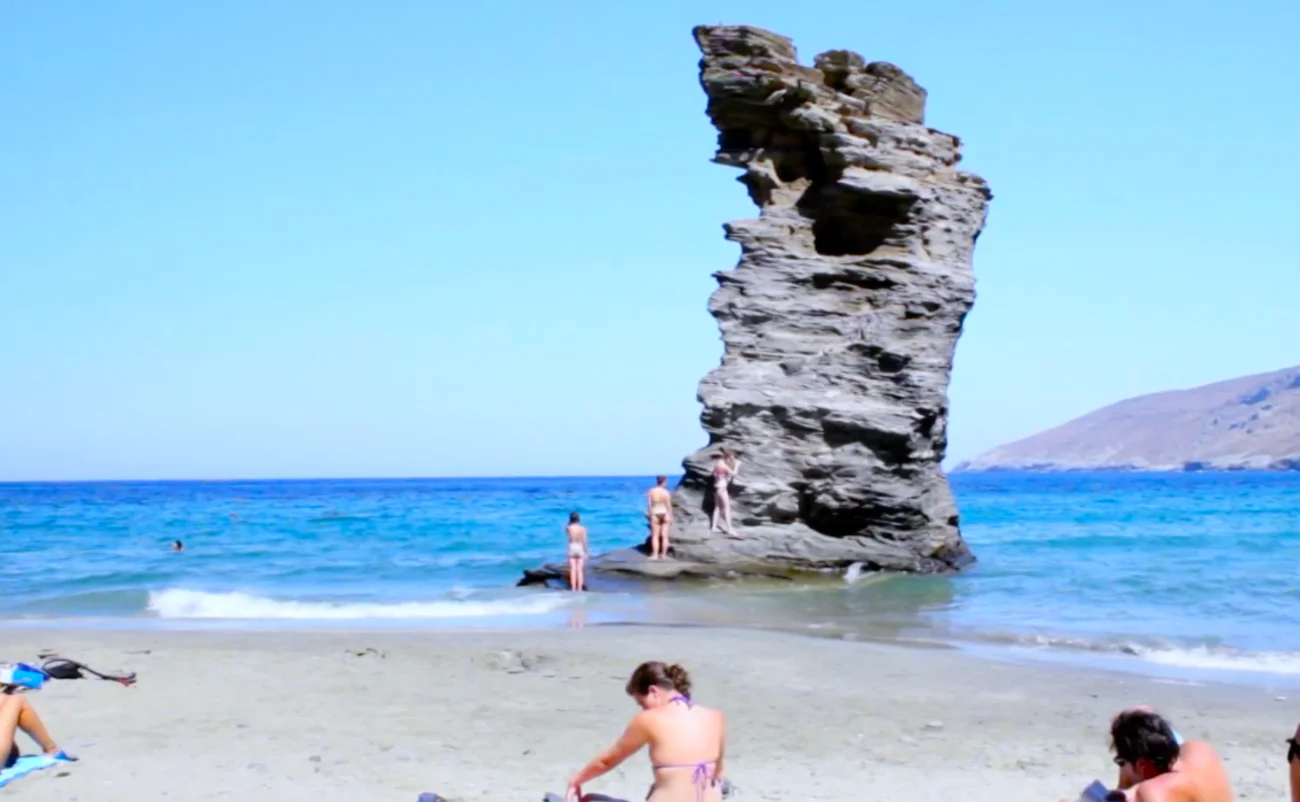
Tis Grias to Pidima Beach, which translates to “The Old Woman’s Jump,” is a small sandy beach located on the southeastern coast of Andros near the sleepy fishing village of Korthi. The beach composition is primarily soft golden sand mixed with some small pebbles, making it comfortable to walk on barefoot, though water shoes are still recommended for the rocky shoreline areas. The beach itself is relatively small and intimate, offering a genuine sense of seclusion that appeals to visitors who are seeking an authentic Greek island experience away from the crowds.
This is predominantly a local and visiting traveler destination rather than a commercial tourist beach, which means that during early morning hours in June and September you will find the beach peaceful and quiet. However, the beach does attract significant crowds during peak afternoon hours in July and August, especially when the weather is pleasant and word of mouth has drawn tourists to this Instagram famous spot. The afternoon period from 1 PM onwards tends to be quite busy as day trippers from other parts of Andros and nearby islands make their way here. Your best strategy for experiencing the beach in a less crowded state is to arrive early in the morning before 10 AM or visit during the shoulder months of May, June, or September.
The beach is generally suitable for families with children, though parents must remain vigilant. The shallow waters near the shore provide safe swimming for young children, and the water gradually deepens as you move away from the sand. However, the rocky underwater terrain in some areas means children should wear water shoes for protection. The beach is not an officially designated nudist area, and it is not naturally accepted as a clothing optional beach, so visitors should follow standard beach etiquette and keep their swimwear on.
Regarding accessibility for people with disabilities, Tis Grias to Pidima unfortunately presents significant challenges. There are no wheelchair facilities, no accessible pathways, and no adapted restrooms. The steep 5 minute downhill walk required to reach the beach from the parking area would be extremely difficult or impossible for someone with mobility challenges or using a wheelchair. Additionally, the rocky terrain and lack of infrastructure make this beach unsuitable for visitors with most types of disability.
2. Water Quality & Conditions
The water at Tis Grias to Pidima is absolutely crystal clear and displays that distinctive emerald green color that makes the Cycladic islands so famous. Visibility extends several meters into the water, making it excellent for snorkeling and underwater photography. The water is calm in protected areas but can show beautiful ripples when the afternoon winds pick up, creating a dynamic and ever-changing seascape that photographers and artists find endlessly fascinating.
Water temperatures follow the standard Cycladic pattern throughout the year. From June through September, the water is pleasantly warm for swimming. June sees temperatures around 72 degrees Fahrenheit (22 degrees Celsius), rising to 78 degrees Fahrenheit (26 degrees Celsius) in July and August when it reaches its warmest state. September remains warm at 76 degrees Fahrenheit (24 degrees Celsius), though the water begins to cool as autumn approaches. May and October are cooler but still swimmable at around 66 to 71 degrees Fahrenheit (19 to 21 degrees Celsius), though you may want to consider a thin wetsuit if you are sensitive to cold. Swimming outside these months is not recommended due to much colder temperatures.
The underwater environment features interesting depth variations and rocky formations that create natural habitats for Mediterranean marine life. You will spot small fish, sea urchins, and various colored fish species if you snorkel carefully. The rocky areas provide good shelter for marine organisms, and on calm days you might encounter small octopuses in the shallow rocky sections. The water is generally safe for swimming with no dangerous currents in normal conditions.
Wind conditions are a critical consideration when planning a visit to Tis Grias to Pidima. The beach faces northeast and is exposed to strong northerly and easterly winds. The Meltemi wind, which is a dry northerly summer wind that blows from June through September and reaches its strongest in July and August, can make this beach very uncomfortable and potentially unsafe for swimming. On Meltemi days, the water becomes rough, waves increase significantly, and the narrow beach can feel quite dangerous. Strong north or east winds should be avoided completely at this beach. If you check the weather forecast and see strong winds from these directions, it is definitely better to choose a different, more sheltered beach for that day.
3. Accessibility & Getting There
Reaching Tis Grias to Pidima requires dedication and physical effort, which is part of what keeps this beach special and less commercialized than some of Andros’ other famous beaches. The primary access method is by car via the small village of Korthi on the southeastern coast. The drive from the capital city of Chora takes approximately 25 to 30 minutes, while the drive from the northern ferry port at Gavrio takes about 40 minutes.
The road approach involves driving through the narrow alleyways of Korthi village following signage toward the beach. Even though signs exist, many first time visitors find this part confusing because the beach is not visible from the main road. Once through the village, you will drive onto a dirt road that is in good condition but is definitely not a paved highway. The final kilometer of road is a narrow dirt track that becomes progressively more challenging to navigate in a regular car. High clearance vehicles or cars with good ground clearance are definitely preferable to low sports cars.
Parking is extremely limited and is available only along the dirt road itself with space for perhaps 10 to 15 vehicles at most. There are no proper parking facilities, ticket machines, or parking attendants. Parking is free of charge. During peak afternoon hours in July and August, the parking area can fill completely, which means you may need to park further back and walk an additional distance, or you may find that no spaces are available at all. This is another good reason to visit in early morning or during shoulder seasons.
From the parking area, you must walk down a fairly steep narrow path to reach the beach. This downhill walk takes approximately 5 minutes and follows a dirt trail with some sections having metal railings for safety. The path is narrow and the slope is noticeable, which means the return uphill walk back to the car is considerably more strenuous than the descent. The uphill return journey takes around 7 to 10 minutes depending on your fitness level and pace. The path can be muddy or slippery after rain, so appropriate footwear is essential. Sturdy trainers or hiking shoes are much better than flip flops or sandals for this terrain.
For hiking enthusiasts, an alternative route exists starting from Gialos (also known as Gialos Beach or the town of Gialos) through Agia Ekaterini Chapel. This natural hiking trail takes approximately 15 to 20 minutes from Gialos and offers spectacular scenic views of the southeastern coast. This route is favored by walkers who want to experience the natural landscape and avoid the dirt road approach entirely. The natural environment along this hiking path is extremely beautiful, featuring wildflowers in spring and dramatic cliff views throughout the year. No car is needed for this route if you are staying in Korthi or can arrange a ride to Gialos.
Road conditions overall are moderate. The paved road from Chora or Gavrio to Korthi is well maintained. However, the final dirt road sections require a vehicle with reasonable ground clearance. Regular sedans can make it, but SUVs or higher-clearance vehicles are definitely better suited to this terrain. During winter months, rain can make the dirt road temporarily impassable or very difficult.
4. Facilities & Amenities
This is crucial information: Tis Grias to Pidima beach has absolutely no facilities whatsoever. There are no beach bars, no restaurants, no cafes, no toilets, no fresh water fountains, no changing rooms, no showers, and no sunbed or umbrella rentals. The beach is completely unspoilt and primitive. This means you must bring everything you need for your visit.
Visitors must pack their own food and drinks. No provisions of any kind are available at the beach, so if you are hungry or thirsty, you have only what you brought with you. Many people pack a simple picnic with sandwiches, fruit, snacks, and plenty of water. The entire experience is one of genuine self sufficiency and connection with nature.
Drinking water must be brought from your accommodation or purchased in Korthi village before you arrive at the beach. There are no water fountains, taps, or sources of fresh water at the beach itself. Dehydration is a real risk if you have not planned ahead, particularly on hot days. I would recommend bringing at least 2 to 3 liters of water per person for a full day visit.
Shade options are limited to the natural rock formation and any trees if you can find them. The distinctive tall rock that rises from the beach does provide some shadow depending on the time of day and sun angle, and this is why many visitors position themselves near the rocks. Trees are virtually nonexistent on this beach, so you should plan to bring a beach umbrella or parasol if you want shade. Alternatively, plan your visit to avoid the peak sun hours between 11 AM and 3 PM.
The nearest food and drink options are in Korthi village, which is about 5 to 10 minutes drive away. Sea Satin Nino, a casual café bar and restaurant, is located in Ormos Korthi near the waterfront and serves coffee, soft drinks, beer, wine, and light meals throughout the day. This is your best option for grabbing supplies before you head to the beach. Nonas taverna and a small fish taverna also operate in Korthi, but they are primarily for sit down meals rather than takeaway. Prices at these establishments are moderate and typical for Andros. A main course at a taverna runs about 10 to 15 euros, while a coffee costs around 2 to 3 euros.
5. Activities & Special Features
Snorkeling at Tis Grias to Pidima is possible and rewarding due to the crystal clear water and rocky formations. The water clarity allows you to see several meters down, and the rock formations near the shore create natural habitats for Mediterranean fish species. You will see small colorful fish, sea urchins, and if you are lucky, cuttlefish or small octopuses in the rocky shallows. The beach itself has good access points for entering the water and beginning your snorkel experience. The underwater caves created by the rocks are accessible by swimming in calm conditions, though you should only explore these if you are a confident swimmer.
Diving with professional diving centers is not available directly at the beach, but Andros island does have professional diving operations based in other parts of the island that could arrange dives in this area. Most serious divers on Andros base themselves in other locations and make day trips to various dive sites. Snorkeling is definitely the more practical water activity for the average beach visitor.
The hiking trails in the area are exceptional. The famous hiking route from Chora to Korthi passes through the area and offers spectacular views of Tis Grias to Pidima beach as you approach. This 14 kilometer trail takes about 4.5 hours and passes through the beautiful Dipotamata Valley with its old stone bridges and abandoned watermills. Another wonderful option is the 15 to 20 minute hiking trail starting from Gialos that leads to the beach itself, offering dramatic cliff and coastal views along the way.
Photography is absolutely the major draw at Tis Grias to Pidima. The distinctive tall rock formation rising from the beach is one of the most photographed features in all of Andros. From certain angles, the rock genuinely does look like an old woman wearing a headscarf, which connects visually to the legendary name of the beach. The soft golden sand, crystal clear emerald water, and dramatic rock formations create naturally beautiful compositions that look spectacular in photographs. The golden hour at sunset produces particularly stunning colors when the rock takes on warm orange and golden tones while the water reflects the fading sunlight. Instagram photographers and travel bloggers consider this one of the must-photograph locations in the Cyclades. If you come specifically for photography, arrive either in early morning for beautiful light and no people in your shots, or in late afternoon from 4 PM onward to catch the golden hour conditions.
6. Practical Information
The best time to visit Tis Grias to Pidima is during the early morning hours from sunrise to 10 AM when the beach is peaceful, the light is beautiful, and crowds are minimal. The afternoon from 1 PM onward becomes increasingly busy with day trippers. If you do not mind crowds and want to swim in the warmest water, midday during July and August is busy but busy. The most comfortable months for visiting are June and September when the water is warm but the summer heat is less intense and crowds are somewhat smaller than in July and August. May and October are cooler but offer a more relaxed experience with very few other visitors.
What to bring is crucial for a successful visit: comfortable walking shoes or trainers for the steep path, swimwear, a towel, sunscreen (the Mediterranean sun is very intense), a wide brimmed hat or sun hat, sunglasses, at least 2 to 3 liters of fresh water per person, packed food such as sandwiches and fruit, a beach towel, snorkeling equipment if you want to snorkel (rentals are not available here), a beach umbrella or parasol for shade, a small first aid kit, any necessary medications, and trash bags to carry out all your rubbish (leave no trace).
Footwear requirements depend on your comfort level and tolerance. Many visitors go barefoot on the sand because the sand is soft and pleasant. Water shoes are recommended for entering the water due to rocky sections of the underwater terrain. For the walking path from the parking area, sturdy walking shoes are definitely recommended rather than flip flops or casual sandals.
Sun exposure is a significant concern at this beach. The beach has virtually no shade except for the rock formation and any umbrella you bring. The Mediterranean sun is intense, and the reflection from the sand and water increases UV exposure considerably. Sunscreen with high SPF (at least 30 or higher) is absolutely essential. Reapply sunscreen every 1 to 2 hours, particularly after swimming. A wide brimmed hat provides crucial head and face protection, and sunglasses protect your eyes. Do not underestimate the power of the Mediterranean sun. Severe sunburn can occur in just 2 to 3 hours of exposure during peak summer months.
7. Safety & Warnings
Water entry at Tis Grias to Pidima requires caution due to rocky sections. The underwater terrain is not consistently sandy. Some areas have rocks, pebbles, and uneven ground. Water shoes or reef shoes are highly recommended to protect your feet from cuts and scrapes. Enter the water gradually and test the bottom before moving into deeper water. Avoid running or diving into the water without first checking conditions.
The Meltemi wind from the north and northeast creates dangerous conditions at this beach. Strong Meltemi winds occur regularly from June through September, especially in July and August. When these winds blow, waves become significantly larger, the water becomes choppy and unsafe for swimming, and the beach can feel quite exposed and uncomfortable. Check wind conditions before you go, and if the forecast shows strong northerly or easterly winds, choose a different sheltered beach instead. Local advice in Korthi is often helpful if you are unsure about wind conditions.
The steep descent path requires careful attention, particularly on the return journey. Ascending a steep uphill path in hot weather after a full day at the beach can be physically demanding. If you have any concerns about your fitness level or mobility, ask yourself honestly if you can manage this walk before you start. There is no assistance available if you become too tired to continue back up the path. Appropriate footwear and taking your time are essential. During rain or when the path is wet, the terrain becomes slippery and considerably more dangerous.
Rocky terrain both on the approach path and at the beach itself means stepping hazards are present. Watch where you step, particularly on the path from the parking area where loose stones can shift under your feet. At the beach, the rocks around the water entry points can be slippery, especially when wet.
Sun exposure risks have already been mentioned but deserve emphasis. Severe dehydration and heat exhaustion are real risks if you do not bring sufficient water and do not take breaks in the shade. The lack of facilities means there is nowhere to cool off or get medical help. Know the signs of heat exhaustion, including dizziness, excessive sweating followed by lack of sweating, muscle cramps, and confusion. If these symptoms occur, move to shade immediately and drink water slowly.
There is a coastguard station in the area. The emergency number for the Andros coastguard is (22820) 22250 in case of serious incidents. Mobile phone reception can be spotty in this remote area, so do not assume your phone will have signal.
8. Special Attractions & Nearby Points of Interest
The iconic rock formation known as Tis Grias to Pidima rock is the beach’s primary special attraction. This 20 to 21 meter tall distinctive formation has achieved fame throughout the Mediterranean travel world. From certain viewing angles, particularly when viewed from certain points on the beach or from the water, the rock genuinely resembles an elderly woman wearing a traditional Greek headscarf, which provides the visual inspiration for the beach’s legendary name.
The legendary mythology surrounding this beach is its most fascinating special attraction. The name “Tis Grias to Pidima” translates literally to “The Old Woman’s Jump,” and it commemorates a tragic legend that has several versions told by locals. The most popular version connects the rock to the nearby Pano Kastro (also called Kastro Faneromeni or the Castle of Faneromeni), a ruined medieval fortress that sits high on the hills above Kochylos village at an elevation of 583 meters (1,912 feet) above the coast. According to the legend, during Turkish occupation of the island, the Turks laid siege to this seemingly impregnable castle. In a crucial moment, an old woman and her pregnant daughter came to the castle gates asking for refuge. During the night, the old woman opened the castle gates from within, allowing the Turkish forces to enter. The Turks then invaded the castle and slaughtered many of the inhabitants who had taken refuge there. The old woman, overcome with guilt and shame for her treachery, climbed the tall cliff and jumped into the sea. According to the legend, at the spot where she fell, she was transformed to stone, creating the distinctive rock formation that stands today.
Two alternative versions of the legend exist among local storytellers. In one version, Turkish soldiers were chasing an old woman, and she desperately climbed the rock to escape them, choosing to jump to her death rather than be captured. In a third less commonly told version, the old woman jumped because she had become a widow for the third time and could not bear the loneliness of her situation.
Pano Kastro (Kastro Faneromeni) is the most significant nearby historic site, located 8 to 10 kilometers away in the hills above Kochylos village. This 13th century Venetian castle was built as a fortress and is now a ruin that visitors can explore. The castle sits at an impressive elevation with stunning panoramic views of the southeastern coast of Andros. A white church called Panagia Faneromeni sits among the ruins. From the castle, you can see Tis Grias to Pidima beach below in the distance, providing visual connection between the legend and the location. A rough gravel road leads nearly to the top of the castle, and the site is accessible for visiting. The view of the bay of Ormos Korthiou and the Aegean Sea from this vantage point is magnificent.
The nearby village of Korthi (also called Ormos Korthiou) is a small, quiet fishing village that remains relatively untouched by mass tourism. The village sits along the coast with a small harbor where fishing boats operate. Tavernas and cafes line the waterfront, offering fresh seafood and casual Greek dining. The village atmosphere is authentic and relaxed, providing a genuine experience of island life. The village serves as the primary supply point before visiting the beach.
The village of Kochylos sits in the hills above the coast and provides access to the Pano Kastro ruins. This small traditional village retains authentic Cycladic architecture and is worth exploring if you enjoy wandering through narrow streets and seeing how life continues in small island communities.
The Andros Trail is a famous 100 kilometer hiking path that runs the entire length of the island from north to south. Various sections of this trail pass through the southeastern region near Tis Grias to Pidima. Hiking enthusiasts can combine a beach visit with longer trekking experiences. The trail is marked and well documented, and it has been awarded the Leading Quality Trails certification.
Nearby Syneti beach is another worthwhile destination in the southeastern part of Andros, located only a few kilometers away from Tis Grias to Pidima. Syneti offers a somewhat less dramatic landscape but provides another beach option if weather or wind conditions make Tis Grias to Pidima unsuitable for that day.
How difficult is it to reach Tis Grias to Pidima Beach, and is it suitable for families with young children?
Reaching Tis Grias to Pidima requires moderate physical effort. The beach is accessible by car via Korthi village, but the final kilometer involves a dirt road. From the limited parking area, you must walk down a steep path for about 5 minutes. The return uphill walk is more strenuous and takes 7 to 10 minutes. Young children can manage this if they are capable hikers and the walk is done slowly, but children under age 5 may struggle with the uphill return. The beach itself is suitable for family swimming due to shallow water near the shore and soft sand, but the rocky underwater terrain means children should wear water shoes. There are absolutely no facilities at the beach, so families must bring all supplies including food, water, and shade structures.
Is Tis Grias to Pidima Beach safe for swimming, and are there any dangerous conditions to watch for?
Tis Grias to Pidima is generally safe for swimming in calm conditions, but caution is necessary. The water is clear and beautiful, with gradual depth increase from the shore. However, avoid this beach when strong north or east winds blow, particularly during Meltemi wind conditions in July and August. The underwater terrain has rocky sections, so water shoes are recommended to protect your feet. The shallow water near the shore is suitable for young swimmers, but children and inexperienced swimmers should not venture into deep water. No lifeguard is present. Make sure to check wind forecasts before visiting and consider alternative beaches if strong winds are predicted.
What should I bring to Tis Grias to Pidima Beach since there are no facilities?
Because Tis Grias to Pidima has absolutely no facilities whatsoever, you must bring everything. Essential items include: plenty of fresh water (at least 2 to 3 liters per person), packed food such as sandwiches and fruit, a beach umbrella or parasol for shade, sunscreen with high SPF, a wide brimmed hat and sunglasses, sturdy walking shoes for the path, water shoes for the rocky underwater areas, a towel, swimwear, a first aid kit, any necessary medications, and trash bags to pack out all rubbish. The beach has no toilets, so plan for this as well. Do not rely on finding supplies at the beach. Get provisions from Korthi village before arriving.
What is the best time of day and season to visit Tis Grias to Pidima Beach?
The best time of day is early morning from sunrise to 10 AM when the beach is peaceful, light is beautiful for photography, and crowds are minimal. The afternoon from 1 PM onward becomes increasingly busy. For the best overall experience, visit during June or September when water temperature is warm and pleasant, the summer heat is less intense than July and August, and the beach experiences fewer crowds. Peak summer months of July and August have the warmest water but also the largest crowds. May and October offer pleasant conditions with very few other visitors but cooler water temperatures. Avoid this beach if strong north or east winds are forecast.
Is Tis Grias to Pidima Beach suitable for disabled visitors or those with mobility challenges?
Unfortunately, Tis Grias to Pidima Beach is not suitable for visitors with most types of mobility challenges or disability. There are no wheelchair facilities, no accessible pathways, no accessible toilets or changing facilities, and no infrastructure of any kind. The steep 5 minute downhill walk required from the parking area would be impossible for wheelchair users and extremely difficult for people with limited mobility. The rocky terrain and lack of assistance further restrict accessibility. Visitors with mobility concerns should choose one of the more accessible beaches in Andros that have better facilities and easier access, such as the organized beaches near Batsi or Gavrio with paved roads and beach bars.