
Beach Type and Experience
Kalotaritissa Beach stands as one of Amorgos’ most enchanting coastal destinations, located at the southwestern tip of the island. The beach stretches long and wide with predominantly sandy composition, offering a welcoming surface for comfortable barefoot walking. Sandy patches dominate much of the beach, though certain areas feature fine pebbles, creating a pleasant and varied beach texture. The natural sandy bottom makes it an ideal choice for families and anyone seeking comfort whilst enjoying the seaside.
Table of Contents
The beach attracts a good mix of both local visitors and international tourists, yet it never feels overwhelming even during the busier summer months. Mornings until midday tend to be quieter, making early visits particularly rewarding if you prefer a more peaceful atmosphere. The beach maintains its tranquil character throughout the day, with the afternoon hours experiencing a moderate increase in visitors but remaining far less crowded than many other Mediterranean beaches. Local fishermen frequent the bay regularly, which adds to the authentic charm and character of the location.
For families with children, Kalotaritissa proves exceptionally suitable. The protected bay creates shallow water areas perfect for young swimmers to build confidence and enjoy themselves safely. The water entry is smooth and gradually sloping, allowing children to wade in gently without encountering sudden depth changes. The calm conditions mean that even nervous swimmers feel at ease here. Parents appreciate the secure environment and the ability to supervise children whilst the beach offers plenty of space for families to spread out and relax together.
Nudism is not an officially designated policy at Kalotaritissa Beach, and the atmosphere generally maintains family-friendly standards with most visitors wearing conventional beachwear. The beach welcomes all body types and ages, but visitors should respect the predominantly clothed environment that the beach maintains.
Water Quality and Conditions
The waters of Kalotaritissa rank among the cleanest and clearest on the island, offering that signature crystal-clear turquoise appearance that makes Greek waters so distinctive. Visibility extends impressively underwater, making snorkeling an absolute pleasure for exploring the marine environment directly from the shore. The water clarity remains excellent throughout the swimming season, with visibility typically exceeding ten metres on good days.
Water temperatures follow the typical Mediterranean pattern for the Cyclades region. From June through September, the water warms considerably, with June bringing pleasant swimming at around 22 to 24 degrees Celsius. July and August reach their peak warmth at approximately 25 to 26 degrees Celsius, making these months particularly comfortable for extended swimming sessions. September maintains pleasant conditions at around 24 degrees Celsius before cooling in October. May and early June offer slightly cooler swimming at 20 to 22 degrees Celsius, but remain perfectly swimmable for those comfortable in refreshing water.
The underwater terrain offers interesting features for snorkelers. The sandy bottom slopes gently, providing safe swimming conditions whilst occasionally revealing small rock formations and natural features that create habitat for fish and marine life. Along the right side of the beach, two underwater caves can be accessed by swimming, offering adventurous snorkelers the opportunity to explore these natural formations. These caves sit at moderate depths and require confidence as a swimmer but provide an unforgettable experience for those keen on underwater exploration.
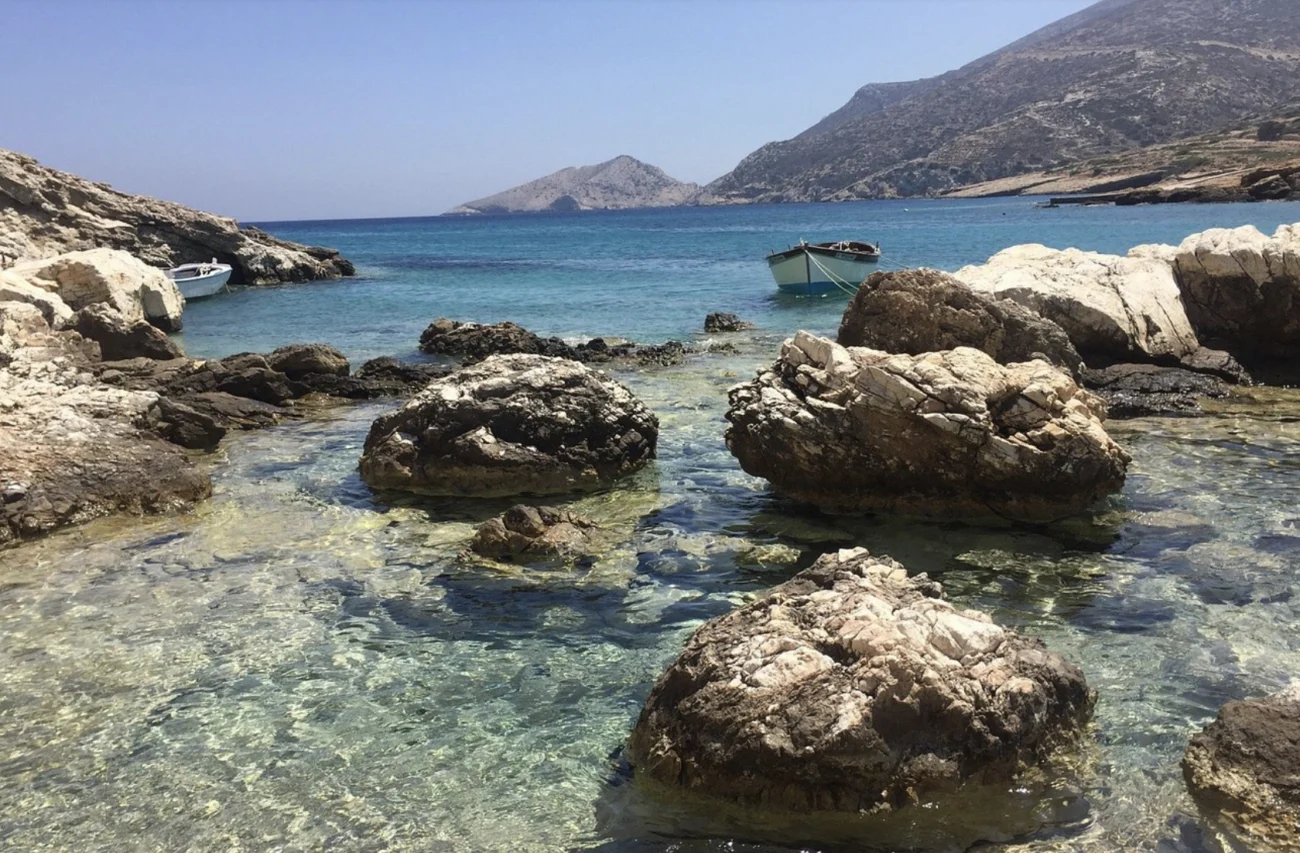
The bay sits naturally protected from the notorious Meltemi wind that affects many other Amorgos beaches during the summer months. This dry northerly wind blows regularly across the Aegean Sea from June through September, creating rough conditions at exposed beaches. However, Kalotaritissa’s sheltered inlet position means the bay remains remarkably calm even when fierce winds buffet other parts of the island. The name Kalotaritissa derives from the Greek word “kalotaria,” meaning good weather, a title the beach thoroughly earns through its consistently peaceful water conditions.
Water entry presents no significant hazards for most visitors. The smooth slope and sandy composition mean swimmers can wade in gradually without encountering unexpected rocks or uneven bottoms. The average depth progression from shore to deeper waters happens gradually and naturally, allowing swimmers to gauge depth comfortably as they move outward.
Accessibility and Getting There
Reaching Kalotaritissa requires driving to the southern region of Amorgos known as Kato Meria. The journey from Chora, the island’s capital village, takes approximately thirty five minutes via the well maintained coastal road. The route follows the Kato Meria Road, which presents no significant driving challenges despite winding through scenic terrain. The road surface remains in good condition throughout, and the drive itself becomes an attraction as stunning views unfold at every turn.
The final descent to the beach involves a short walk of approximately four hundred metres from the car park, making it easily achievable for most visitors. This brief walk allows time to anticipate arrival whilst remaining manageable for families with children or those with reduced mobility. The pathway itself presents no extreme difficulty, though the terrain is natural and uneven in places, requiring modest physical capability.
A small car park sits just above the beach, offering free parking during the day. The parking area accommodates a reasonable number of vehicles and rarely fills to capacity even during peak summer season. The convenient parking arrangement means visitors need not stress about finding suitable spaces, allowing for spontaneous visits and flexible departure times.
Accessibility for people with mobility challenges proves limited. The beach lacks purpose-built wheelchair facilities or paved pathways leading directly to the sand. The natural terrain of the final descent and the absence of adapted facilities mean wheelchair users would face significant challenges accessing the beach independently. Visitors with reduced mobility should contact local establishments in advance to discuss potential assistance arrangements.
Facilities and Amenities
A small but efficient beach café operates at Kalotaritissa, serving food and beverages throughout the day during the main summer season. The café provides traditional Greek snacks and light meals, with homemade pies featuring prominently on the menu. These pies often contain local cheese known as xynomizithra combined with vegetables such as courgettes, offering an authentic taste of regional cooking. Fresh meatballs prepared daily represent another popular option, typically served immediately after cooking whilst still warm.
Sunbeds and umbrellas are available for hire at a standard rate of ten euros per set. This typically includes two loungers and one umbrella, providing reasonable value compared to other Mediterranean beach destinations. Whilst the beach only maintains a limited number of sunbed sets, ranging from approximately fifteen to twenty units, they rent fairly quickly during peak summer hours. Arriving before noon maximises the chances of securing sunbeds should you wish to rent them. The beach remains spacious enough that bringing your own beach equipment is entirely viable, with plenty of sandy space available for visitors who prefer their own chairs and towels.
Natural shade comes from several large trees scattered throughout the beach area, providing welcome respite from the intense midday sun. These native trees offer genuine shade for reading, relaxing or simply escaping the heat during the hottest hours of the day. The combination of available umbrellas and natural tree coverage means visitors have multiple shade options rather than relying on a single solution.
Toilet facilities exist at the beach in basic form, operated by the beach café establishment. Changing facilities prove minimal, consisting primarily of the basic toilets rather than dedicated changing rooms. Visitors should plan accordingly, perhaps changing at accommodation before arrival or bringing extra clothing for post-swim freshening.
Fresh water availability requires enquiry at the café, as no public drinking fountains exist on the beach. It is wise to bring adequate fresh water from your accommodation or purchase bottled water at the café, ensuring proper hydration during long beach days. The intense Mediterranean sun increases fluid requirements substantially.
Water Activities and Special Features
Snorkeling directly from Kalotaritissa Beach represents one of the primary attractions. The crystal clear waters and easy access to interesting underwater features make it ideal for snorkelers of all experience levels. The underwater caves along the right side of the beach provide adventure and exploration possibilities for confident swimmers. Marine life includes various fish species that frequent the rocky areas, though underwater visibility remains excellent throughout the swimming season.
Diving operations centre around Amorgos Diving Center, based in Aegiali Bay at the northern end of the island. This established diving school offers courses ranging from beginner open water certification to advanced options, as well as daily guided dives for qualified divers. The underwater world around Amorgos features numerous caves, rock formations and interesting dive sites suitable for various experience levels. Contact the diving centre directly from your accommodation to arrange dives or courses.
Beyond the beach itself lies the famous Olympia Shipwreck, situated just a short distance away in nearby Liveros Bay. This cargo vessel sank in nineteen eighty whilst seeking shelter from a storm and has become an iconic landmark featured extensively in the acclaimed film “The Big Blue” directed by Luc Besson. The wreck sits in shallow water visible from a nearby beach, approximately a fifteen minute walk from Kalotaritissa. Visiting the shipwreck combines beautifully with a day at the beach, though swimming directly at or inside the wreck is not recommended due to water quality and safety concerns around the deteriorating vessel.
Hiking opportunities exist from the beach onwards. A short walk past the beach canteen leads across the road towards the far side of the inlet, where wonderful views open over Gramvousa Island and the surrounding seascape. For more ambitious walkers, heading uphill from this vantage point provides spectacular panoramic views across the entire Kalotaritissa Bay. Local legend speaks of five mysterious rock pyramids visible from the hilltop, an entertaining challenge for visitors keen on exploration and photography.
Boat trips to nearby Gramvousa Island depart regularly from Kalotaritissa throughout the day. These small island transfers typically run on schedules of thirty minutes to one hour between departures, offering flexibility for spontaneous excursions. The journey takes approximately ten minutes by small boat. Gramvousa features two sandy beaches with clear waters, though facilities are completely absent on the island. Visitors should bring their own beach equipment, food and water if planning to spend time ashore. The island offers excellent snorkeling and fishing opportunities for those interested in water activities beyond simple swimming.
Practical Information
The best time to visit Kalotaritissa depends on your preferences regarding temperature and crowds. June through September offer the warmest water and most reliable weather, with July and August reaching peak summer conditions. June and September provide warmer water than spring whilst experiencing fewer visitors than July and August. If avoiding crowds matters more than temperature, visiting in May or late September offers pleasant swimming conditions with substantially fewer tourists.
Arrive at the beach before noon to secure sunbeds if you wish to rent them, as availability becomes limited as the day progresses. Morning visits maximise the likelihood of parking close to the walking path and potentially finding your preferred beach location without navigating crowds.
Essential items to bring include high SPF sunscreen, as the Mediterranean sun during summer months proves intense and damaging to unprotected skin. Water and snacks should be packed from your accommodation, though the beach café provides food and beverages. A hat and sunglasses provide essential sun protection. Water shoes or sandals prove helpful given the combination of sandy and pebbly areas, protecting feet during entry and exit from the water.
The only significant drawback mentioned by regular visitors involves the generator powering the beach café’s electricity, which produces noticeable noise even though it operates from higher up the hillside. Expecting this sound allows better enjoyment, and the convenience of having a café and facilities outweighs this minor inconvenience for most visitors.
The water temperature at Kalotaritissa consistently runs several degrees higher than other Amorgos beaches due to the bay’s sheltered nature and depth characteristics, providing a small but noticeable advantage for comfort during spring and autumn months.
Safety and Warnings
The Mediterranean sun during the summer months proves exceptionally intense, making sunscreen essential. Use broad-spectrum protection of SPF 30 or higher, and reapply regularly throughout the day, especially after swimming. The combination of direct sun and reflected light from sand and water means UV exposure exceeds expectations. A wide-brimmed hat, long-sleeved beach shirt and quality sunglasses provide additional essential protection.
Sea urchins inhabit rocky areas around Amorgos coastlines, and Kalotaritissa is no exception. These creatures hide in shallow water and crevices, with sharp spines that can puncture skin if stepped upon accidentally. Wearing water shoes provides excellent protection. Watch carefully when entering and exiting the water, particularly when walking on any rocky sections. The sandy composition of Kalotaritissa reduces urchin contact compared to fully rocky beaches, but awareness remains important.
The bay’s sheltered nature means it remains protected from the Meltemi wind even on days when other beaches experience rough conditions. This protection makes Kalotaritissa an excellent backup choice on windy days that might otherwise spoil beach plans elsewhere on the island.
Wave conditions at Kalotaritissa remain calm due to the protected bay setting. Strong swimmers and less experienced swimmers alike can feel confident in the water conditions, though basic water safety remains advisable. Never swim alone, maintain awareness of your swimming ability, and inform someone of your location and expected return time.
The terrain leading to the beach involves some natural uneven ground rather than purpose-built paths, requiring reasonable footwear and modest fitness. Those with significant mobility challenges should discuss options with accommodation providers before attempting the walk.
Special Attractions and Nearby Points of Interest
The Olympia Shipwreck provides a fascinating cultural and historical attraction, easily combined with a Kalotaritissa visit. The wreck features prominently in Luc Besson’s famous diving film “The Big Blue,” making it instantly recognisable to cinema fans. Photography enthusiasts will find the wreck particularly interesting during late afternoon light, approximately two to three hours before sunset, when illumination becomes less harsh and golden tones enhance images. The seventeen minute walk to the wreck requires reasonable fitness but presents no extreme difficulty.
Nearby villages provide dining and exploration options. Chora, the island capital, sits approximately thirty five minutes’ drive northward and offers numerous traditional tavernas, local shops and the castle ruins perched dramatically above the main square. Katapola, the main port village, provides additional restaurant and café options, though it sits further away at the northern end of the island. Both villages offer authentic Greek experiences and are worth exploring on separate occasions.
Gramvousa Island, accessible by regular boat service from Kalotaritissa, offers a day trip combining beach activities with island exploration. The two sandy beaches provide swimming and snorkeling opportunities, while the island’s relatively undeveloped nature offers peace and quiet rare on larger inhabited islands.
The Hozoviotissa Monastery, perched dramatically on cliff faces approximately one kilometre from Chora, ranks among Greece’s most spectacular religious sites and features prominently in “The Big Blue” film. This eleventth-century monastery welcomes visitors with modest dress code requirements and offers stunning views alongside profound spiritual atmosphere.
The Agia Anna Chapel, another location featured in “The Big Blue,” sits in a scenic location offering photography opportunities and a touch of film history.
Frequently Asked Questions About Kalotaritissa Beach
What makes Kalotaritissa Beach different from other Amorgos beaches?
Kalotaritissa Beach earns its reputation through exceptional protection from the notorious Meltemi wind. Whilst many Amorgos beaches battle strong summer winds creating rough conditions, Kalotaritissa remains sheltered within a natural bay offering calm waters even during windy periods. This unique advantage makes it the go-to beach for families seeking guaranteed calm swimming and relaxation. The name itself translates from Greek as “good weather,” a title the beach consistently earns.
Is Kalotaritissa Beach suitable for young children and nervous swimmers?
Yes, absolutely. Kalotaritissa Beach provides ideal conditions for families with young children and anyone lacking swimming confidence. The smooth sandy entry slopes gradually into deeper water, allowing children to wade progressively without encountering sudden depth changes. The calm bay conditions mean never facing waves or strong currents. The beach offers plenty of space for families to spread out, and the shallow water area extends far enough to allow children genuine swimming and play. The small café and available amenities mean families can spend full days comfortably.
Can I snorkel directly from Kalotaritissa Beach without hiring a boat?
Yes, snorkeling directly from the beach provides excellent opportunities. The crystal clear water and interesting underwater features, including two caves on the right side of the beach, are all accessible by swimming from the shore. Basic snorkeling equipment can be worn from the beach immediately. Visitors with moderate swimming ability can explore quite extensively. The main rocks and caves sit at moderate depths requiring confidence as a swimmer.
What should I bring to Kalotaritissa Beach?
Pack high SPF sunscreen as the Mediterranean sun proves intense during summer. Bring plenty of fresh water, as dehydration occurs quickly in heat and saltwater environments. Bring your own snacks or plan to purchase them from the beach café. Water shoes or sandals protect feet against occasional sharp rocks or pebbles. A hat and sunglasses provide essential sun protection. If you prefer not renting sunbeds, bring your own beach towel or mat. A camera proves worthwhile for capturing the spectacular views.
How do I visit the Olympia Shipwreck from Kalotaritissa?
The shipwreck sits in nearby Liveros Bay just a short distance from the beach. On the road approaching Kalotaritissa from the north, watch for a sheepfold on the right side of the road, visible just before reaching the beach car park. Cars will likely be parked alongside the road marking the walking path start point. The walk down takes approximately fifteen minutes and presents easy difficulty. The beach near the wreck offers the closest views and best photography opportunities. The walk back uphill takes slightly longer as you gain elevation. This makes an excellent addition to a Kalotaritissa beach day.