Table of Contents
1. BEACH TYPE AND EXPERIENCE
Agios Sostis Beach represents one of the last truly undeveloped and authentic beaches on the island of Mykonos. This large sandy beach stretches along the northern coastline, offering visitors a completely different experience from the famous party beaches found in other parts of the island. The beach features soft, clean sand that is perfect for sunbathing and relaxing. What makes Agios Sostis special is its commitment to remaining free from commercial development. You will not find rows of sunbeds, umbrellas for rent, or beach bars crowding the shoreline. Instead, you get open space and the feeling of having discovered your own private piece of paradise.
The crowd levels at Agios Sostis vary significantly depending on when you visit. During the quieter months from September through June, the beach attracts mostly local people and a few tourists who have learned about this hidden gem. However, during the peak summer months of July and August, the beach does become busier, especially on weekends and during the hottest parts of the day. Even at its busiest, Agios Sostis remains considerably quieter and more peaceful than other Mykonos beaches like Paradise or Super Paradise.
Agios Sostis is excellent for families seeking a more relaxed beach experience. The sandy shore provides a safe and comfortable place for children to play. The shallow water near the shore makes it ideal for young swimmers to splash about whilst parents keep watch. The water gradually deepens as you move further out, so children can progress at their own pace. The calm, protected position of the beach within a small cove means waves are generally gentle and manageable.
The beach is officially recognized as a nudist friendly location, though nudism is not compulsory or even dominant. The far end of the beach, away from the main access points and the few buildings, has become a naturally accepted area for those who wish to swim and sunbathe without clothing. The main central area of the beach remains suitable for all visitors, with the majority of beachgoers wearing normal swimming attire.
Regarding disability access, the beach presents some challenges. There are no wheelchair facilities or specially adapted pathways leading down to the sand. The walk from the parking area to the beach takes 5 to 10 minutes down narrow paths and stairs. However, the relatively gentle slope and adequate space on the path means someone with certain mobility challenges might manage the walk with assistance. There are no adapted restrooms on the beach itself.
2. WATER QUALITY AND CONDITIONS
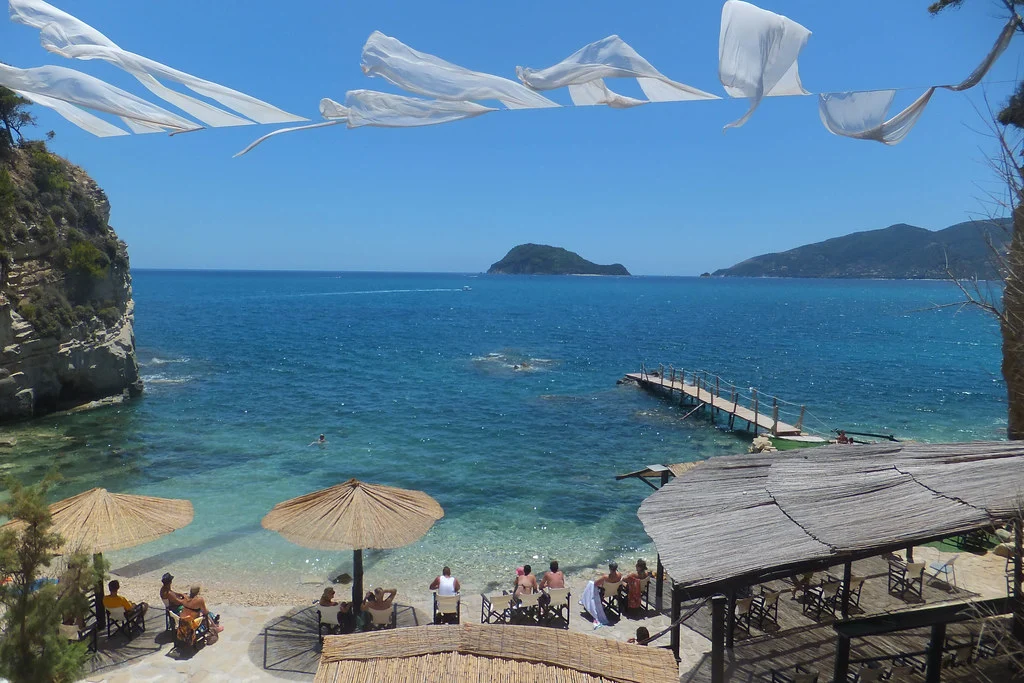
The water at Agios Sostis Beach is absolutely stunning and represents one of the main attractions of this location. The water is crystal clear, allowing you to see right through to the sandy and rocky bottom. This exceptional clarity is perfect for swimming, wading, and snorkeling. The water maintains its transparency throughout the year because the protected cove position prevents significant sediment and rubbish from washing ashore.
The water temperature varies considerably depending on the season. From June to September, which is the prime swimming season, the water temperature ranges from 73 to 78 degrees Fahrenheit, or 23 to 26 degrees Celsius. August is the warmest month, with water temperatures reaching approximately 78 degrees Fahrenheit. These temperatures are comfortable for swimming and allow you to spend extended periods in the water without feeling cold. May and October are cooler but still swimmable at approximately 67 to 72 degrees Fahrenheit, though some people may feel a bit chilly. April and November are cool enough that many people choose not to swim, though brave souls can still go in for short periods.
The underwater landscape features both sandy areas and rocky sections. The bottom is generally quite shallow near the shore, making it very safe for children. As you move out deeper, you will encounter both sandy patches and areas with rocks and small formations. These underwater features create excellent habitats for marine life, including small fish, sea urchins, and various other creatures that make snorkeling particularly rewarding.
The Meltemi wind, which is a dry northerly wind that blows across the Aegean Sea during summer, can occasionally affect Agios Sostis. Because the beach sits on the northern part of the island, it can sometimes experience stronger winds compared to beaches on the southern side. However, the protected cove position means that on many days the water remains calm and perfect for swimming. It is worth asking locals or checking recent conditions before your visit if you are specifically seeking completely calm water.
Swimming safety at Agios Sostis is generally excellent. The water entry is straightforward and manageable from the sandy beach. The gradual depth progression means you can wade in at your own pace. The protected cove keeps waves small and manageable most of the time. However, on days when the Meltemi wind is particularly strong, waves may be a bit larger. Most swimmers and families find the conditions very safe and enjoyable.
3. ACCESSIBILITY AND GETTING THERE
Reaching Agios Sostis Beach requires some effort, but the effort is well worth it for the peace and natural beauty you discover. The beach is located approximately 8 kilometres northeast of Mykonos Town, or roughly 2.8 miles from the town centre. The journey takes about 15 minutes by car under normal conditions.
The only realistic way to reach Agios Sostis is by private vehicle. There are no buses that service this beach, which is one reason it has remained so undeveloped and quiet. You have several options for transport: rent a car, rent an ATV or scooter, hire a taxi, or arrange transport through your hotel. Most visitors choose to rent a car for the flexibility and independence it provides. Read More: Getting around Mykonos
The road to Agios Sostis is generally in good condition, though it is narrow and mostly unmarked. The route takes you through the northern part of the island, and you will need to follow road signs or use a GPS or map application on your phone. Take the road beyond Panormos Beach and head east towards the bay. The narrow roads and lack of clear signage mean you should not attempt this drive in poor weather conditions or during the evening when visibility is limited.
Parking at Agios Sostis presents a challenge that requires planning. There are no parking spaces directly on the beach. Instead, you must park your vehicle on the narrow road above the beach. From the parking area, you then walk down to the beach, which takes 5 to 10 minutes depending on where you find a spot. The good news is that parking is completely free. The challenging news is that popular times, particularly during July and August, fill up quickly. It is strongly recommended to arrive early in the morning, ideally between 7 and 9 o’clock, to secure a good parking spot.
The roads in the area are narrow and winding in places, which means care is needed when driving. However, they are in good condition and suitable for regular cars. Some people with larger vehicles or caravans might find maneuvering a bit tricky.
4. FACILITIES AND AMENITIES
One of the defining characteristics of Agios Sostis Beach is its deliberate lack of commercial infrastructure and facilities. This is by design and choice, not by accident. The beach has successfully resisted the development of sunbed and umbrella rental operations that dominate many other Greek beaches. You will find no rows of sunbeds, no umbrellas for hire, and no deck chairs waiting to rent. This means you have complete freedom to choose where you sit and enjoy the beach without feeling any pressure to purchase anything.
There are no beach bars located directly on the sand at Agios Sostis. You cannot walk a few metres and find a café selling drinks or snacks. This requires planning and preparation on your part. You must bring everything you need for the day: water, food, snacks, drinks, and anything else you might want.
The famous Kiki’s Tavern sits above the beach rather than on it, and it is well worth visiting for lunch or dinner. This simple, rustic restaurant has become something of a legend among Mykonos visitors. Kiki’s serves authentic Greek food prepared on a wood fired grill right in front of you. The menu is limited and simple, featuring grilled meats and fresh fish, salads, and traditional Greek dishes. Prices are reasonable for Mykonos, with a three course meal for one person typically costing between 25 and 35 euros. A full meal for four people might cost around 50 to 60 euros total. Popular dishes include the enormous grilled pork chops, fresh Greek salads, grilled fish, and octopus prepared in various styles.
Kiki’s Tavern operates without electricity and takes no reservations. It is purely first come, first served. You simply arrive and join the queue. Waiting times are often 1 to 2 hours during peak season, but the restaurant compensates by offering free wine in traditional tin cups whilst you wait. This wait is part of the experience and gives you plenty of time to relax and enjoy the view. Only cash is accepted, so you must bring euros with you. The tavern usually opens around lunchtime and serves food until sunset.
There are no public toilets or changing facilities on the beach itself. Some sources suggest there may be basic facilities near Kiki’s Tavern or associated buildings, but you should not rely on this. It is a good idea to use restrooms before arriving at the beach or plan your visit carefully if this is a concern.
Fresh water is not available at the beach. You must bring your own supply. Most visitors bring at least 2 litres of drinking water per person for a full day at the beach. During hot summer days, you might want to bring even more.
There is one small hotel, the Mykonos Star Hotel, located above the beach with direct access. This hotel features a restaurant, bar, and swimming pool. Staying here would give you easy access to the beach. There is also the Mykonos Thea Hotel nearby, which offers a more traditional Cycladic experience with beautiful views.
Shade is something you absolutely must arrange yourself. There are no permanent structures providing shade. Some sections of the beach have a few scattered trees that provide dappled shade, but you cannot rely on finding a good spot. Most visitors either bring a large beach umbrella, a pop up tent, or some form of portable shade structure. Alternatively, bring a large beach towel or sarong that you can rig up between two stakes or use as a head covering.
5. ACTIVITIES AND SPECIAL FEATURES
Swimming and sunbathing are the primary activities at Agios Sostis Beach. The clear, calm water makes swimming an absolute pleasure. Whether you are a confident swimmer or someone who prefers to wade in the shallow areas near the shore, you will find suitable conditions.
Snorkeling is excellent at Agios Sostis. The crystal clear water, shallow depths in many areas, and rocky formations mean you can see a variety of marine life without needing to venture far from shore. You can spot small colourful fish, sea urchins, and other Mediterranean sea creatures. The underwater rock formations create interesting structures to explore. If you are keen on snorkeling, bring a basic snorkel set with you, as rentals are not available on the beach. The best conditions for snorkeling are May to October when the water is clearer and the sun is higher in the sky.
Diving is also possible at Agios Sostis, though there are no facilities directly on the beach. Professional diving centers operate elsewhere on Mykonos and can arrange dives at various sites including Agios Sostis. If you are interested in diving, contact a diving center in Mykonos town or at other beaches before your visit.
Photography is one of the hidden pleasures of Agios Sostis. The combination of crystal clear turquoise water, soft golden sand, and dramatic coastline makes this one of the most photogenic beaches on Mykonos. The golden hour, which is the period just after sunrise or just before sunset when the sun is low on the horizon, provides absolutely stunning light for photography. Even with a basic phone camera, you can capture beautiful images. The natural, undeveloped nature of the beach means your photos will look refreshingly authentic compared to crowded developed beaches.
Walking and exploring are rewarding activities. There is a small coastal path that continues north from the main beach to a second smaller and even more secluded sandy beach. This walk takes only a few minutes and reveals yet another hidden gem. You can also explore the area around Kiki’s Tavern and discover the natural beauty of the surrounding hills and coastline.
The Church of Agios Sostis stands on the hillside above the beach. This small whitewashed chapel is part of the landscape and adds to the authentic, undeveloped character of the location. The beach is actually named after this church.
Relaxation and peace are perhaps the greatest activities at Agios Sostis. This is a place to escape the noise and energy of Mykonos’s famous party scene. Spend your day swimming, reading, chatting with friends or family, and simply soaking in the Mediterranean sun and natural beauty.
6. PRACTICAL INFORMATION
The best time to visit Agios Sostis depends on what kind of experience you are seeking. If you want warm water, hot sunshine, and plenty of sunshine for swimming and sunbathing, then May through September is ideal. Within this period, June is excellent because the water is warm but the island is not yet packed with peak season crowds. July and August offer the warmest water and most reliable sunshine, but the beach becomes noticeably busier, especially on weekends. September offers excellent conditions with fewer crowds than July and August.
Within each day, early morning visits are best for avoiding crowds and securing parking. Arriving between 7 and 9 o’clock in the morning gives you the best chance of finding a good parking space and having the beach relatively to yourself for at least a couple of hours. By mid morning and certainly by afternoon, more visitors arrive and the beach becomes progressively busier.
Bring plenty of sunscreen with a high SPF rating. The Mediterranean sun is intense, and reflected light from the water intensifies sun exposure further. Even people who rarely burn elsewhere can get badly sunburned at Greek beaches. Apply sunscreen liberally and reapply regularly, especially after swimming. Consider bringing a sun hat with a wide brim and sunglasses to protect your face and eyes.
Bring far more water than you think you need. Dehydration happens quickly under the hot sun combined with salt water swimming. A minimum of 2 litres per person for a full day is recommended. Bring snacks and food for the day, as options are limited. Bring a beach towel, though you can purchase these inexpensively if needed. Bring any medications you might need. Bring cash for Kiki’s Tavern if you plan to eat there.
Regarding footwear, water shoes or sandals are recommended because of the rocky areas in and under the water. Bare feet are fine on the main sandy beach area, but when wading or swimming, your feet will be more comfortable and protected with water shoes. Also bring a shirt or cover up if you have sensitive skin or want additional sun protection.
The beach gets progressively busier throughout July and August. Weekends are busier than weekdays. Weekdays in September and June are the least crowded times. April and May are pleasant but the water is cool. November through March the weather is cool and the beach is very quiet.
If you do visit Kiki’s Tavern, arrive with realistic expectations. The wait is genuinely worth it for the quality and authenticity of the food, but you need patience. The atmosphere is rustic and simple, with no frills. The real value is in the fresh food, the outdoor setting above the beautiful beach, and the unique experience. Bring cash, wear casual clothes, and be prepared to wait. The tavern is open for lunch and dinner but closes in the evening.
7. SAFETY AND WARNINGS
Sun exposure is intense at Agios Sostis. The lack of shade structures and the reflective nature of sand and water mean you are receiving significant sun exposure from direct rays and reflected light. People unused to Mediterranean sun conditions regularly experience moderate to severe sunburn on their first day. Take this seriously. Apply high SPF sunscreen liberally and frequently. Bring a hat. Seek shade during the hottest part of the day, typically 12 to 3 o’clock.
Water entry is straightforward and safe from the main beach area. The sandy bottom and gradual depth progression make this one of the safer beaches for swimming. However, some areas have rocky underwater terrain, so water shoes are sensible precautions.
The Meltemi wind can occasionally bring stronger waves and rougher water conditions to Agios Sostis because of its northern location. On days when this wind is strong, the water may be choppier than usual. Check recent conditions or ask locals before arriving if you are concerned about wave conditions. Most summer days are calm, but it is worth being aware of this possibility.
Rocky terrain exists in parts of the coastal paths leading to the beach. The main walking path from parking to beach is relatively straightforward, but it does involve some uneven ground and stairs. Wear appropriate footwear and watch your step, especially if you are returning after sunset when visibility is reduced.
Parking challenges can be a source of stress. Arriving early is essential. If you arrive late in the day, you might find no parking available and have to leave. Plan your visit accordingly and arrive early in the morning.
The nudist area is located only at the far end of the beach away from the main access point and facilities. Nudism is not compulsory, not enforced, and the main beach area remains suitable for all visitors. If nudism makes you uncomfortable, simply stay in the central and southern parts of the beach.
There are no lifeguards on duty at Agios Sostis. You are responsible for your own safety and the safety of anyone in your care. Strong swimmers should not assume there is backup if something goes wrong.
8. SPECIAL ATTRACTIONS AND NEARBY POINTS OF INTEREST
The Church of Agios Sostis sits on the hillside above the beach and is the namesake of this location. This small whitewashed Cycladic chapel adds to the authentic, undeveloped character of the area. Photography enthusiasts will appreciate this traditional Greek island landmark.
Kiki’s Tavern is the main special attraction for most visitors. The history of this simple tavern and its rise to fame through word of mouth makes it a worthwhile destination in itself. The rustic, off the grid atmosphere with no reservations, no electricity, and cash only payment creates an authentic Greek experience that has become increasingly rare.
Panormos Beach is located nearby and offers a different character. This beach has become somewhat developed with beach clubs and facilities, providing contrast to the natural simplicity of Agios Sostis.
The northern section of Mykonos remains relatively undeveloped compared to the southern beaches. Driving through this area gives you a sense of how Mykonos looked before the major tourism development. Small villages, traditional farms, and natural landscape characterize this region.
Beaches Lovers Beach is a smaller, more secluded beach reached by a short walk north from Agios Sostis. This tiny bay features even more privacy and tranquility for those willing to walk a few extra minutes. The short northern walk from the main beach reveals this hidden alternative for those seeking maximum solitude.
The Mykonos Star Hotel above the beach offers accommodation with direct beach access. Staying here provides convenience and beautiful views of Agios Sostis Beach.
What should I bring to Agios Sostis Beach and why is preparation important?
You absolutely must bring everything you need for the day because there are no facilities on the beach itself. This includes at least 2 to 3 litres of drinking water per person because the sun and swimming dehydrate you quickly. Pack food and snacks such as sandwiches, fruits, cheese, nuts, or crackers. Bring a large bottle of high SPF sunscreen and reapply it frequently, especially after swimming. A beach towel or large sarong is essential. A beach umbrella or pop up shade tent is highly recommended because there are almost no natural shade structures. Water shoes or sandals protect your feet in rocky areas. A hat, sunglasses, and a light shirt or rashguard provide additional sun protection. Bring any personal medications you might need. Bring cash if you plan to eat at Kiki’s Tavern. Pack everything you think you might need because you cannot rely on finding a café or shop.
Is Agios Sostis Beach suitable for families with young children and what precautions should we take?
Yes, Agios Sostis is absolutely suitable for families with children. The sandy beach, clear water, protected cove position, and gradual depth progression make it very safe for young swimmers. The low crowd levels mean your children can play freely without worrying about being knocked over by swimmers or obstructed by beach furniture. The main precaution is sun protection because children’s skin is particularly vulnerable. Apply generous amounts of sunscreen every 2 hours and after swimming. Keep children wearing a protective shirt whilst playing in the water. Ensure they wear water shoes to protect their feet from rocks. Bring plenty of drinking water and monitor them for signs of dehydration. The main disadvantage is the lack of facilities like restrooms or changing areas, so plan accordingly.
Can I go nude or naturist swimming at Agios Sostis Beach and are there any rules I need to know?
The far end of Agios Sostis Beach, away from the main access point and facilities, has become a naturally accepted area for naturist swimming and sunbathing. This area attracts people of all ages and orientations who wish to swim without clothing. The main central beach area near the church, parking access, and Kiki’s Tavern remains suitable for all visitors, with most people wearing normal swimming attire. There are no official signs or enforcement, and it is not compulsory to be nude anywhere on the beach. If nudity makes you uncomfortable, simply stay in the main central area of the beach and avoid the far end. Local etiquette expects naturists to remain discrete and not venture into areas where clothed swimmers predominate.
What is the water quality like at Agios Sostis Beach and is it safe for swimming and snorkeling?
The water quality at Agios Sostis Beach is exceptional. The crystal clear water allows you to see clearly to the bottom even in deeper areas. The water purity comes from the protected cove position which prevents sediment and rubbish from washing ashore. The water is absolutely safe for swimming. The sandy bottom near the shore and gradual depth progression make water entry straightforward and safe. There are no strong currents or dangerous underwater hazards that you would not expect. The water quality is excellent for snorkeling, offering visibility of up to 30 metres or more on clear days. You can see small fish, sea urchins, rocky formations, and other marine life. There are no power boats or jet skis on the beach, so the water remains peaceful and undisturbed. The only consideration is that on windy days the northern location means waves might be slightly larger than on southern beaches, but this is still generally manageable and safe.
What are the best times to visit Agios Sostis Beach to avoid crowds and ensure good conditions?
The best times to visit depend on your preferences. For warm water and sunshine, May through September are ideal. June is excellent because the water is warm but the summer peak season crowds have not yet arrived. If avoiding crowds is your priority, early September, late May, and June offer the best combination of good weather and lower visitor numbers. Within the day, early morning between 7 and 9 o’clock provides the best conditions because fewer people have arrived yet and parking is easier to find. If you can only visit during July or August, try visiting on weekdays rather than weekends when visitor numbers are lower. Early morning visits are always preferable to afternoon visits during peak season. October provides good swimming weather with noticeably fewer visitors than summer months. If you want the absolute quietest experience and do not mind cool water, April or November provide very peaceful conditions.
Is Agios Sostis Beach free to visit?
Yes, there’s no entry fee and no charge for parking. You simply drive up, find a spot on the road above the beach and walk down. This is one of the reasons it’s stayed so popular with people who want to avoid the pricier beach clubs elsewhere on the island.
Can I walk to Agios Sostis Beach from Mykonos Town?
Technically yes, but it isn’t something we’d recommend. It’s about 8 kilometres away along narrow, mostly unmarked roads with very little shade, and the walk can take a couple of hours in full sun with no pavement for most of it. Locals on travel forums often warn visitors against attempting it on a hot day. A rental car, ATV or taxi is a far more sensible option.
Is Agios Sostis Beach pet friendly?
Yes, dogs are generally welcome. Because the beach has no sunbeds, umbrellas or crowds to navigate around, it tends to suit dog owners better than the busier organised beaches further south. As always, bring water for your dog too, since there’s no shade or fresh water source nearby.
Is Agios Sostis Beach worth visiting, or is Panormos Beach nearby a better choice?
It depends what you’re after. Some visitors who’ve been to both find the entry into the water a little rockier at Agios Sostis and prefer the softer sand and easier facilities at Panormos, which has a beach bar and sunbeds. If you want peace, quiet and a proper “undeveloped Greece” feeling, Agios Sostis wins. If you’d rather have a sunbed, a cocktail and an easy walk into the sea, Panormos is the better bet. Many people visit both on the same day since they’re only a short drive apart.
How do I get to Agios Sostis Beach without a rental car?
Since there’s no bus route, your main options are a taxi (worth booking in advance in peak season, as Mykonos taxis get very busy) or a ride hailing app such as Beat, which operates on the island. Some hotels can also arrange a private transfer. Renting an ATV or scooter is another popular choice, giving you the flexibility of a car at a lower cost, though the narrow roads mean you should be a confident rider.