Table of Contents
1. Beach Type and Experience
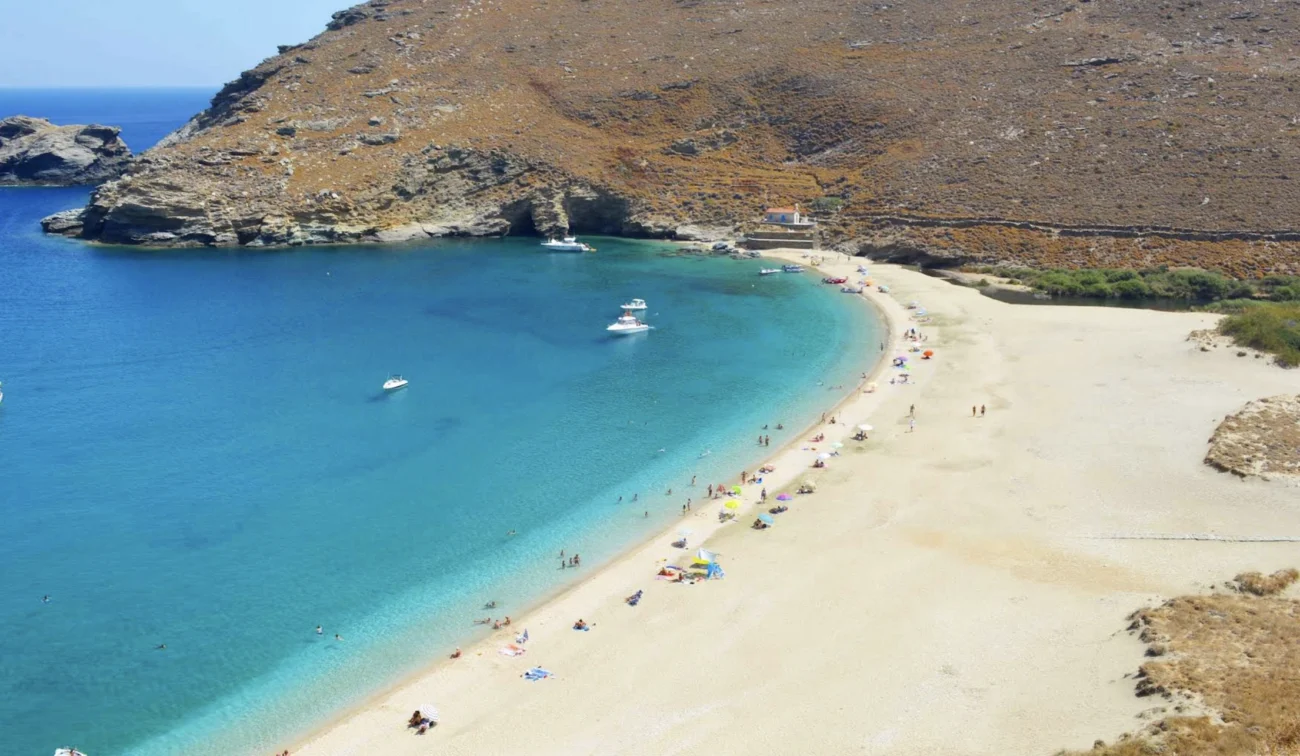
Achla Beach is truly one of the most stunning and unspoilt beaches you will find anywhere in Greece. The beach is composed of fine sand mixed with white pebbles that create a picturesque shoreline. The setting here is completely different from the busy, developed beaches you find around Andros. This is a totally secluded beach that belongs only to those brave enough to make the journey.
The crowd levels are virtually non-existent when you arrive early in the morning. The beach really only gets busy after eleven o’clock when the day trippers arrive by boat from Chora. Many people choose to visit during the shoulder seasons like May or September or even October when there are far fewer tourists. The beach attracts adventurous independent travellers rather than package tourists or families with young children. You will rarely see large groups or noisy crowds here which makes it incredibly peaceful.
Achla is absolutely not family-friendly, especially for families with young children. The dangerous access routes and complete lack of facilities make this an unsuitable destination for most families. The water does become very shallow closer to shore, so there are some areas suitable for wading, but getting to the beach itself is the major challenge. This is a beach for adults and older teenagers who are comfortable with adventure and rougher terrain.
Nudism is not officially designated or widely practised at Achla Beach. Visitors wear standard swimwear. There are no particular enforcement issues regarding clothing as the beach is simply too remote for it to be a concern.
Wheelchair access and disability facilities are essentially non-existent. The road is extremely rough, the hiking trail is very demanding, and even getting off the boat can be challenging. This beach is only suitable for those with good mobility and physical fitness.
2. Water Quality and Conditions
The water at Achla Beach is absolutely magnificent and crystal clear, with a beautiful emerald and turquoise colour that looks almost unreal. The clarity of the water is exceptional, making it excellent for underwater viewing and photography.
The best time to swim at Achla is from June through September when water temperatures range from 23 to 26 degrees Celsius. August is the warmest month at around 26 degrees Celsius, making it the most comfortable for swimming. May and October remain swimmable at 17 to 22 degrees Celsius, though the water is noticeably cooler. From November onwards through to April, the water becomes quite cold and proper swimming becomes unpleasant for most visitors.
The water clarity allows you to see the underwater features quite clearly. The bay is deep and there are interesting rock formations visible underwater. The beach does have areas with underwater rocks and pebbles so proper water shoes or protection is strongly recommended.
The bay at Achla is naturally protected and the waters remain remarkably calm even when strong winds are blowing elsewhere on the island. This is because the cove is enclosed by high cliffs and headlands that shelter it from the worst of the Meltemi wind, which is the fierce northerly summer wind that can make other Andros beaches dangerous. However, during east or north winds the area can become dangerously windy and the beach should be avoided entirely during these conditions.
Swimming is generally safe in the protected bay, but the water entry requires care as there are underwater rocks and pebbles. Water shoes are not optional here, they are absolutely essential for safe entry into the water.
3. Accessibility and Getting There
Reaching Achla Beach is genuinely difficult, and this is the critical factor you must understand before planning a visit. There are three main methods to access this beach, and each one presents significant challenges.
The first option is by boat from Chora, which is supposed to be the easiest route. Boats depart from the port in Chora but they operate only when the sea is calm enough. During the summer season when the Meltemi wind is active, boat services are frequently suspended because the area is dangerously windy and the journey becomes unsafe. When services are running, the boat trip costs around twelve to thirteen euros per person return. The boat journey itself is beautiful, passing along the coast through caves and past small rocky islets. However, the service is famously infrequent and unpredictable.
The second option is driving via a rough four by four or pickup truck. This requires driving approximately eight kilometres down an extremely bad dirt and gravel road from the village of Vourkoti. This rough track descends about eight hundred vertical metres and the journey downhill takes around forty minutes to one hour depending on conditions and your driving confidence. The road is steep with switchbacks, no safety railings, and rocks everywhere. Standard car drivers absolutely should not attempt this route as the damage to a normal vehicle is guaranteed. Many standard cars have become stuck or damaged attempting this drive. The return journey uphill is actually easier in terms of traction but equally demanding on nerves. You will need a proper four by four vehicle with good clearance.
The third option is hiking, which is a serious undertaking. The official hiking trail from Vourkoti village is nine point four kilometres long and takes three and a half hours to descend to the beach. There is an altitude difference of six hundred and seventy metres. This trail is rated as difficult, particularly in sections where the terrain is loose and loose gravel. An alternative starting point is from the Monastery of Saint Nicholas, which reduces the hiking distance to around four point two kilometres and takes approximately one and a half hours to descend. The return journey is considerably harder, taking two to two and a half hours walking uphill under the hot sun. You need to be in good physical condition to complete this hike, particularly the return journey. Walking boots or serious trekking shoes are essential.
Parking is very limited. There is some parking available along the dirt roads near the beach itself, but spaces are scarce and not clearly marked. You will need to park carefully to avoid blocking access for other vehicles.
4. Facilities and Amenities
You must understand clearly that Achla Beach has absolutely no facilities whatsoever. There are no restaurants, cafés, tavernas, or bars. There are no toilets or changing rooms. There are no water fountains or fresh water sources. There are no sunbeds, umbrellas, or any shade structures at all. There is nothing to rent and nothing to buy.
This is not a managed beach with staff or services. This is a completely natural, wild beach in a remote location. You must bring absolutely everything you need with you including food, water, sunscreen, and a hat. Pack out everything you pack in as there are no rubbish facilities either. Many visitors bring picnic supplies and spend an entire day at the beach, swimming and resting under whatever natural shade they can find near the plane trees behind the beach.
The lack of facilities is actually what keeps this beach so pristine and peaceful. The difficulty of access and complete absence of commercial services mean that only truly committed visitors arrive here. This preserves the beach in a natural and unspoilt state.
5. Activities and Special Features
Snorkelling at Achla Beach is excellent because the water clarity allows you to see marine life and underwater features clearly. You can snorkel directly from the beach and explore the underwater rock formations and clear water. The marine life is varied and interesting.
One of the special features of Achla is the river. The Achlas River is one of the three largest rivers in Andros and it flows into the sea right at the beach, creating a beautiful natural feature. The river has running water even during the hottest and driest days of summer, which is remarkable for the Aegean region. Behind the beach, there is a magnificent plane tree forest along the river, a truly rare sight in the Cycladic islands. You can explore small waterfalls, natural pools, and the beautiful natural lake called Gerolimni where you can swim in freshwater under ancient plane trees.
The area is a rich bioreserve and an important natural habitat. You may see freshwater crabs, eels, sea turtles, rabbits, and fireflies if you explore the river area. This is a stop-off point for migratory birds, particularly the Eleonora’s Falcon, a medium-sized falcon that rests at Achla before flying to Madagascar. Seeing these rare falcons is genuinely possible here.
At one end of the beach is the small and charming church of Agios Nikolaos, also known as Saint Nicholas Church. This traditional white-washed chapel adds a beautiful architectural element to the setting. At the other end of the bay, across the water, you can see the impressive Gria Lighthouse standing dramatically against the sky.
6. Practical Information
The best time to visit Achla Beach is early in the morning, ideally arriving by eight or nine o’clock. This allows you to enjoy the beach in peace and quiet before the day trippers start arriving by boat around eleven o’clock. The morning light is also beautiful for photography.
Visiting in the shoulder seasons of May or September or even early October offers excellent conditions. The water is still warm enough for comfortable swimming and there are far fewer visitors. August is the warmest month but also the busiest period when many boats arrive and the beach becomes noticeably more crowded.
What to bring is critical to planning your visit. You must bring plenty of fresh water because there is no source at the beach itself. You must bring sunscreen as the sun is extremely intense, particularly in the middle hours of the day. You must bring snacks and food for the entire day. You must bring a hat or sun protection for your head. You must bring water shoes or proper sandals for entering the water. You must bring a towel and a change of clothes. If you are hiking, you need proper walking boots or serious trekking shoes, not casual footwear.
The road conditions change with the season. In winter, the dirt road can become muddy and even more treacherous. In summer, it becomes very dusty and rocky.
Food costs at nearby villages like Chora are reasonable. A simple meal at a local taverna costs around ten to fifteen euros. However, you must bring your own food to the beach as there is nothing available there.
7. Safety and Warnings
Sun exposure at Achla Beach is intense. There is virtually no natural shade on the main beach itself, though there are some plane trees behind the beach near the river. The Aegean sun is extremely powerful and you can burn very quickly. Sunscreen with high SPF is absolutely essential. Reapply frequently, particularly if you are swimming.
Water entry requires extreme caution. The underwater terrain is rocky and pebbly, and you can injure your feet if you enter barefoot. Water shoes are not optional, they are necessary. Even with water shoes, you must enter the water slowly and carefully to avoid tripping on underwater rocks.
The Meltemi wind significantly impacts Achla Beach and the surrounding area. During the summer months from June through September, this dry northerly wind can become dangerously strong, particularly in the afternoon. This wind is what makes the boat service unreliable and why many attempts to visit by boat are cancelled. The area experiences the Meltemi wind frequently and intensely. If you see north or east winds in the forecast, do not attempt to visit Achla on that day.
Waves at Achla are usually quite small because of the protected bay, but occasionally larger swells can occur. The swimming conditions are generally calm, but you should always check local conditions before entering the water.
The rocky terrain on the access roads is genuinely dangerous. The road down to the beach is not maintained, has no safety railings, and features steep drops on both sides in certain sections. Driving this road requires concentration and a capable vehicle. Similarly, the hiking trail is steep in places and can be slippery after rain.
During summer, the beach can get very warm as there is limited shade. Many visitors bring a tarpaulin or lightweight tent to create shade.
8. Special Attractions and Nearby Points of Interest
The Monastery of Saint Mamas is situated on the access road to Achla. This monastery was originally built in the sixteen hundreds and it is part of the Holy Monastery of Agios Nikolaos Andros. The drive down passes by this historic building and you pass the newer Monastery of Agios Mamas on the road down.
The Agios Nikolaos Monastery is another historic site located higher up and serves as an alternative starting point for the hiking route to Achla. This monastery has running water available if you are hiking.
The Church of Theotokos is visible from the sea if you arrive by boat. This traditional white-washed chapel is located on the rocks across from the beach.
The Gria Lighthouse is clearly visible from the beach, standing dramatically across the bay. The name Gria means Old Woman, and there is a nearby rock formation that supposedly resembles an old woman’s profile if you look carefully.
From Achla Beach, if you are interested in exploring more of the northern coast of Andros, there are caves and small rocky islets visible if you are arriving by boat that are worth photographing and exploring.
The main town of Chora is located approximately twenty-four kilometres away by road. Chora is a charming harbour town with tavernas, shops, and accommodation options. You can arrange boat services from here and pick up supplies before heading to Achla.
The Vourkoti village is where the rough access road begins. This traditional village sits high in the mountains and offers views across the island.
What is the best way to get to Achla Beach in Andros?
There are three ways to reach Achla Beach. The first option is by boat from Chora, which costs around twelve to thirteen euros per person return, but the service is frequently cancelled due to strong winds. The second option is driving a four by four vehicle down a very rough eight-kilometre dirt road from Vourkoti, which takes about forty minutes to one hour downhill. The third option is hiking the nine point four kilometre trail from Vourkoti village, which takes three and a half hours to descend. Most visitors choose the boat option when it is available, but hiking is also popular with adventurous travellers. A four by four vehicle is essential if driving, as standard cars will get damaged.
What facilities and amenities are available at Achla Beach?
Achla Beach has absolutely no facilities whatsoever. There are no restaurants, bars, toilets, showers, sunbeds, umbrellas, or water sources. You must bring everything you need including food, water, sunscreen, and a hat. There is no shade except for some plane trees behind the beach. This is an entirely natural, wild beach with no commercial services or infrastructure. Pack everything out that you pack in as there are no rubbish facilities.
When is the best time to visit Achla Beach?
The best time to visit Achla Beach is from June through September when water temperatures range from twenty-three to twenty-six degrees Celsius. August is the warmest month but also the busiest. The shoulder seasons of May and September or October offer excellent conditions with fewer crowds. You should always avoid north or east winds as these make the beach unsafe and boat services are cancelled. Early morning visits are ideal before day trippers arrive around eleven o’clock.
Is Achla Beach suitable for families with children?
Achla Beach is absolutely not suitable for families with young children. The access routes are extremely difficult and dangerous. The road by car is very rough and unsuitable for families. The hiking trail is challenging and takes several hours with an altitude drop of six hundred and seventy metres. The beach itself has no facilities, no shade, and no services of any kind. There are no lifeguards and the water entry requires caution due to underwater rocks. This beach is only for adventurous adults and teenagers who are comfortable with difficult access and basic conditions.
What should I bring when visiting Achla Beach?
You must bring plenty of fresh water as there is absolutely no water source at the beach. You must bring all the food and snacks you plan to eat for the entire day. You must bring high SPF sunscreen as the sun is extremely intense. You must bring a hat or head protection, a towel, and a change of clothes. You must bring water shoes or proper sandals for safe entry into the water. If you are hiking, you need proper walking boots or trekking shoes. Bring a small rucksack or bag to carry all these items. Many visitors bring a lightweight tarpaulin or tent to create shade as the beach has virtually no natural shade.