
Table of Contents
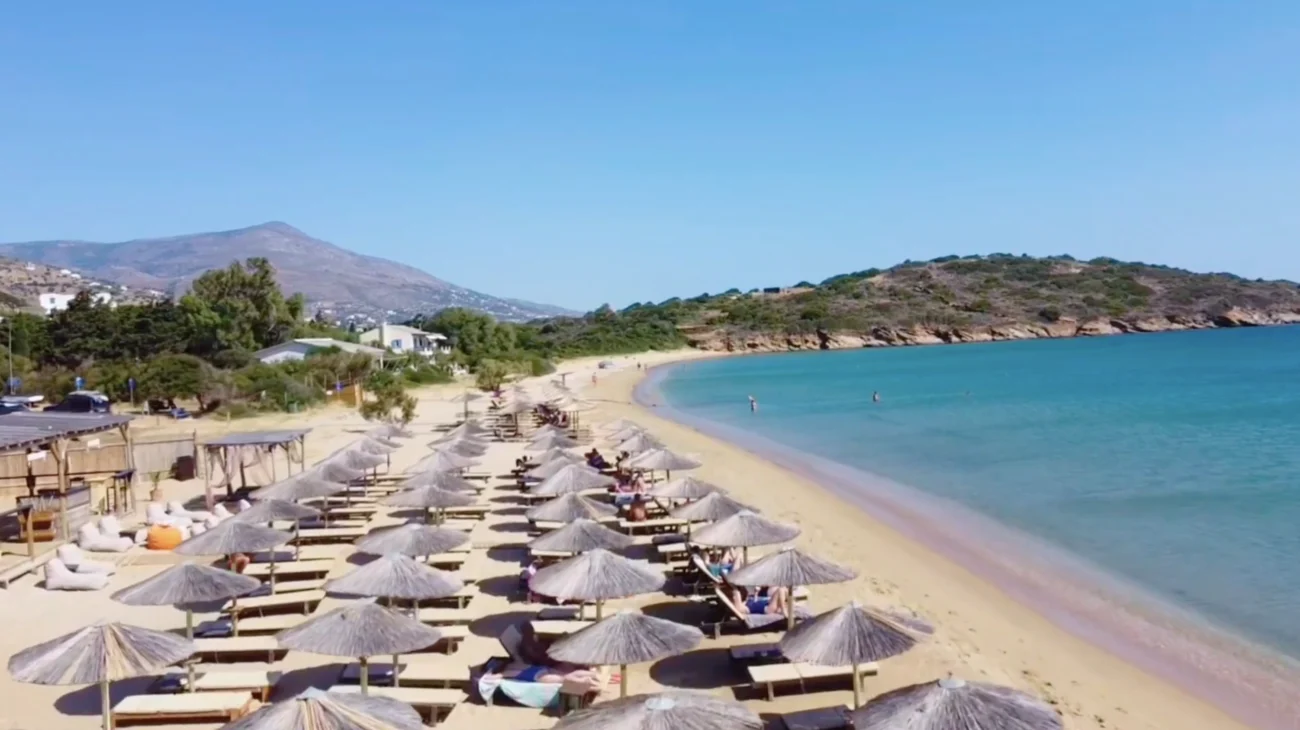
Agios Petros Beach stands as the largest and most impressive sandy stretch along Andros’ coastline, stretching almost one entire kilometre across the island’s western shoreline. This magnificent beach has earned its reputation as a beloved destination for families and travellers seeking the perfect combination of accessibility, comfort, and unspoilt beauty. Located on the main road connecting Batsi to Gavrio, Agios Petros offers the kind of reliable beach experience where you can count on finding all the essentials without feeling like you have stumbled into an overcrowded tourist trap. The golden sand and crystal-clear waters paint a picture of Mediterranean paradise, while the sheer length of the beach means that even during the busiest weeks of August, you will find ample space to lay your towel and relax without feeling squeezed against other visitors.
1. Beach Type and Experience
Agios Petros Beach presents itself as an exceptionally family-friendly destination with sandy composition that feels wonderful beneath bare feet. The beach features shallow waters that progress gently into deeper areas, making it absolutely ideal for young children who are still building their swimming confidence. This gradual depth progression means parents can relax knowing their little ones can wade safely in ankle-deep water whilst remaining within arm’s reach.
What makes this beach particularly special is its enormous length and width. At nearly one kilometre long, the beach never feels crowded regardless of the time of year. Even during the peak summer months when Andros sees its highest visitor numbers, the sheer scale of Agios Petros absorbs the crowds effortlessly. You might find yourself on a beach full of people without ever feeling hemmed in or uncomfortable. The beach accommodates both those seeking organised facilities and sunbeds alongside those who prefer to bring their own equipment and claim a free spot.
The composition transitions from a few scattered pebbles at the waterline to fine golden sand that extends across the beach. Most visitors find this transition manageable and pleasant rather than uncomfortable. The sand itself is soft and inviting, perfect for sunbathing, building sandcastles with children, or simply strolling the full length of the beach.
Regarding nudism and disability access, Agios Petros follows traditional Cycladic norms where clothing is expected. The beach does not offer wheelchair ramps or specialised disability facilities, though the flat sandy terrain and proximity to parking means visitors with mobility challenges may find access more straightforward than at steeper, more isolated beaches on the island. The main amenities including bars and facilities are located on the cliff directly above the beach rather than within the sand itself.
2. Water Quality and Conditions
The waters at Agios Petros remain remarkably clear and transparent throughout the swimming season, offering excellent visibility for those interested in snorkeling or simply observing the underwater landscape. The sea floor features sand and occasional rock formations, with depths that start shallow and progress gradually further out. This clarity combined with the gentle depth progression makes the beach excellent for families with children.
Water temperatures here follow the standard Aegean pattern. Swimming is pleasant from June through September, when temperatures typically range from 72°F to 78°F (22 to 26 degrees Celsius). June brings water temperatures around 72°F (22°C), which feels refreshing and quite pleasant once you are in the sea. July and August warm to around 78°F (26°C), offering the warmest swimming conditions of the year. September remains comfortable at around 76°F (24°C). May and October can be swum in by those who tolerate cooler water at around 67 to 71°F (19 to 22°C), though most families find June through September the ideal window for beach visits.
One important factor to understand about Agios Petros is its exposure to the wind. The beach sits on an open western-facing bay with minimal natural windbreaks. The area becomes significantly affected by the Meltemi wind, a dry northerly wind that blows particularly intensely during July and August. Despite this exposure, the actual water conditions often remain calm and swimmable. Here lies the critical detail that repeat visitors emphasise: the water may be perfectly still whilst the wind whips sand across the beach. Traveller reviews repeatedly mention that sand becomes an irritant despite the calm seas. This is not a slight breeze stirring sand, but genuine wind-blown sand that travels across the entire beach and finds its way into everything. Families with small children need to factor this into their decision-making, as sand in hair, clothes, and belongings becomes more likely than at more sheltered beaches.
The best times to visit regarding water conditions are June or the shoulder months of late spring and early autumn, when the Mediterranean settles into calmer conditions whilst maintaining pleasant water temperatures. Swimmers should exercise normal caution and understand that whilst winds may not create dangerous waves, the sand movement they generate can create an unpleasant beach experience during peak summer months.
3. Accessibility and Getting There
Reaching Agios Petros Beach ranks among the easiest beach access points across Andros, removing any complications from your travel planning. The beach sits directly on the main road connecting the western coast villages and ferry ports, making it accessible by multiple straightforward methods.
By car, Agios Petros presents absolutely no difficulty. The beach is located on the main paved road, with free parking available directly adjacent to the beach. The road is well-maintained and easy to navigate, without the steep gradients or rough surfaces that characterise some of Andros’ more remote beaches. From Gavrio Port, the drive takes approximately 22 kilometres and roughly 25 to 30 minutes. From Batsi, the beach lies just 7 kilometres away, around 10 to 15 minutes of driving. From Chora, the island’s capital, the distance reaches 31 kilometres and typically requires about 40 minutes of driving.
For those without a rental car, bus services connect Gavrio and Batsi with regular routes throughout the day. The bus timetables are coordinated with ferry arrivals, ensuring that passengers arriving by boat from the mainland can connect to onward bus service relatively seamlessly. Check the current KTEL Andros bus schedule for exact timings, as services vary seasonally.
Walking remains an option for those based in Gavrio. From the port, a pleasant 25 to 30 minute walk along the main road takes you directly to Agios Petros Beach. This option works particularly well if you are staying in nearby accommodation and want to avoid rental costs. The walk is straightforward with no steep terrain or tricky navigation required.
The road itself presents no unusual challenges. You will not encounter winding mountain passages, unpaved surfaces, or other complications typical of more remote island locations. Parking is free and ample, with space available directly behind the beach. Even during peak season, finding a parking spot is not the stressful experience it becomes at some Greek beaches.
4. Facilities and Amenities
Agios Petros excels in providing the facilities and amenities that make a beach day enjoyable and stress-free. Multiple beach bars operate along the shoreline, with the establishments Kaliva Beach Bar and San Pedro Beach Bar standing out as particularly popular choices. These bars offer comfortable seating on sunbeds beneath umbrellas, cold beverages ranging from soft drinks and coffee to cocktails and alcoholic drinks, and food options including snacks and light meals.
Sunbeds and umbrellas are available for rent at modest cost, typically in the region of three to six euros for sunbeds and comparable amounts for umbrellas. This affordability makes renting practical even for those spending a full beach day. Alternatively, the beach features extensive free areas where you can bring your own equipment and claim space without any charge. This flexibility means families can choose between the convenience of organised facilities or the budget-friendly option of self-sufficiency.
Showers and changing rooms are provided free of charge, allowing visitors to rinse off sand and change comfortably. Toilet facilities are also available at no cost. On the cliff directly above the beach, you will find several traditional tavernas and restaurants offering proper meals with local specialities and fresh fish alongside more casual fare. A bakery, supermarket, and coffee shop sit on the roadside above the beach, providing options for those who prefer to bring food or grab provisions for the beach day.
Water and fresh supplies should be carried to the beach, as the bars primarily serve beverages rather than free water. Bringing your own water bottle ensures you stay hydrated throughout the day, particularly important given the intense Mediterranean sun and the heat that radiates from the sand.
5. Activities and Special Features
Beyond traditional sunbathing and swimming, Agios Petros offers several water sports and activities. Paddleboards are available for rent, allowing visitors to explore the shoreline and bays from a different perspective. Jet skis can be rented for those seeking more adrenaline-fuelled water activities. The beach also offers inflatable towed rides pulled by speedboats, providing fun and excitement for those inclined toward such pursuits.
The Andros Surf Club operates at the beach, offering windsurfing and stand-up paddle board lessons for various skill levels, making it accessible to children as young as seven years old. These organised lessons provide structured instruction for those wanting to develop new skills in a safe environment.
Snorkeling opportunities exist in the clear waters, though Agios Petros itself is not particularly noted as a prime snorkeling destination compared to some of Andros’ rockier coves. The clear water and sandy bottom make snorkeling feasible, but those specifically seeking extensive underwater exploration might find other Andros locations like Vitali Beach or Fellos Beach more rewarding.
Immediately above the beach stands the Tower of Agios Petros, an ancient structure that gives both the beach and the nearby area their name. This Hellenistic period tower, built in approximately the 4th or 3rd century before Christ, rises approximately 20 metres and originally served to protect a nearby copper mining operation. The tower’s position atop the cliff provides views across the bay toward Gavrio Port and the small Gavrionisia islands offshore. From the beach itself, you gain pleasant views of the tower rising against the sky, adding a historical and visual dimension to your beach day.
6. Practical Information
The best time to visit Agios Petros depends on your priorities. For warmest water and longest daylight hours, July and August offer peak summer conditions, though these months also bring the strongest Meltemi winds and associated sand movement. For a balanced experience with warm water and calmer conditions, June stands out as an excellent choice. Many experienced visitors specifically target June as the sweet spot of the summer season.
Autumn months, particularly September and even into early October, provide warm water continuing from the summer, reduced visitor numbers compared to July and August, and more stable wind conditions. These shoulder seasons offer tremendous value for budget-conscious travellers, as accommodation and dining costs drop significantly whilst the beach experience remains excellent. April and May at the start of the spring season similarly provide lower prices and pleasant conditions, though the water is notably cooler.
Regarding what to bring, sunscreen represents essential protection given the intensity of Mediterranean sun. Bring a higher protection factor than you might use in your home climate, as the sun’s strength at sea level in Greece should not be underestimated. A hat or cap provides both comfort and additional sun protection. Water is crucial, as the combination of sun, wind, and activity dehydrates quickly. Bring substantially more water than you think you will need.
Footwear depends on your preference. The pebbles at the waterline are not sharp or problematic enough to require water shoes for most visitors, though some prefer them for extra comfort during entry. Beach sandals or flip flops work well for walking across the sand. The flat beach is excellent for walking, so comfortable footwear for strolling the full length is worthwhile.
Snacks and light provisions prove useful, as beach bar snacks and meals come at premium prices typical of tourist establishments. Those sensitive to wind and sand should bring sunglasses that fit well to prevent sand irritation. Lightweight, loose-fitting clothing that can be easily shaken out helps manage sand better than tight garments.
Crowds follow predictable patterns. August, particularly the weeks around the 15th August Greek holiday, sees the highest concentrations of visitors. Despite this, Agios Petros accommodates crowds better than smaller beaches due to its size. September, October, and the spring months offer significantly fewer visitors without major degradation to weather or water conditions. Those seeking the quietest experience should visit outside the July to mid-September window. Early morning hours also tend to be quieter than afternoons, making sunrise swimmers and early beachgoers the peacefully relaxed core of the daytime crowd.
Food and beverage costs at the beach bars align with typical Mediterranean tourist pricing. Expect to pay around five to eight euros for basic snacks, eight to twelve euros for light meals, and similar amounts for coffee or soft drinks. Cocktails and alcoholic beverages cost in the range of seven to ten euros. The tavernas and restaurants on the cliff above the beach offer more substantial meals at moderate prices typical of provincial Greek establishments, usually in the range of ten to eighteen euros for main courses.
7. Safety and Warnings
The intense Mediterranean sun demands serious sun protection. Do not underestimate the strength of Greek sun, particularly at the coast where reflection from water and sand amplifies exposure. Sunburn develops rapidly for those unfamiliar with this climate. Bring substantial sunscreen, reapply frequently throughout the day, and do not assume that sun protection used in your home country will suffice. Sunglasses with proper UV protection protect your eyes from intense reflected light.
Wind-blown sand represents the primary environmental hazard at Agios Petros during summer months. Whilst the water itself remains calm and swimmable, the wind does blow sand continuously across the beach. This sand works its way into everything including hair, clothes, bags, and between your toes. Those with long hair might consider tying it back or wearing a hat. Bring a secure bag or container for items you want to protect. Some travellers bring plastic bags and zippered storage solutions specifically to manage the sand issue. This is genuinely the only significant drawback to the beach, but it bears mentioning as a practical reality rather than a safety issue.
The Meltemi wind itself does not create dangerous water conditions despite its strength. The sheer length of Agios Petros and the orientation of the bay result in relatively calm waters even on windy days. However, the same wind that keeps waters calm does stir the sand, so the weather pattern creates calm seas but uncomfortable sandy conditions. Those seeking complete calm and comfort should avoid July and August in favour of June or autumn months.
Rocky underwater terrain is minimal. The sandy bottom and gentle depth progression mean swimmers do not encounter sharp rocks or unexpected underwater formations. Those wading at the waterline experience only minor pebbles that pose no hazard. No specialised water shoes are required for normal swimming at this location.
The beach is not known for exceptional hazards from marine life. Swimmers should apply normal Mediterranean precautions, but jellyfish and sea urchins are not noted as particular problems at Agios Petros compared to some other Aegean locations. Water clarity allows good visibility to spot any concerns.
Is Agios Petros Beach suitable for young children?
Absolutely yes. Agios Petros Beach is specifically noted as one of Andros’ most family-friendly beaches. The waters are shallow and progress gradually, allowing young children to wade safely without sudden depth changes. The enormous length and width of the beach means families can find quiet corners away from crowds. The organised facilities including bars, toilets, and changing rooms add to the convenience for parents. The only consideration is the wind-blown sand during summer months, which some families find more manageable than others depending on their children’s tolerance.
What is the cost of renting sunbeds and umbrellas at Agios Petros Beach?
Sunbed rental typically costs between three and six euros per day, with umbrellas available at similar rates. Many beach bars offer sunbed and umbrella bundles for combined pricing. Free areas exist where you can bring your own equipment at no cost. The beach accommodates both rental seekers and those preferring to bring their own gear, making it accessible regardless of budget.
How can I reach Agios Petros Beach from Gavrio Port?
Agios Petros lies 22 kilometres from Gavrio Port, accessible by several methods. A rental car provides the easiest option with a scenic 25 to 30 minute drive on the main paved road. Bus services operate regularly between Gavrio and the beach, with routes timed to ferry arrivals and departures. Walking is also feasible for those based in nearby accommodation, with a pleasant 25 to 30 minute walk along the main road. All three options are straightforward with no difficulty or navigation challenges.
Is wind-blown sand a serious problem at Agios Petros Beach?
Yes, this deserves straightforward acknowledgement. Whilst the water at Agios Petros remains remarkably calm, the beach sits significantly exposed to winds, particularly the Meltemi wind blowing from July through August. Despite calm water, wind during these months does blow sand across the beach continuously. Sand works into hair, clothes, bags, and belongings. Families and those sensitive to sandy conditions should either visit during calmer months like June or autumn, or accept that sand management will be a practical reality of their beach day. Early morning hours tend to experience less wind-blown sand than afternoons.
Are there restaurants and food options near Agios Petros Beach?
Yes, multiple dining options are available. Beach bars operate directly on the shoreline, serving soft drinks, coffee, cocktails, and light snacks. More substantial meals come through the traditional tavernas and restaurants positioned on the cliff directly above the beach, offering local specialities and fresh fish. A bakery and supermarket sit on the main road above the beach for those wanting to bring provisions. Pricing follows typical Mediterranean tourist standards, with snacks at the beach bars costing five to eight euros and taverna meals typically running ten to eighteen euros for main courses. Those seeking to control costs can easily bring food and simply purchase drinks from the beach bars.
When is the best time to visit Agios Petros Beach?
June stands out as many visitors’ preferred month, offering warm water around 72°F (22°C), pleasant longer days, and wind conditions significantly calmer than peak summer. September and early October similarly provide warm water continuing from summer, far fewer crowds than July and August, and reduced accommodation and dining costs. Those specifically seeking the warmest water and longest days should visit July or August, though these months bring stronger winds and associated sand movement. Autumn and spring shoulder seasons offer the best combination of pleasant conditions and budget considerations, with prices noticeably lower outside the peak July through August window.