Quick facts
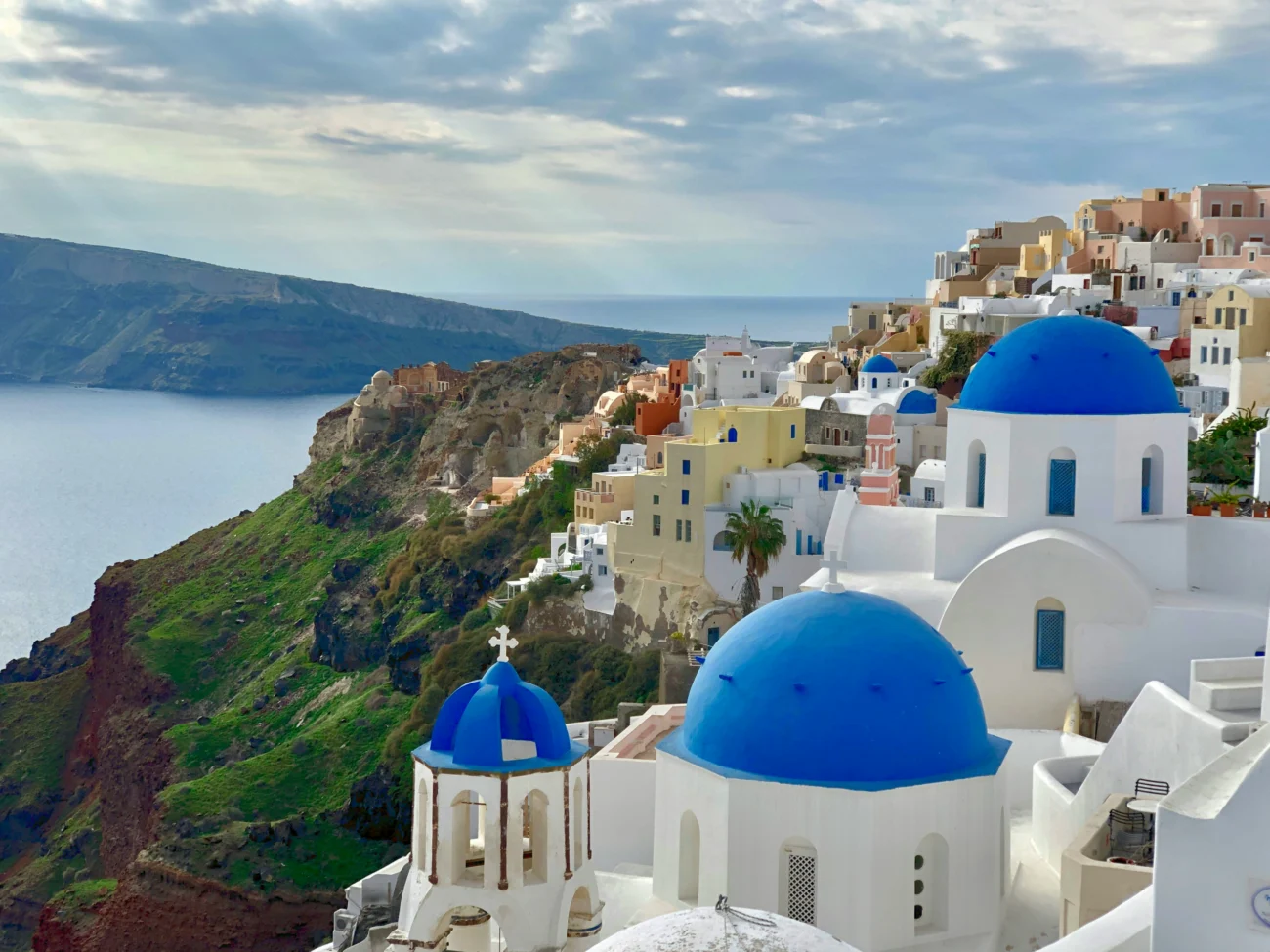
Best subject: the kastro of Chora, a walled quarter of whitewashed houses built on the edge of a 200 metre cliff, with the Church of Panagia standing above the town.
Best sunset spot: the cliff edge path around Chora, looking straight out over open sea.
Best season for photography: May, June and September, when the light is clear and Folegandros, already one of the quieter Cyclades islands, is at its most comfortable for walking.
Golden hour: the standard 45 minutes or so before sunset works well from Chora’s cliff edge. Karavostasis harbour tends to give calmer, more reflective water earlier in the day.
Getting around: Folegandros has no airport, so every visitor arrives by ferry into Karavostasis. See how to get to Folegandros, and note that the bus timetable and taxi options are limited, since this is a small, lightly developed island.
Is Folegandros worth visiting for photography
Folegandros is smaller and far less built up than most of its Cycladic neighbours, and that is exactly what makes it rewarding to photograph. Chora, the capital, is a genuine walled kastro rather than a spread out modern village, built right to the edge of a sheer cliff, and the island beyond it is quiet, rural and largely undeveloped. You will come home with fewer photographs than a week in Santorini or Mykonos, but the ones you get will look like almost nowhere else in the Cyclades.
Best photo spots in Folegandros
1. The kastro of Chora and the Church of Panagia. Chora’s old town is a walled kastro quarter, its houses forming part of the original defensive ring, built directly on the edge of a 200 metre cliff. The whitewashed Church of Panagia stands above the town and is one of the most recognisable images of the island. We do not yet have a dedicated page for Chora, so for now see our guide to getting to Folegandros for how to reach it.
2. The cliff edge path around Chora. A short walk along the edge of the cliff that Chora is built on gives you the town from outside, with the whitewashed houses stacked against the drop to the sea, a different and less crowded composition to shooting from inside the kastro itself.
3. Karavostasis. The island’s only port and the arrival point for every visitor, a small working harbour that photographs well in the calmer light of the morning, before the day’s ferries come and go. Read more in our Karavostasis village guide.
4. Ano Meria. Rather than one village centre, Ano Meria is a string of scattered stone farm units, known locally as themonies, spread along the road across the island’s northern half, a genuinely different rural landscape to the tight, whitewashed centres found elsewhere in the Cyclades. Read more in our Ano Meria village guide.
5. Katergo Beach. A remote beach reachable only on foot or by a small boat taxi from Karavostasis, set beneath dramatic cliffs with clear water, one of the more rewarding beaches in the Cyclades for the effort of getting there.
Best time of day to photograph Folegandros
The cliff edge around Chora is where most visitors head for sunset, since the drop faces straight out over open water. Arrive with a little time to spare in peak season, since the path can get busy in the last half hour before the sun goes down.
Karavostasis harbour tends to work better earlier in the day, when the water is calmer and you have a better chance of a clean reflection of the boats and the hillside behind them.
Best season for photography in Folegandros
May, June and September are the most comfortable months, with clear light and easier walking conditions for reaching Katergo Beach and the cliff paths around Chora.
July and August bring the strongest light along with the meltemi wind, which is worth planning around if you are taking the boat taxi to Katergo. Even in peak summer, Folegandros stays noticeably quieter than islands like Santorini or Mykonos, which works in your favour if you are trying to photograph the kastro without a crowd in every frame.
Practical photography tips
Take care on the cliff edge. Chora sits on top of a 200 metre drop, and the best photo spots are right along that edge, so watch your footing, especially with a tripod or if you are backing up to frame a shot.
Plan your trip to Katergo Beach properly. It is reachable only on foot along a coastal path or by a small boat taxi from Karavostasis, so check the current boat times before you go, and carry more water than you think you will need for the walk.
Bring cash and plan ahead. Folegandros is small and lightly developed compared with most of the Cyclades, so do not assume you will find a shop, taxi or card machine wherever you happen to be.
Check current drone rules before you fly. Greece follows the EU’s common drone regulations, which generally require operator registration for anything over 250 grams, and there are no fly zones around ports and religious sites such as the Church of Panagia. Rules can change, so check the current requirements from Greece’s Civil Aviation Authority before your trip.
Book a local photographer
If you would rather leave the camera work to a professional, a local Folegandros photographer will know the quiet hours at the kastro, the safest angles along the cliff edge and the right day to make the trip out to Katergo, far better than a first visit ever could.
Explore more of Folegandros
How to get to Folegandros · Folegandros bus timetable · Folegandros taxi · Folegandros map · Folegandros weather
Back to the Folegandros island guide.