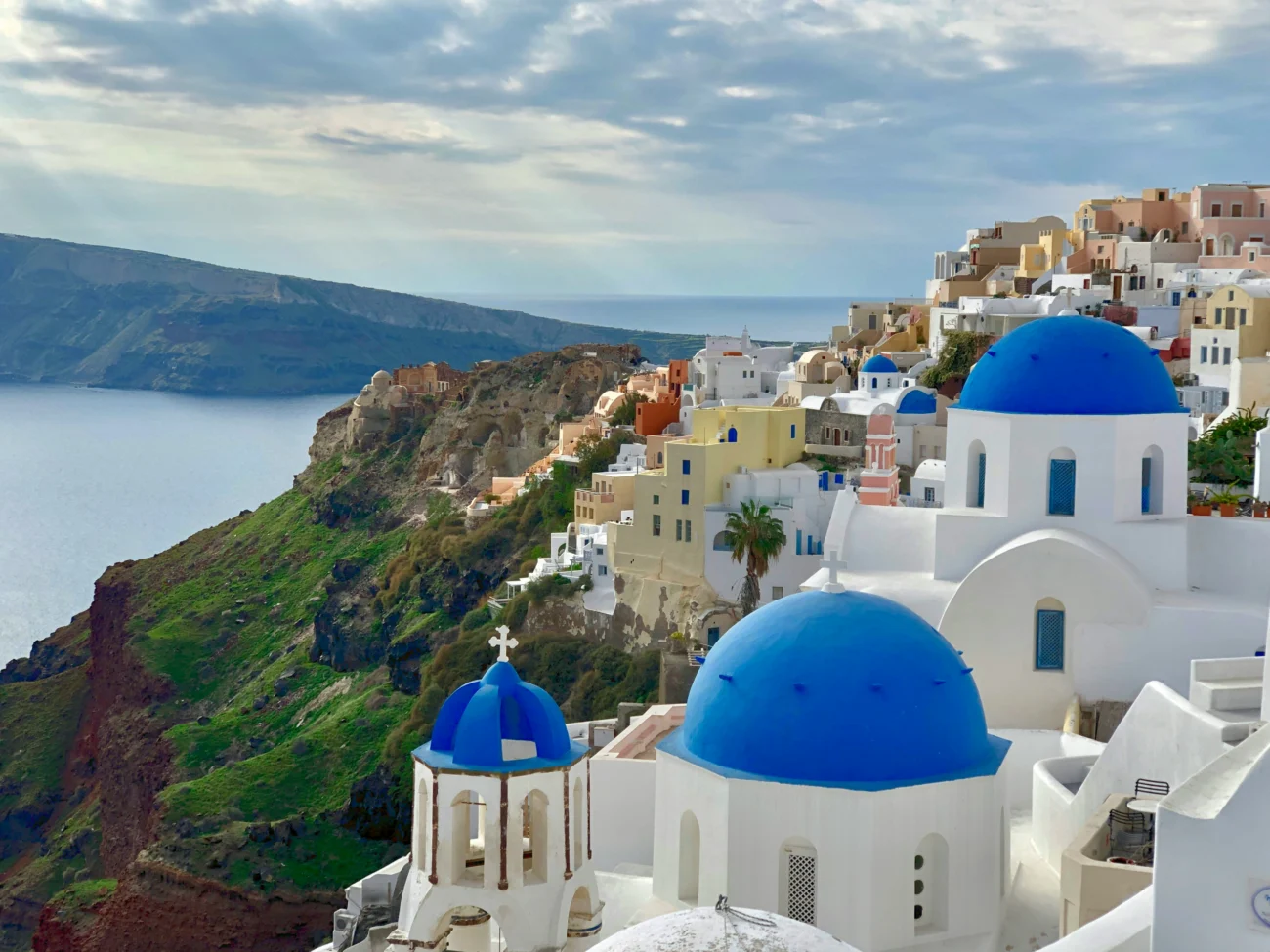
Koufonisia has a classic Mediterranean climate, meaning you can expect hot, dry summers and mild, damp winters. The warmest period runs from July to August, when temperatures frequently reach 30 degrees Celsius or more. The coolest period falls between January and February, with daytime highs hovering around 14 degrees Celsius.
During the typical summer months, the island experiences virtually 0 rainfall, very low humidity and brilliant sunshine for up to 13 hours a day. However, the summer weather is strongly influenced by the Meltemi wind, which keeps the air feeling refreshing even on the hottest days.
Rainfall is mostly confined to the winter season, particularly December and January, while the shoulder months of May and October offer a wonderful balance of warm sunshine and comfortable temperatures. Understanding the local climate matters deeply when planning your trip here, because Koufonisia is entirely focused on outdoor living, beach days and walking.
Below you will find a live weather forecast for the island, followed by our comprehensive guide to Koufonisia climate conditions throughout the year.
Koufonisia Weather at a Glance
The weather in Koufonisia follows a predictable seasonal pattern shared with the rest of the Cyclades. The climate is hottest during July and August, which is perfect for visitors who want intense heat and long sunny days. The coolest weather arrives in January and February, when the island is very quiet and mostly empty of tourists.
Rainfall is most likely between November and March. The driest months are June, July and August, when rain is exceptionally rare. The island is sunniest from June to August, offering bright blue skies almost every day.
Winds can be strongest in July and August due to the seasonal Meltemi. The general swimming season begins in late May and lasts until late October, as the Aegean Sea takes time to warm up and time to cool down.
| Month | Typical conditions | What it is good for |
| January | Cold, windy, occasional rain | Quiet local life |
| February | Cool, often cloudy, damp | Peaceful winter walking |
| March | Mild, unpredictable, spring flowers | Early spring hiking |
| April | Warming up, sunny days, cool sea | Sightseeing and walking |
| May | Warm, bright, calm sea | Relaxed beach days |
| June | Hot, very sunny, warm sea | Perfect summer holidays |
| July | Very hot, strong wind, dry | Hot beach days |
| August | Peak heat, windy, completely dry | Swimming and sunbathing |
| September | Very warm, calmer wind, warm sea | Peaceful beach holidays |
| October | Pleasant, mild, occasional shower | Late season swimming |
| November | Cooling down, increased rain | Exploring nature |
| December | Cold, damp, short days | Experiencing winter island life |
Koufonisia Weather by Month
January
January is generally the coldest and wettest month in Koufonisia. Daytime temperatures sit around 14 degrees Celsius, while nights can drop to 10 degrees Celsius or lower. You can expect a mixture of rainy days, strong winds and occasional periods of bright winter sunshine. The sea temperature is around 16 degrees Celsius, making it much too cold for most people to swim. Almost all tourist businesses remain closed, so this is a very quiet time suitable only for travellers wanting complete isolation.
February
February brings very similar weather to January, with cool air and frequent grey skies. The average daytime temperature stays near 15 degrees Celsius. Rain showers are common, though there are usually slightly more clear days than in the previous month. The sea reaches its coldest point of the year, dipping to around 15 degrees Celsius. The island remains deeply asleep during February, with only a small number of permanent residents staying around the main village.
March
March signals the very beginning of spring. Temperatures start to rise gently, reaching about 16 to 18 degrees Celsius during the day. The weather remains quite unpredictable, mixing brilliant sunny afternoons with sudden rain showers and windy spells. The sea is still much too cold for swimming. However, the island turns beautifully green and is covered in wild spring flowers. This makes March a rewarding time for walking and photography, even though most restaurants remain shut.
April
April brings a noticeable shift towards summer. Daytime temperatures frequently hit 20 degrees Celsius, and rainfall decreases significantly. The sun feels much stronger, allowing you to comfortably wear a t-shirt during the day. The sea temperature stays cool at around 16 degrees Celsius, so only brave visitors tend to swim. Accommodation and tavernas slowly begin to open ahead of Easter. April is a fantastic month for hiking along the coastal paths without suffering from extreme heat.
May
May is among the most pleasant months to visit Koufonisia. The air temperature regularly reaches 24 degrees Celsius, creating perfect conditions for spending time outdoors. Rain is very rare, and the days feel long and bright. The sea temperature rises to roughly 18 degrees Celsius, which is fresh but acceptable for a quick swim. The island feels vibrant but not overcrowded. The mild heat makes May highly suitable for combining beach days with walking trips around the coastline.
June
June marks the official start of the hot summer season. Temperatures easily reach 27 to 30 degrees Celsius, and the sun shines for around 13 hours every day. You will rarely see a single cloud in the sky. The Aegean Sea warms up nicely to about 21 degrees Celsius, providing a very comfortable swimming experience. The island becomes much busier, yet the weather is absolutely perfect for long lazy beach days, boat trips and late evening dinners by the harbour.
July
July is exceptionally hot and completely dry. Daytime temperatures frequently exceed 30 degrees Celsius, although the actual heat is often heavily moderated by the strong Meltemi wind. The sea feels wonderfully warm at 23 degrees Celsius. Because Koufonisia is very small and lacks natural shade, the midday sun can feel intense. Visitors spend almost all their time in the water or resting under umbrellas. This is a very busy travel period, bringing lively energy to the main beaches.
August
August shares the same peak summer climate as July, with temperatures hovering around 31 degrees Celsius and 0 rainfall. The Meltemi wind often blows strongly during this month, which helps to keep the air feeling fresh and breathable. The sea reaches its maximum temperature of about 24 degrees Celsius, making swimming an absolute delight. This is the busiest month of the year, so visitors spend their days enjoying the pristine waters at Pori and Fanos beaches.
September
September is highly regarded as a perfect travel month. The fierce summer heat softens slightly, dropping to a very comfortable 26 to 28 degrees Celsius. The strong summer winds usually die down, creating calm and glassy sea conditions. After baking all summer, the sea water remains incredibly warm at 23 degrees Celsius. The weather is still absolutely ideal for sunbathing, yet the milder air makes walking to the more remote swimming spots much easier.
October
October offers a gentle transition into autumn. The weather remains surprisingly warm, with daytime highs around 24 degrees Celsius. You can still expect plenty of sunshine, though clouds become more frequent and you might experience a short rain shower. The sea holds onto its summer heat, staying near 21 degrees Celsius, meaning swimming is still highly enjoyable. The island empties out significantly, making October a beautiful and peaceful time for a relaxed walking and swimming holiday.
November
November brings a definitive end to the tourist season. Temperatures drop to about 18 degrees Celsius, and the evenings feel distinctly chilly. Rainfall increases sharply, and the skies are often overcast. The sea temperature drops back to 18 degrees Celsius. Most businesses close for the winter, and ferry schedules are reduced. While you might catch a few beautiful sunny days, the unpredictable weather means November is mostly suitable for travellers seeking absolute quiet rather than beach holidays.
December
December is a proper winter month in the Cyclades. The daytime temperature averages 14 to 15 degrees Celsius, while nights are cold. This is 1 of the wettest months, with frequent rain and high winds. The sea is cold and rough, making boat travel occasionally difficult. The island is completely focused on local life, with visitors being exceptionally rare. You will need warm clothing and waterproof jackets if you plan to walk around the island during this period.
Wind and Meltemi
The wind is a defining feature of the summer weather in Koufonisia. Like the rest of the Cyclades, the island is heavily influenced by the Meltemi. This is a strong, dry northerly wind that blows across the Aegean Sea, primarily during July and August.
The Meltemi usually starts blowing in the morning, reaches its peak during the afternoon, and dies down slightly after sunset. When it blows strongly, it can dramatically change how the weather feels. A day measuring 32 degrees Celsius might only feel like 25 degrees Celsius because the wind cools the air so effectively.
While this natural air conditioning is highly welcome during a heatwave, it can occasionally feel too breezy for comfortable sunbathing on exposed beaches. Because the wind blows from the north, the direction your chosen beach faces is very important.
On Koufonisia, the southern coast features several beautiful coves that offer excellent natural shelter from the Meltemi. Beaches such as Finikas, Fanos and Italida face south. When the north wind is howling, these beaches often remain perfectly calm, with flat water and protected sand.
By contrast, the famous Pori beach is located on the eastern side of the island and is much more exposed to the wind. On a windy day, Pori can experience choppy waves and flying sand. However, this same wind makes Pori an exciting spot for windsurfing enthusiasts.
The Meltemi also affects swimming conditions. While the sheltered southern beaches maintain calm waters, the northern coastline features crashing waves. You should never attempt to swim on the rocky northern coast during strong winds.
The wind can also impact your travel plans. Strong gales can sometimes disrupt the smaller local ferries, such as the famous Express Skopelitis which connects Koufonisia to Naxos and Amorgos. You should always check with your ferry operator for live updates when the wind is very strong.
Finally, remember that the Meltemi is highly deceptive. Because the wind keeps you feeling cool, you will not feel the true heat of the sun. The UV index remains extremely high, and visitors frequently get severe sunburns on windy days because they forget to reapply sun cream.
Weather for Activities
Beach days
Perfect beach days on Koufonisia require warm temperatures, bright sun and low to moderate wind. These conditions are most common from June to September. Because Koufonisia has very few organised beaches with umbrellas, you must bring your own shade. On very hot days with 0 wind, the lack of shade can make the beaches feel intensely hot by midday. On very windy days, head straight to the south facing beaches like Fanos or Italida to escape the blowing sand and enjoy perfectly flat water.
Swimming
The swimming season realistically spans from early June until late October. The Aegean Sea is naturally quite cool, so May waters feel very refreshing at 18 degrees Celsius. By August, the sea warms to a glorious 24 degrees Celsius. Wind plays a huge role in swimming comfort. When the Meltemi blows, getting out of the water can feel instantly chilly. The sheltered southern coves provide the best swimming conditions because the water remains completely flat and calm even when the rest of the Aegean is rough.
Hiking and walking
Koufonisia is very small and relatively flat, making walking the primary way to get around. The best walking weather occurs in April, May, September and October. During these months, the temperatures sit comfortably between 20 and 26 degrees Celsius. Walking during July and August requires caution. The island has almost no trees and 0 natural shade. If you must walk in peak summer, do it before 10 in the morning or after 6 in the evening to avoid dangerous UV exposure and extreme heat.
Boat trips and sailing
Boat trips around the island or across to uninhabited Kato Koufonisi depend entirely on the wind. During calm weather, boat rides are spectacularly beautiful and smooth. However, when the Meltemi blows above 6 on the Beaufort scale, small boat trips will often be suspended for safety. Do not assume a bright sunny day means good sailing weather. The sun can be shining brilliantly while the sea is dangerously rough. Always check the latest local information at the port.
Sightseeing and photography
The white buildings and turquoise waters of Koufonisia look most spectacular under the bright summer sun. From May to September, the island offers incredibly clear light, which is perfect for photography. The best time to explore the main village is during the early morning or late afternoon when the heat is softer and the light turns golden. Overcast days are rare in summer, but they offer wonderfully comfortable conditions for wandering through the narrow alleys without sweating.
Best Time to Visit for Weather
Choosing the best time to visit Koufonisia depends entirely on what kind of weather makes you happiest. Because the island is completely focused on outdoor life and swimming, your decision is vital.
Best months for hot beach weather
If you want intense heat, cloudless skies and endless sunshine, July and August are the best months. You will experience peak summer temperatures of 30 to 32 degrees Celsius. These months are ideal if you plan to spend 90 percent of your time in the water or resting on the sand. Just be prepared for the strong Meltemi wind, and remember to pack heavy duty sun protection because natural shade is practically non existent.
Best months for swimming
The sea takes a long time to warm up. Therefore, the absolute best swimming conditions occur in August, September and even early October. By September, the sea temperature reaches a very comfortable 23 to 24 degrees Celsius. September is particularly special because the fierce summer winds often drop away, leaving the sea surface looking like smooth glass.
Best months for hiking
Walking around the coastline is a joy when the weather is mild. April, May and October offer the absolute best conditions for exploring on foot. With daytime temperatures sitting between 20 and 24 degrees Celsius, you can walk for hours without feeling overwhelmed by the heat. The spring months also bring beautiful wild flowers to the rocky landscape, making the scenery far more colourful than in late summer.
Best months for sightseeing
May, June and September provide a gorgeous balance of warm weather and manageable heat. You can easily spend the morning exploring the village, enjoy a long lunch at a taverna, and spend the afternoon at the beach. The sunlight is bright and clear, but the air does not feel suffocating.
Best months for fewer crowds and milder weather
If you strongly dislike extreme heat and busy beaches, aim for late May or early October. During these periods, you will enjoy plenty of sunshine, very little rain, and daytime highs of around 24 degrees Celsius. You might need a light jumper for the evenings, but the days are glorious. Most importantly, you will have the beautiful coastal paths and small sandy coves almost entirely to yourself.
Is Koufonisia hot in summer?
Yes, Koufonisia gets very hot during the summer. In July and August, daytime temperatures regularly reach 30 to 32 degrees Celsius. However, the island rarely feels unbearably humid because the strong summer winds help to keep the air moving.
What is the Meltemi wind?
The Meltemi is a dry, seasonal wind that blows from the north across the Aegean Sea. It is most common in July and August. It acts like natural air conditioning, cooling down hot days, but it can also make the sea rough and the beaches quite breezy.
Which beaches are best on windy days?
When the north wind is blowing strongly, you should head to the south facing beaches. Finikas, Fanos and Italida are protected by the natural shape of the island. The water here usually remains flat and calm even when the wind is howling elsewhere.
Do ferries get cancelled because of the weather?
Yes, ferry cancellations can happen, especially for smaller vessels like the Express Skopelitis. Large car ferries can handle very rough seas, but small passenger boats will stay in port if the wind is dangerously strong. Always check with your operator.
Does it rain in Koufonisia during the summer?
Summer rain is extremely rare. Between June and August, the island sees almost 0 rainfall. You are highly unlikely to experience any wet weather during a peak summer holiday.
What should I pack for September?
September weather is glorious. You will need standard summer clothing, swimwear and sun protection for the daytime. However, because the evenings can feel slightly cooler, it is sensible to pack 1 light jacket or a thin jumper for dinner by the sea.
Is there natural shade on the beaches?
No, Koufonisia is a very dry, rocky island with almost no trees near the sand. There are no organised sunbeds on most beaches, so you must bring your own beach umbrella if you want protection from the strong summer sun.
Are there dangerous waves?
The sheltered southern coves rarely have dangerous waves. However, the rocky northern coastline can experience violent, crashing waves during strong winds. You should also watch out for sudden boat wakes near Ammos beach when the ferries arrive at the port.
Is October a good time to visit?
October is wonderful for travellers who prefer peace, quiet and mild weather. The sea remains warm enough for swimming, and daytime temperatures sit around 24 degrees Celsius. Just be aware that some restaurants may begin closing for the winter.