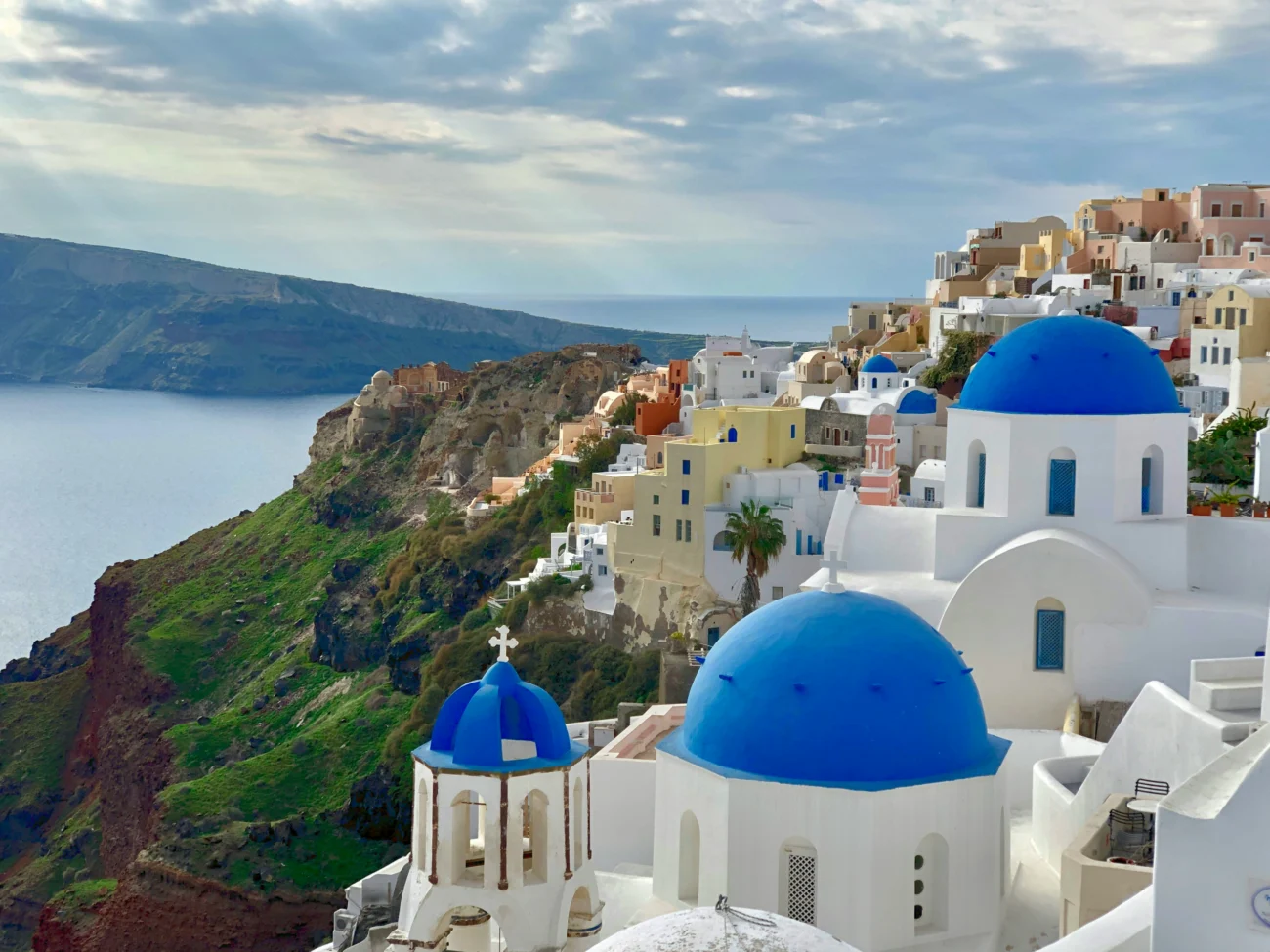
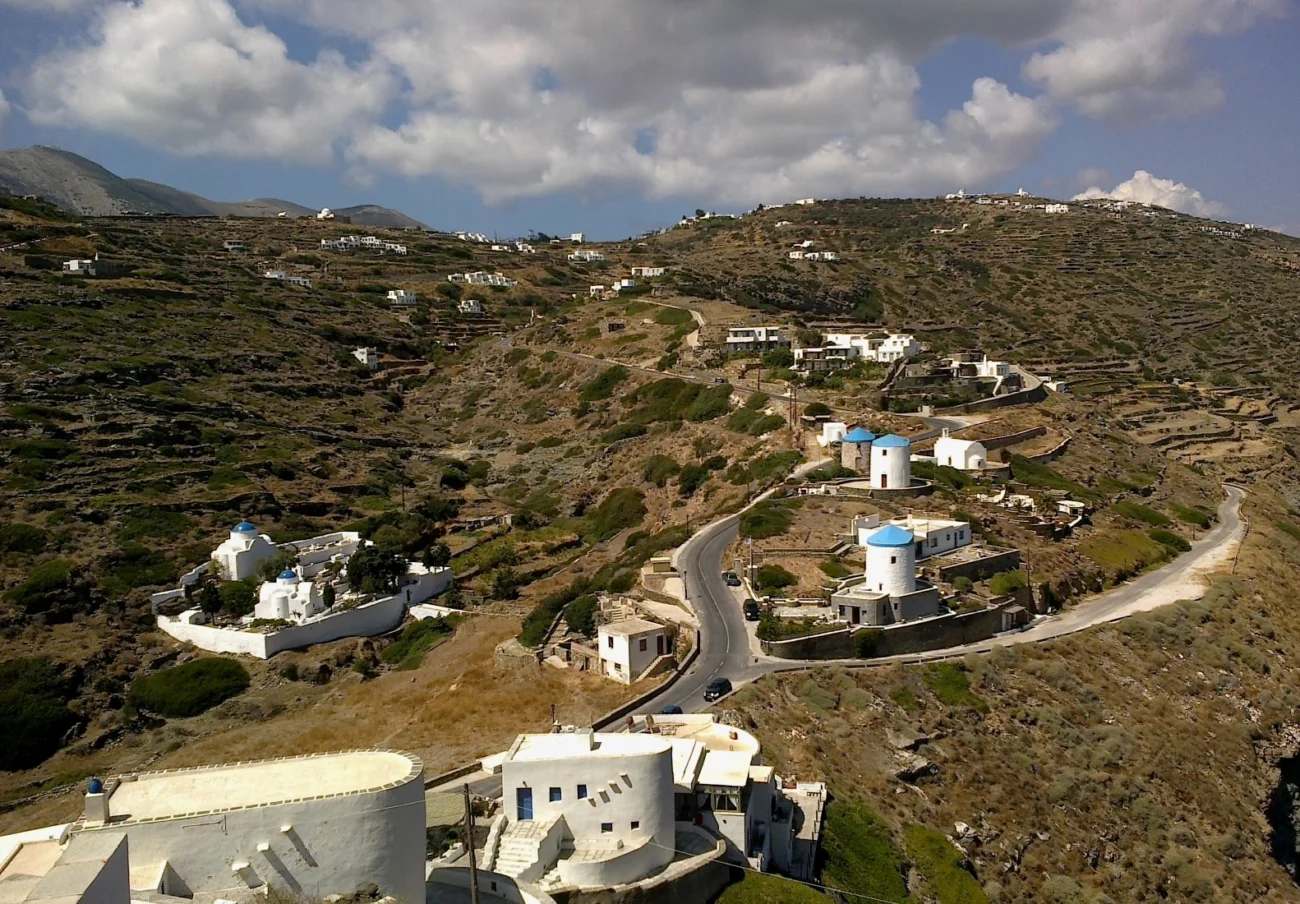
At a glance: East coast of Sifnos, around 3 kilometres from Apollonia and 8 kilometres from Kamares port, built on a clifftop above the sea. The island’s capital for more than 2,000 years until 1836, and its only village with a genuinely medieval character. Best suited to travellers who want real history, fortified architecture and dramatic sea views without a resort atmosphere.
Is Kastro worth visiting
Kastro is unlike anywhere else on Sifnos, and its long history explains why. Built directly on top of an ancient acropolis and shaped into its current form by Venetian fortification in the 17th century, the village still follows its original defensive layout, with grand houses in the inner ring and more modest homes forming an outer wall against the sea and any approach from land. It suits travellers who want to walk through more than two thousand years of history in a single afternoon, ending with dramatic views straight down onto the water below the cliff.
Highlights
- The ruins of an ancient acropolis dating to the 6th century BC, including the only surviving Sifnian marble wall from that period anywhere in the Cyclades
- The Venetian fortified structure itself, built around 1635 under the Da Corogna dynasty, with two concentric rings of houses still intact
- The loggias, arched gateways that once served as the village’s defensive entrances and remain the main access points today
- The Archaeological Museum of Sifnos, in the centre of the village, with sculptures and coins spanning from prehistoric to Roman times
- Seralia, a small pebble beach at the foot of the cliff, once the ancient harbour serving the settlement above
More than two thousand years as the capital
Kastro served as the capital of Sifnos for over 2,000 years, only losing that status in 1836. Its earliest chapter dates to the island’s 6th century BC golden age, when Sifnos grew wealthy from its gold and silver mines, funding an acropolis at the top of the hill that still yields fragments of an extraordinary marble wall, the only one of its kind surviving from that period in the Cyclades. Centuries later, the Venetians reshaped the settlement into the fortified village visible today, its houses deliberately packed close together in an outer ring to form a defensive wall, with the wealthier inner ring offering greater protection for the village’s leading families.
Where Kastro is
Getting to Kastro
From Apollonia: Kastro is about 3 kilometres away, around 10 minutes by car or taxi.
From Kamares port: Around 8 kilometres, roughly 15 to 20 minutes by car or taxi.
By bus: Seasonal bus services connect Apollonia to Kastro. Check current routes and times on the Sifnos bus timetable.
By car or taxi: See getting around Sifnos and Sifnos taxi for prices and booking details.
Arriving on Sifnos: For ferry routes and journey times to the island, start with how to get to Sifnos.
Where to eat
Kastro has a small choice of tavernas within the village, along with a couple of options down at Seralia beach right below the cliff. It is a quieter place to eat than Apollonia, with the medieval setting adding real atmosphere to a simple meal.
Where to stay
Kastro suits travellers who want a genuinely historic base with dramatic sea views, though its steep, narrow lanes and limited accommodation make it better suited to a shorter stay than a full holiday base. For a private villa with a pool elsewhere on Sifnos, see Sifnos villas with a private pool.
Beaches near Kastro
Seralia, a small pebble beach at the foot of the village and the site of Kastro’s ancient harbour, sits directly below the cliff. It does not yet have its own detailed guide on this site. For a fuller list of Sifnos beaches, see Kamares Beach near the port.
Best time to visit
Spring and autumn suit Kastro particularly well, with cooler temperatures for exploring the fortified lanes and the acropolis ruins at the top of the hill. The Archaeological Museum operates from April to October, so visiting within that window is worth planning for if the museum is a priority.
How do I get from Apollonia to Kastro?
About 3 kilometres, around 10 minutes by car or taxi.
How long was Kastro the capital of Sifnos?
For more than 2,000 years, from its origins as an ancient acropolis until 1836, when Apollonia took over as the island’s capital.
What can I see at the ancient acropolis in Kastro?
Ruins dating to the 6th century BC, including a fragment of Sifnian marble wall, the only surviving example from that period anywhere in the Cyclades.
Is there a beach in Kastro?
Yes, Seralia, a small pebble beach at the foot of the cliff, once the ancient harbour for the settlement above.