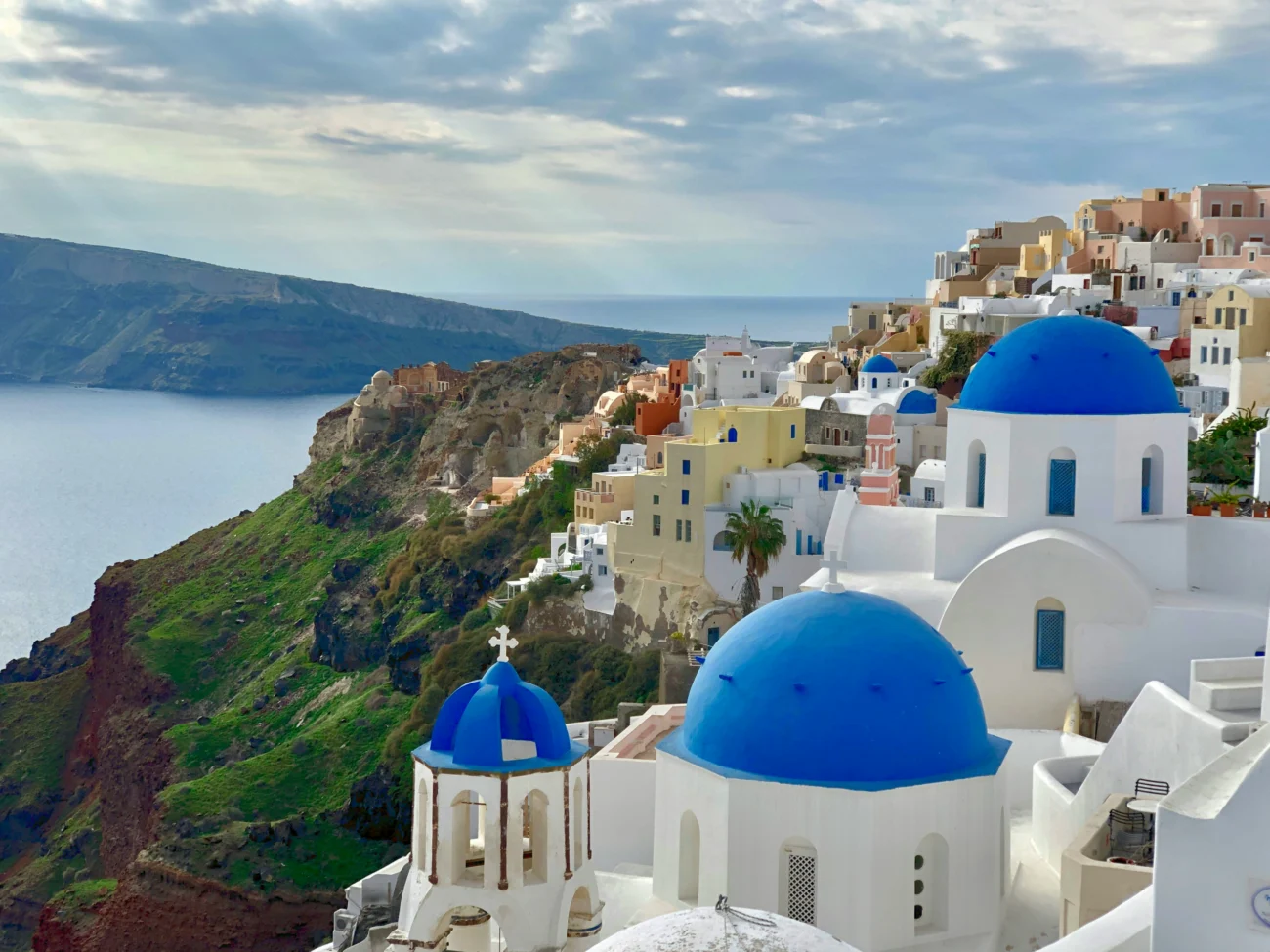
At a glance: Central Naxos, around 12 kilometres southeast of Naxos Town, made up of two smaller settlements, Ano Sangri and Kato Sangri, in a valley below Mount Profitis Ilias. A quiet village known for its whitewashed lanes and, just outside it, one of the most important ancient temples in the Cyclades. Best suited to travellers combining a short village stop with real ancient and Byzantine history nearby.
Is Sangri worth visiting
Sangri is often described locally as little Mystras, a nod to its blend of medieval architecture and whitewashed Cycladic alleys, and it makes a natural stop for travellers exploring inland Naxos. The village itself is small and easygoing, with a scattering of cafes, tavernas and shops selling local produce, but its real draw lies just outside it. Within a short drive are both the Temple of Demeter, one of the oldest surviving marble temples in Greece, and Kastro Apalirou, a Byzantine hilltop fortress that once served as the administrative capital of the region. It suits travellers who want a quiet base for exploring genuine ancient and medieval sites without the crowds of the coast.
Highlights
- The Temple of Demeter at Gyroulas, built around 530 to 520 BC, nearly a century before the Parthenon, dedicated to Demeter, Persephone and Apollo
- The small on site museum near the temple, open most days and free to visit alongside the ruins
- Kastro Apalirou, a 7th century Byzantine fortress on a 450 metre summit, once the administrative capital of Byzantine Naxos until its fall to the Venetians in 1207
- The Palaiologos tower and the Byzantine church of Panagia Orfani in Kato Sangri
- The quiet valley setting below Mount Profitis Ilias, largely untouched by the island’s coastal tourism
A village between a temple and a fortress
Sangri’s setting places it between two of the most significant historical sites on Naxos. The Temple of Demeter, around 1.5 kilometres south of Ano Sangri at the site of Gyroulas, was built from Naxian marble in the late Archaic period and stands as one of the earliest known temples to combine Ionic order architecture with a design later echoed by the Parthenon itself. Excavations suggest the site served religious purposes as far back as the late Mycenaean era. A short drive in the other direction, Kastro Apalirou rises on a hilltop above the village, its fortified walls, more than 40 cisterns and religious buildings dating from the 7th century, when it functioned as the administrative and military centre for the whole region until it fell to the Venetian Marco Sanudo after a 40 day siege in 1207.
Where Sangri is
Getting to Sangri
From Naxos Town: Sangri is about 12 kilometres away, around 20 minutes by car.
To the Temple of Demeter: About 1.5 kilometres south of Ano Sangri, signposted from the village with a small car park at the site.
To Kastro Apalirou: A short drive south towards Agiassos, followed by a walk up a signposted dirt track to the fortress.
By bus: Regular bus services run from Naxos Town to Sangri in season. Check current routes and times on the Naxos bus timetable.
By car or taxi: See getting around Naxos and Naxos taxi for prices and booking details.
Arriving on Naxos: For ferry routes and journey times to the island, start with how to get to Naxos.
Where to eat
Sangri has a small taverna and cafe serving traditional, homemade dishes, in keeping with the village’s quiet character. It makes a good stop for lunch either before or after visiting the temple or the fortress.
Where to stay
Sangri suits travellers who want a quiet inland base close to some of the island’s most important historical sites, with a smaller choice of accommodation than the coastal resorts. For a private villa with a pool elsewhere on Naxos, see Naxos villas with a private pool.
Beaches near Sangri
Sangri is an inland village with no beach of its own. See the Naxos villages guide or the island’s individual beach pages for coastal options.
Best time to visit
Spring and autumn are the most comfortable seasons for visiting both the Temple of Demeter and the hike up to Kastro Apalirou, with cooler temperatures for walking the exposed hillside paths. The temple site and museum are closed on Tuesdays, so it is worth checking opening days before planning a visit.
How do I get from Naxos Town to Sangri?
About 12 kilometres, around 20 minutes by car.
How far is the Temple of Demeter from Sangri village?
About 1.5 kilometres south of Ano Sangri, with a signposted road and small car park at the site.
What is Kastro Apalirou?
A 7th century Byzantine fortress on a hilltop near Sangri, once the administrative capital of Byzantine Naxos until it fell to the Venetians in 1207.
Is there a beach in Sangri?
No. Sangri is an inland village. The nearest beaches are along the coast elsewhere on the island.