Table of Contents
Beach Type & Experience
Perissa Beach stretches for seven kilometres of stunning black volcanic sand and pebbles along the southeastern coast of Santorini. The beach composition is primarily fine black sand mixed with smooth pebbles created from the island’s volcanic past, and it remains one of the most well-maintained stretches of coastline on the island. The sand can get extremely hot during peak sun hours, so wearing beach shoes or water sandals is essential for comfortable walking. The beach has earned a Blue Flag designation for 2024 to 2025, recognising its high standards of cleanliness and facilities.
Perissa attracts a good mix of both local Greek families and international tourists, particularly during the summer months. The beach is generally less crowded than neighbouring Kamari but more developed than the southern section towards Perivolos. Morning hours and late afternoon offer the quietest experience, whilst midday brings the largest crowds during peak season. The atmosphere here feels authentically Greek compared to other Santorini hotspots, with a laid-back vibe that appeals to families and couples seeking a genuine Mediterranean experience without the overwhelming crowds of Oia or Fira.
Families will find Perissa excellent for children, with shallow water areas at the beach entrance and a gentle slope into deeper waters. The protected bay provides calm swimming conditions most of the time, making it safe for young swimmers. Disability access has been given proper consideration, with wheelchair-friendly boardwalks and specially installed ramps at various points for accessing the sea. The proximity from the main road to the beach loungers is approximately 30 metres, making it accessible for visitors with mobility challenges without the need to navigate stairs.
Regarding nudism, Perissa has strict policies in place. Whilst toplessness is tolerated in the developed tourist areas, full nudity is officially prohibited throughout the beach. Clear signs stating “nudity is forbidden” are posted and these restrictions are strictly enforced by local authorities. The beach maintains a family-friendly atmosphere with a clear dress code policy.
Water Quality & Conditions
The waters at Perissa Beach are crystal-clear and exceptionally transparent, offering excellent visibility for snorkelling and underwater photography. The clarity extends downwards, allowing swimmers to see the seafloor and appreciate the underwater rock formations and marine life without difficulty. The water quality has been recognised with the Blue Flag Award, confirming its cleanliness and suitability for swimming.
Water temperature makes Perissa suitable for comfortable swimming from May through November. May brings cool but refreshing waters at approximately 19.1 degrees Celsius, whilst June warms to 22.8 degrees Celsius. July and August represent the peak swimming season with water temperatures reaching 25.3 to 25.7 degrees Celsius, providing optimal conditions for extended time in the water. September remains warm at 24.6 degrees Celsius, and October still offers pleasant swimming temperatures of 22.1 degrees Celsius. By November, the water cools to 19.4 degrees Celsius, but remains swimmable.
August represents the absolute best month for water temperature, reaching a maximum of 27.3 degrees Celsius, making it ideal for those seeking the warmest conditions. If you prefer slightly cooler, refreshing water without sacrificing comfort, June and September offer excellent alternatives with fewer crowds and equally beautiful conditions.
The underwater features at Perissa create an interesting diving and snorkelling environment. The area known as Perissa Rock, located just offshore, features a maze-like underwater cosmos with various depth variations. Colorful corals and sponges coat the rocks, providing perfect hiding spots for octopuses, moray eels, glassfish, anthia, and wrasse. Barracuda hunting is common in these waters, adding an element of excitement for experienced snorkellers. The underwater caves and rock formations have depths ranging from shallow areas near the shore to deeper sections ideal for more experienced swimmers.
Wind conditions at Perissa require attention during summer months. The Meltemi, a dry northerly wind, blows strongly from late May through September, with peak intensity in July and August. This wind can create choppy waters and stronger gusts, potentially affecting beach comfort during afternoon hours. However, Perissa’s relatively protected bay positioning means it experiences less severe wind effects than more exposed beaches. By mid-September, wind patterns typically calm down significantly, making it a better choice for those sensitive to breezy conditions.
Swimming safety at Perissa is generally good thanks to lifeguard presence from June through September. The calm bay waters and gentle slope make entry straightforward for most swimmers. Water shoes are recommended for the rocky underwater terrain, preventing discomfort when stepping on sharp volcanic rocks.
Accessibility & Getting There
Reaching Perissa Beach is straightforward and hassle-free, making it accessible to all visitors. The most popular method is by public bus from Fira, which costs two euros and fifty cents and takes approximately 30 to 40 minutes depending on traffic and number of stops. The Fira to Perissa route runs frequently with roughly 20 departures daily, ensuring you will not wait long for your connection. The bus terminates near the church in Perissa village, placing you within walking distance of the beach facilities.
For those preferring personal vehicle independence, renting a car or ATV provides excellent value and freedom to explore at your own pace. The distance from Fira to Perissa is approximately 12 to 13 kilometres, and the drive is straightforward with smooth road conditions. Unlike mountain routes to northern Santorini villages, the road to Perissa does not involve challenging winding paths. Parking is abundant and readily available near the beach, with most areas offering free parking close to the main road.
Taxis are available but tend to be expensive and may require advance booking during peak season, making them less practical than buses or rental vehicles for budget-conscious travellers. The journey by taxi takes roughly 20 to 25 minutes from Fira, but costs significantly more than alternative transport methods.
The difficulty level for accessing Perissa is minimal. There is no significant hiking required, and the beach location means direct and easy road access from the main island routes. From the parking areas or bus stops, you can reach the beach within minutes of walking. The infrastructure is designed for convenient access, with established pathways and clear signage.
Road conditions between Fira and Perissa remain in good repair with regular maintenance, making the journey smooth and straightforward. Visitors arriving by car will find the route simple to navigate without requiring special directions or local knowledge.
Facilities & Amenities
Perissa Beach boasts an impressive array of facilities and amenities that line the entire promenade, creating a vibrant atmosphere perfect for a full day at the beach. Nearly every restaurant and taverna along the waterfront offers seating with beachfront views, quality food options, and comfortable service. The dining scene ranges from casual Greek fare to upmarket fish restaurants serving fresh daily catches.
For budget-conscious diners, basic gyros can be purchased for three to three euros fifty, perfect for a quick lunch. For a proper meal, expect to spend 40 to 60 euros for two people when ordering a starter and main course with house wine. Premium restaurants featuring fresh fish sold by weight or quality steaks typically cost 70 to 90 euros for two people including wine. A cold draft beer costs approximately five to five euros fifty.
Notable restaurants worthy of visit include Fratzeskos Fish Tavern, which serves exceptional seafood at reasonable prices with portions large enough for sharing. They offer fresh fish by weight and speciality catches for around 40 euros for a full fish with sides. Tranquilo restaurant attracts visitors for its extensive vegetarian options, massive salads, and creative Greek dishes in a relaxed setting. Taverna Perissa offers authentic traditional Greek dining with diverse menu options catering to all tastes.
Sunbeds and umbrellas are available throughout Perissa at affordable rates. Standard rental costs approximately ten euros for one umbrella and two loungers for the day, making it excellent value compared to other Santorini beaches. However, a fantastic alternative exists: numerous restaurants and beach bars offer completely free sunbeds and umbrellas to customers who purchase food or drinks. This budget-friendly approach means you can enjoy a full day with shade and comfortable seating whilst supporting local businesses with modest spending.
Shade options beyond the paid sunbeds are limited, as Perissa lacks natural tree coverage common to many other Mediterranean beaches. The volcanic landscape means you will encounter few natural shelters from the sun. This makes renting an umbrella or strategically timing your beach visits to early morning and late afternoon highly recommended.
Facilities for personal needs are well-maintained and readily accessible. Showers and changing facilities are distributed throughout the beach area, allowing visitors to rinse off sand and change comfortably. Toilets are available and kept in good condition by staff at various beach establishments. Fresh water fountains exist near the main facilities, so you can refill water bottles and stay hydrated.
The main road parallel to the beach contains shops, boutiques, souvenir stores, and minimarkets stocked with essentials. If you forget sunscreen, snacks, towels, or other beach necessities, everything is within easy reach without venturing far from the sand.
Activities & Special Features
Snorkelling opportunities at Perissa are excellent thanks to the crystal-clear waters and abundant marine life visible directly from the beach. You can wade into shallow areas and immediately spot fish schools, octopuses, and rock formations creating an underwater landscape worth exploring. The Perissa Rock formation just offshore provides deeper snorkelling sites with corals, sponges, moray eels, and various coloured fish species for those comfortable swimming further from shore.
Professional diving opportunities exist through local dive operators who offer guided tours, equipment rental, and instruction for beginners. The calm waters and reasonable depths make Perissa suitable for divers of all experience levels wishing to explore underwater caves and volcanic formations.
Hiking represents one of Perissa’s most significant attractions, particularly the trail up Mesa Vouno mountain to Ancient Thera ruins. This archaeological site crowns the 630-metre mountain overlooking the beach, accessible via a well-marked rocky trail from the village. The hike from Perissa to the Ancient Thera site takes approximately one to two hours of steady climbing, classified as easy to moderate difficulty. The trail is exposed to sun for much of the distance, so early morning starts are highly recommended.
Ancient Thera itself is a remarkable open-air museum of Santorini’s past, with excavations revealing statues, houses, temples, Roman baths, theatre seating, and sophisticated road networks dating from the ninth century BCE until 726 CE. An entrance fee of two euros grants access to these ruins and their outstanding viewpoints. The panoramic vistas from the summit extend across the Aegean Sea, neighbouring islands, Santorini’s famous caldera, and wildflowers blooming seasonally. The wind at the summit is consistently strong, so secure any loose items. Operating hours are Tuesday through Sunday from 8:00 AM to 3:00 PM, closed Mondays, with seasonal variations from April to October.
Beyond Ancient Thera, a longer hiking trail extends from Perissa all the way to Kamari Beach, passing through numerous historical sites and offering varied perspectives of the island’s landscape. This approximately two-hour route represents an excellent full-day activity for serious hikers.
Photography at Perissa offers compelling subjects. The dramatic black sand against turquoise water creates striking colour contrasts perfect for capturing the island’s unique character. Sunset viewing from the beach provides beautiful golden light, though Perissa does not offer the famous white-cliff sunset views of Oia. The Mesa Vouno mountain creates a striking backdrop framing the beach, especially during golden hour photography.
Simply walking along the seven-kilometre beach represents an enjoyable activity, with the long expanse allowing solitude even during busy periods. Many visitors rent inexpensive bicycles from local operators and cycle along the southern beach sections to explore quiet areas and surrounding villages.
Practical Information
The optimal times to visit Perissa depend on your priorities. Late April through May offers pleasant warm weather, decreasing crowds as spring transitions toward summer, and significantly lower accommodation prices than peak season. Water temperatures of 19 to 23 degrees Celsius provide refreshing swimming without the heat of midsummer.
June through September represents peak beach season with warm water temperatures of 22 to 26 degrees Celsius and reliable sunny weather. However, July and especially August bring maximum crowds, requiring reservations for accommodation months in advance. If you prefer warm beach weather without overwhelming crowds, June and early September provide excellent compromise timing.
October offers a unique advantage, with still-warm water at 22 degrees Celsius, comfortable air temperatures, and noticeably fewer tourists than summer. Accommodation becomes affordable again, and restaurants feel less hectic. The only consideration is slightly increased wind potential as autumn approaches, though this rarely significantly impacts beach enjoyment.
What to bring for Perissa Beach differs slightly from golden-sand Mediterranean beaches due to the volcanic environment. High SPF sunscreen rated at least 50 is essential, as the black sand reflects solar radiation intensely and the sun at this latitude is powerful. A wide-brimmed hat and sunglasses protect your face and eyes from glare. A full litre of drinking water minimum is necessary, as the exposed beach offers limited natural shade and dehydration occurs quickly in the Mediterranean heat.
Beach shoes or water sandals are absolutely mandatory due to the hot black sand and rocky underwater terrain. Flip-flops provide basic protection but water shoes with grip soles offer better security. Lightweight clothing covering your shoulders provides additional sun protection. A quick-dry beach towel takes minimal space and dries much faster than conventional towels. A foldable beach bag holds essentials without bulging.
Footwear requirements cannot be overstated. The black volcanic sand reaches temperatures that can burn unprotected skin within seconds during peak afternoon hours. Water shoes protect your feet when entering the water over rocky volcanic terrain that can cause discomfort without protective soles.
Crowdedness patterns show Perissa reaches maximum capacity in August, requiring patience and flexibility regarding spot selection. Early morning from sunrise to 10:00 AM offers the most peaceful experience with room to spread out. Late afternoon from 16:00 onwards also sees reduced crowding as visitors return to accommodation or depart for dinner. Midday brings peak crowds. Visiting in June, September, or October dramatically reduces crowding compared to August.
Food and drink costs at Perissa remain reasonable compared to other Santorini tourist destinations. A casual meal costs between 40 and 60 euros for two people, making it accessible for most budgets. Beer at 5 to 5 euros fifty is standard pricing. The value for money, especially when acquiring free sunbeds through restaurant dining, represents excellent savings for a full beach day.
Safety & Warnings
Sun exposure at Perissa demands serious attention. The Mediterranean sun at Santorini’s latitude is intense, and the black sand reflects solar radiation rather than absorbing it, increasing effective sun exposure. Combined with limited natural shade, unprotected sun exposure can result in severe sunburn within two to three hours. Apply sunscreen with minimum SPF 50 before leaving your accommodation and reapply every two hours, immediately after swimming, and whenever you feel your skin. Wear a hat continuously and consider a lightweight rashguard or cover-up shirt whilst in the water.
Water entry requires basic caution, though Perissa’s calm bay reduces risks compared to exposed beaches. The underwater terrain consists of rocky volcanic rock with sharp edges, necessitating water shoes to prevent foot cuts. Always enter the water slowly, scanning the bottom for hazards. The gentle slope and shallow entry areas make entry safe even for children, but awareness remains important.
Meltemi wind impacts create the primary weather-related concern. From late May through August, this dry northerly wind blows with varying intensity, occasionally creating rough seas and strong gusts making water conditions less pleasant. Afternoon hours experience the strongest winds. If wind conditions bother you, visit early morning hours or choose September and October when winds significantly diminish.
Wave conditions at Perissa remain generally calm due to the protected bay location. Unlike exposed beaches, Perissa rarely experiences rough seas suitable only for experienced swimmers. The conditions suit families and recreational swimmers comfortably for the majority of the year.
Rocky terrain on the approach to certain beach sections and the underwater environment requires appropriate footwear. Whilst Perissa does not involve steep difficult descent paths to reach the sand like some Santorini beaches, the volcanic rock composition means sturdy shoes are sensible when walking around the beach perimeter.
Special Attractions & Nearby Points of Interest
The most significant nearby attraction is Ancient Thera, the archaeological remains of Santorini’s ancient capital perched dramatically atop Mesa Vouno mountain directly above Perissa Beach. The site contains a theatre, temples, cemeteries, agora (market), Roman baths, and dwellings spanning from the ninth century BCE to 726 CE. The ruins showcase exceptional views across the Aegean and reward the short hike with outstanding panoramic vistas. An entrance fee of two euros grants access during opening hours Tuesday through Sunday 8:00 AM to 3:00 PM.
The Museum of Fossils and Minerals is housed in Perissa village and offers a unique glimpse into the geological forces that shaped Santorini. The collection includes fascinating specimens reflecting the island’s dramatic volcanic history and mineral composition.
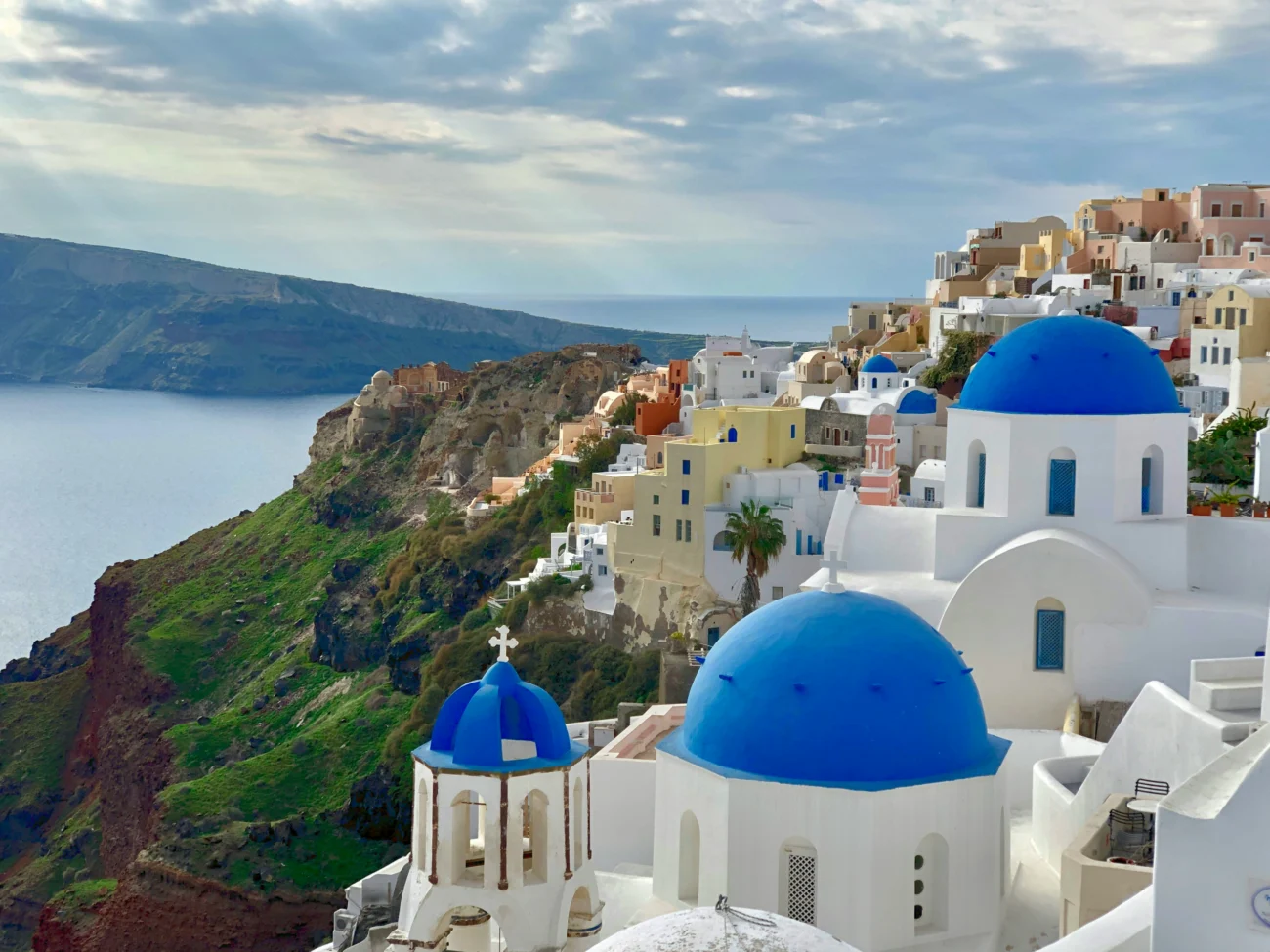
Timiou Stavrou stands as the largest blue-domed church on Santorini, a stunning white-washed chapel with the traditional blue dome that represents iconic Greek architecture. The building represents ecclesiastical history and cultural significance within the Perissa community.
Nearby Emporio village represents Santorini’s largest settlement and deserves exploration for its traditional character. Winding narrow alleys connect whitewashed houses preserving authentic Greek island architecture rarely seen in touristy areas. The village features multiple blue-domed churches, historic windmills on the hillside, and a lively traditional market in the eastern portion. Local restaurants serve genuine Greek food to appreciative locals rather than tourists, providing authentic culinary experiences. The village’s preservation of historical character makes it excellent for photography and cultural immersion.
The hiking trail from Perissa to Kamari via Ancient Thera provides a full-day adventure combining beach, history, and mountain scenery. The approximately two-hour journey passes through varied landscapes and culminates in another excellent beach suitable for swimming after the hike.
For photography enthusiasts, Perissa offers excellent sunset and sunrise opportunities. Whilst the famous white-cliff caldera sunsets occur on Oia and Firostefani, Perissa offers genuine golden-hour light reflecting off the black sand and sea with Mesa Vouno mountain providing a dramatic backdrop.
Is it safe to swim at Perissa Beach?
Absolutely. Perissa Beach holds a Blue Flag Award recognising its cleanliness and safety standards. Lifeguards patrol the beach from June through September. The calm bay waters and gentle slope into deeper areas make swimming safe for children and adults. The only precaution is wearing water shoes for the rocky underwater terrain and applying strong sun protection due to the intense Mediterranean sun.
Do I need to pay an entrance fee to access Perissa Beach?
No, Perissa Beach is completely free to access. There are no gates, turnstiles, or entrance fees. You can walk onto the beach freely from dawn to dusk. The only costs are optional sunbed rentals at approximately ten euros, or spending money on food and drinks at beach establishments which often include free sunbeds with purchases.
What makes Perissa Beach different from Kamari Beach just up the coast?
Whilst both offer black sand and similar amenities, Perissa feels noticeably less crowded and more relaxed than Kamari. The sand at Perissa is finer and softer underfoot than Kamari’s coarser pebbles. Perissa has a longer beach expanse allowing more personal space. The atmosphere is more laid-back and family-friendly, whilst Kamari caters more to young party crowds. Perissa’s proximity to Ancient Thera hiking makes it excellent for active visitors seeking history combined with beach time.
Can I rent water sports equipment at Perissa Beach?
Yes, the beach offers various water sports facilities including snorkelling equipment, diving courses, and other aquatic activities through local operators. Bicycles can be rented inexpensively from vendors in Perissa village for exploring the longer beach stretches and surrounding areas. However, advanced booking is recommended for diving lessons during peak season to guarantee availability.
What is the best time of day to visit Perissa Beach to avoid crowds?
Early mornings from sunrise until 10:00 AM offer the most peaceful experience with empty stretches of beach and minimal crowds. Late afternoon from 16:00 onwards sees reduced numbers as visitors depart for evening activities and dinner. Midday from 11:00 AM to 16:00 brings the largest crowds, particularly in July and August. Visiting during shoulder seasons like May and October entirely eliminates crowding concerns regardless of the time of day.